OpenClaw ran wildly for two weeks, waking up hardware and Agent manufacturers.
The wildly popular OpenClaw has split the world in two.
On one side are the enthusiastic "driving enthusiasts" who use OpenClaw to do various tasks for them. Writing code and finding files are just basic operations. The more advanced users are already thinking about how to make it earn money. On the other side are those who try it out following the hype but find it both costly and not as useful as expected.
Those who love it and those who don't are clearly divided, but the OpenClaw effect is far from over.
As a prototype of a true AI assistant, OpenClaw has developed its own ecosystem, attracting upstream and downstream manufacturers to make changes for it. Cloud service providers such as Alibaba, Tencent, and Baidu have quickly launched one-click deployment of OpenClaw. AI PCs and smart glasses have rushed to announce "compatibility with OpenClaw." The 16GB version of the Mac mini has sold out. Geeks' attempts are not limited to computers; they have started to transform a "ClawPhone" to experience controlling the phone with just one sentence.
OpenClaw is like a catfish, stirring up the long-silent AI hardware market. Just as DeepSeek popularized all-in-one computers back then, manufacturers are trying to convince skeptical users by providing computing power and environments for OpenClaw: If you want such a powerful assistant, you need to equip it with a dedicated physical body.
Why has OpenClaw boosted the popularity of hardware? Is a hardware Agent really necessary in the future? From OpenClaw, we can see many possibilities worth discussing.
Born on the hardware side, OpenClaw has grown "hands and feet"
To discuss the hardware issue, we first need to figure out what OpenClaw has done right to make it so "useful."
For a long time, our expectations of an Agent have remained at the "Jarvis" in movies, which can handle everything from daily schedules to entire workflows. However, for a long time, various Agent products have been unable to implement the above scenarios.
The reason AI has not performed well is not only because of limited model capabilities but also because of the lack of permissions and context.
"The biggest difference is that it runs on your computer. All the things I've seen run on the cloud and can do some things. But if it runs on local hardware, it can do anything," explained Peter Steinberger, the founder of OpenClaw, when talking about why OpenClaw has been successful.
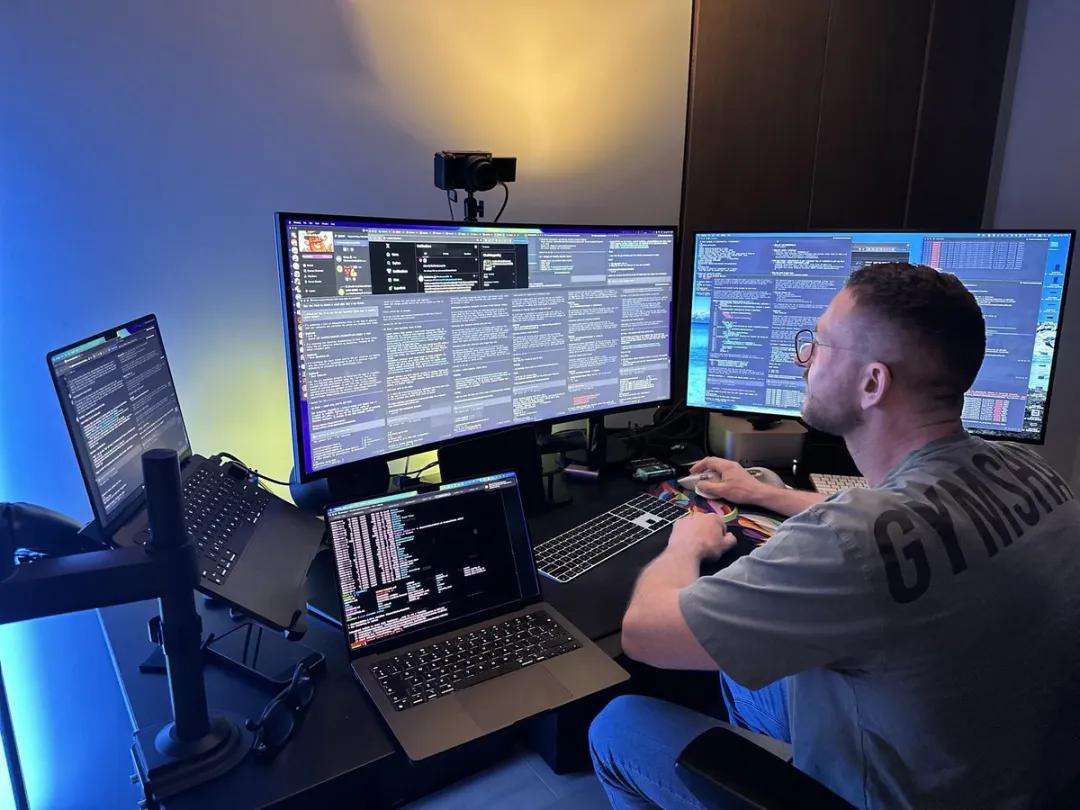
To put it simply, ChatGPT is a super brain floating in the cloud, but to do simple and practical tasks, it needs hands and feet.
By locally deploying the Agent on the computer and leveraging various permissions on the hardware, this "shrimp" finally has the right tools to do what large models can theoretically do but have been unable to due to permission issues.
For example, if the Agent wants to synchronize your schedule, it needs to have access to the email on your computer and the use of Outlook. Another example is that if it needs to find a file whose location you don't know, it needs to be able to read all the data on your computer's hard drive to search freely in the database.
This is also the reason why the "Doubao Phone" was more impressive than the AI PC before. Compared with the latter, the former was able to perform cross - app operations and integrate functions scattered across multiple apps by combining the opening of mobile phone permissions. When the mobile phone "opened a crack" for AI to access, the AI PC had not yet achieved permission integration.
In addition to the simple operations of invoking functions mentioned above, when given tasks that require data, such as writing an annual summary, OpenClaw performs better than directly invoking AI.
Compared with the previous method of uploading files to the cloud for processing, OpenClaw lives directly in your computer. Your hard drive, browser history, etc., are all databases it can access at any time.
Peter also gave an example. He said that his friend asked OpenClaw to write an annual summary, and the result was better than expected. To understand what the AI had done, he found through the operation records that OpenClaw had found the irregular weekly recordings on his computer, which recorded his daily thoughts. OpenClaw used this information to write the annual summary. It can be said that the information sources it accessed were even better than what the person himself knew.
In addition to permissions, another trump card of OpenClaw is the Skills ecosystem. Compared with directly invoking the model, Skills, as pre - written "plugins," are more "human - friendly" than the large model itself.
This is also why OpenClaw has a greater impact on technology novices. Users without programming skills need to write the correct prompts and even manually debug to teach the large model how to do things. However, Skills are pre - written with a set of standard workflows by humans, and then the AI executes them according to the established process. This combination of "large model + workflow" makes the task accuracy reach a higher and more usable level.
OpenClaw is a good open - source framework. By placing the "brain" in the cloud and the "body" on the hardware terminal, it has realized the dream of an AI assistant. Hardware is the most important part of making this dream come true.
The first fire ignited by OpenClaw led to the hardware side
Although OpenClaw's intelligence makes people eager to try, deploying OpenClaw has become the first hurdle for users.
OpenClaw does not have an installation package. As an open - source project, users need to configure the environment on GitHub by themselves, and each step may encounter errors. Operating with the command line is also not in line with the usage habits of ordinary users.
In addition to the high deployment difficulty, fully opening computer permissions brings unbearable risks to users. For example, it may accidentally delete important files when cleaning the hard drive or cause the computer to freeze due to excessive CPU usage in the background.
Given the potential over - reach of OpenClaw, most users are not willing to directly deploy it. They generally have two options: either allocate a dedicated spare computer for it or back up the data on their own computers before using it. Completely open permissions allow OpenClaw to both help and cause trouble.
As a result, the Mac mini became the first "digital body" to sell out. The popularity of OpenClaw first boosted the sales of the Mac mini.
Since the development environment of OpenClaw is optimized for macOS, and more Skills are designed for Apple devices, coupled with its low cost and plug - and - play feature, it is an ideal carrier for OpenClaw. Driven by demand, the price of the Mac mini has increased. The original price of the device, with national subsidies, was 2,699 yuan, but it has recently been adjusted to around 3,000 yuan.
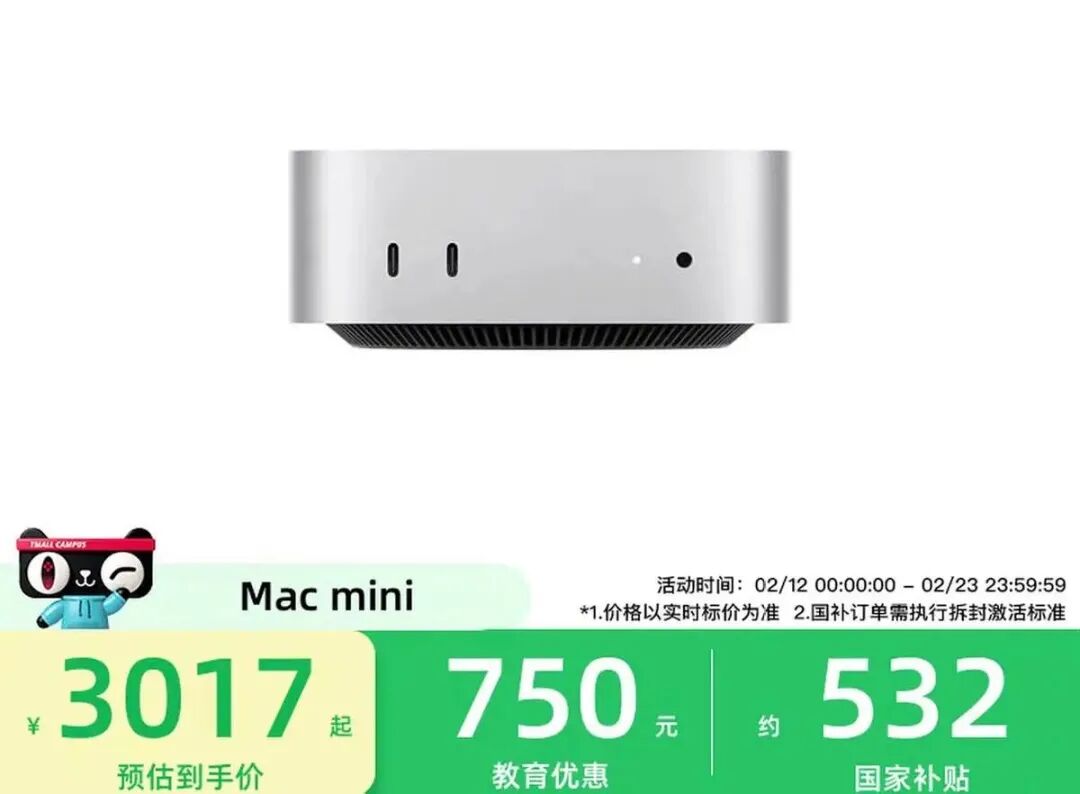
The price of the Mac mini on Taobao after national subsidies
The impact of OpenClaw is not limited to computers but has spread to other smart terminals.
As Peter said, OpenClaw can not only operate your computer but also control your phone, light strips, and even your oven.
Based on the differences between the cloud and local, we can see two different approaches to using OpenClaw:
One approach is to use the cloud model API + local hardware deployment of the Agent, allowing low - cost hardware to access the Agent and experience the benefits of an AI assistant.
Take the mobile phone as an example. This week, the geek user Ethan posted a transformation plan called "ClawPhone" on X. He connected OpenClaw to a second - hand mobile phone and ran it on the Android system emulator, enabling OpenClaw to run on the mobile phone.
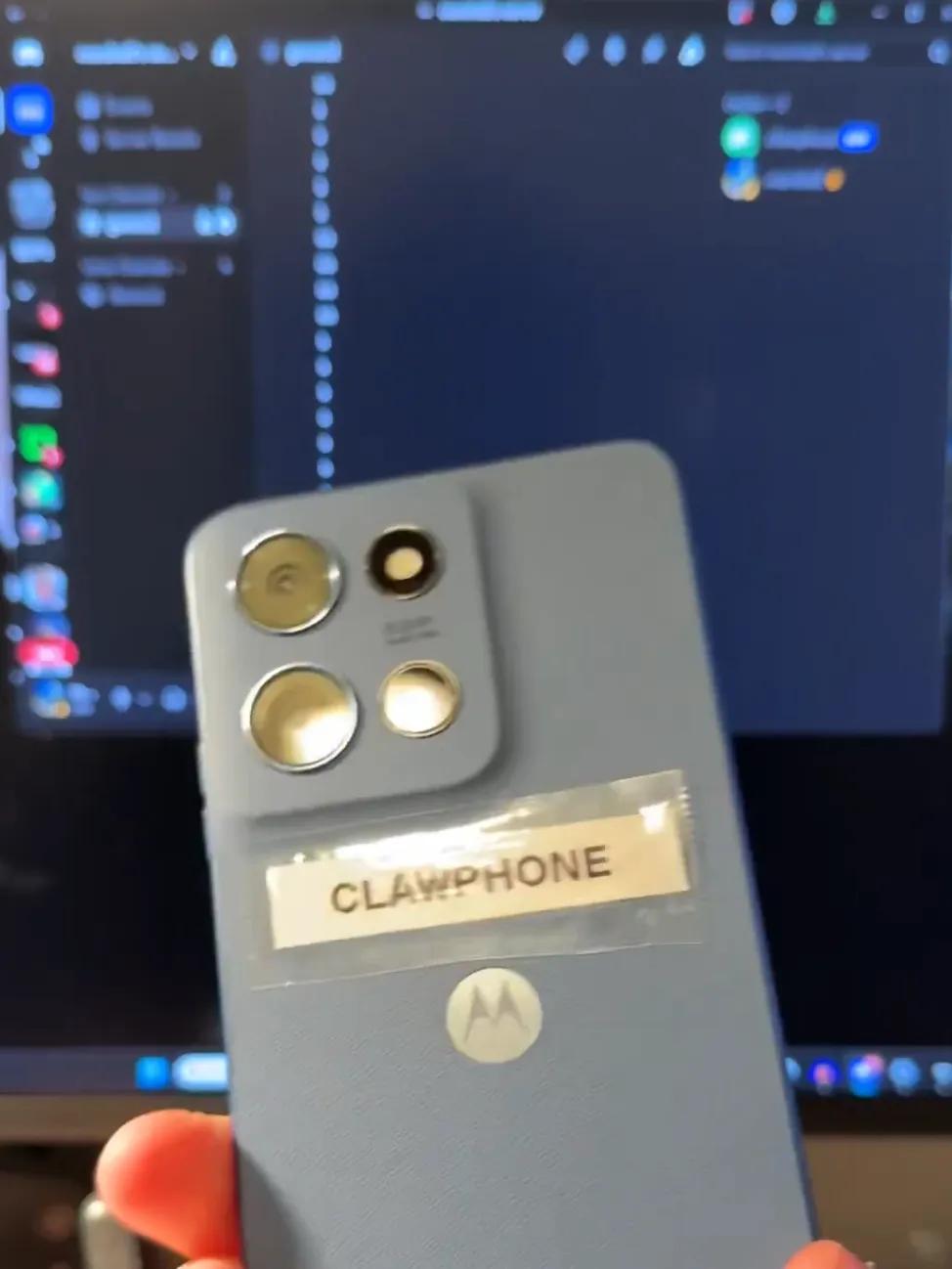
Ethan used Discord (a community software) as a communication window and directly gave instructions to the phone through the input box. He successfully turned the phone's flashlight on and off and made the phone "see" and describe the surrounding environment by taking a photo.
However, the current self - made version has limited effects on the mobile phone. As a product based on hardware, OpenClaw needs more permissions to be truly freely invoked.
For example, the integration of permissions in the current mobile phone ecosystem is still an issue. Ethan admitted that if he wants OpenClaw to listen to the microphone audio or send voice, the phone needs root permissions. But his phone is not rooted, so he can't do it because Android has very strict sandbox isolation for permissions such as calls and audio.
The other approach is to directly deploy OpenClaw on a local device to run a small edge - side model. Such products are generally more cost - effective but require higher - end hardware.
This is where Infra manufacturers come in. For example, by launching various hardware and chips, Infra manufacturers solve the most difficult deployment problems for users and promote that their chip computing power can support OpenClaw to use the edge - side model.
On February 10, Thundersoft announced the full - stack deep adaptation and large - scale deployment of OpenClaw on its Magic Pie 3 and AIBOX. It encapsulates problems such as environment configuration, deployment, and network environment debugging into pre - processed programs, helping users to run it immediately after installation.
This design idea is to first provide sufficient computing power for the edge - side model and then solve various detailed configuration problems in the deployment, which is very similar to the DeepSeek all - in - one computer back then.
Some manufacturers are also trying to let users experience a stripped - down version of OpenClaw through cloud - based deployment of the Agent.
Recently, smart glasses have found an opportunity to "ride on the wave." For example, on February 11, the smart glasses manufacturer Rokid announced the opening of the "customizable intelligent agent" function on its Lingzhu platform.
However, it should be noted that although Rokid claims that developers can connect the locally deployed OpenClaw to the glasses, in the configuration, the official demonstration shows that cloud server public network configuration is required, and it emphasizes that it is not recommended to connect the local OpenClaw to the glasses.
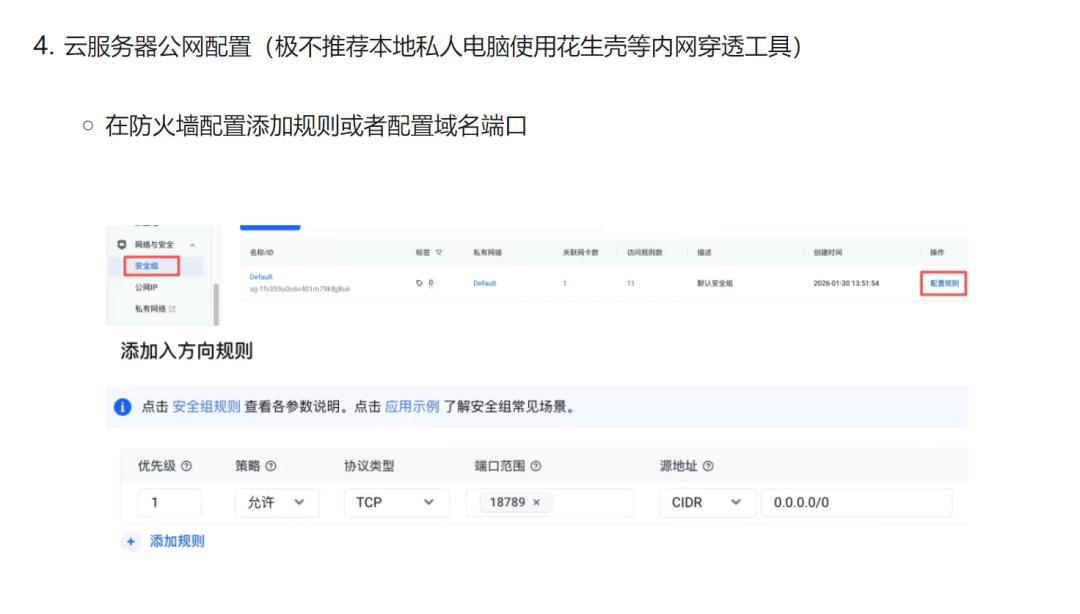
Rokid's official deployment suggestions
In short, Rokid's way of connecting OpenClaw is still cloud - based deployment. If you deploy OpenClaw in this way, you can neither access files on your computer desktop through hardware permissions nor transfer data directly to the local device because the data has to pass through the cloud server.
All the above methods still involve locally deploying OpenClaw on various hardware. However, some people are already designing AI Native hardware for Agents.
That is to say, in addition to the business opportunities around OpenClaw deployment, new business opportunities are emerging based on Agent - related usage scenarios.
For example, Distiller Alpha is a native hardware comparable to OpenClaw. This product, priced at 1,700 yuan, encapsulates the capabilities required by an Agent in a single hardware device.
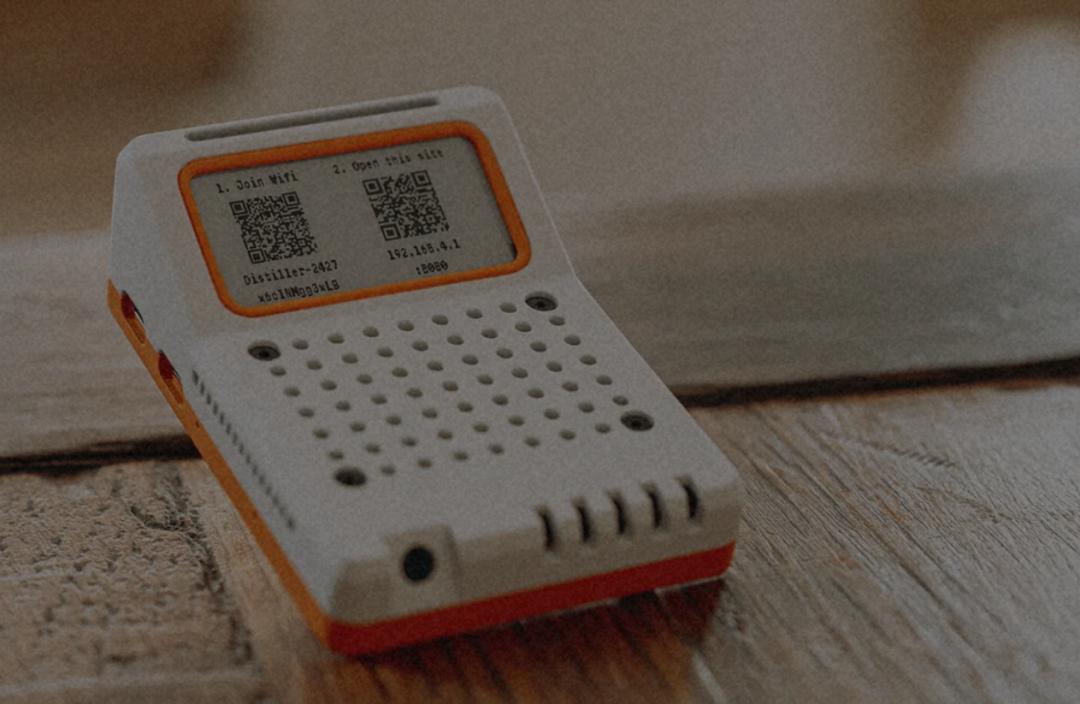
In the demonstration, users give instructions through other devices, and the pre - deployed Agent inside is responsible for completing the tasks. In short, it is also a way to lower the deployment threshold for ordinary people. It is like a "hardware - based Docker (sandbox)," allowing novice users to have a safe, physically isolated Agent environment from the main computer just by plugging in the power and connecting to the network. As an independent hardware product, it can also be connected to other hardware devices such as sweeping robots and computers.
It can be said that starting from OpenClaw, from the sell - out of the Mac mini to the modification of mobile phones and the emergence of native hardware, a hardware ecosystem chain centered around Agents is growing rapidly.
OpenClaw is a key, but the new world requires the participation of multiple parties
The impact of OpenClaw is not limited to the hardware side. In China, the fire ignited by OpenClaw has made many large - scale manufacturers restless.
After the popularity of OpenClaw, cloud service providers behind various large manufacturers have all launched cloud - based deployment versions. The last product to stir up the nerves of cloud service providers was DeepSeek.
The advantage of cloud service providers lies in one - click deployment and cloud space. They create a safe space in the cloud for users who are not willing to buy hardware. This space can be in the form of a computer or a mobile phone. For example, Alibaba Cloud offers the Wuying Cloud Computer for enterprises and individuals, while Baidu Cloud has chosen to develop a mobile version of OpenClaw, namely the Red Finger Operator, a customized cloud mobile phone for OpenClaw.
Although cloud - based deployment cannot provide the experience of accessing local files and controlling permissions compared with local deployment, large manufacturers have implemented some functions that are more appealing to individual users through their own ecosystems.
What may be most appealing to individual users is the integration of OpenClaw into apps.
In addition to integrating with products such as iMessage, Telegram, and WeChat Work, the initial differentiation was achieved through the integration of their own application products. For example, Tencent Cloud's advantage is its exclusive support for QQ. Most other manufacturers have also integrated with commonly used domestic office software, such as Alibaba Cloud and Baidu Cloud, which have integrated with Feishu and DingTalk.
Although cloud service providers are the first to let people experience OpenClaw, when it comes to the core value of OpenClaw - the integration of local permissions, this is somewhat diminished when it is completely deployed in the cloud.
It can be seen that as an open - source framework, OpenClaw is more like opening up new possibilities for manufacturers: an Agent that can run locally becomes smarter and more useful. It is no longer just an open - source tool but a "catfish" that has entered the sardine school, providing a preview of the future for hardware and Agent manufacturers.
A product that is difficult to deploy and not very secure is also an opportunity for large manufacturers to make a breakthrough. Who can be the first to turn OpenClaw's "wild growth" capabilities into a more stable, secure, and accessible product?
When we shift our attention from the bustling hardware and cloud battlefields, we will find that software giants in Silicon Valley have already started to make moves for the end - game.
Compared with OpenClaw's unrestricted permission - opening approach, Coworker launched by Claude provides a more mature solution.
Although it also uses a virtual machine, Coworker is exploring a more conservative way. It asks users for permission to access files