MiHoYo, a single investment yielding a return of 10 billion yuan
MiniMax's market value has exceeded HK$200 billion.
As everyone can see, since its listing on the Hong Kong Stock Exchange on January 9th, MiniMax's stock price has shown an amazing curve. With the official release of the latest model M2.5, today (February 13th), MiniMax's stock price hit a new high again, rising by more than 13% at one point, and its market value exceeded HK$200 billion.
Together with Zhipu, two companies with a market value of over 200 billion have emerged in the Chinese large - model field at the beginning of the year.
As a result, the investors behind have reaped rich rewards. Among them, the most unexpected one is Mihoyo. This game company, as an angel investor, invested in MiniMax. It not only accurately positioned itself on the eve of the large - model explosion but also gained substantial returns - this investment has earned about 10 billion yuan on paper.
Looking at this, such technology - wealth creation stories are happening frequently.
MiniMax Soars, 100 - fold Return on the Angel Round
It only took 4 years from its establishment to listing, and the age of the core management team is no more than 35. In the Chinese large - model arena, MiniMax is a unique existence.
As the Spring Festival approaches, the large - model circle has become extremely competitive. This morning (February 13th), MiniMax officially joined the fray - it officially announced its new model M2.5, which had started two days earlier. Its programming and Agent performance are directly comparable to the level of Claude Opus 4.6.
After testing by netizens, they all exclaimed that it is "extremely lightweight, extremely fast in reasoning, and extremely low in cost." It's like what used to require a large truck to carry can now be transported by a small cart.
The market responded quickly, and MiniMax's intraday market value exceeded HK$200 billion. At such a moment of remarkable change, the returns of the investors behind MiniMax are particularly attracting attention.
And Mihoyo is the most prominent presence in this grand scene.
At the end of 2021, Yan Junjie decided to leave SenseTime and founded MiniMax. Almost at the same time, Mihoyo, Hillhouse Capital, IDG Capital, and Yunqi Capital became the angel investors of MiniMax. The post - investment valuation of this round was 200 million US dollars.
The team of angel investors was thus established.
Coming from the game industry, Mihoyo is undoubtedly the most unique one. In the subsequent financing rounds of MiniMax, Mihoyo continued to invest, and its shareholding ratio once increased to 7.34%. In 2023, Liu Wei, one of the founders of Mihoyo, became a non - executive director of MiniMax. Since then, Mihoyo has become a customer of MiniMax - using its models in the character behavior control, NPC intelligent dialogue, 3D modeling optimization, and plot generation of products such as "Honkai: Star Rail".
This special role of "both investing and using" makes Mihoyo one of the two leading senior independent investors in MiniMax's prospectus, and the other one is IDG Capital.
To this day, Mihoyo holds about 5.24% of the shares of the listed MiniMax. Corresponding to the latest market value, the book value of its shareholding is close to 10 billion yuan. If only considering the post - investment valuation of 200 million US dollars in the angel round, the return on Mihoyo's investment has exceeded 100 times.
The other investors behind are also equally happy. The prospectus shows that MiniMax's investors also include Hillhouse Capital, IDG Capital, Yunqi Capital, Sequoia China, Alibaba, Tencent, Shanghai State Investment, Cornerstone Capital, Xiaohongshu, Guofang Innovation, Matrix Partners, etc. The team is large.
Started in Xuhui, Paid 15 Billion in Taxes in Five Years
In the Chinese game circle, when it comes to Mihoyo, "everyone knows it."
Back in January 2011, Cai Haoyu, Liu Wei, and Luo Yuhao, who were studying at Shanghai Jiao Tong University, officially established the Mihoyo studio in the school dormitory. Besides being classmates, their common hobbies created a unique bond: they all like games and are very fond of the second - dimension culture.
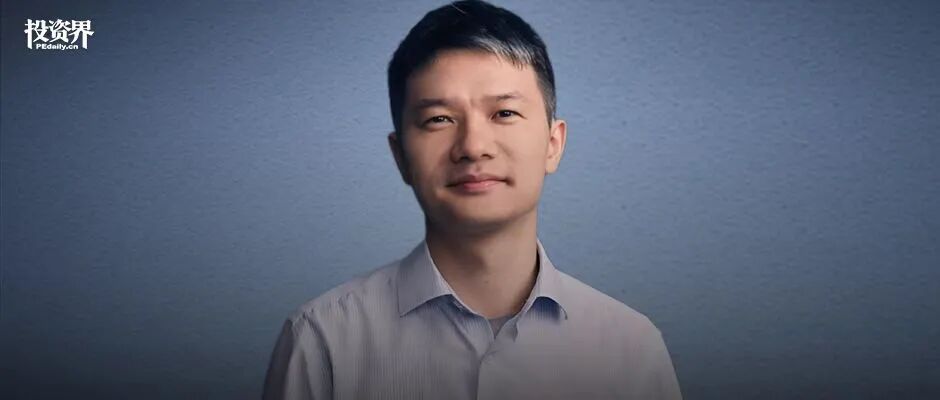
Liu Wei, the founder, president, and chairman of Mihoyo
In the second half of 2011, Mihoyo participated in the New Entrepreneurs Competition hosted by the Shanghai University Students' Science and Technology Entrepreneurship Foundation. It was this time that they received a 100,000 - yuan interest - free loan from the Shanghai Science and Technology Innovation Center and a 50 - square - meter office that they could use for free for half a year.
Subsequently, Cai Haoyu and Liu Wei bought the cheapest office desks and chairs from IKEA, moved the team out of the dormitory at Jiao Tong University, and settled in Building 1 of the Shanghai Science and Technology Innovation Center at No. 100 Qinzhou Road, Xuhui District. Several young people full of youthful spirit set off from here.
In the following years, Mihoyo faced doubts, missed opportunities, and was also tempted, but finally achieved amazing results: it changed its fate with "Honkai Academy" and attracted global traffic with "Genshin Impact"... To this day, Mihoyo has become the third - most - profitable company in the Chinese game circle after Tencent and NetEase.
How profitable is Mihoyo? As a non - listed company, the outside world rarely gets a full view of Mihoyo's revenue scale.
At the recent Investment Promotion and Recognition Conference in Xuhui District, Shanghai, Mihoyo rarely disclosed a set of shocking data: from 2021 to 2025, it paid a total of 15 billion yuan in taxes.
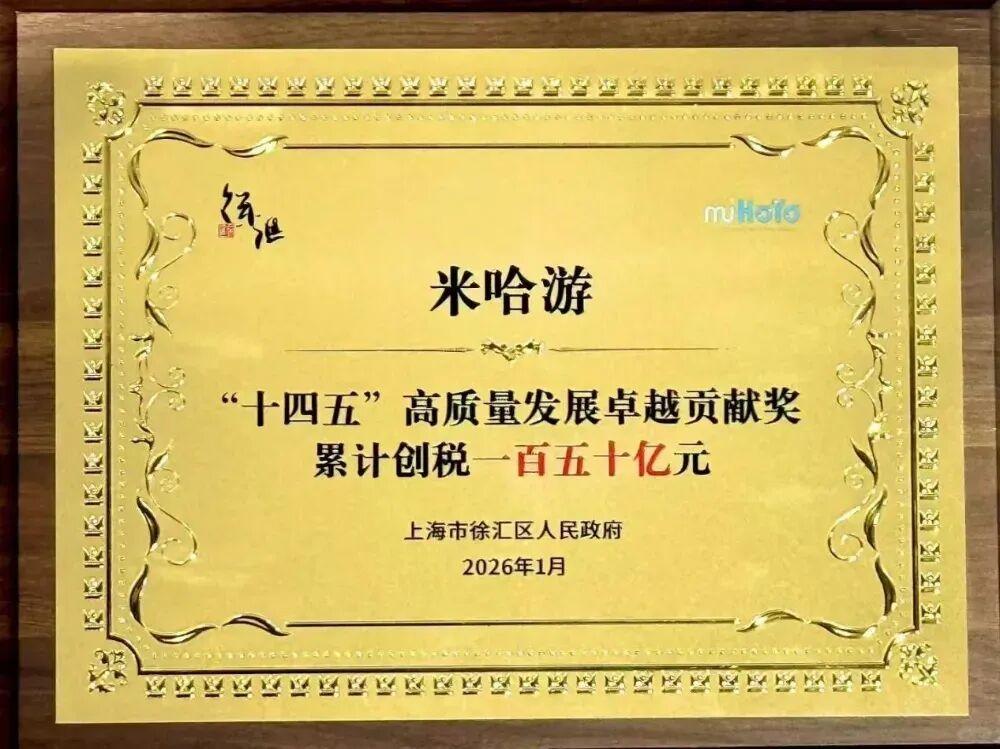
It can be said that this is the most specific and significant financial data that Mihoyo has disclosed externally in recent years. In June 2023, the "Guangming Daily" reported that in 2021, Mihoyo paid about 1.8 billion yuan in taxes. In 2022, the company's main business revenue was 27.34 billion yuan, and the net profit was 16.145 billion yuan.
Combining the data, from 2021 to the next 4 years, Mihoyo's tax revenue increased from 1.8 billion to 15 billion yuan, which shows from the side that its revenue scale has also experienced a significant explosion in recent years.
One can't help but sigh at Mihoyo's "success".
Recalling that in October 2023, Mihoyo spent about 1.077 billion yuan to buy a core R & D and design land in Caohejing, Xuhui District. At that time, there was a hard - and - fast rule in the land transfer contract: the transferee needed to promise that during 2023 - 2025, the group's annual total tax payment would not be less than 3.333 billion yuan.
There were many skeptical voices at that time. After all, the game industry was facing a cold winter in the stock market and intensified involution, and there were even more lay - off news. Promising to pay about 10 billion yuan in taxes in three years was no small pressure on any game company at that time.
But Mihoyo did it and repaid the place where it started in the most practical way.
"Tech Geeks Change the World", Heavily Invest in Young People
Unconsciously, Mihoyo has become an IPO hunter.
At the beginning of this year, Super Play, focusing on trendy toys and collectible cards, submitted its prospectus to the Hong Kong Stock Exchange. Surprisingly, before the IPO, Mihoyo held 11.86% of the shares and was the largest external shareholder.
Not long ago, Xinghaitu completed its share reform, which is also regarded as a signal for an IPO. Before that, Mihoyo had invested and increased its holdings several times.
There is also Soul, which Mihoyo has invested in, and it is already in the process of listing in Hong Kong.
A super new star in the VC circle has emerged. Few people know that Mihoyo extended its investment tentacles to cutting - edge technologies early on. It made bold and casual investments. For example, it invested in Brain - Computer Interface Lingyisi, private rocket Dongfang Space, and nuclear fusion energy company Energy Singularity early on, betting on projects that seemed full of uncertainties at that time.
Remember in a speech last year, Liu Wei, the founder, president, and chairman of Mihoyo, casually summarized: "I made a few investments when I was young. They were random investments out of pure passion, and I haven't really managed them since then." It can be regarded as the most casual VC.
As the industry sees it, Mihoyo's investment style is really "unrestrained". If there is a common point, it is that the founders of the companies it invests in are all very young and believe that technology can change the world. This kind of temperament is similar to that of Mihoyo.
For example, Yan Junjie of MiniMax is a legendary figure who worked his way up from an intern to the vice - president at SenseTime, and the whole team is very young. The founding team of Xinghaitu is mostly post - 90s, and the four co - founders, Gao Jiyang, Zhao Xing, Li Tianwei, and Xu Huazhe, all have top - notch academic and technical backgrounds.
Mihoyo is getting closer and closer to such young people.
In recent years, Liu Wei, the helmsman of Mihoyo, has been appearing in the venture capital circle more and more frequently. Recall the early days of entrepreneurship, Liu Wei held multiple positions and was the "customer service lady" for a whole year. He was more able to get along well with players than Cai Haoyu and Luo Yuhao. In October 2023, Liu Wei succeeded Cai Haoyu as the chairman of Mihoyo, and "Big Brother Wei" has become more well - known.
Recently, Big Brother Wei posted a feeling on his WeChat Moments: "It's been fifteen years since I started my business in Xuhui in 2011! Mihoyo is very honored to have contributed to the development of Xuhui in the past five years."
Recalling the slogan "Tech geeks save the world" that Mihoyo shouted when it just started, it now has a new meaning.
This article is from the WeChat public account "Investment World" (ID: pedaily2012), written by Feng Yuchen and Yang Jiyun, and published by 36Kr with authorization.