Young people are starting to "craft" everything: A microcosm of the trillion-dollar emotional economy market
01
Making Everything by Hand: When the Threshold of "Manufacturing" Drops
On the eve of the Spring Festival in 2026, the view count of the New Year handicraft topic on Xiaohongshu exceeded 1.02 billion, and the discussion volume reached 919,000. Users were no longer satisfied with buying ready - made New Year goods but turned to making their own Year of the Horse posters, special pendants, and creative Spring Festival couplets. Meanwhile, the playback volume of the #Making Everything by Hand# topic on Douyin had exceeded 5 billion. From handicrafts to smart hardware, from practical tools to emotional services, a cultural and economic activity centered around "making by hand" is quietly emerging among young people in China.
At the beginning of the year, an app called "Are You Dead?" triggered a phenomenon - level discussion. Three post - 1995 programmers accurately captured the "loneliness and safety anxiety" of young urban singles and "crafted" an emotional solution in a short time using AI tools: users click "I'm still alive" to sign in every day, and in case of losing contact, the app will notify emergency contacts. This "rough" product quickly became a social symbol for young people to self - mock and help each other.
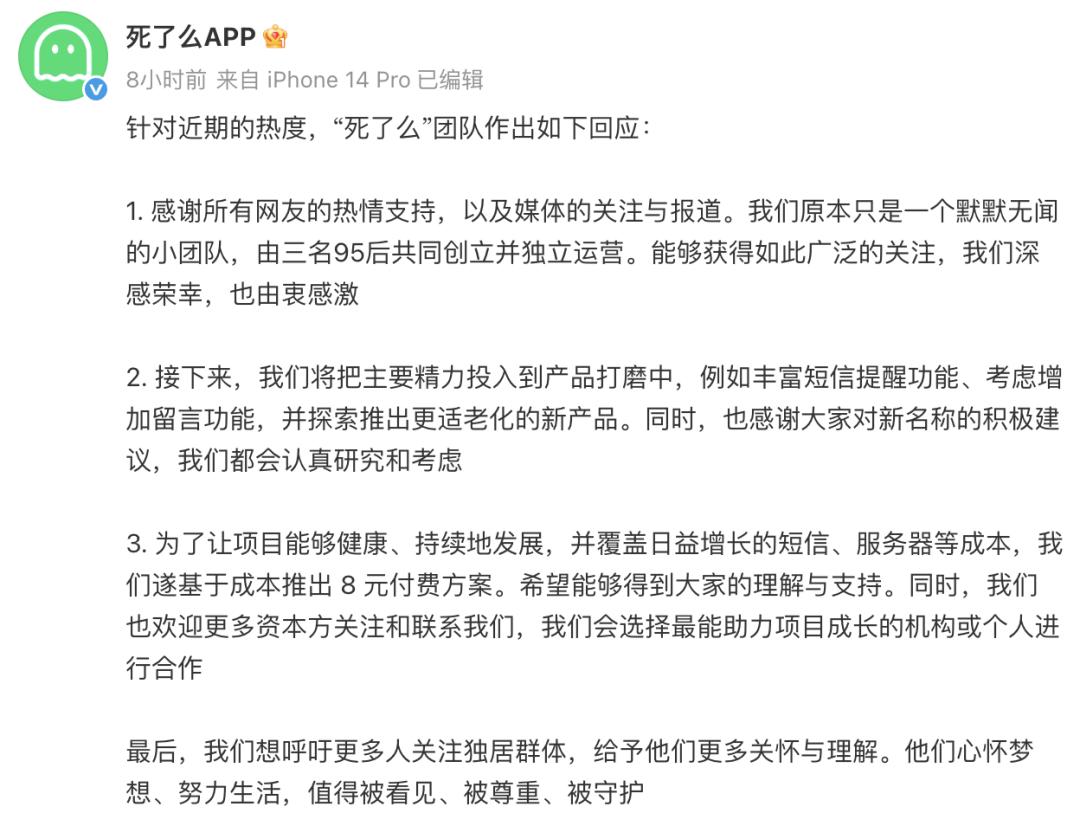
The statement released by the official Weibo of the "Are You Dead?" APP. Image source | The Paper
On the other hand, Gao Xingyu, a post - 2000 student, "crafted" a sophisticated mecha model with plastic boards in his dormitory. This model not only carried the emotion of making up for the regret of childhood pirated models but also won the recognition of the capital market. The brand "Wave Fantasy" he founded has signed a contract with a listed company.
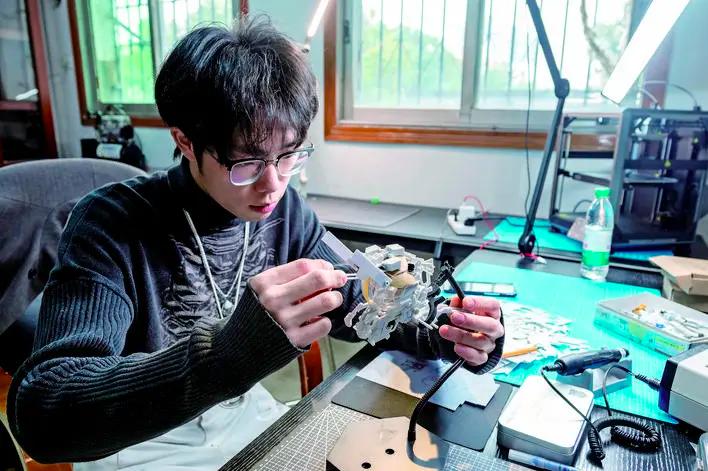
Gao Xingyu "crafted" a sophisticated mecha model with "plastic boards" in his dormitory. Image source | Hunan Daily
The "making by hand" wave has shaken the upstream of the industrial chain. JLCPCB, a small - batch customization platform for electronic components, is one of the enterprises that directly benefit from the "hand - making economy" - it is the production - end support for a large number of "hand - made" hardware.
This company, which was just a "one - meter counter" in Huaqiangbei in 2006, showed in its 2024 financial report that its revenue was nearly 8 billion yuan, and the net profit was 998 million yuan, with year - on - year growth of 18.55% and 35.19% respectively.
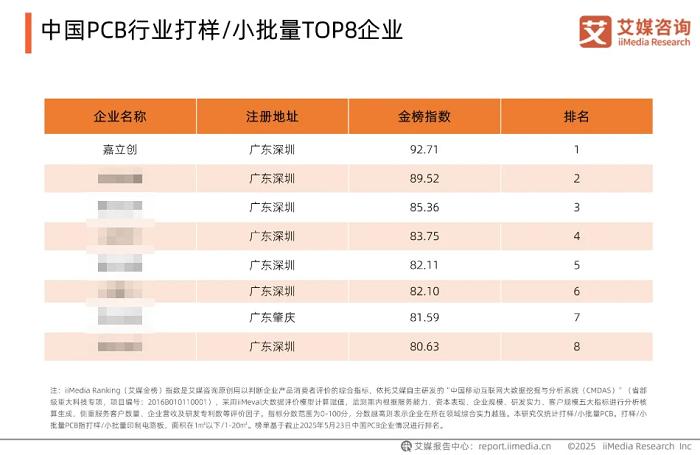
JLCPCB is among the top 8 enterprises in the PCB prototyping/small - batch industry in China. Image source | iiMedia Research
These seemingly unrelated scenarios share the same core: The threshold of "manufacturing", which once required huge capital, professional equipment, and complex skills, is being flattened to an unprecedented low by new technologies.
In the peak narrative of industrialization, "manufacturing" is the core. It means standardization, efficiency, scale, and obedience. Workers on the assembly line are precise cogs in the "manufacturing" process, and their subjectivity is compressed to the maximum extent. The philosopher Hannah Arendt once divided human activities into "labor" (Labor, repetitive activities for livelihood), "work" (Work, activities to create a lasting world), and "action" (Action, initiating new words and deeds).
We have some expectations. When the threshold of "manufacturing" drops, will a larger proportion of future human activities involve creative work and innovative actions?
The future is unknown, but "making by hand" seems to be a silent confrontation in modern society. Young people spend hours "making" a fish lantern or assembling a model, actively investing time in a self - directed and continuous production process. Perhaps the greatest charm lies not in the result but in the subjectivity confirmed by the action of "I made it with my own hands".
The market has given positive feedback: The models "made by hand" by college students are favored by listed companies, and the app that solves emotional pain points has become popular. All these show that the market is paying for good ideas and accurate emotional insights, and it continuously proves that the market serving small emotions and personalized expressions is continuously expanding and has commercial value.
02
The Rise of the Emotional Economy and the Emergence of Individual Creativity
Data from the "Insight Report on the Consumption Trends of China's Emotional Economy from 2025 - 2029" released by iiMedia Research shows that the market scale of China's emotional economy is on the rise. In 2024, the market scale of China's emotional economy reached 2.307767 trillion yuan, and it is expected to exceed 4.5 trillion yuan in 2029. Among them, consumers in the emotional economy show a preference for original and novel products and a rejection of homogeneous products.
This constitutes the soil for the survival of "hand - made" products: They are non - standard products by nature, carrying unique stories and emotions.
Just like trendy toys such as Labubu that once detonated the market, unique products naturally have the attribute of social currency and are easy to become a medium for Generation Z to establish identity and have social conversations. On the contrary, homogeneous products are difficult to establish deep emotional connections.
The "hand - making economy" is a more precise and extreme slice of this wave of the emotional economy. This also benefits from the popularization of technology and the trend of equal rights. Generative AI has significantly lowered the skill threshold for programming and design; the supply chain of the JLCPCB model has made "prototyping" no longer the patent of giants. The time, cost, and difficulty from an idea to the implementation of a prototype have been unprecedentedly compressed, making it commercially feasible to meet the highly personalized, small, and even instantaneous emotional needs. The "hand - making economy" has welcomed its spring at such a historical intersection.
This trend always has some similar shadows in history. During the European Renaissance in the 14th century, the popularization of printing technology allowed knowledge to leave monasteries, accelerating the liberation and spread of personal emotions and talents. Generalists like Leonardo da Vinci emerged, which is very similar to today's "individual creative households". In the middle and late Northern Song Dynasty in China, the prosperous commodity economy gave birth to a large urban middle class, making the parting emotions in Liu Yong's poems, such as "Holding hands and looking at each other with tearful eyes", become a widely spread "emotional hit".
History rhymes similarly: When technology or business development lowers the threshold of expression and dissemination, the individual emotions and small needs covered by the grand narrative quickly gather to form a vibrant emerging market.
In the past, transforming an emotion or an idea into a product (such as a mini - program, a short drama, or an app) required years of professional skill training. But now, with the help of AI tools and modular resources, an ordinary person may "craft" a concept into reality in a very short time. This provides opportunities for countless "one - person enterprises" or "creative individuals" to emerge. Their core competitiveness is not the traditional large - scale production capacity but the keen insight into life scenarios, the in - depth understanding of specific emotions, and the ability to quickly turn ideas into products using new tools.
Capital is paying attention to this trend. Recently, CMC Capital and the Hong Kong Investment Corporation, wholly owned by the Hong Kong government, jointly established the "CMC AI Creative Fund" and led a $130 million Series B financing for the AI creation community LiblibAI. This is one of the largest financings in the AI application track this year, and its goal is very clear: to invest in tools and communities that can incubate, empower, and stimulate public creativity.