A giant emerges and surrounds DJI.
Author | Zhang Ziyi
Editor | Yuan Silai
DJI's lucrative market segment has finally been targeted by more aggressive and powerful competitors.
Recently, vivo officially confirmed the launch of an independent vlog camera project. The product form will directly compete with DJI's Osmo Pocket series. Previously, the media reported that Liu Zuohu, the chief product officer of OPPO, is leading a team to develop a similar product.
OPPO and vivo, two giants that have survived numerous fierce battles in the market, are definitely not the opponents DJI wants to face.
However, the seeds of this confrontation were sown when the Pocket 3 became a huge hit.
Few consumer electronics products can dominate the market for a long time, but DJI's Osmo Pocket 3 has achieved this. According to media reports, the global sales of the Pocket 3 exceeded 10 million units in just one year, and the revenue from this single product exceeded 20 billion yuan. Due to insufficient production capacity, the Osmo Pocket 3 was once jokingly called the "Electronic Moutai", and the second - hand price premium once exceeded 30%. It wasn't until DJI actively lowered the price in the second half of last year that the story of the product being extremely hard to find finally came to an end.
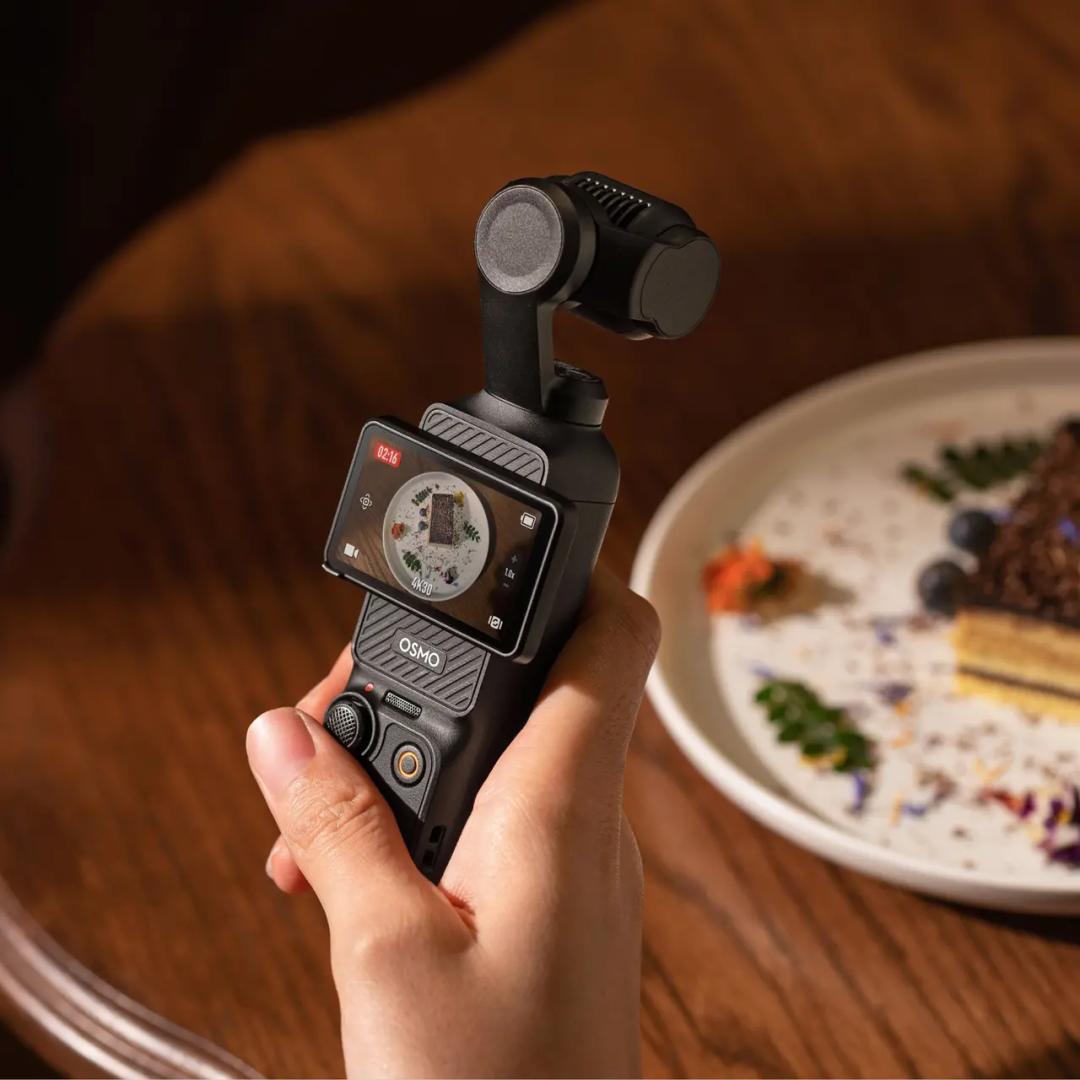
DJI Osmo Pocket 3 (Image source/ Official website)
More importantly, in the minds of users, the gimbal camera has, to some extent, become synonymous with "DJI Pocket" - the role of defining a product category that countless consumer electronics companies are eager to obtain. DJI seems to have easily achieved this.
If it were five years ago, mobile phone manufacturers might not have heavily invested in this product category. Several leading mobile phone companies have annual revenues of hundreds of billions. Compared with the large - scale markets of mobile phones and IoT, the investment - output ratio of products like the Pocket is not high.
"In the past two years when the mobile phone market was still booming, no one cared about the Pocket category. Mobile phone manufacturers had high expectations and only focused on big - ticket items. Moreover, the mobile phone and IoT businesses were large and not that difficult back then," a person from a mobile phone manufacturer analyzed to Yingke.
Now, a product with 20 billion yuan in revenue is quite attractive. "Previously, people didn't realize this was a lucrative opportunity. Now, adding this category to increase sales is a good way to make money," another person in the mobile phone industry commented.
This turn of events is a bit bitter for DJI. They spent a full seven years validating a previously undiscovered and unproven market - the shooting needs of vlog creators and travel enthusiasts. Although DJI's first two generations of products were novel, they only sold about one million units each. It was the continuous iteration of the third - generation product that made the Osmo Pocket 3 the ultimate "blockbuster".
However, this is also an inevitable battle for companies in the consumer electronics market. In China, where the 3C industry chain is extremely developed, it's impossible for a company to rely on a single blockbuster product to make easy money for a long time. Eternal competition is their destiny.
Of course, the manufacturing barriers for gimbal cameras are actually not low. Before the Pocket 3, many small and medium - sized manufacturers failed just before the category's boom. Even if mobile phone manufacturers enter the market, they won't be able to capture all of DJI's market share. But there's no doubt that the era of intense competition in the imaging hardware market finally arrived in 2026.
01 The "Martyrs" Who Failed Despite Crossing the Gimbal Barrier
Looking back at the success path of the Pocket 3, it's obvious that DJI has leading technological, financial, and marketing capabilities in the industry.
The first - generation Pocket was the smallest three - axis mechanical stabilization gimbal camera launched by DJI at that time. It filled the gap between the unstable shooting of mobile phones and the bulkiness of professional cameras. Its physical gimbal effectively compensated for the image quality degradation caused by the electronic anti - shake technology used in mobile phone shooting at that time.
To date, the gimbal stabilization technology remains the core of DJI's Pocket series products.
Around 2020, when the first - generation Osmo Pocket had just proven the market demand, a group of sensitive hardware manufacturers flocked into the market. Moza, Feiyu, and Snoppa all successively launched gimbal cameras.
These three companies all have experience and expertise in manufacturing mobile phone gimbals and professional camera stabilizers. Moza was one of the promoters of the "foldable mobile phone gimbal"; Feiyu mainly focuses on gimbal cameras, handheld stabilizers, etc.; Snoppa's Snoppa Atom was once a representative product of its mobile phone gimbals and had a good reputation on overseas crowdfunding platforms.
Among them, Snoppa Technology had the most tortuous fate.
The Snoppa Vmate was launched in 2019. At that time, although DJI's first - generation Osmo Pocket pioneered a new product category, it had many shortcomings: the screen was too small, making it difficult for users to see the composition clearly; it had no independent Wi - Fi transmission ability and needed to be directly connected to the mobile phone via Bluetooth; it did not support vertical shooting mode.
The strategy of the Snoppa Vmate was to address the shortcomings of the Osmo Pocket. Its gimbal lens could rotate 90 degrees physically, allowing users to freely switch between horizontal and vertical shooting without changing the grip of the handle. DJI didn't solve the vertical shooting composition problem until the Pocket 3 by introducing a rotating screen. The built - in Wi - Fi module of the Vmate enabled wireless image transmission. These designs were very advanced at that time.
However, its success and failure both stemmed from image transmission. Due to insufficient antenna design and software optimization, the image transmission of the Vmate often lagged and disconnected. The image users saw on their mobile phones had a delay of several seconds, making real - time monitoring difficult. The genius design of the rotating gimbal lens also encountered problems in actual production. The early batches of the Vmate had poor quality control, with some gimbals tilted and some microphones not working.
What was even more embarrassing was that when the Snoppa Vmate began large - scale distribution and fixed firmware bugs in the second half of 2020, DJI launched the Pocket 2. The Pocket 2 had a larger sensor, better sound recording, and a wider field of view, far superior to the Vmate in terms of hardware. Before it could develop a second - generation product, the Vmate completely withdrew from the gimbal camera market due to a shortage of chips.
Feiyu is the only one still insisting on launching new products. They also launched a similar product with a more flexible split - magnetic design than DJI, and the price is less than 2,000 yuan, much lower than the DJI Pocket 3. However, although Feiyu's product solved the gimbal anti - shake problem, it didn't improve the image quality much.
The one - inch large - sensor used in the DJI Osmo Pocket 3 far outperforms its competitors in terms of night - time shooting, color reproduction, and post - processing capabilities. "Good - looking shots" have become an important reason for the long - lasting popularity of the Osmo Pocket 3.
A marketing person in the intelligent imaging industry recalled: "The Pocket had a very popular marketing campaign, probably comparing it with the iPhone. The things it shot were even better - looking than those of the iPhone. But actually, it was cunningly comparing with the front - facing camera of the iPhone. It definitely can't compare with the rear - facing camera of the iPhone, but this marketing method was quite interesting. Moreover, after using the one - inch large - sensor, the image quality was better. Since creators value image quality very much, more people think it's usable and can even replace the need for a DSLR in some scenarios."
Moreover, in the view of the above - mentioned person, the more difficult - to - replicate aspect of the Osmo Pocket 3 is that it has become a must - have for video creators. The system design of the Pocket 3 meets the needs of video creators. More importantly, DJI has a rich product matrix. For example, it can be paired with drones to complete a whole set of shooting.
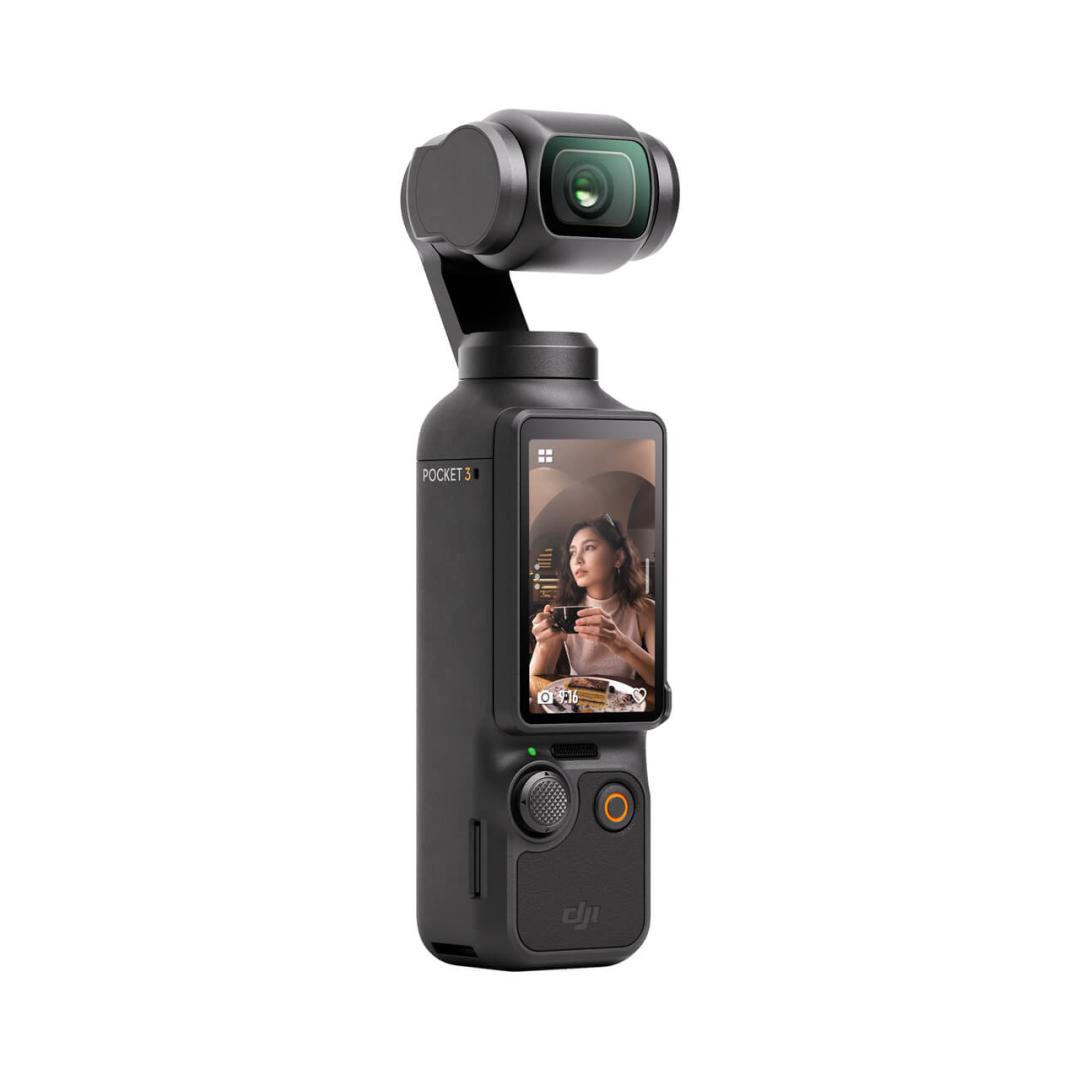
DJI Osmo Pocket 3 (Image source/ Official website)
In fact, using a one - inch sensor requires extremely high engineering capabilities from hardware companies. They need to solve the problems of camera size, heat dissipation, and supporting algorithms simultaneously. This is not a capability that small and medium - sized manufacturers like Feiyu possess. Similarly, the mid - to - low - end positioned Feiyu Pocket 3 does not have DJI's mature ecological layout.
Manufacturers with gimbal technology may be able to follow the trend and launch products, but they all lack software and imaging capabilities. Gimbal cameras still require high comprehensive capabilities. There is still an insurmountable gap in front of small and medium - sized intelligent imaging manufacturers.
"When DJI launched the first - generation Pocket, there were many imitators. But by the third generation, the imitation threshold was so high that almost no similar products were seen," a senior person in the intelligent imaging industry told Yingke.
DJI has firmly established itself in the market with its strong capabilities. However, the entry of mobile phone manufacturers has brought the industry to a completely different and more dangerous and unpredictable battlefield.
02 The Ferocious Beasts Emerge
Chen Mingyong, the leader of OPPO, loves Go and is good at playing it. On the surface, OPPO's actions are like what is said in the "Ten Go Proverbs": Enter the opponent's territory slowly. This is also the inherent impression of OPPO in the industry: it is willing to follow others, but often strikes a decisive blow.
Among vivo and OPPO, the latter is even more aggressive: vivo acts more steadily and low - key.
However, these two companies are by no means weak. They have survived in the highly competitive Chinese electronics consumer market and developed sales channels in countries where they need strong support. They definitely have an aggressive side.
"These companies that have survived in the mobile phone industry are all strong. They just seem weaker when compared with the strongest. When they enter other industries, it's basically a case of attacking from a higher level. For example, when Xiaomi entered the automotive industry, it changed the market pattern in about one or two years," a former employee of a large - scale mobile phone company analyzed.
For mobile phone manufacturers that can mobilize huge resources, the key to success lies in the determination of their decision - makers to invest.
They are now facing a tsunami. As manufacturers such as Samsung and Hynix shift their business to high - bandwidth memory for AI, the production of memory for mobile phone manufacturers has decreased, and the price has skyrocketed.
According to Counterpoint's "February Memory Price Tracking Report", as of the first quarter of 2026, the memory price increased by 80% - 90% quarter - on - quarter, setting a historical record. As a person in the mobile phone industry described it to Yingke, everyone is facing a "disaster".
These giants have instinctively started to look for a way out.
Moreover, the imaging market has always been the forte of mobile phone manufacturers. OPPO and vivo have accumulated more than a decade of experience in mobile phone imaging, and their software algorithms are approaching the limit of improvement.
In the past, they tried to expand their boundaries by using external hardware. For example, the vivo X200 Ultra introduced an external teleconverter. However, compared with attaching large - sized lenses to mobile phones, the market - proven Pocket 3 is a safer and more controllable choice.
OPPO and vivo also don't need to do much user education. "OV is very suitable for making gimbal cameras, which fits the perception of their users. Many people like the photography of the vivo x300pro, and the target audience of the Pocket is actually similar," a person in the smartphone industry told Yingke.
As for the hardware itself, an investor who focuses on the hardware industry believes that the barriers of hardware products are temporary. The Pocket does have the advantages of customized components and optimized algorithms, but these are all "highly engineering - related things", and there are no insurmountable barriers. In the face of huge interests, different alliances may be formed, and suppliers and distributors may jointly break DJI's monopoly.
More than one employee of a mobile phone manufacturer also told Yingke that technology is "not a problem for mobile phone manufacturers that have been in fierce competition for so many years."
In addition to the advantages in imaging algorithms and user base, what makes OPPO and vivo most intimidating is their extensive sales channels.
According to Google Maps statistics, DJI has about several thousand physical stores (including various distributors) globally, while vivo has more than 300,000 offline physical stores globally.
The logic behind opening physical stores for the two may be slightly different. The former builds a sales model of "experience + teaching + community", while the latter has a strong sales - oriented logic. Among hardware manufacturers, DJI's channel construction is quite complete.
"DJI's products have a fast turnover rate and a high sales conversion rate, and there are basically no competitors for its products. So DJI has a high degree of control over its authorized dealers. Firstly, it can keep the global product price basically the same (excluding tariff factors). Secondly, it doesn't allow agents to lower the price voluntarily," a former DJI salesperson told Yingke.
However, obviously, DJI's distributors have never experienced the intense competition like that of mobile phone brands. The core agents of OPPO and vivo are all elite teams that have fought their way up from the grassroots level. OPPO and vivo have always been very generous to their channels. As a community of interests, the channels are very willing to introduce high - profit products like the Pocket. If only 10% of OPPO and vivo's stores can successfully promote the product, it will be a significant impact on DJI.
Of course, it should not be ignored that DJI's Osmo Pocket 3 is a highly integrated product. It not only perfectly inherits DJI's technical capabilities in miniature gimbals but also has great advantages in imaging algorithms and software ecosystems.
On social media, many people share the shooting parameters of the Osmo Pocket 3, such as how to achieve the filters of Fujifilm cameras, the blue tone at the seaside, the vintage film effect, and the Korean - style atmosphere... Behind the sharing of these parameters is DJI's ability and experience in combining hardware and software.
"The hardware may be similar, but the difficult part is the software ecosystem and community. The know - how of color - adjustment and video - editing that DJI has applied in its entire product ecosystem requires a high learning cost from scratch," another investor who focuses on the hardware industry told Yingke.
The final result is still far from certain.