This company has secured 40 million yuan in angel round financing after achieving application deployment of a rapid optical switching solution for AI intelligent computing centers.
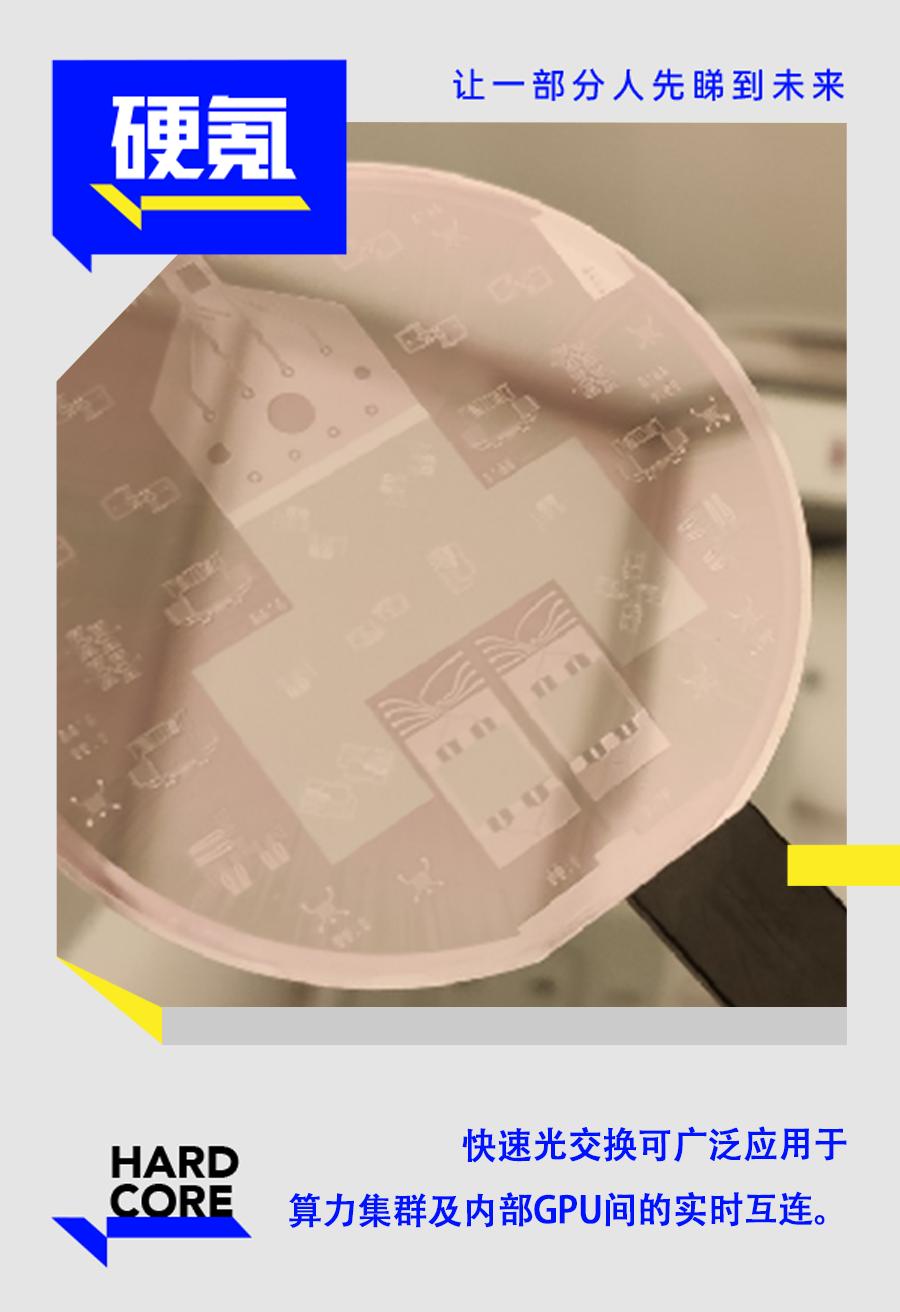
Yingke has learned that Beijing Zhilian Technology Co., Ltd. (hereinafter referred to as "Zhilian Technology") recently completed a 40 million yuan angel round of financing, led by Zhongying Venture Capital and followed by Beichuang Venture Capital. We have summarized the information of this round of financing and several highlights of the company:

Financing situation
Financing round: Angel round
Financing amount: 40 million yuan
Investment institutions: Led by Zhongying Venture Capital and followed by Beichuang Venture Capital
Use of funds: To accelerate the mass production of optical switching chips, expand the team, and conduct research and development on next - generation technologies

Basic company information
Establishment time: 2025
Company headquarters: Beijing
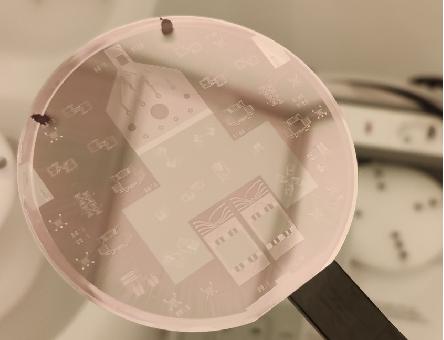
Technical highlights: Zhilian Technology takes the Arrayed Waveguide Grating Router (AWGR) as the core to build a nanosecond - level fast optical switching system, and is capable of providing an overall optical switching solution with multi - wavelength optical engines and end - to - end scheduling and control. Currently, the company's core product, the world's first batch of optical switching chips compatible with the DWDM standard, has completed the Demo verification and has undergone small - scale application tests in leading intelligent computing center scenarios.
(Image source/Enterprise)

Market analysis
As the scale of AI training continues to expand, the traditional intelligent computing network centered on electrical switching is gradually approaching the physical limit in terms of bandwidth, latency, and power consumption indicators. Optical switching chips can directly complete large - capacity data path switching in the optical domain. Through a flat network topology, they can significantly reduce communication latency and become a key basic device to support the evolution of large - scale computing clusters and next - generation computing super - nodes.
Currently, optical switching technology is still in its early stage of development. According to the switching speed, it can be divided into slow optical switching (millisecond - level) and fast optical switching (microsecond/nanosecond - level). Slow optical switching is limited by the response speed and is difficult to meet the real - time and high - frequency communication needs in AI training. It is mostly used in the core layer of the network to play the role of link reconstruction.
Fast optical switching (such as AWGR, SOA, etc.) with nanosecond - level switching capabilities can be widely used in real - time interconnection between computing clusters and internal GPUs. Among them, the AWGR - based route has outstanding comprehensive performance in terms of switching speed, stability, and power consumption and has commercial feasibility.

Team background
Professor Xue Xuwei, the founder of the company, is a tenured professor at the National Key Laboratory of Information Photonics and Optical Communications of Beijing University of Posts and Telecommunications. His research direction is the optoelectronic hybrid switching technology for data centers and high - performance computing, and the related technologies have been deployed and applied in many data centers and super - computing centers.
Li Chenhui, the co - founder, graduated with a doctorate from Eindhoven University of Technology in the Netherlands. His research direction is silicon - based optoelectronic heterogeneous integration, 2.5D/3D advanced packaging, and optical interconnection technology between chips for high - computing scenarios. He presided over the "Major Project of Innovation 2030" of the Ministry of Science and Technology and was selected into the Overseas Post - doctoral Talent Introduction Program of the Ministry of Education for his systematic contributions in the field of optoelectronic integration and advanced packaging.
Zhang Maosen, the co - founder, graduated with a master's degree from Shandong University. He once worked in the leading industry enterprise KPMG, responsible for the construction of the data platform and the commercialization of data products. As the CEO of the company, he has led the digital transformation and major strategic adjustment of technology - based enterprises and has rich experience in enterprise commercial operation and management.
The core technology of Zhilian Technology comes from the National Key Laboratory of Information Photonics and Optical Communications of Beijing University of Posts and Telecommunications. With in - depth "industry - university - research" collaboration, it focuses on the optical switching chip solution under the bottleneck of the AI intelligent computing cluster network.

Founder's thoughts
Yingke: Why is optical switching considered the inevitable direction after electrical switching?
Xue Xuwei: On the one hand, as Moore's Law gradually fails, the improvement of the capacity and bandwidth of electrical switching has significantly slowed down, but the demand of AI large models for the capacity of intelligent computing networks is growing exponentially. There is a very obvious structural contradiction between them.
On the other hand, electrical switching essentially relies on a large number of active optical modules, which have high power consumption and complex systems, and the equipment cost and failure rate also increase accordingly. At the same time, the intelligent computing network architecture based on electrical switching requires multi - hop networking, and latency has become the core bottleneck restricting model training and inference. In contrast, the capacity of light at the physical level is much higher than that of electricity. Optical switching is centered on passive devices and has significant advantages in power consumption, cost, and system stability, which is difficult to solve through local optimization of electrical switching.
Yingke: Among many optical switching technology routes, why choose and bet on AWGR?
Xue Xuwei: First of all, the slow optical switching OCS route includes technology routes such as MEMS, silicon - based liquid crystal, and piezoelectric ceramics. Currently, some large domestic and international companies are testing OCS. However, the configuration speed of OCS itself is too slow, and it lacks real - time end - to - end capabilities. From our observation, OCS is more like an "intelligent patch panel" in the network rather than a switching - layer device participating in real - time communication, and it is difficult to find large - scale practical application scenarios with actual benefits. For real - time AI training and high - frequency communication between GPUs, a fast optical switching solution with faster switching speed and more complete system capabilities is needed.
In the fast optical switching route, AWGR is superior to technical solutions such as SOA and MZI in terms of stability, polarization sensitivity, number of ports, etc. Moreover, AWGR is a passive device, with lower power consumption and higher stability.
Yingke: What is the positioning and core advantage of Zhilian Technology in the optical switching field?
Xue Xuwei: We do not only make a single AWGR device but provide a complete set of fast optical switching solutions. Since AWGR itself is a device highly sensitive to wavelengths, to be truly implemented in an intelligent computing center, it also requires supporting multi - wavelength transceiver units and a complete scheduling and management system. Therefore, we cover the entire link from core devices to system - level control, aiming to make fast optical switching truly deployable and maintainable.
From the device level, there are not few factories that simply manufacture passive optical waveguide devices. However, after introducing multi - channel routing and high - speed signals on this basis, the technical threshold is significantly increased. Zhilian's advantage lies in maintaining good system performance in high - speed transmission scenarios. Currently, the single - wavelength rate has reached the 100G level, and it is expected that the rate will double by the beginning of 2027. Under the complex conditions of multi - port and multi - wavelength simultaneous access, we have accumulated unique technical capabilities in crosstalk suppression and insertion loss control, which is the key to supporting the stable operation of high - speed and large - scale optical switching systems.
Yingke: From a competitive perspective, where does the biggest challenge currently faced by Zhilian come from?
Xue Xuwei: In addition to the challenges of the technology itself, the real difficulty lies in the construction of the industrial ecosystem.
Switching from electrical switching to optical switching involves the entire upstream and downstream chain of the intelligent computing center and requires coordinated promotion with multiple parties.
In the field of optical switching, there are also some domestic enterprises doing OCS, mainly serving overseas customers such as Google. In contrast, we have advantages in terms of the technology itself, patent layout, and system integrity.
This article is from the WeChat official account "Yingke", and is published by 36Kr with authorization.