Will 80% of apps on mobile phones face unemployment?
"Perspective" is a newly launched lightweight data graphic column by 36Kr - using data to analyze trends and pictures to present key points. "Talk is Cheap. Show me the data."
Author: Qiu Xiaofen
The open - source project OpenClaw on GitHub has recently become extremely popular. In an interview with Y Combinator, the founder Peter Steinberger said, "In the future, operating systems will no longer need icons, only intents." He even made a radical judgment that 80% of apps will naturally die out because they will no longer be actively opened. This is not alarmist talk, but three interaction structures are reshaping the "entry points".
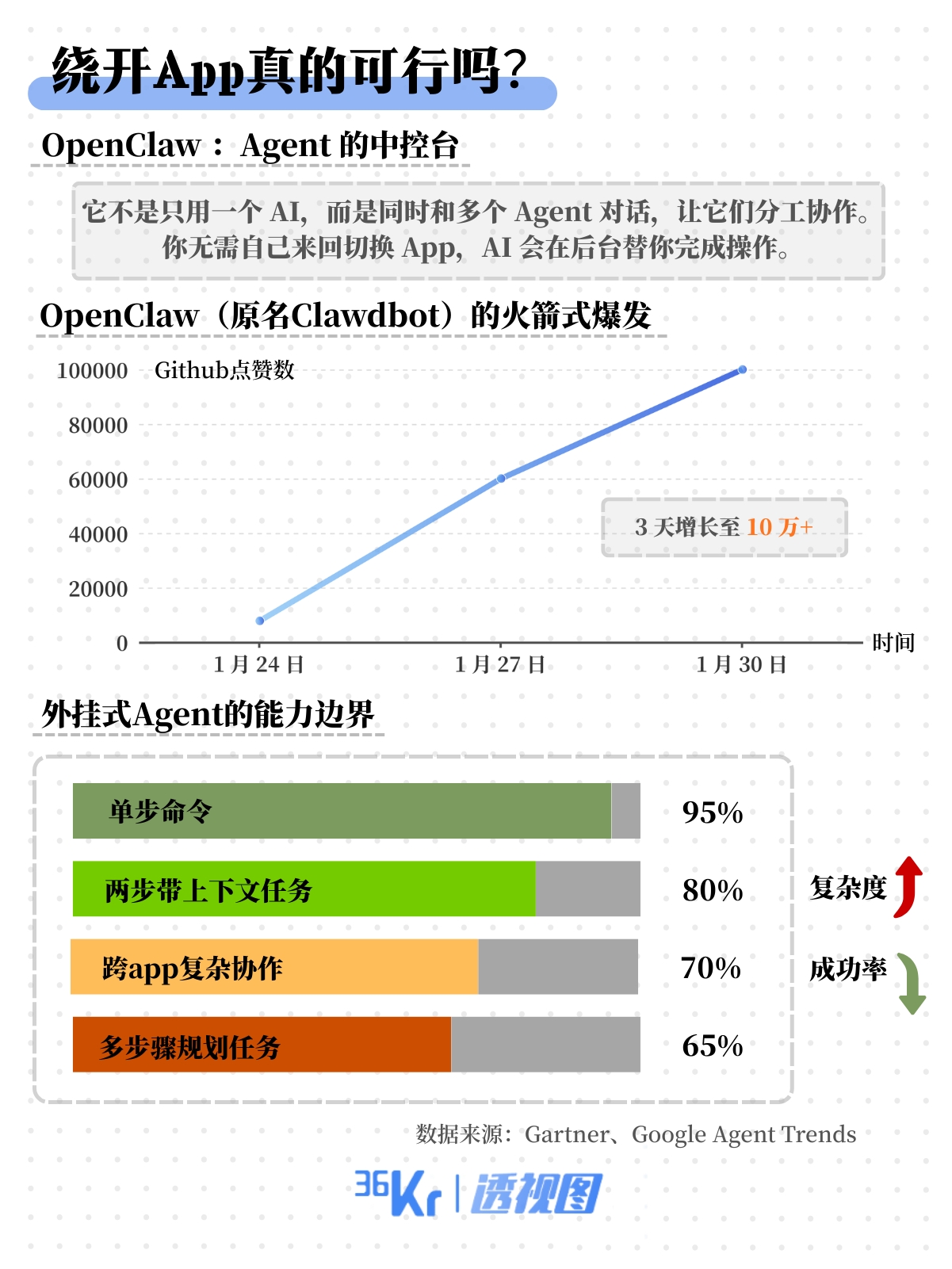
Graphic by 36Kr
01. Reconstruction of the Scheduling Layer: The "Swarm" Approach of OpenClaw
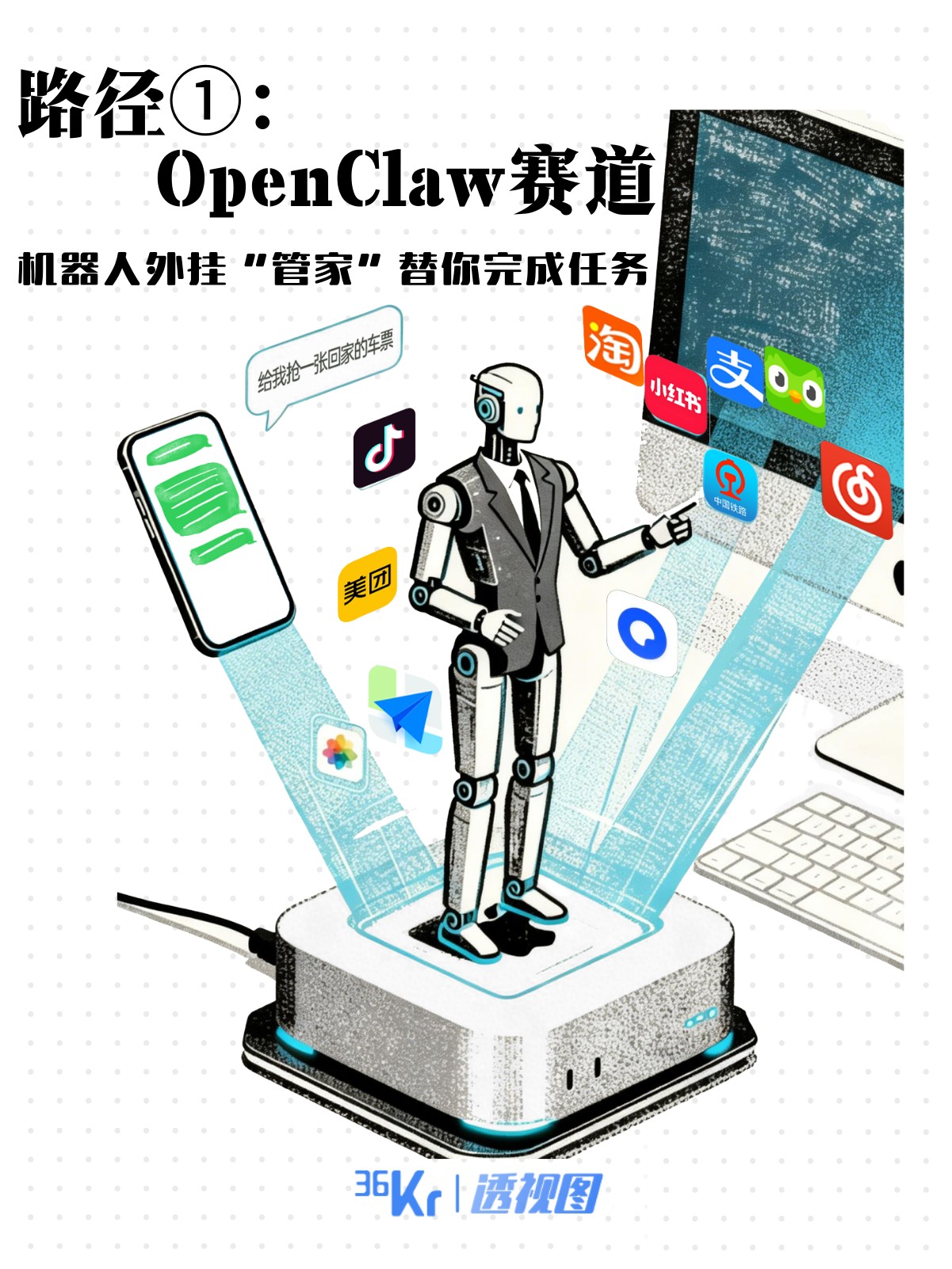
Graphic by 36Kr
OpenClaw does not rely on a single model but coordinates multiple agents to work together in the background. It is like a control center, transforming AI from a "responder" to an "executor". Although the success rate in multi - step planning still declines at present, it proves that a new execution structure can be established above apps.
02. Takeover of the Hardware Layer: The "Visual Violence" of Doubao Phone
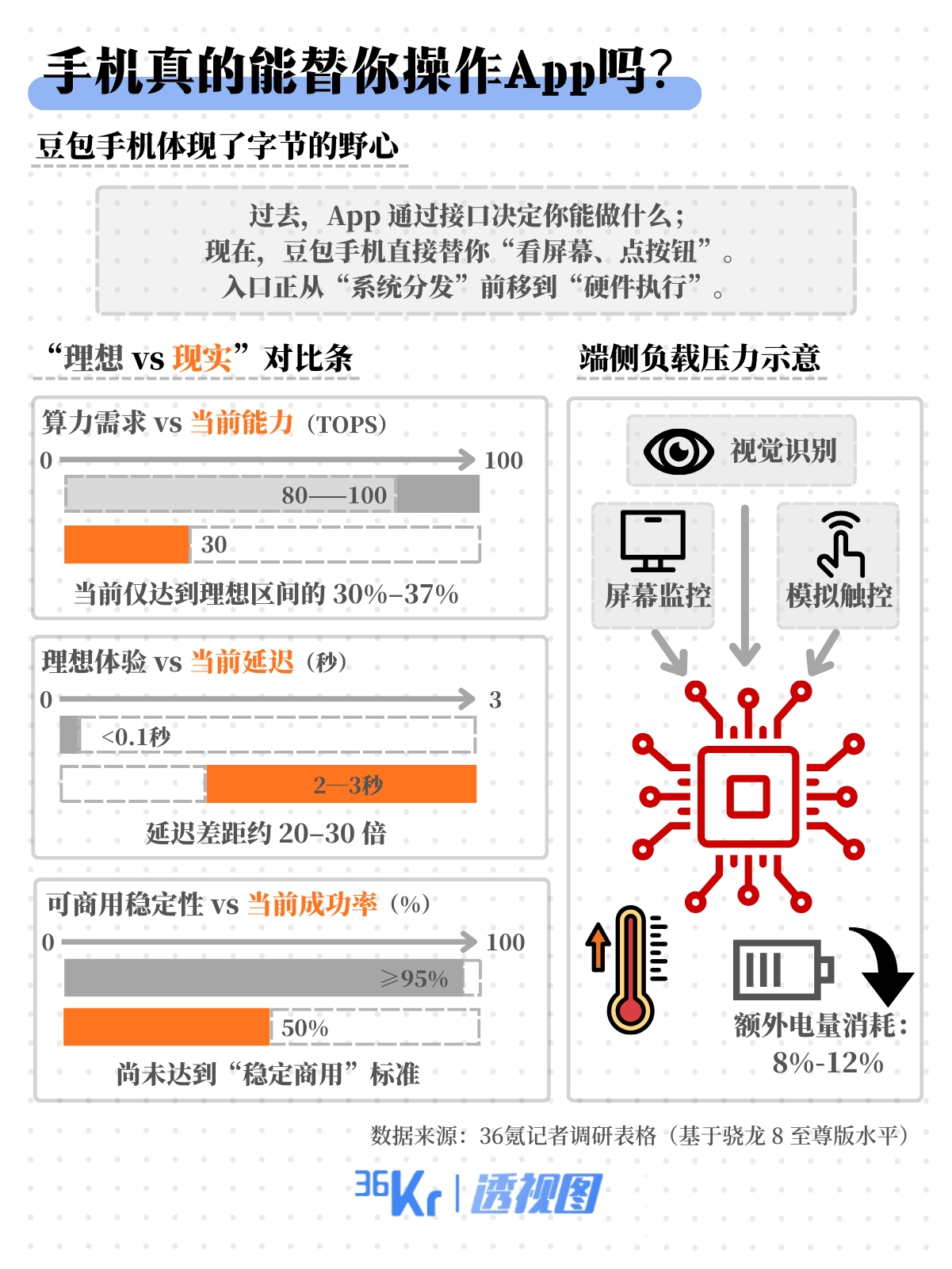
Graphic by 36Kr
ByteDance has chosen a more direct path - without waiting for the interface to be opened, it uses visual recognition to let AI "use apps" on its own. This verifies the possibility of taking over the interface layer. However, under the current end - side computing power bottleneck of 30 TOPS, cross - application operations still face real - world challenges of latency (about 3 seconds) and success rate (about 50%). The direction has been verified, but Moore's Law still needs time.

Graphic by 36Kr
03. Shuffle of the System Layer: Apple and Google's Roles Reversed
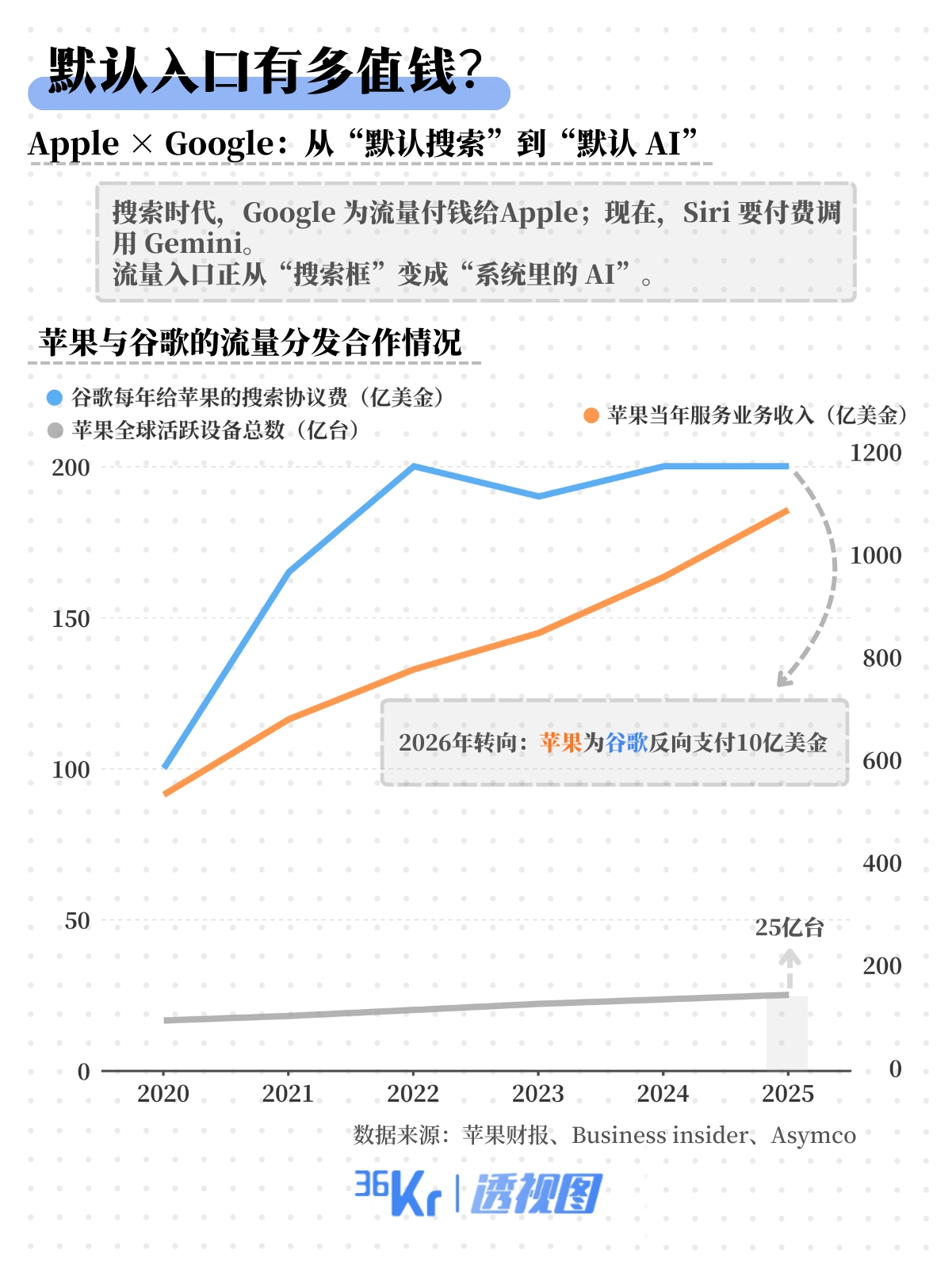
Graphic by 36Kr
A deeper change comes from the flow of money. In the past decade, Google has paid Apple about $20 billion annually to keep the "default search box". According to Bloomberg, in the future, Apple may pay Google $1 billion in reverse to access Gemini. This means that the pricing power of the entry points has changed: traffic distribution no longer depends on the search box, but on system - level AI.
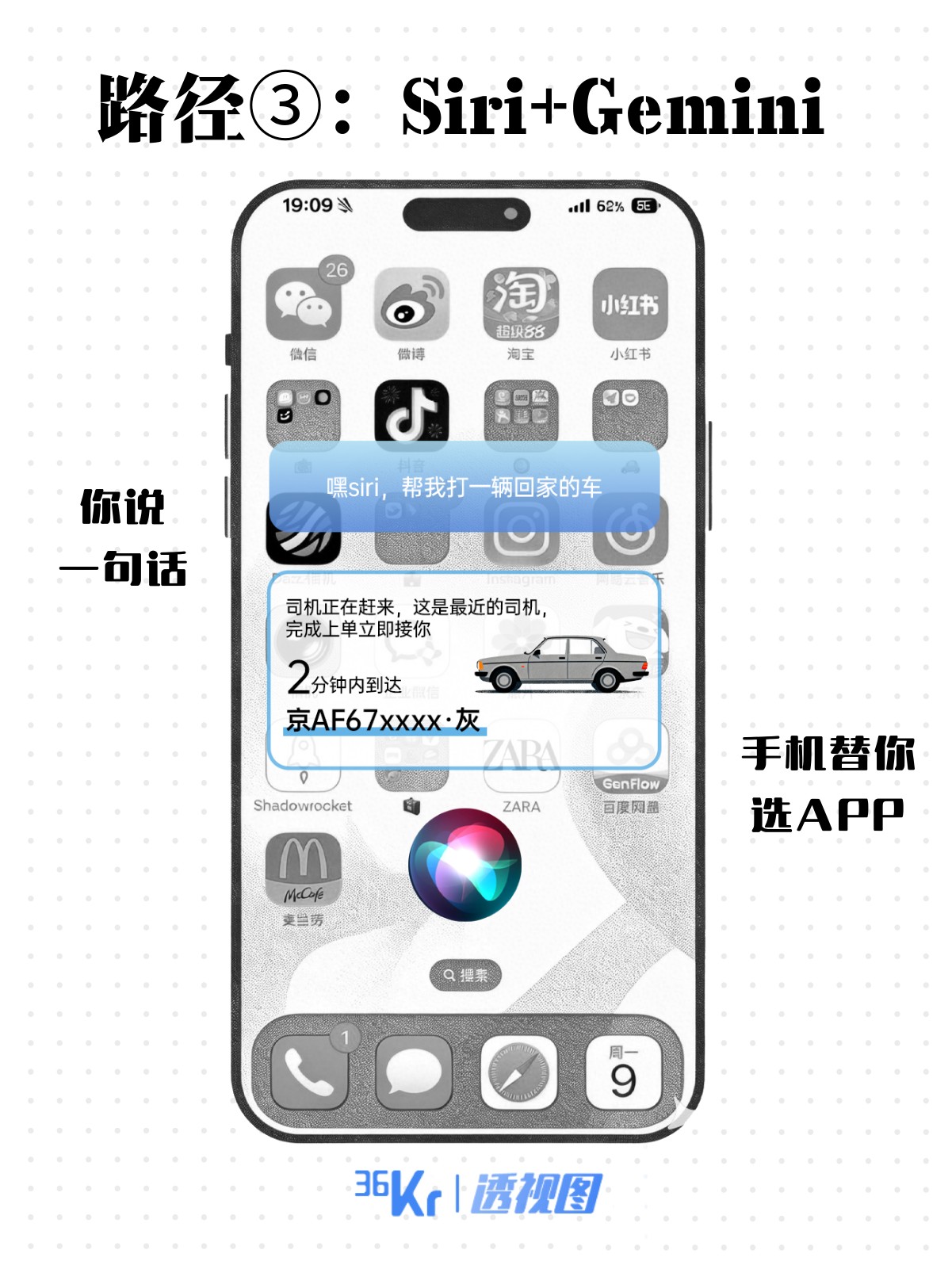
Graphic by 36Kr
Apps will not disappear, but their roles are being marginalized. When AI can directly understand intents and run through processes, "opening an app" will no longer be the first step. In the future, mobile phones will start with intents, and apps will eventually degenerate from the "end - points of interaction" into "digital pipelines" called by AI. The migration of entry - point power has already begun.