Major mobile phone manufacturers are all vying for DJI's business.
The DJI Pocket is a handheld gimbal camera that has become extremely popular across the internet in recent years.
Compared with mobile phones, it comes with built - in mechanical image stabilization, so the video won't shake even when you're walking or exercising. It has cleaner audio recording, supports external microphones, and can filter out ambient noise. It also won't overheat or lag when shooting videos for a long time.
Compared with ordinary cameras, it is extremely portable and small enough to fit in your pocket. It has built - in image stabilization, so you don't need to spend extra money on a stabilizer. It's easy to operate with zero threshold, and even beginners can start shooting with just one click.
Nowadays, many internet influencers use a DJI Pocket 3 to shoot videos when they go out.
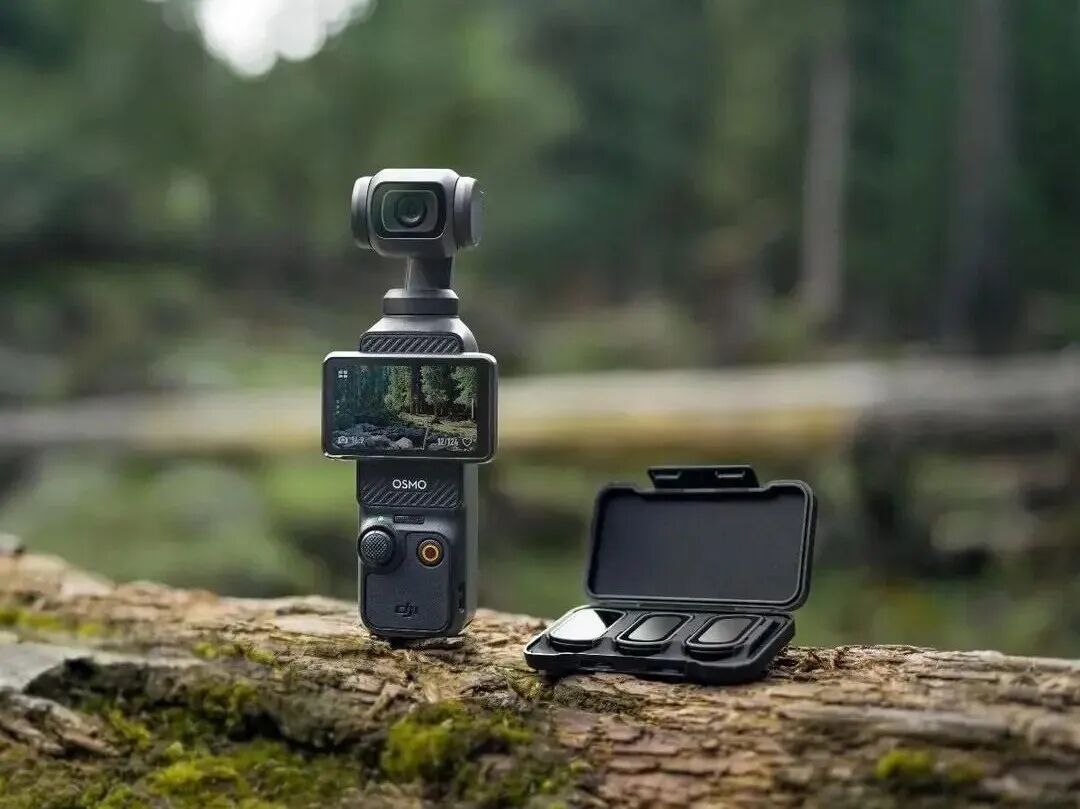
The Pocket 3 is very excellent, but for ordinary people, the price of around 3,000 yuan is a bit of a burden. With official accessories, the selling price is almost as high as that of a flagship mobile phone.
Facing this situation, OPPO, vivo, and Honor have stepped in.
Various news shows that several major mobile phone manufacturers are all planning handheld gimbal camera projects similar to the Pocket. It is expected that relevant products will be launched this year.
An industry insider told Tech Daily Push that mobile phone manufacturers have some advantages in supply - chain integration, cost control, imaging algorithms, ecological linkage with mobile phones, and consumer - grade channels. However, it will be somewhat difficult to gain market recognition.
It is certain that after they enter the market, the price of the handheld gimbal camera market will become more affordable in the future.
Major mobile phone manufacturers are making efforts, and products will be launched this year
Currently, the "Pocket"-like products of several major mobile phone manufacturers are progressing steadily, with different progress speeds.
The latest news shows that at the end of 2025, vivo internally launched a Vlog camera project and assembled a team of nearly a hundred people. The product is directly targeted at the DJI Pocket.
The official name has not been determined yet, and it is expected to be launched this year.
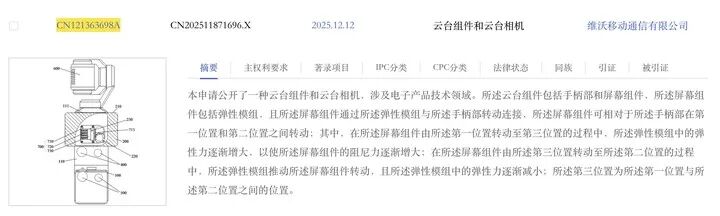
Patents for relevant form products applied by vivo
OPPO also attaches great importance to the "Pocket Project". Liu Zuohu, the chief product officer, personally leads a high - specification R & D team.
It attempts to transfer the technological advantages in computing power chips and light - sensing chips accumulated in the field of mobile phone imaging to this project.
Honor's approach is more flexible. It doesn't assemble a large - scale team separately. Instead, it enters the market through its "Honor Selection" ecological platform and adopts the ODM cooperation model. It only sends a small team to participate in product definition and quality control. Currently, the product has entered the gimbal selection stage.
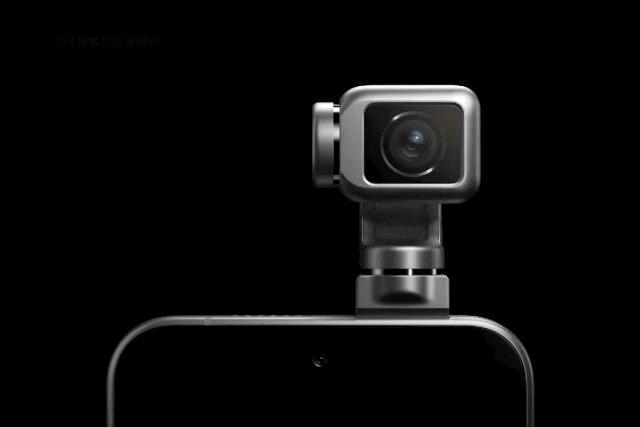
Not long ago at CES 2026, Honor also demonstrated a new - form mobile phone, the Robot Phone, which integrates the gimbal and the camera directly with the mobile phone.
In addition to the top three, Huawei and Xiaomi are also evaluating this direction.
There are rumors that Xiaomi may cooperate with Leica to create differentiated products by combining its own magnetic lens system. Currently, it is in the early R & D stage, and it is expected to meet the market in the second half or at the end of 2026.
The mobile phone market is tough, while the Pocket market is a blue ocean
The fact that major mobile phone manufacturers are eyeing DJI's market share is not a momentary trend but an inevitable choice after the superposition of multiple factors.
The most core reason is that the mobile phone market is highly competitive, and new growth points must be found.
Currently, smartphones are hard to sell worldwide. The average time for people to change their phones is more than two and a half years. It's becoming increasingly difficult to achieve growth by selling mobile phones.
Not to mention that the storage prices have skyrocketed this year, making the situation even tougher for mobile phone manufacturers. IDC predicts that the global mobile phone shipments in 2026 may decline by 3% - 4% year - on - year to about 1.15 billion units.
The handheld gimbal camera market dominated by DJI presents a different picture - high growth and high gross profit, making it a "hot commodity" in the consumer electronics field.
According to Frost & Sullivan data, the gross profit margins of the latest flagship models of DJI's various series all exceed 50%. In contrast, the gross profit margins of domestic mobile phones are only a little over 10%.
Moreover, the "Pocket" is one of the few hardware categories in the consumer electronics field, other than mobile phones, that can achieve tens of millions of sales.
As short videos and Vlogs become more and more popular, more and more ordinary people want to "easily shoot video with a cinematic feel". The handheld gimbal camera market is still growing rapidly, and it's possible to sell tens of millions of units this year.
Secondly, major mobile phone manufacturers have innate advantages in making handheld gimbal cameras.
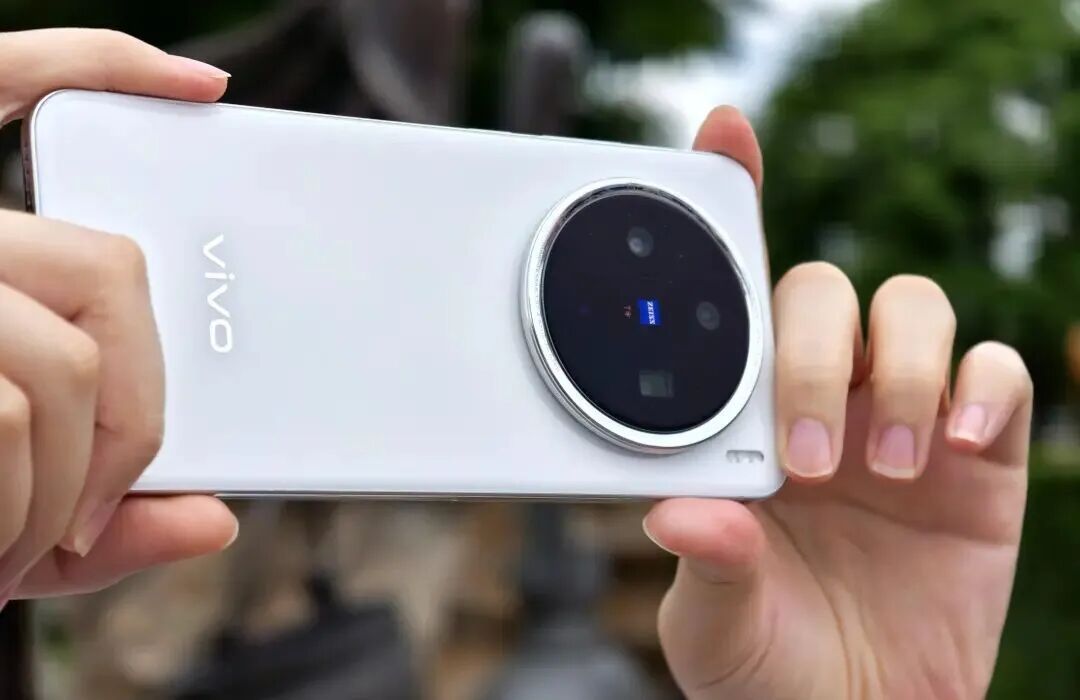
Over the years, the photography algorithms developed by mobile phone manufacturers and the lens technologies cooperated with Zeiss, Leica, etc., can be directly applied to their own "Pocket" products.
The core components such as sensors, imaging chips, and batteries required by cameras can also share suppliers with mobile phones, greatly reducing R & D and production costs.
For major mobile phone manufacturers, making such products is more like a natural extension of their technological capabilities rather than a cross - border adventure.
Finally, deploying handheld gimbal cameras is also an important step for major mobile phone manufacturers to build a full - scenario ecosystem.
Nowadays, the ultimate goal of mobile phone manufacturers is no longer simply selling mobile phones but building a full - scenario ecosystem of "mobile phone + tablet + watch + earphone + imaging device".
The handheld gimbal camera is equivalent to a second camera for the mobile phone. It can be seamlessly connected to the mobile phone for real - time preview, video transmission, and synchronous editing, completing the entire process from shooting to editing and sharing.
It can not only improve the user experience but also make users more dependent on their products, further consolidating their market position.
Major mobile phone manufacturers enter the market, and DJI faces challenges
As the "Pocket"-like products of major mobile phone manufacturers are gradually launched, the landscape of the entire portable imaging device industry will change significantly.
Previously, DJI dominated the handheld gimbal camera market with almost no competitors and had strong pricing power.
However, after major mobile phone manufacturers enter the market, facing several rich and technologically - advanced competitors, DJI's market share and profits will be affected to a certain extent.
Moreover, vivo, OPPO, Honor, and Xiaomi have more than 100,000 offline stores across the country, even in towns and townships. People can experience and purchase products on - site, which is much more convenient than DJI, which mainly sells products online and in professional imaging stores.

However, DJI's core advantages are still obvious, and major mobile phone manufacturers can't surpass it in the short term.
DJI has been deeply involved in the portable imaging device field for more than 10 years and has irreplaceable technological barriers - self - developed ISP chips, gimbal motors, more than 10 years of gimbal algorithm accumulation, and mechanical image - stabilization angles. These are difficult for major mobile phone manufacturers to replicate in the short term.
Moreover, when people think of shooting Vlogs, they think of the DJI Pocket. This brand impression has taken root in people's minds, especially among professional content creators and frequent video - shooters, who have high brand loyalty to DJI.
It is foreseeable that the future landscape of the entire portable imaging device industry will evolve from "DJI's dominance" to a hierarchical competition pattern of "1 + N".
The first tier is still DJI, which firmly holds the high - end professional market and serves professional content creators and heavy Vloggers.
The second tier includes vivo and OPPO, which will seize the mid - to high - end consumer market with their imaging technology and ecological advantages.
The third tier consists of Honor, Xiaomi, and other ecological chain brands, which focus on cost - effectiveness and cover entry - level users and niche scenarios.
Conclusion: This competition is not a bad thing for the entire industry.
The entry of major mobile phone manufacturers will promote the rapid iteration of industry technology. Technologies such as AI - assisted creation, hybrid image stabilization, and fast charging will be widely applied, and the product experience will continue to improve.
At the same time, the price reduction will make portable imaging devices more affordable for ordinary people, promoting Vlog creation to transform from a niche hobby into a daily activity for the general public, and the market size of the entire industry will also expand rapidly.
Major mobile phone manufacturers dominate the mid - to low - end mass market, while DJI firmly holds the high - end professional market. They each give full play to their own advantages and at the same time force each other to accelerate innovation.
Perhaps in the future, the "mobile phone + Pocket" will become the mainstream imaging creation combination, and DJI may also transform into a professional imaging technology provider, licensing core technologies to major mobile phone manufacturers to jointly promote the development of the entire industry.
This competition will ultimately make the industry more mature, products of higher quality, and prices more affordable. Ordinary people will truly realize their wish of "shooting high - quality videos at a low price".
This article is from the WeChat official account "Tech Daily Push" (ID: apptoday). Author: Tech Daily Push. Republished by 36Kr with authorization.