With a huge loss of 155 billion, Stellantis hits a snag. Does Leapmotor still dare to rely on this partner?
As the Spring Festival approaches, a thunderbolt has hit the global automotive industry.
Stellantis, the world's fourth - largest automotive group, has directly "exploded a bomb": it suffered a huge loss of over 19 billion euros (equivalent to about 155 billion RMB) in the first half of the year. Its stock price plummeted by 26% in a single day, it suspended all dividend payments for 2026, and even cut its annual operating profit margin target to "low single - digits".
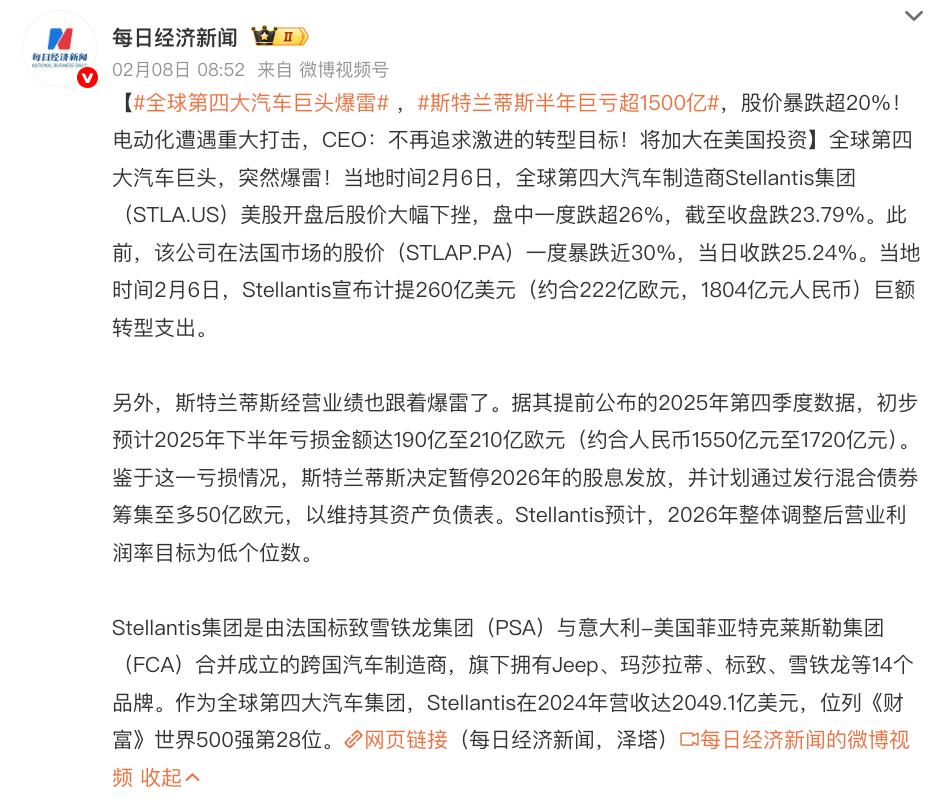
Screenshot: Weibo @Daily Economic News
This financial storm thousands of miles away has made many Chinese consumers and investors nervous.
You may be unfamiliar with the Stellantis Group. In fact, it is the European giant that has a deep - seated cooperation with Leapmotor.
Two years ago, the two sides had a high - profile "marriage". The Stellantis Group invested 1.5 billion euros to take a stake, and the two sides jointly established a joint - venture company, exchanged technologies, and shared channels. Leapmotor hoped to penetrate the global market through it, while Stellantis hoped to rejuvenate its electrification with Leapmotor. Both sides had their own ambitions and met each other's needs.
Now, on one hand, there is a dark horse among Chinese new - energy vehicle startups that has just achieved profitability and doubled its gross profit margin. On the other hand, there is a global giant facing a survival crisis and comprehensively shrinking its business.
Almost everyone is asking: Will Leapmotor be dragged down?
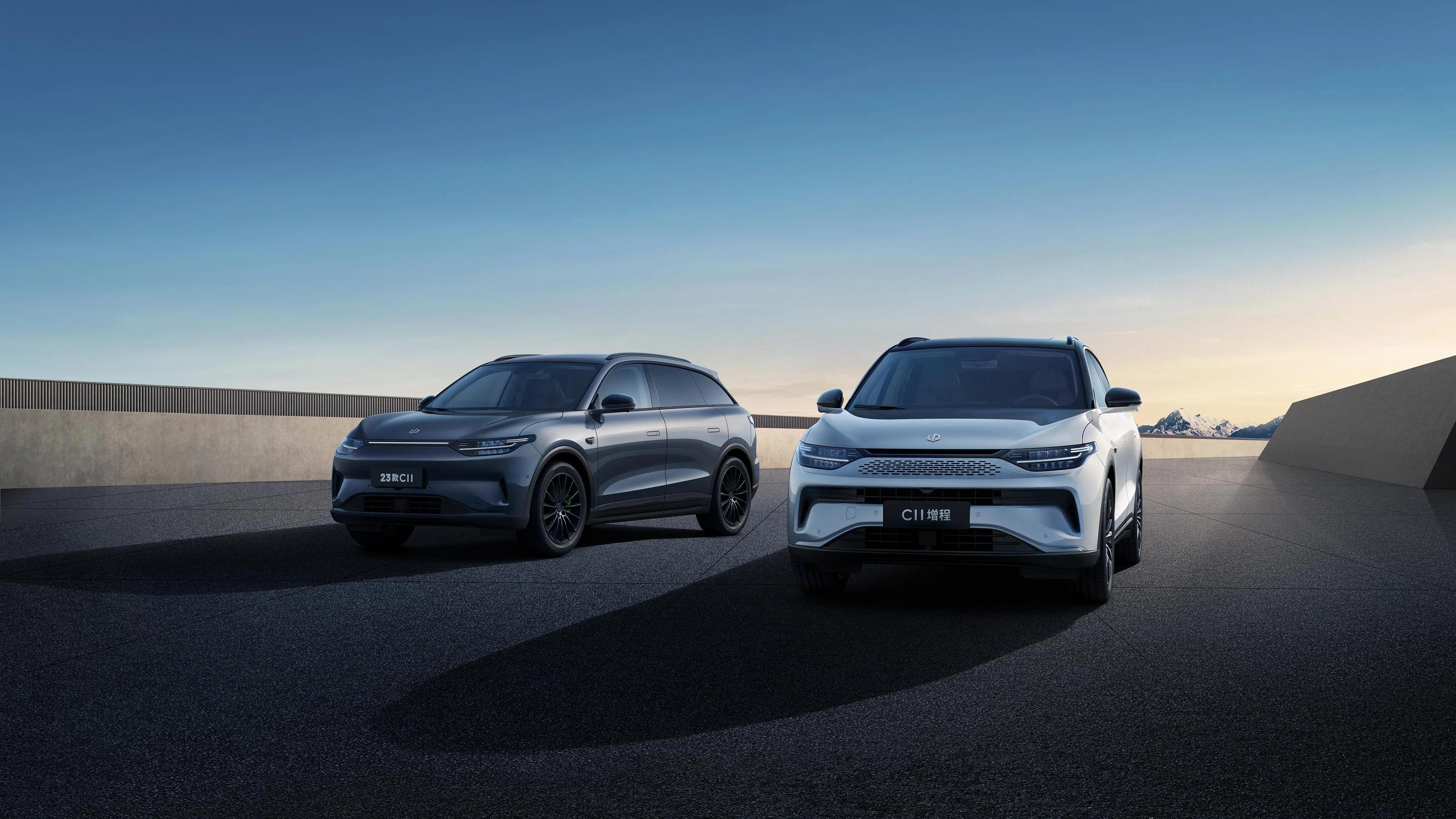
Image source: Leapmotor official
Spending 30 billion on electrification, Stellantis is losing more and more
Stellantis once proposed a seemingly grand investment plan for electrification transformation. For example, it planned to invest nearly 30 billion euros in electrification R & D and software development by the end of 2025. However, there were not many actual results, and the market performance also fell short of expectations.
Antonio Filosa, the CEO of Stellantis, almost candidly admitted the group's core mistakes in a public statement: "This huge write - off largely reflects our overestimation of the speed of the energy transition", and the company's product layout "deviates from the actual needs, capabilities, and willingness of many automotive consumers."
The Stellantis Group has a strong advantage in traditional fuel - powered vehicle categories such as pickups and large SUVs, which is very appealing to users in North America. However, in the electrification transformation, the group misjudged the acceptance speed of North American consumers and bet a large amount of resources on high - end and high - cost models such as electric pickups and large all - electric SUVs.
Its highly anticipated star electric model, the RAM 1500 all - electric pickup, after a huge investment in R & D, promotion, and pre - heating, finally had to cancel the mass - production plan or significantly postpone the launch time due to extremely cold market feedback and far fewer orders than expected.

Image source: RAM brand official
Similar stories have repeated themselves in multiple sub - brands and models, ultimately forming a vicious cycle of "the more you invest, the greater the loss, the worse the sales, and the more the confidence collapses".
Therefore, this "explosion of the bomb" by the Stellantis Group is by no means accidental, and it cannot be simply blamed on superficial reasons such as "poor market conditions", "short - term fluctuations", or "rising costs". It is the result of long - term wrong decisions accumulating layer by layer, and finally crossing the critical point and leading to a collapse.
On February 6th, Stellantis announced a comprehensive contraction of its electric vehicle business, resulting in the company writing off 22.2 billion euros in transformation expenses, far exceeding the initial estimate of 2 billion euros by brokerage firm Equita. Among them, 14.7 billion euros were used to adjust the product plan according to the preferences of American customers and new emission regulations.
In other words, more than two - thirds of the transformation investment has become an unrecoverable sunk cost due to the misjudgment of the market rhythm.
What's more fatal is that there is a structural vulnerability in Stellantis' global market layout that is difficult to repair.
The group is highly dependent on the single North American market, which happens to be the segment of the world's major automotive markets with the slowest pace of electrification transformation and the most wavering policies. At the same time, in the Chinese market, which is the largest in the world, with the most intense electrification competition, the most complete industrial chain, the richest variety of models, and the highest penetration rate, Stellantis has almost been completely marginalized. The sales of major brands such as Peugeot and Citroën in China have been shrinking year after year, and their market share is almost zero.
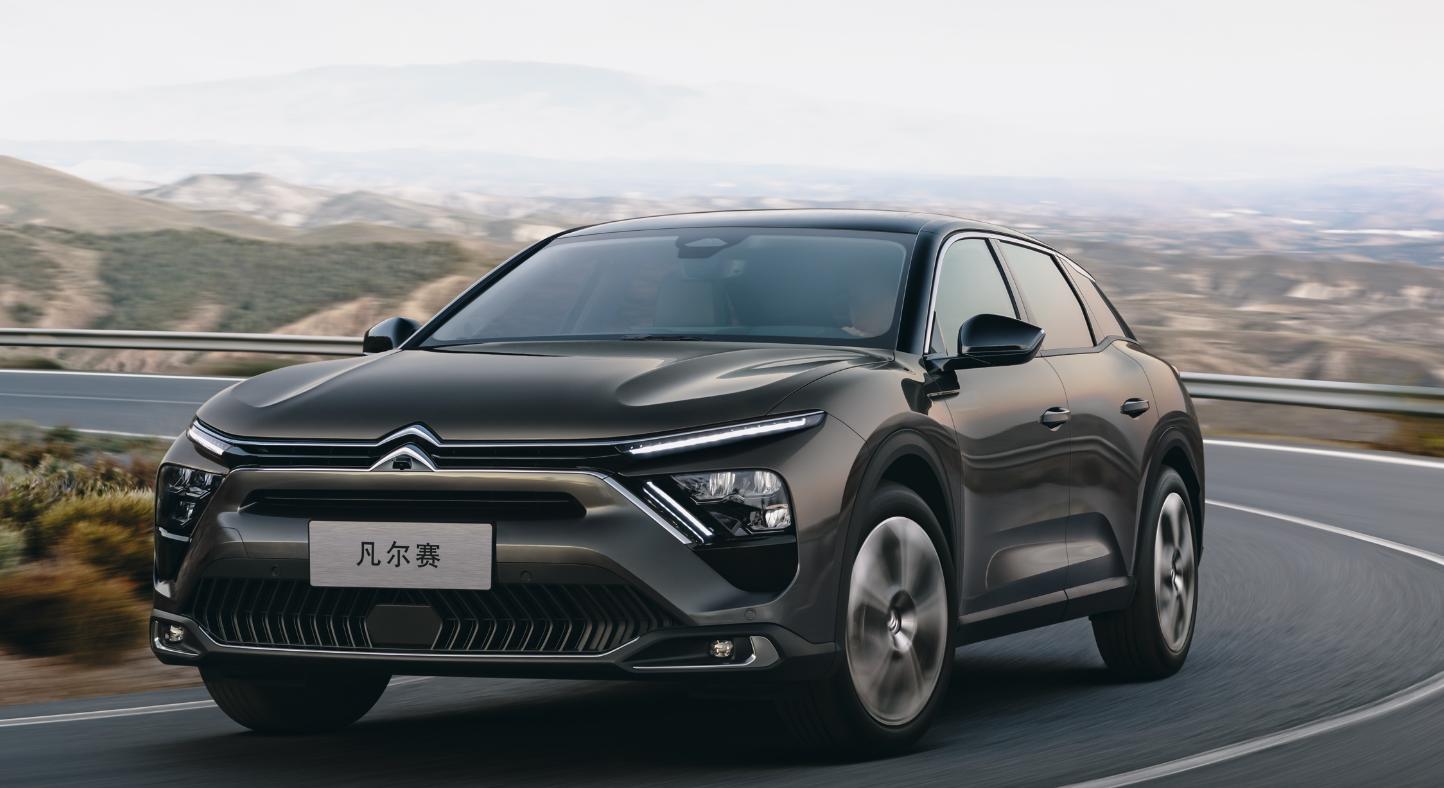
Image source: Citroën official
Many times, giants don't die at the hands of their opponents, but in their own blind spots of perception.
Stellantis has spent a lot of money, but failed to build the right cars and understand the market. It misjudged the slow - warming North American market and missed the opportunity in China. In the end, Stellantis spent billions of euros on an expensive lesson.
Stellantis' crisis is not Leapmotor's crisis
When a partner is in deep crisis, the outside world's attention naturally focuses on Leapmotor.
However, after careful analysis, the situation on Leapmotor's side may not be that bad, and there may even be hidden opportunities.
In 2023, Stellantis spent 1.5 billion euros to buy about 20% of Leapmotor's shares and became the second - largest shareholder. The most crucial thing is that this money has already reached Leapmotor's account in real terms.
The money is safely in the bag. This means that no matter how difficult Stellantis' current situation is, this money has become Leapmotor's "safe money" and no one can take it away.
In addition, the two sides jointly established a joint - venture company called "Leapmotor International" (Stellantis holds 51% and Leapmotor holds 49%). This company has been given the exclusive sales, manufacturing, and export rights of the Leapmotor brand in all global markets outside the Greater China region.
For Leapmotor, "borrowing a boat to go out to sea" is the real value of this cooperation. Stellantis' more than 1,700 stores in Europe, its mature supply chain, and its local production capacity are things that Leapmotor would find it difficult to build on its own in ten or eight years. Now, this "boarding pass" has been obtained.
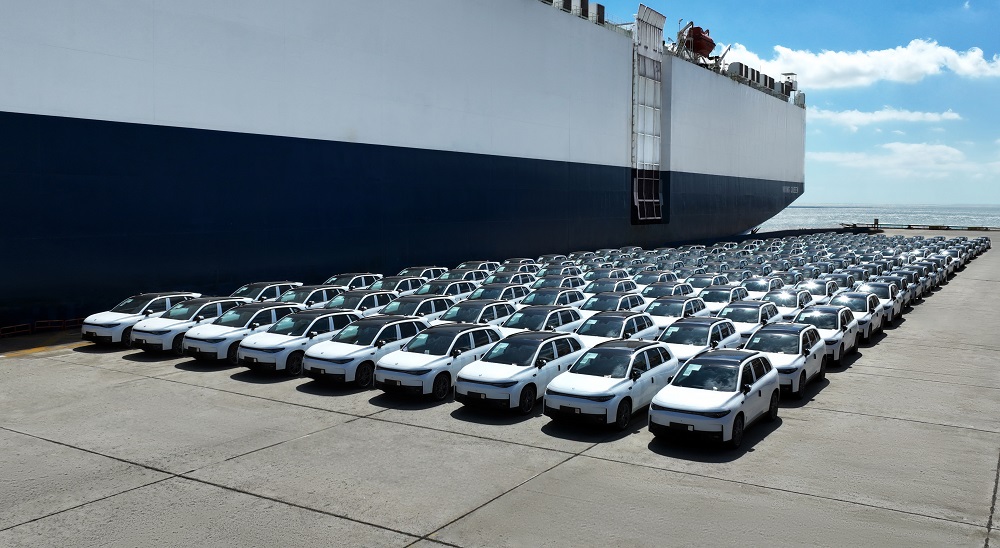
Image source: Leapmotor official
Moreover, Stellantis' engineering team has been helping Leapmotor to tune models suitable for the European market, from the chassis to safety standards, using their century - old experience. When experiencing the Leapmotor C10 at offline stores, salespeople also promote the "Maserati - tuned" feature as an important selling point of this car.
In exchange, Leapmotor has opened up its core technologies, such as the LEAP 3.0 architecture and CTC battery technology, to Stellantis. This can help the latter develop competitive electric models at a lower cost and faster speed, and further promote its electrification transformation.
Therefore, this cooperation is essentially a transaction where both sides meet each other's needs. Leapmotor provides technology in exchange for market access and brand endorsement; Stellantis provides channels and experience in exchange for an accelerator for electrification.
The two sides are tied together, but neither is the other's life - saving straw. As the giant shrinks its transformation, it may seem to bring risks to Leapmotor, but in fact, it brings three seriously underestimated strategic opportunities to Leapmotor.
Firstly, it is an opportunity for a reversal of cooperation discourse power.
When the giant is in the midst of losses, cutting budgets, and slowing down its transformation, it becomes even more dependent on the low - cost, high - efficiency, and fast - iterating Chinese electric solutions. Leapmotor's product and cost advantages will gradually change from "optional" to "essential".
Secondly, it is a window - period opportunity for seizing a position in the European market.
The more conservative Stellantis is, the slower the electrification pace of European mainstream brands will be; the more the European market lacks high - cost - performance models, the scarcer Leapmotor's precisely positioned products will be. This is the golden window period for Leapmotor to seize overseas market share and build its reputation.
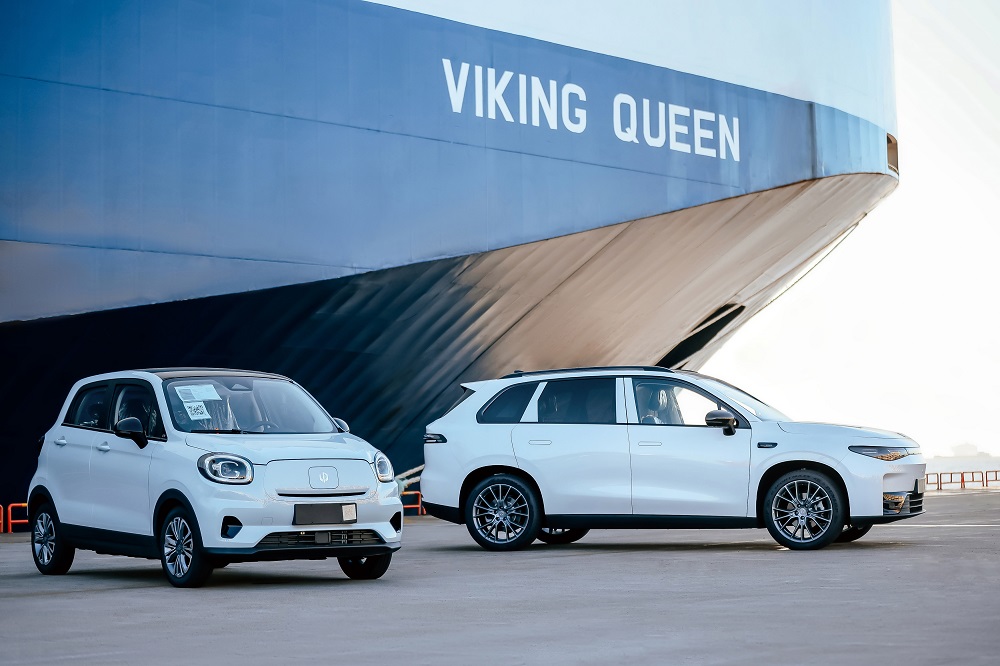
Image source: Leapmotor official
Thirdly, it is an opportunity for Leapmotor to upgrade its industry positioning from an "automobile manufacturer" to a "technology exporter", which is also the most undervalued invisible dividend with the most long - term value in this crisis.
The current dilemma of global traditional automotive giants has never been a lack of money, but a lack of real electrification and intelligent capabilities. Just like other giants at the same level such as Volkswagen, Toyota, and Renault, even though they have a huge amount of funds and a global distribution network, their electrification transformation is still struggling. The models they launch either have high costs or are out of touch with user experience, and they can never keep up with the market rhythm.
Leapmotor's cooperation with Stellantis has demonstrated a feasible new - energy implementation plan in the European market. Once Leapmotor's technology proves successful in the European market and the models achieve large - scale production, proving the feasibility and profitability of this model, then other giants such as Volkswagen, Toyota, and Renault, who are deeply trapped in the transformation dilemma, are very likely to quickly follow suit and actively offer an olive branch.
By then, Leapmotor's identity may no longer be an automobile manufacturer, but a "technology supplier", "platform provider", or even a "solution provider" for the electrification transformation of global traditional giants.
Stellantis' "explosion of the bomb", is Leapmotor becoming more stable?
Let's go back to the original question: Will Stellantis' "explosion of the bomb" drag Leapmotor down?
First, let's state the conclusion: Stellantis Group's "explosion of the bomb" cannot hurt Leapmotor's foundation. Instead, Leapmotor may even gain more initiative because of this.
First of all, Leapmotor's domestic operations are completely independent, and it has no impact on domestic car owners.
Leapmotor's R & D, production, sales, and after - sales all operate independently and are not directly linked to Stellantis' business in Europe and America. The layoffs and contractions there will not affect car - manufacturing in the factory here, car - selling in the stores, and even less affect the warranty and service of already - purchased cars.
More importantly, Leapmotor itself has a solid foundation.
According to the official financial report, in the first half of 2025, Leapmotor's revenue reached 24.249 billion yuan, a year - on - year increase of 174%; its net profit changed from a loss of over 2.2 billion yuan in the same period last year to a profit of about 33 million yuan, making it the second new - energy vehicle startup after Li Auto to achieve semi - annual profitability. Moreover, Leapmotor's gross profit margin showed a "V - shaped reversal", rising from 1.1% in the same period in 2024 to 14.1% in the first half of 2025.
Leapmotor can not only sell cars but also make real money.
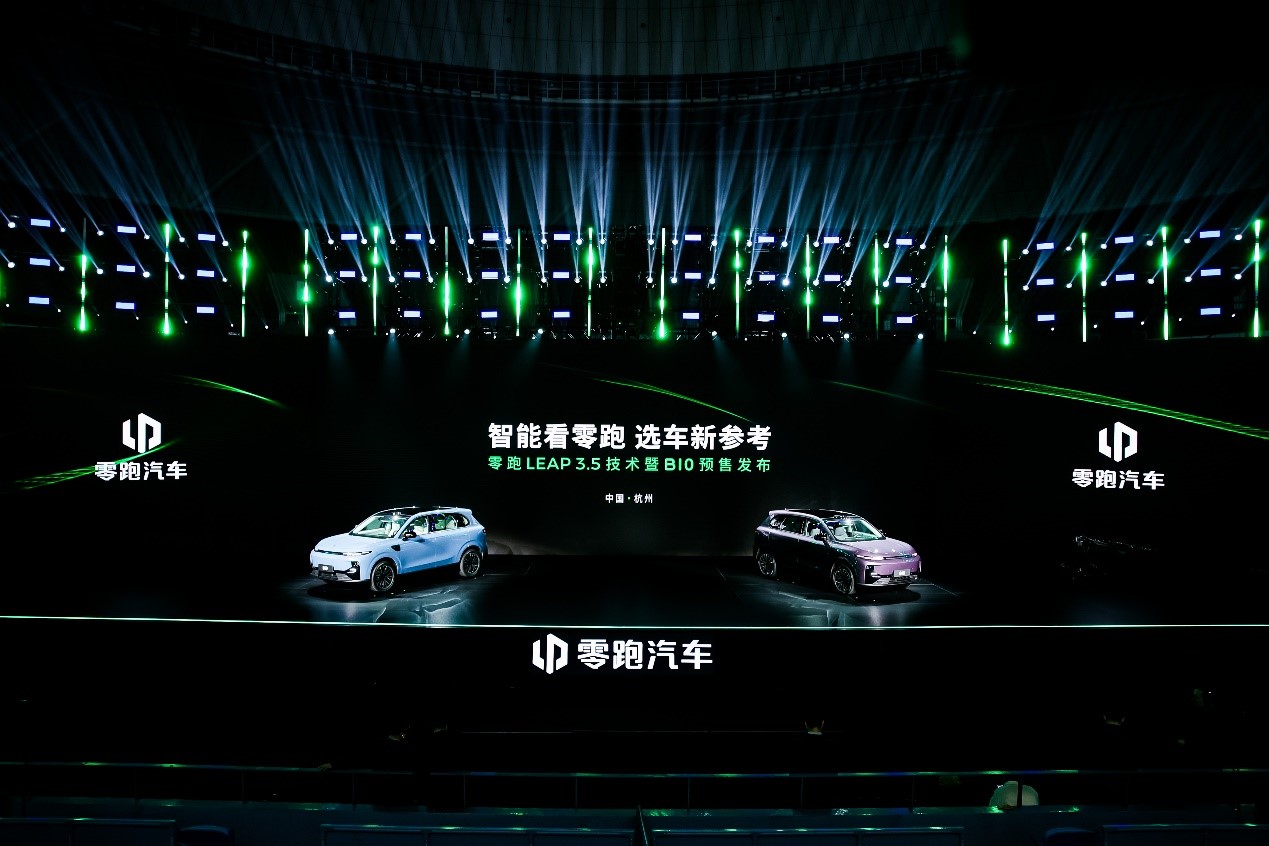
Image source: Leapmotor official
It can achieve this because of its almost full - stack self - research ability.
As one of the very few new - energy vehicle startups in China with the ability of full - domain self - research, Leapmotor has mastered most of the key technologies from the three - electric systems to the intelligent cockpit, intelligent driving algorithms, and then to the vehicle architecture and core components.
This ability brings not only technological barriers but also extreme cost control and rapid response capabilities. In today's fierce price war, this has become its strongest survival capital.
In other words, Leapmotor already has the ability to "generate its own blood" and is no longer a startup that needs external blood transfusion to survive.
Stellantis' turmoil may at most affect some expectations of Leapmotor's overseas expansion progress, but it cannot shake its survival foundation.
Polar reversal: The world's automotive industry looks to China
In the past few decades, there has always been a saying in the Chinese automotive industry, which is "exchanging the market for technology". We provided the market, and others provided the technology, and the core things were always in the hands of others.
However, now, there has been a polar reversal in the automotive market.
Leapmotor and Stellantis, Volkswagen and XPeng, Audi and SAIC... Chinese automotive companies are no longer simply learners or followers. Instead, they have become technology exporters and even started to participate in defining the rules of the game.
