Is the cost of ternary lithium out of control, and are high-end electric vehicles no longer in favor?
Power batteries have always been the sensitive nerve of new energy vehicles.
In recent years, the market share of lithium iron phosphate has been rising steadily, while that of ternary lithium has been declining step by step. Even in the high - end new energy vehicle market, cracks have appeared, and the once - fierce route competition is gradually coming to an end.
To make matters worse, ternary lithium is facing a cost crisis.
After entering 2026, both the global cobalt and nickel prices have risen, and combined with the increase in the price of lithium carbonate, the cost of ternary lithium has become even higher.
With its competitiveness weakened, how can ternary lithium hold on to the high - end new energy vehicle market?
The dual increase of cobalt and nickel prices devours the profits of car companies
There was a time when ternary lithium was the "synonym" of power batteries.
Years ago, high energy density was the core indicator to measure the quality of power batteries. Ternary lithium became the common choice in the market due to its natural advantage of long - range.
At that time, the route competition within ternary lithium was a hot topic among the public.
Panasonic adopted the NCA (nickel - cobalt - aluminum lithium battery) route, which has a relatively high difficulty coefficient. While companies like CATL adopted the NCM (nickel - cobalt - manganese lithium battery) route. Although its energy density is lower than that of NCA, it is safer.
An industry insider told Zinc Scale: "NCA has poor safety performance, requires high control over battery swelling and deformation, and the humidity needs to be controlled below 10% throughout the production process."
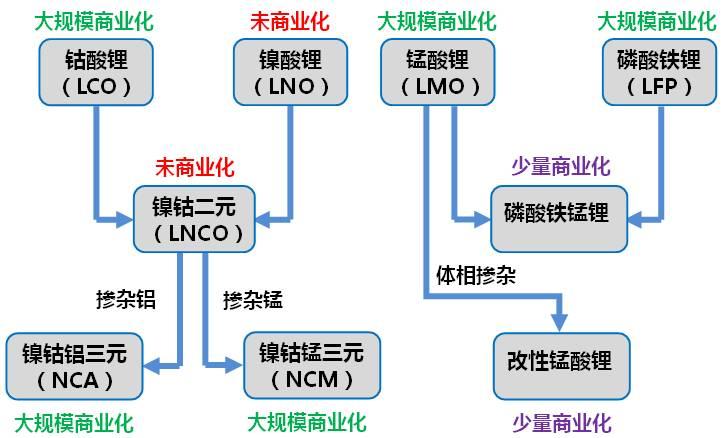
The early evolution route of lithium - battery technology
As a result, the competitive landscape of power batteries is clearly defined: ternary lithium dominates the passenger car market, while lithium iron phosphate dominates the commercial vehicle market.
Unexpectedly, with the diversification of the core indicators of power batteries and the price increase of cobalt and nickel, ternary lithium started to decline after 2019, while lithium iron phosphate overtook on a curve with its cost - effectiveness.
Public data shows that in 2019, the market share of ternary lithium was as high as 65%. By 2025, its market share shrank to 18.7%, while that of lithium iron phosphate reached 81.2%.
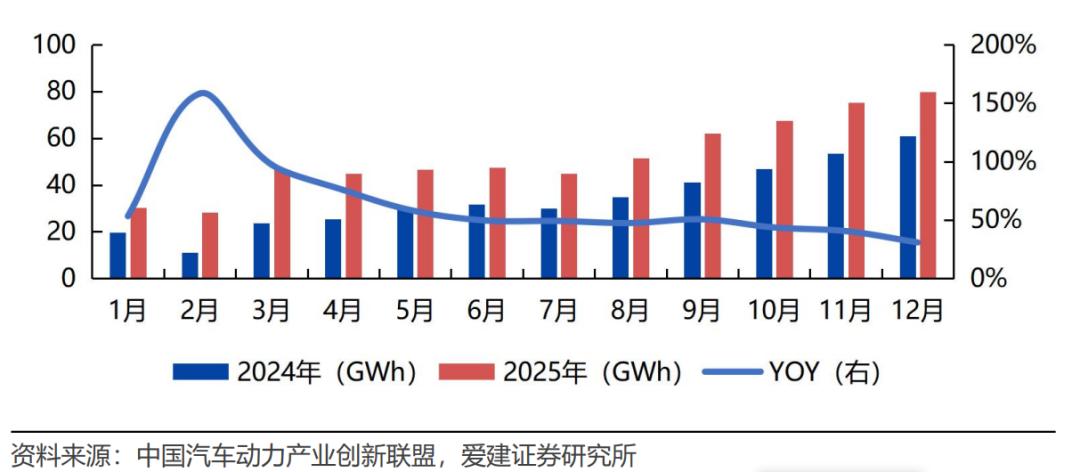
The installation volume of lithium iron phosphate
A market observer told Zinc Scale: "The basic market of ternary lithium has actually tripled, but its growth rate is far lower than that of lithium iron phosphate, which makes it seem to be on the decline."
In a nutshell, slow progress is also a form of regression.
This can be seen from the continuous shrinkage of the application scenarios of ternary lithium.
Take range - extended vehicles as an example. In the past, car companies unanimously chose ternary lithium batteries. Now, this "fortress" has also been lost. Models like the Li L6 and the Zhijie R7 extended - range version have switched to the lithium iron phosphate camp.
Against this background, ternary lithium is facing the pressure of another price increase of cobalt and nickel.
Different types of ternary lithium have different contents of nickel and cobalt, but overall, they cannot do without these two elements, so they are deeply affected by price fluctuations. From December 2025 to January 2026, the nickel price increased by nearly 20%, and the increase of the cobalt price was even more exaggerated. In 2025 alone, the cobalt price increased by as much as 190%, reaching a new high since the second half of 2022.
As a result, the pressure is now on car companies.
Data from UBS shows that the increase in commodity prices in the past three months has directly led to an increase in the bill of materials (BOM) for a single vehicle. The cost inflation of a typical medium - sized intelligent electric vehicle is as high as 4,000 to 7,000 RMB.
"In the current highly competitive and profit - thin market environment, since it is difficult for car companies to pass on this part of the cost to consumers, this wave of cost increase is enough to completely devour the profits of car companies." UBS said.
Considering the cost, it is reasonable that the relatively cheap lithium iron phosphate has become a must - choose option for car companies.
The high - end market is no longer a safe haven
The price increase of the core raw materials of ternary lithium is closely related to the irresistible factors on the supply side.
Indonesia, the world's largest nickel - producing country, set its nickel ore output in 2026 at 250 million tons, a year - on - year decrease of 34%, which pushed up the nickel price.
Behind the output reduction is its strategic shift from controlling production capacity to controlling prices, in order to gain more say in the industrial and value chains.
Like nickel, cobalt has also experienced a reduction in output.
The Democratic Republic of the Congo implemented a seven - month cobalt export ban in 2025 and then launched a quota - based export system. The annual export volume in 2026 and 2027 is 96,600 tons, far from the 220,000 tons in 2024.
As a result, the global cobalt supply has changed from surplus to shortage.
Wang Chendong, a ternary material researcher at Xinluo Information, said in an interview with the media: "Due to the increase in the cobalt price, the penetration rate of medium - and low - nickel models of ternary materials has declined. For ternary materials, the cost - effectiveness gap with lithium iron phosphate has widened, which may further accelerate the preference of downstream car companies in the power sector for lithium iron phosphate solutions."
Coincidentally, after continuous iterations, lithium iron phosphate can now take on major tasks independently.
Low energy density, slow charging speed, and poor low - temperature performance were once the lingering pain points of lithium iron phosphate. However, with the continuous efforts of power battery manufacturers, it can now compete with ternary lithium in terms of parameters.
For example, the energy density of BYD's third - generation blade battery is 230 Wh/kg, with a cruising range of over 1,000 kilometers. It can be charged to 80% in 25 minutes, and its cycle life has increased to 4,000 times.
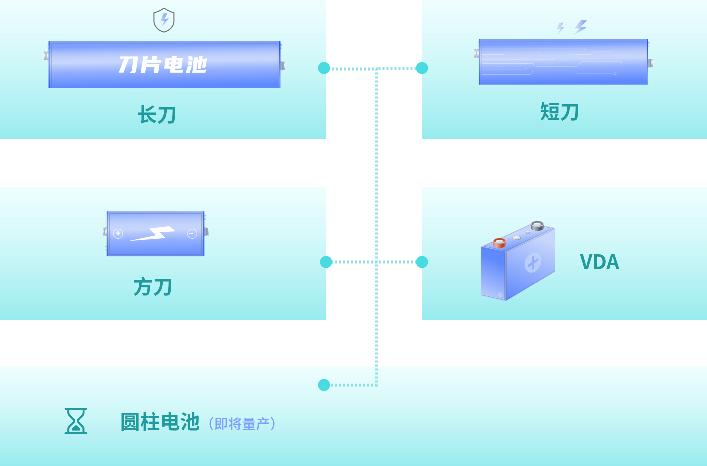
Image source: Fudi Battery
Another example is CATL's Shenxing battery. In the extremely cold environment of - 20°C in Heihe, Heilongjiang, it can charge from 20% to 80% in 24 minutes.
In short, long - range does not necessarily mean ternary lithium, and low - temperature resistance does not necessarily mean ternary lithium either.
A battery R & D engineer said: "We are striving to create a lithium iron phosphate battery that can meet multiple requirements. Without reducing the energy density, through technological innovation, we can optimize the movement speed of ions in the positive and negative electrodes and the electrolyte to improve the power performance of the battery."
In contrast, the iteration of ternary lithium is relatively slow.
The main direction of ternary lithium research is to continuously increase the nickel content and reduce the cobalt content to reduce costs, but it still cannot bridge the obvious price gap with lithium iron phosphate.
In fact, with the continuous penetration of new energy vehicles into the market and the intensifying competition, the sensitivity to cost has further magnified the cost - effectiveness advantage of lithium iron phosphate.
In addition, although ternary lithium has strengthened thermal management monitoring and optimized the explosion - proof path to give early warnings or suppress potential problems, its thermal stability has not fundamentally changed.
As a result, the basic market of ternary lithium has been continuously shrinking, and it can only retreat to the high - end market.
Unfortunately, car brands like Li Auto, AITO, XPeng, and Xiaomi have all embraced lithium iron phosphate, and some have even entered the million - yuan - level market. The Yangwang U7, U8, and U9 are all equipped with lithium iron phosphate batteries.
This means that the high - end market is no longer a safe haven for ternary lithium.
Nevertheless, ternary lithium still has a card to play: Solid - state batteries are regarded as the next - generation batteries by the industry, and most of the mainstream R & D routes have chosen high - nickel ternary materials with a higher upper limit of energy density.
Put simply, ternary lithium is one of the cornerstones of solid - state batteries.
Currently, the energy density of solid - state batteries is constantly breaking through. The laboratory data has reached a maximum of over 600 Wh/kg, which can completely solve the range anxiety of new energy vehicles. Moreover, by abandoning the flammable and explosive liquid electrolyte, they have better safety performance, so it has become a consensus in the industry.
As early as September 9, 2025, Mercedes - Benz announced that its pure - electric EQS test vehicle equipped with a solid - state battery had completed a long - distance road test in real - world scenarios. The test vehicle started from Germany, passed through Denmark, and finally arrived in Sweden. The whole journey passed through various climate environments and complex road conditions, and the cruising range exceeded 1,200 kilometers.
It is not difficult to see that solid - state batteries are one step closer to commercialization.
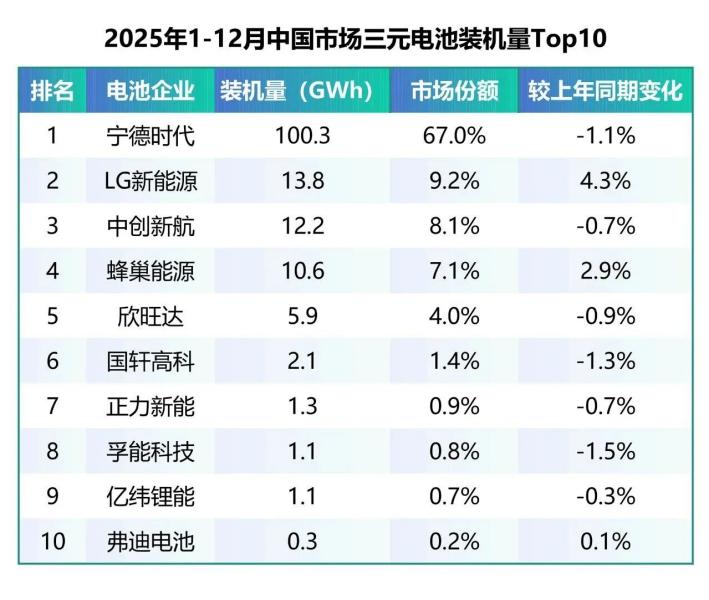
Image source: Battery China
It should be noted that some enterprises have started to take the lead: Yili Technology plans to invest 1.12 billion yuan to build a fully automated and intelligent production line for high - nickel ternary cathode materials for solid - state batteries with an annual output of 5,200 tons.
All in all, lithium iron phosphate is in a positive cycle, continuously making up for its shortcomings and strengthening its advantages, and gradually dominating the market share of power batteries. Coupled with the joint price increase of cobalt and nickel, ternary lithium is on the defensive. Moreover, it will take several years for solid - state batteries to be commercially available on a large scale, which cannot solve the current problem.
Whether ternary lithium can turn the situation around remains to be seen.
This article is from the WeChat official account "Zinc Scale" (ID: znkedu), author: Chen Dengxin, published by 36Kr with permission.