Who is making money in the medical aesthetics industry?
Author | Xie Yunzi
Editor | Zhang Fan
After years of dormancy, SoYoung may be about to "turn the tables", and the secret lies in regaining the pricing power.
By customizing products with upstream manufacturers, SoYoung managed to bring down the price of the "baby face needle", which used to cost nearly 20,000 yuan per syringe, to less than 1,000 yuan. Although this move benefits consumers, it has also attracted a "blockade order" from a number of upstream manufacturers.
To date, the game in the medical aesthetics arena has finally come to an end.
Not long ago, SoYoung announced the establishment of the "Youth Premium Products Alliance". Among the first batch of 14 upstream manufacturers, there are many leading enterprises such as Solta Medical, the parent company of Thermage, Amic, Bloomage Biotechnology, and Jinbo Biotech.
In early 2024, Jinbo Biotech also accused SoYoung of disrupting product prices. The change in the attitude of mid - and upstream manufacturers more reflects the downward transfer of the right to speak in the medical aesthetics industry.
As SoYoung becomes more and more active offline, can this old player, once hailed as the "Dianping of the medical aesthetics industry", change the industry's profit distribution rules with its own strength? Can it improve its own profit dilemma through "affordable medical aesthetics" and give the capital market new room for imagination?
Low prices trigger a "war of words"
In September last year, at a media communication meeting, Jin Xing, the CEO of SoYoung Group, used a case to highlight the huge profits in the medical aesthetics industry.
"A hyaluronic acid product is sold for 16,800 yuan on the e - commerce platform, but its cost may be only 32 yuan." Although Jin Xing also emphasized that the cost does not include operating and marketing expenses, the huge gap is still astonishing.
He gave this example mainly to introduce the price positioning of the "SoYoung Youth Clinic" - Jin Xing wanted to use cheaper or more cost - effective products to pry open the high - end medical aesthetics market.
The price war was first initiated by the baby face needle.
The baby face needle emerged in France in 2010. Its core component is polymer microspheres (such as poly - L - lactic acid PLLA). By injection, it stimulates the skin to regenerate collagen and is an anti - aging product for reshaping the facial contour and reducing wrinkles. In recent years, baby face needle manufacturers have launched combined therapies, that is, by combining "hyaluronic acid + PLLA" to formulate products with diverse functions.
In April 2025, SoYoung launched "Miracle Baby Face 1.0", which combined the baby face needle Puryan with hyaluronic acid and treated it in the form of a hydro - light needle. 36Kr checked the Meituan APP and found that the current official guide price of Puryan is 18,800 yuan per syringe, while the price of SoYoung's "Miracle Baby Face 1.0" is only 4,999 yuan.
Two months later, "Miracle Baby Face 2.0" was launched. SoYoung replaced the baby face needle with Aivilan, and the price was still as low as 5,999 yuan.
With the increasing market popularity, in September of the same year, SoYoung and Xihong Biotech jointly launched "Miracle Baby Face 3.0", priced at 2,999 yuan per syringe. Subsequently, the two sides launched the Pretty version on the basis of 3.0. Although the microsphere content is lower, the "group - buying price for two people" is only 999 yuan per syringe. After SoYoung launched the Miracle Baby Face series, the prices of Puryan and Aivilan on the platform are still significantly lower than the official guide prices.
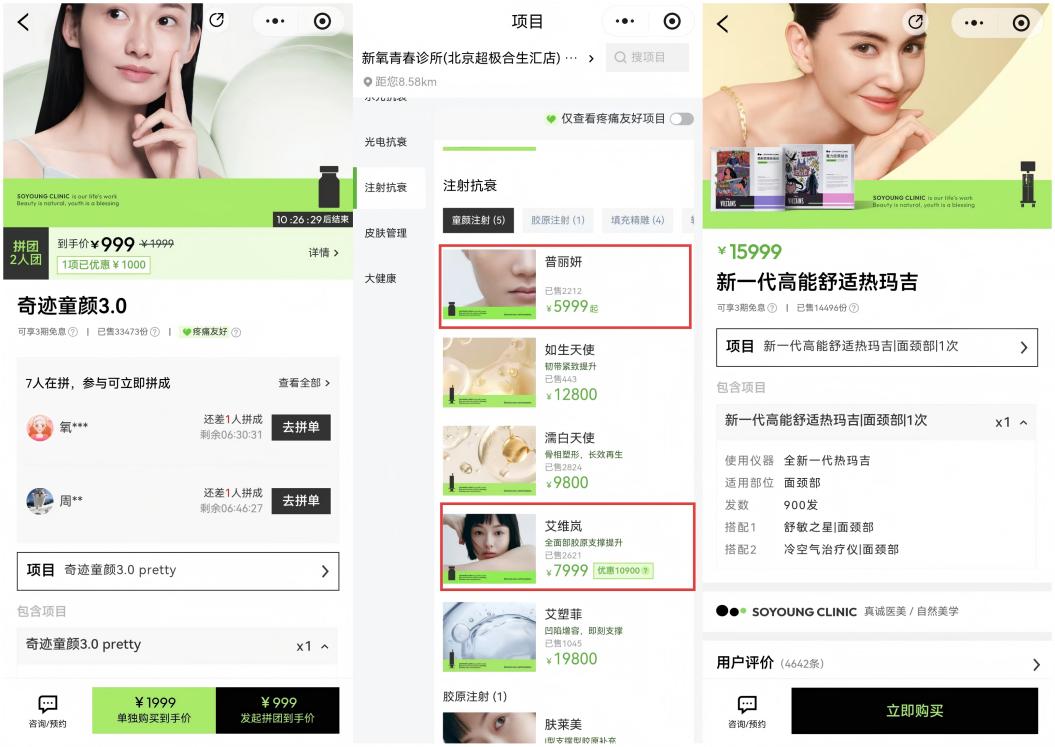
Chart made by 36Kr based on the SoYoung mini - program
This move was regarded as a "serious violation" by some upstream manufacturers.
Puryan was the first to react. It put the SoYoung Youth Clinic on the blacklist and warned consumers that its products had "unknown sources and were difficult to distinguish between true and false". On the other hand, Shengboma, the manufacturer of Aivilan, also said that low - price sales damaged the brand value and R & D returns.
SoYoung chose to stand firm and even issued a "Non - Apology Statement" the next month. It stated that all Puryan products it used were legally supplied by enterprises with medical device business qualifications, and had complete and traceable purchase vouchers. Relevant doctors practiced in accordance with the "Law on Doctors".
Similar to the traditional pharmaceutical industry, medical aesthetics manufacturers have absolute pricing power over their products. The financial reports of some listed companies also clearly indicate the co - existence of "direct sales and distributors". However, the prices of the same medical aesthetics products still vary at different terminals.
Take Runzhi Doll Needle, a basic hydro - light product under Bloomage Biotechnology, as an example. For a 2 - ml product, the price under the "10 - billion subsidy" can be as low as 182 yuan, and the highest can reach 1,589 yuan. This shows at least that upstream manufacturers can no longer control the sales behavior of downstream players. There may also be some "channel - hopping" by distributors. The chaotic price system has also provided fertile ground for fake products and inferior medical aesthetics institutions.
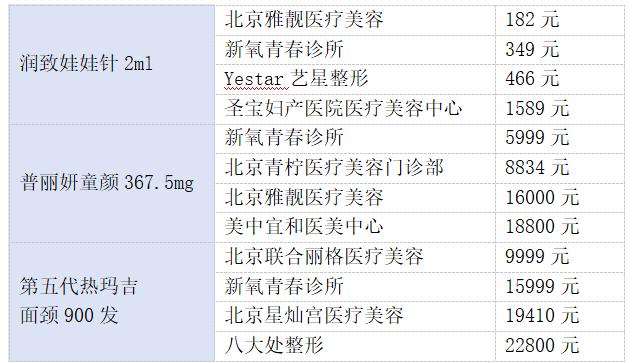
Chart made by 36Kr based on the Meituan APP
Where does the price - cut space come from?
SoYoung calls for "transparent medical aesthetics" and hopes that "people with a monthly salary of 3,000 yuan can also afford the baby face hydro - light treatment."
But what consumers care most about is - where does the price - cut space of the products come from? This is related to the safety and effectiveness of low - price products. The key to the problem lies in how much the cost of medical aesthetics actually is.
Looking at the industry as a whole, it can be roughly divided into heavy medical aesthetics that "require surgery" and light medical aesthetics mainly including "photoelectric projects and injection projects".
Breaking down the medical aesthetics industry chain further, upstream enterprises produce medical devices and raw materials. Mid - stream enterprises, represented by Amic and Jinbo Biotech, are manufacturers that produce products for both B - end and C - end customers. Downstream are terminal institutions represented by SoYoung and Yestar, or recommendation platforms mainly including Meituan and Xiaohongshu.
Of course, more large enterprises like Bloomage Biotechnology and Giant Biogene often span the mid - and upstream sectors, producing both raw materials and B - end and C - end products.
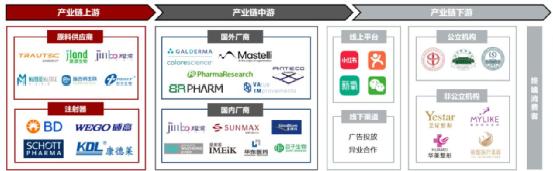
Data source: Frost & Sullivan, Yuanda Information Securities Research Institute
It may be difficult to objectively list the cost structure of a medical aesthetics product from official disclosures. However, we can still get a glimpse from the financial reports of listed companies.
Take Bloomage Biotechnology as an example. As the world's largest hyaluronic acid supplier, the "Run - series" hydro - light products such as "Runbaiyan" and "Runzhi" that consumers usually come into contact with all come from here.
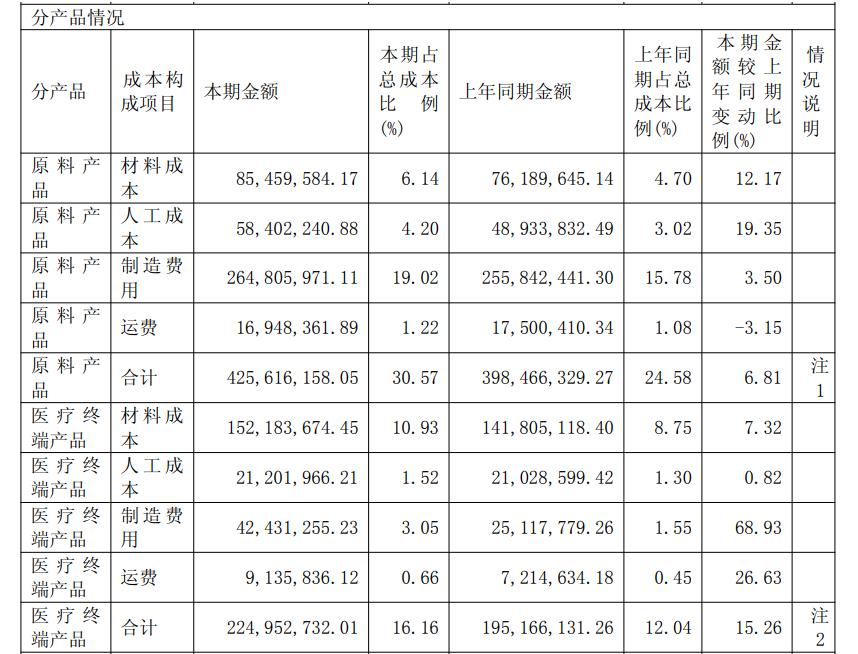
Picture from Bloomage Biotechnology's 2024 financial report
The financial report shows that in 2024, the revenue of Bloomage Biotechnology's "medical terminal business" represented by the "Runzhi series" reached 1.44 billion yuan, and the operating cost was only 225 million yuan. If we do not consider the company's overall expenses, the production cost rate of Bloomage Biotechnology's medical aesthetics products is only 15.6%.
An industry insider also told 36Kr that "for a hydro - light needle or baby face needle that costs more than ten thousand yuan, the direct purchase price for institutions is at most five thousand yuan."
Looking at the cost distribution of Chinese medical aesthetics institutions, it can be mainly divided into four parts.
First is the marketing cost. The marketing and customer - acquisition costs of direct - customer institutions generally account for 30%. For channel institutions whose customers come from third - party referrals, it will exceed 50%. This part of the cost has no direct connection with actual diagnosis and treatment and is mostly borne by consumers.
Second is the supply - chain cost, which accounts for about 20% - 30%. Calculated based on the cost rate of Bloomage Biotechnology's medical terminal business, the production cost of manufacturers should be within 5%.
Third is the salary cost of medical staff, which is about 20% - 30%.
Finally is the fixed cost, including rent, utilities, medical administration management, professional service fees, amortization of pre - opening store investment, taxes, etc. This part of the cost is often difficult to estimate due to the different situations of each institution. It is clear that the previously increasing circulation links have gradually pushed up the procurement cost, leaving downstream institutions with meager profit margins.

Manufacturer's production cost calculated from Bloomage Biotechnology's 2024 financial report; Chart made by 36Kr
Jin Xing also revealed that the net profit margin of Chinese chain medical aesthetics institutions is only about 6%. After identifying the industry pain points, SoYoung began to optimize product prices in a targeted manner.
For example, it acquires customers through communities and old - customer referrals, and abandons the traditional "aggressive sales model" in the industry. It does not require customers to recharge or apply for membership cards, and does not set up sales - oriented consultants, reducing the marketing and customer - acquisition costs to less than 10%.
In terms of the supply chain, SoYoung conducts direct - purchase centralized procurement and customizes exclusive products with upstream enterprises, avoiding the "middle - man markup". This reduces the procurement cost from the source and also saves the product promotion expenses for upstream manufacturers to a certain extent.
At the store end, SoYoung improves the space - utilization efficiency through means such as informatization, effectively amortizing various fixed costs.
Seek profits from upstream manufacturers
Judging from the current results, aside from the "war of words", the price of the baby face needle in the market has indeed dropped significantly. Just the specific promotional product "SoYoung Miracle Baby Face 3.0" has sold more than 22,000 copies.
However, the price of a product is always affected by supply and demand, not determined by cost, and will not change because of a single company. Jin Xing also emphasized that "we just gave a push at a certain stage of the industry's development."
A typical case is the price change of hyaluronic acid raw materials.
Early hyaluronic acid was mainly extracted from animal tissues. The process was complex and the efficiency was extremely low. The price of medical - grade products was once dozens of times higher than that of gold. In 2000, Bloomage Biotechnology cooperated with Shandong University and was the first to use the microbial fermentation method to produce hyaluronic acid on a large scale using food crops as raw materials, completely changing the industry landscape.
In the following years, the cost price of hyaluronic acid continued to decline. Bloomage Biotechnology's financial report also mentioned that from 2016 to 2024, the price of the company's injectable hyaluronic acid raw materials dropped from 158,000 yuan per kilogram to about 144,000 yuan per kilogram in 2024.
Almost at the same time, the number of approvals for the "Class III medical device registration certificate" has also been increasing.
Since 2025, the number of newly approved "Class III medical device certificates" in China has reached 52, covering multiple popular fields such as hyaluronic acid, baby face needles, collagen, and photoelectric equipment. This number far exceeds previous years, completely changing the previous situation of "hard - to - get certificates".
Take VYMED, the flagship product of Jinbo Biotech, which uses "recombinant humanized collagen" as the core raw material, as an example.
Since April 2024, Jinbo Biotech has accused platforms including SoYoung and Meituan of disrupting the market price of its products twice. The original price of VYMED, which was 6,800 yuan, once dropped to 1,380 yuan.
However, Jinbo Biotech's accusations received little response.
In October of the same year, Giant Biogene's "recombinant humanized collagen" product was successfully approved, breaking VYMED's monopoly in the collagen market. At that time, consumers had generally accepted the lower product price, which also led to a decline in the price of the first - generation VYMED product.
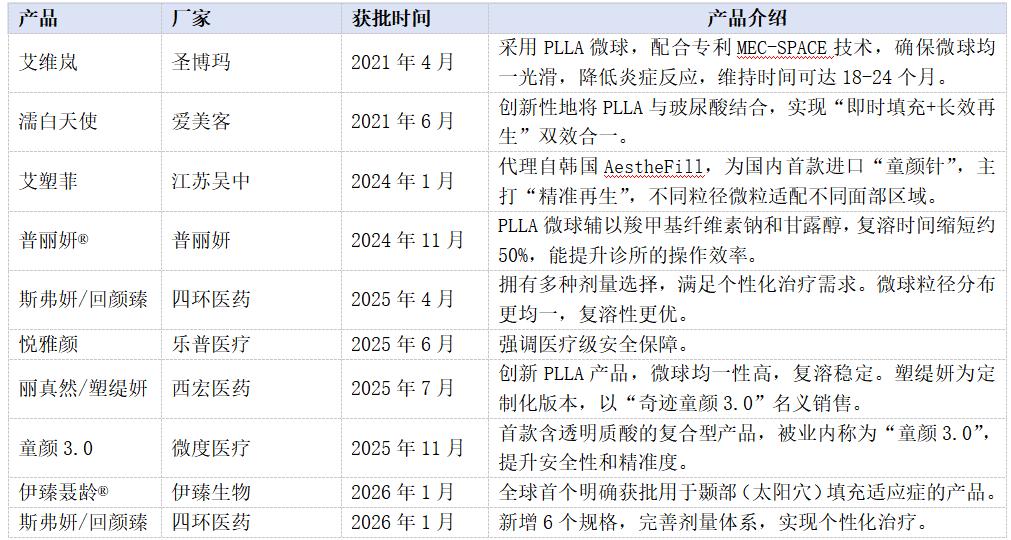
List of approved baby face needles in the Chinese market; Chart made by 36Kr based on public information
It is a clear fact that with the increase in production, it is inevitable that the right to speak of manufacturers will be diluted. However, the overall profits of the medical aesthetics industry are still controlled by mid - and upstream manufacturers.
Based on an incomplete statistics by 36Kr from the financial reports of Chinese medical aesthetics listed companies in the first half of 2025, downstream institutions are still in a state of negative profit.
Jinbo Biotech's financial report also shows that although the price of VYMED has dropped, the company can still hedge the pressure through sales volume expansion, keeping its overall gross profit margin above 90%.