Elon Musk "loses his cool" late at night: Chinese AI will win without a fight. Is America's only hope in space?
Facts have proven that even the world's richest man likes to talk at length after a bit of drinking and becomes bolder than usual.
Recently, Elon Musk, who has been deeply involved in the Epstein case, appeared on the podcast of Dwarkesh Patel in the United States and answered various questions during the three - hour program. From chatting about AI data centers to Grok, and then to how China will achieve final victory, it can only be said that the richest man in the United States is really "infatuated" with our side.
To be honest, after watching the podcast video, my only thought is that "Crazy Musk" is truly crazy, and the main purpose of his appearance on the show is probably to build momentum for the upcoming SpaceX IPO. Throughout the conversation, he kept talking about building a computing power center in space. When the host finally managed to bring the topic back to Earth, he started talking about Chinese manufacturing.
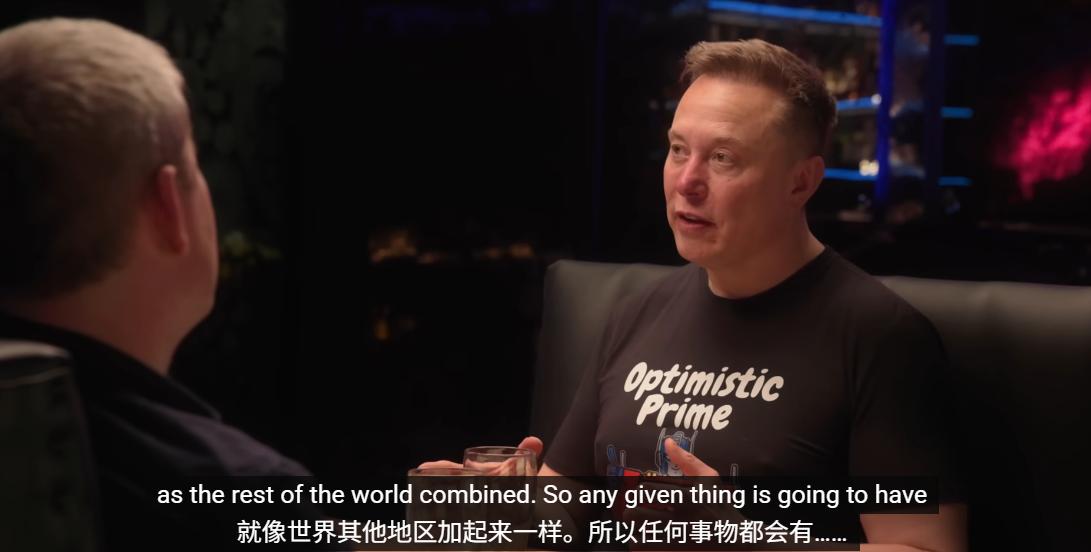
Source: YouTube Note: Musk talked about China's productivity being several times that of the rest of the world.
Musk has liked China for a long time. Recently, there have been many reports that Musk's team is conducting inspections in China. The team composed of Tesla and SpaceX is "investigating" photovoltaic enterprises. Obviously, SpaceX is here for the upcoming computing power center in space.
After all, Musk believes that the greatest advantage of a space computing power center is free and clean energy. The efficiency of generating electricity with solar panels in space can be five times that on Earth, and in special orbits, it can get almost uninterrupted power supply, which can more easily solve the problem of power shortage.
As for why there is a power shortage, it can only be blamed on the backward power facilities in the United States. In fact, there have been reports last year that many cities are facing power shortage problems in order to meet the needs of data centers, and power has become the biggest obstacle restricting the explosion of computing power in the United States.
In contrast, China's power supply makes Musk extremely envious. He even bluntly said that if there is no "breakthrough innovation" in the United States in the future, then China will "win without a fight", which obviously refers to AI and robots. In fact, in the field of AI and robots, China and the United States are basically the only two players. Other countries such as Russia, the European Union (single European countries have no chance of competing), Japan, and India can only pick up the scraps.
Musk: The US won't always lead in AI
The competition at the AI level is the most brutal. Although from the current situation, the leading AIs are still ChatGPT, Claude, and Gemini, all from the United States. However, from the perspective of popularity, China's Qianwen and Doubao are more widely used. The reason is very simple: they are "cheap".
Taking Doubao and Qianwen as examples, whether it is in - depth thinking or image generation, there are a large number of free quotas for ordinary users. You can get world - class AI tools without spending a single cent, which is unimaginable in the United States (unless they also use Doubao and Qianwen).
So the question is, do ChatGPT and Gemini not want to be free? Obviously not, because American companies are the most familiar with the strategy of "using free products to seize the market and then reap the benefits". Microsoft, Adobe, Oracle have all risen globally in this way.
Source: Microsoft
Ultimately, even giants like Google can't afford the cost of free services, let alone "money - losing" companies like OpenAI. So American AI companies can only balance their investments through charging. At the same time, they create the expectation of "making money" to further raise funds and maintain the investment required for computing power and AI model training.
In contrast, although Chinese AI companies can't get the latest computing power graphics cards, domestic computing power graphics cards have significantly higher cost - performance ratios, and the energy cost is lower and more stable. These favorable factors have significantly narrowed the gap between Chinese and American AI companies. Coupled with globally leading open - source AI models such as DeepSeek, China is showing a trend of becoming the "cornerstone" in the AI field.
This is also what Musk is most worried about. He believes that China will gradually catch up with and even surpass the United States in the AI field with its huge productivity and perfect infrastructure, and the United States can only watch but can't stop it. In addition, Musk also believes that the restrictions brought by chips won't last long. Now, semiconductor manufacturing processes are almost reaching their limit, and the advantages brought by advanced processes will inevitably gradually shrink in the future.
Musk even predicted: "China will far exceed the rest of the world in total AI computing power through this energy advantage." To be honest, Musk has more confidence in China than most Chinese people, which really surprised me.
To put it simply, in the end, the decisive factor in the AI industry is not chips, but large - scale energy infrastructure. In this regard, if China says it is the second, probably no one dares to claim to be the first.
Are robots the key to productivity?
By now, you may be wondering what the "breakthrough innovation" that Musk mentioned, which can give the United States a chance of victory, is. The answer is robots, or rather, robots with "full autonomy". In Musk's vision, only by enabling Optimus (Tesla's robot) to have the ability of autonomous production can the huge gap in productivity with China be made up.
The view that robots will be the core of future industry is recognized by most people. In recent years, China has been promoting the deployment of intelligent factories. For example, Xiaomi's dark factory and Huawei's southern factory are representatives of high - level intelligence.
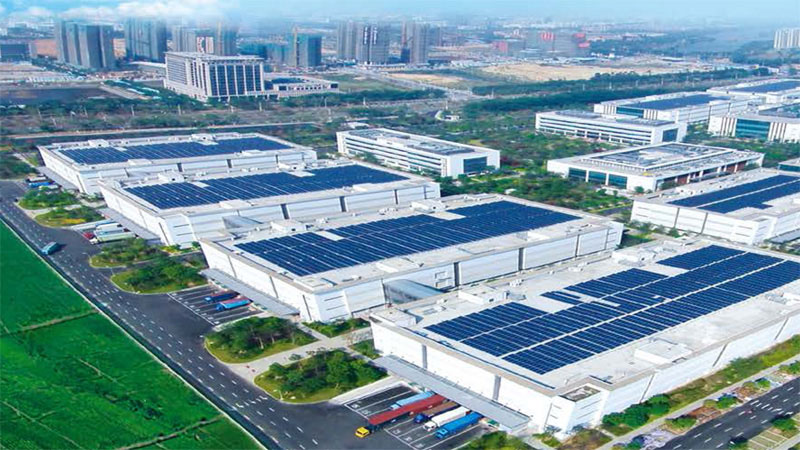
Source: Huawei
According to the data released by the International Federation of Robotics, in 2024, the installation volume of industrial robots in China already accounted for more than 50% of the world's total. This data reached a new high in 2025. According to the data of the China Federation of Machinery Industry, the annual output in 2025 reached 773,000 sets, a year - on - year increase of 28%. This makes China not only the world's largest user of industrial robots but also the largest producer, covering the entire upstream and downstream of the industry.
Of course, there are still many differences between industrial robots and the humanoid robots that Musk mentioned. However, in the field of humanoid robots, China can really claim to be "far ahead". From manufacturers such as Unitree, Zhipu, to Zhuji Dynamics, they all have a high profile globally and are often considered to have stronger technological strength than American companies such as Tesla.
Here is another set of data: According to the report "General Embodied Robot Market Radar" released by market research institution Omdia in January 2026, China has firmly grasped the global market for humanoid robots. More than 80% of the 13,000 units shipped in 2025 were from Chinese companies. Among them, Zhipu Robotics shipped 5,168 units, accounting for 39%, and Unitree Technology shipped 4,200 units, accounting for 32%.
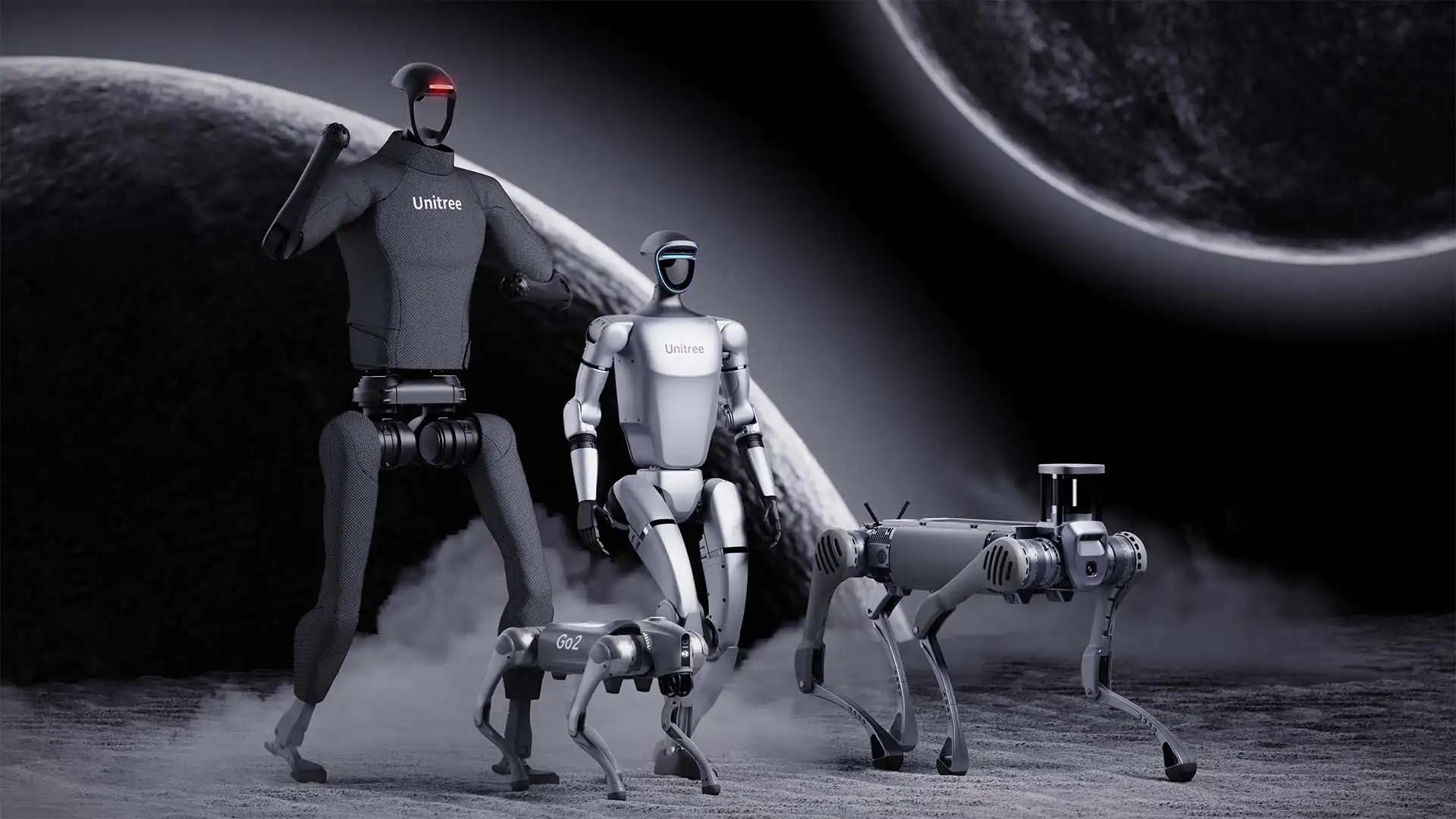
Source: Unitree Technology
In contrast, the shipment volume of Tesla's Optimus accounts for less than 4%. Strictly speaking, it can only be regarded as "production volume" because all Optimus robots are only used for Tesla's internal testing and there is no current plan for external sales. Moreover, many of you may have seen the video of Optimus malfunctioning some time ago. At least for now, it is very difficult for it to meet the needs of factory production.
To be honest, I don't think Musk can solve the various problems of Optimus in the next few years. Even if it enters the state of "self - production cycle", its cost will still be quite different from that in China. If one Optimus can buy two or even three Zhipu robots, even if the former is more efficient, it will be difficult to compete with the latter.
Furthermore, Musk himself should know that there is actually no need to put humanoid robots on the production line because humanoid robots only have advantages in some special positions, and automated production lines don't require many "people".
So what does the efficiency of an automated production line depend on? The answer is the supply chain and power resources. So the problem comes back to infrastructure again. As an industrialist, Musk must be aware of this, but Optimus is indeed the last hope for the United States to turn the tables.
Some readers may ask: What about Boston Dynamics? To be honest, Boston Dynamics' robots malfunctioned badly at the exhibition some time ago. After they abandoned the hydraulic solution and switched to Unitree's electric drive solution, they were doomed to be followers.
Musk is getting anxious
For Musk, the possibility of leading the United States to defeat China in productivity is really low. So he can only turn his attention to space, hoping to solve energy and other problems with the help of space. However, the space computing power center also faces many difficulties.
First of all, there is the issue of heat dissipation. Although the temperature in space is very low, heat transfer requires a medium (note: here refers to conduction and convection, and in a vacuum, heat is mainly dissipated by radiation). To dissipate heat for a 1GW computing power center in space, it may be necessary to lay heat dissipation modules covering several square kilometers. Even with SpaceX's transportation capacity and cost - control ability, this is a bit too exaggerated.
Moreover, in order to achieve full - time power generation, this huge object must always be in sunlight. At this time, the heat dissipation module may actually become a "heat - absorbing" module. Due to heat exchange problems, if the heat dissipation surface cannot avoid direct sunlight and the external temperature is higher than the internal design temperature, heat will be absorbed into the computing system, directly causing the system to collapse.
In addition, it's not easy to maintain a computing power center in space. In a ground - based computing power center, engineers can replace damaged hard drives or graphics cards at any time. In space, you have to deploy an autonomously operating maintenance system and then regularly replenish graphics card chips and other spare parts.
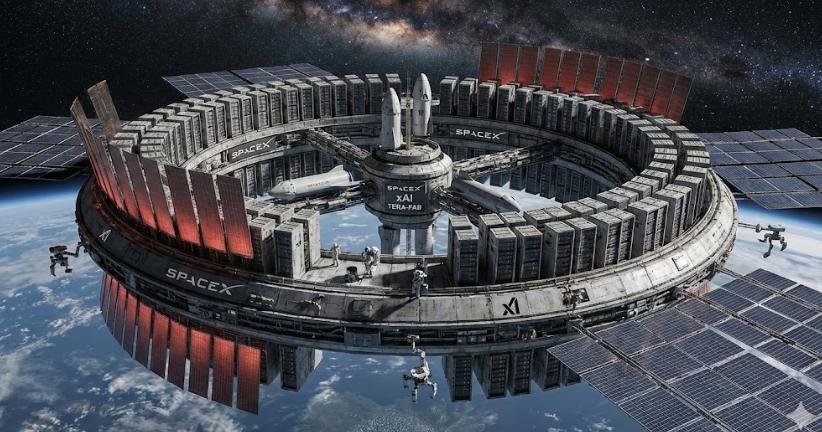
Source: AI - generated
It can only be said that Musk's crazy plan sounds good, but there are many problems to be solved behind it. It's hard to imagine that SpaceX can solve them all in the next three years (Musk's schedule is a minimum of 30 months).
Looking back at the three - hour interview, my biggest impression is that Musk is indeed one of the most sober American elites of this era.
He is not like the politicians in Washington who are addicted to maintaining their advantages through sanctions and blockades. As an engineer, he knows very well that technological blockades will ultimately fail in the face of a perfect industrial chain and huge market demand. He clearly sees the shortcomings of the United States in power infrastructure, skilled workers, and supply - chain integration capabilities, and he also doesn't shy away from admitting China's leadership in these "hard power" aspects.
He is trying to solve these problems with a plan full of American heroism - that is, to confront "scale advantages" through "disruptive innovation" (AGI, humanoid robots, space computing power).
Therefore, for us, Musk's "frankness" is actually an excellent reminder. On the one hand, due to our huge advantages in energy infrastructure, supply - chain efficiency, and application levels, China has indeed got the best ticket for the second half of AI implementation. Whether it is the stable power grid that Musk envies, or the strong manufacturing ability that has driven down the price of humanoid robots, they are all our confidence to win without a fight.
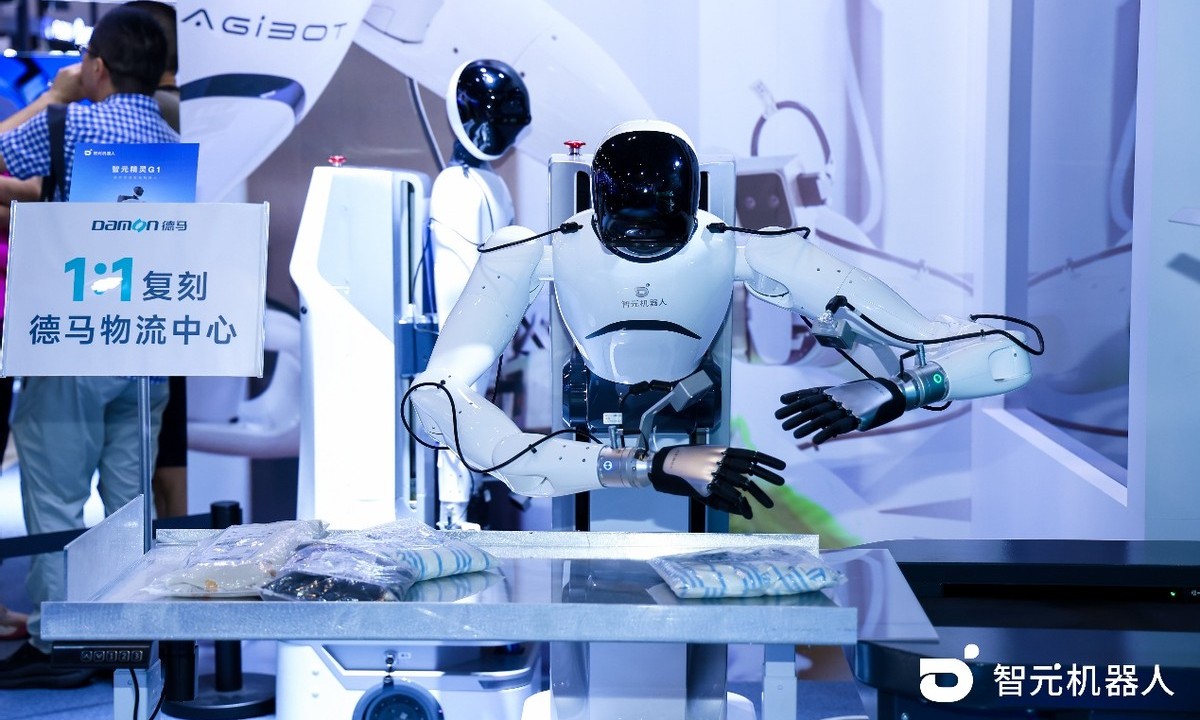
Source: Zhipu
On the other hand, we must also be vigilant against Musk's "game - changing" innovation ability. When he can't compete with you on the ground, he will really turn to space. Once SpaceX's IPO is successful, it will surely inject huge funds into his seemingly crazy plans. In the future, technological competition may really extend from the Earth to space, and even to the moon.
Ultimately, this Sino - US technological competition has evolved from a simple "chip war" into a comprehensive national strength game in energy, manufacturing, aerospace, and AI. Musk has understood the situation, so he is getting anxious and more crazy.
This article is from "Lei Technology" and is published by 36Kr with authorization.