Dialogue with Tao Lin: How does Tesla cope with the intense competition in China?
At the beginning of 2026, Tesla is standing at a major turning point.
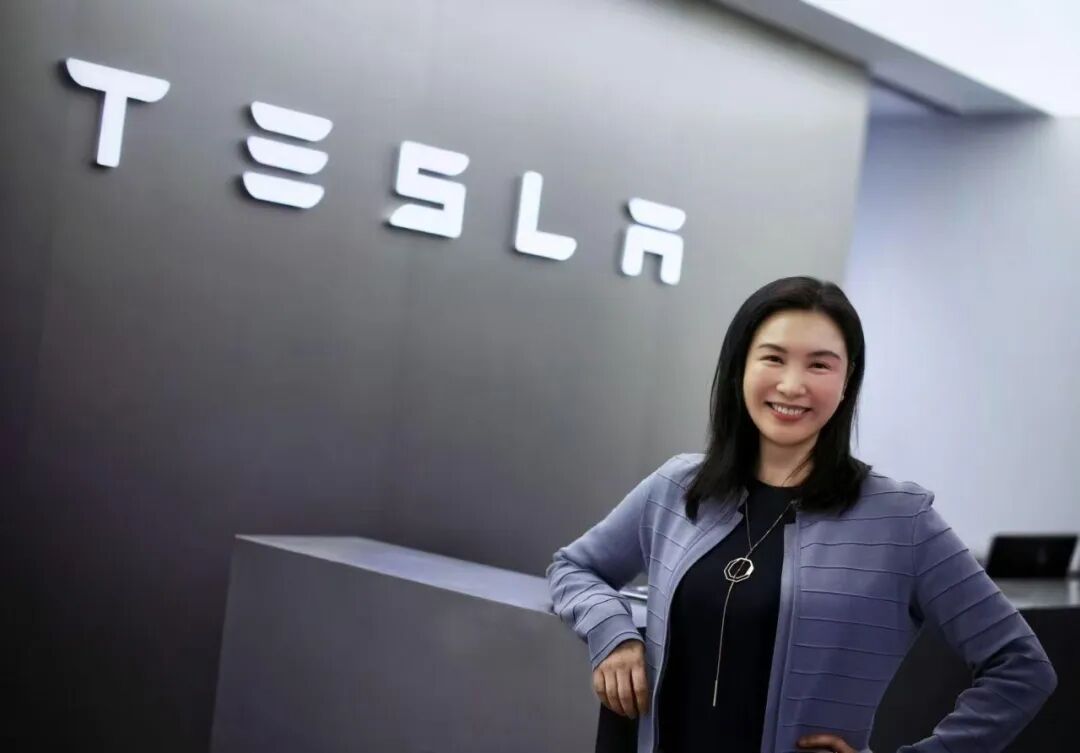
At a media communication meeting on the afternoon of February 6th, Tao Lin, the global vice president of Tesla, faced Chinese media including Phoenix Tech and attempted to clarify the true nature of the company amidst the fierce competition. In the eyes of the outside world, Tesla is undergoing an “anti-intuitive” adventure: while global automakers are frantically competing in terms of SKUs, 800V high-voltage platforms, and large sofas and TVs in cars, Tesla appears unusually calm – it is streamlining its vehicle models and investing over $20 billion in capital expenditure each year in invisible computing power centers, humanoid robots, and energy networks.
“Tesla is no longer just an electric vehicle company; it has transformed into a technology enterprise centered around AI, robots, and energy.” Tao Lin said directly in the interview.
This is another large-scale implementation of Musk's “First Principles”: when the physical world begins to be taken over by AI, cars are no longer the only destination but a mobile AI carrier.
01
Rejecting “Pseudo-Demands” at the Product Level
In 2025, Tesla's delivery volume fluctuated, which worried many analysts. However, in Tao Lin's view, this fluctuation was not due to a shrinkage in demand but rather the “growing pains of the production line” before the vehicle model upgrade.
“The fluctuation in delivery volume in 2025 was because during the upgrade phase of the Model Y, the production lines of the four global factories were being switched and were not operating at full capacity.” Tao Lin explained. Even the Shanghai Gigafactory, under the pressure of switching the production line to the Model Y L in the second half of the year, still delivered over 850,000 vehicles.
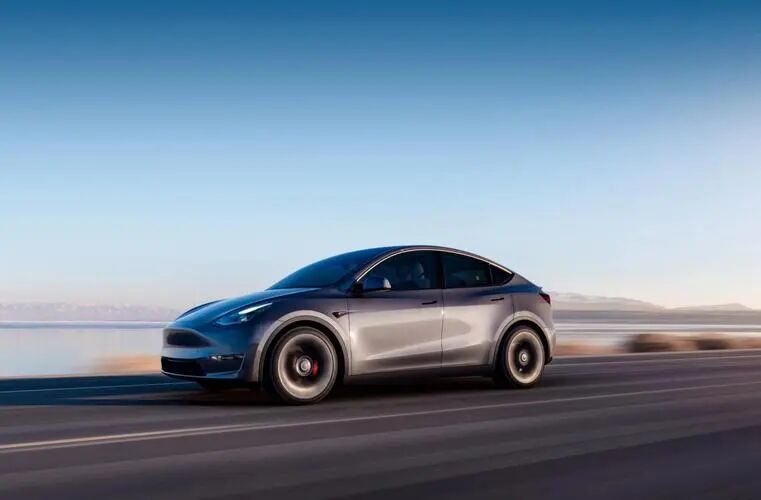
Facing the approach of domestic new car-making forces of “launching a new car every month,” Tesla has always adhered to a minimalist SKU strategy. This sounds very “anti-intuitive.”
“A company's resources are limited, not infinite. Therefore, it must allocate resources to the most critical areas.” Tao Lin pointed out that in Tesla's view, making more vehicle models is “meaningless.” Each additional SKU requires a large amount of resources and energy, which often only meets short-term demands.
Tao Lin gave an example: Many families, in order to meet the demand for “two child safety seats and one adult” in the third row, have to give up Tesla and buy large SUVs or MPVs. However, in Tesla's view, this may be a “pseudo-demand” that will soon be eliminated by technology.
“Suppose our cars can drive fully autonomously. At that time, you won't put child safety seats in the third row.” This decision-making logic of “sacrificing the present for the future” runs through Tesla's product definition. Tesla believes that when the era of autonomous driving arrives, if a car does not have full autonomous driving capabilities, having more SKUs is meaningless.
In terms of technology routes, Tesla also shows the stubbornness of a “tech geek.” Facing the industry's hype about 800V high-voltage fast charging, Tesla has been slow to fully follow suit.
“Tesla is a technology-driven company. We have reserves of all these technologies and can develop them.” Tao Lin responded. The reason for not blindly following suit is that Tesla pursues the optimal solution for the comprehensive user experience.
“If your car has an 800V system, but not all charging stations can provide 800V charging. In fact, in a sense, you're asking consumers to pay for a feature they may not be able to use.” Tao Lin believes that the current V3/V4 Superchargers, combined with Tesla's BMS (Battery Management System), can charge up to 320 kilometers in 15 minutes, which has reached an optimal balance in the current infrastructure.
Compared with the parameter-based arms race, Tesla values underlying technological innovation more. For example, the dry electrode process for the 4680 battery. Tao Lin confirmed that this long-rumored technology “is real” and has achieved mass production.
“It will directly make the 4680 battery cheaper and improve its performance.” This kind of factory and process layout that started several years ago is what Tesla considers to be “core technology.”
Although there seem to be no major changes in the exterior, Tesla has been rapidly iterating through OTA updates. Data shows that in the past four years, Tesla has carried out 58 OTA updates, adding more than 105 important features.
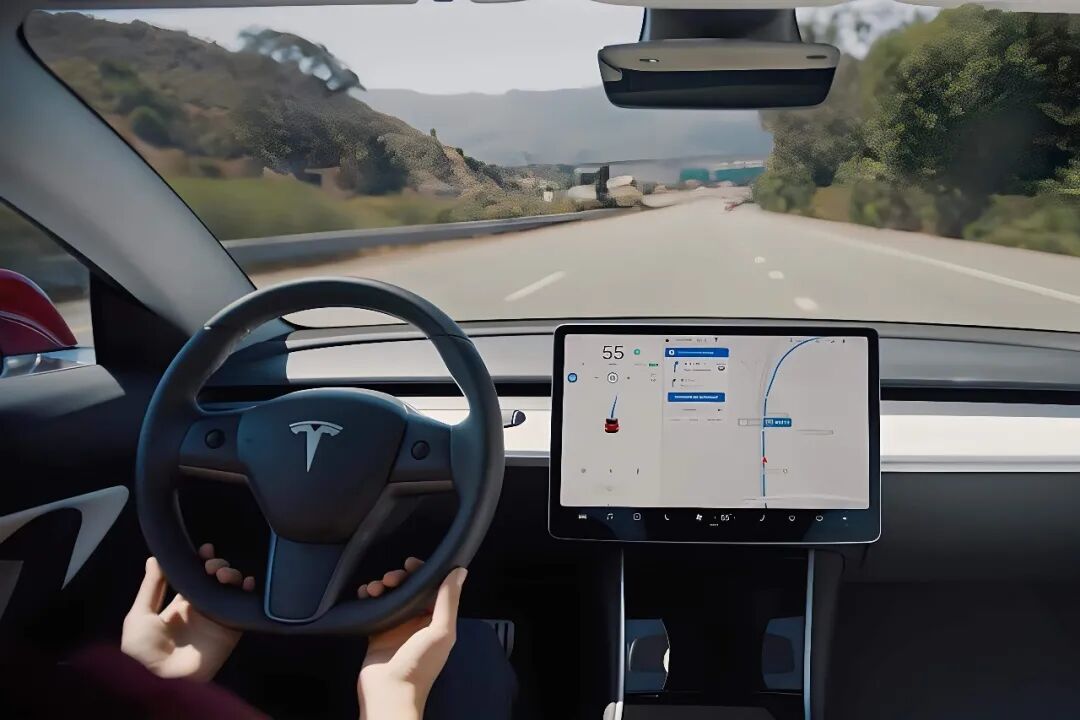
“Our cars are fully self-developed, including the power system, chassis system, thermal management, BMS, assisted driving, and active safety systems. In fact, everything is self-developed.” The advantage of full-stack self-development is the high integration of the system and long-lasting vitality. Tao Lin confidently said that even a Tesla that has been driven for seven or eight years will not experience screen freezes because it is equipped with an industrial-grade computer interaction system, not a simple consumer-grade tablet.
02
FSD: A Victory for the Pure Vision Route and the “Last Piece of the Puzzle” in the Chinese Market
If cars are the hardware carriers, then FSD (Full Self-Driving) is the soul of Tesla. As of February 2026, the cumulative global driving mileage of Tesla's FSD has exceeded 12 billion kilometers (7.5 billion miles).
There have been long-standing market rumors about when FSD will enter the Chinese market. Although Tao Lin did not give a specific timeline, she sent a clear signal: “We haven't wasted any time. Just like a child or an actor, they keep practicing even before their public debut.”
She revealed that Tesla has established a training center in China and formed a dedicated team. The preparation work is currently in full swing. “Once it's ready to be launched, it will be in its best state at that time.” Regarding concerns about data security, Tao Lin clearly stated that Tesla strictly abides by Chinese laws and regulations. “Our assisted driving system doesn't require data to be transferred overseas... We also have a training center in China.”
The outside world generally worries whether the FSD trained in the United States can adapt to China's complex road conditions. Tao Lin is very confident about this because Tesla follows a “vision + end-to-end” technology route. “The intelligent assisted driving system trained at our training center in Texas, USA, can adapt to road conditions around the world.”
Tao Lin explained that for AI, 99% of driving scenarios (such as physical laws, vehicle dynamics, and complex interactions) are universal globally. The particularity of the Chinese market (such as special traffic lights and road signs) only accounts for a small part of the “fine-tuning” work.
“For AI, it's just about understanding Chinese signs... It's a very limited amount of data that can be mastered in a short time.” This means that Tesla doesn't need to rely on a large number of local vehicles to “map” the roads like local automakers. Instead, it can directly bring a “seasoned driver” with 12 billion kilometers of driving experience to China and only needs to teach it Chinese traffic rules.
At the communication meeting, Tao Lin said that Tesla is willing to license FSD to other automakers. “Tesla is an open company. Our self-driving system will also be available for other cars in the future.”
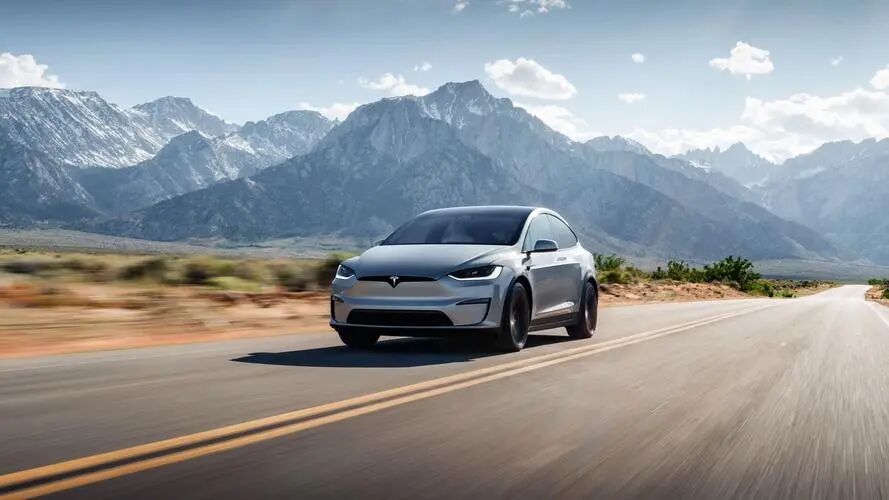
This logic is similar to Tesla's decision to open its Supercharger network. Tao Lin believes that the R & D threshold for autonomous driving is extremely high, requiring tens of billions of dollars in investment and a large amount of data. Most automakers do not have this capability.
“It's impossible for those cars to be without intelligent driving capabilities.” By adapting and deploying Tesla's intelligent assisted driving system on other brands of vehicles, the process of autonomous driving in society can be accelerated. Although there are no specific cooperation agreements yet, this “open” attitude shows that Tesla intends to become an “infrastructure provider” in the era of autonomous driving.
03
Robotaxi: Revolutionizing Transportation
Based on the gradual maturity of FSD, Tesla's Robotaxi (driverless ride-hailing) business is also gradually emerging.
Different from existing modified vehicles, Tesla's Cybercab is a newly designed model. “It's a car without a steering wheel and is fully autonomous.” This design is not only radical but also aimed at achieving extreme cost control and efficiency. Tao Lin revealed that this car will use new alloy materials and a modular production method.
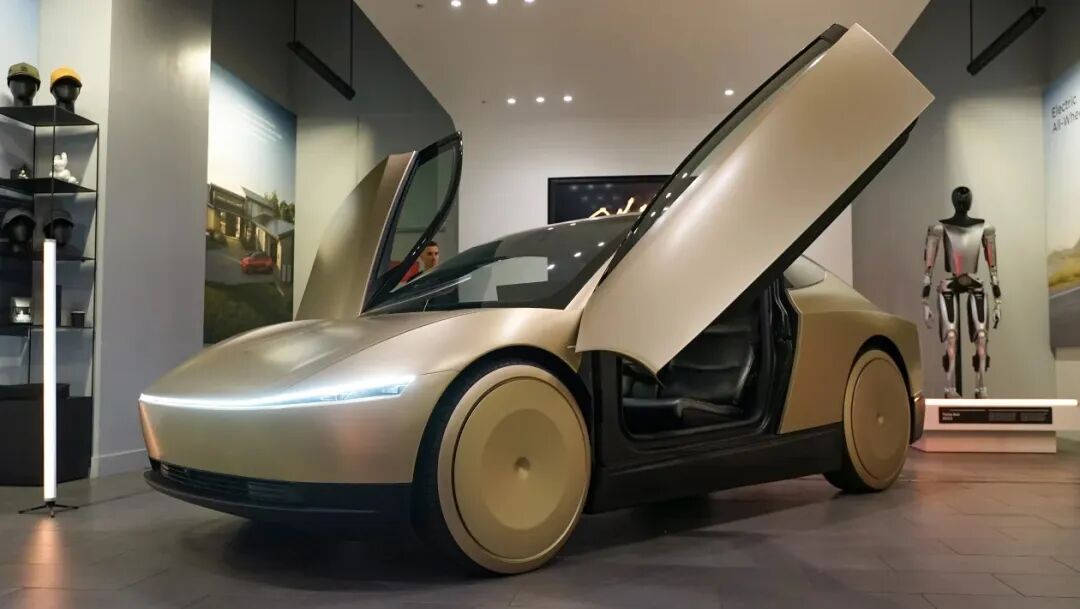
Tao Lin believes that the emergence of Robotaxi will greatly change the economics of human transportation.
“It will replace a lot of public transportation. With autonomous driving, labor costs are eliminated, and the depreciation cost of the vehicle will be significantly reduced (spread out). The cost per kilometer of transportation may be even cheaper than taking a bus or subway.” Since the vehicles can operate 24/7 and don't need parking spaces, it will free up a large amount of urban space and solve the “last mile” problem.
Although the technology is ready, Tesla is being extremely cautious in promoting Robotaxi. Currently, Robotaxi is only undergoing driverless testing in limited areas such as Texas and the San Francisco Bay Area in the United States.
When asked why Tesla doesn't roll out Robotaxi on a large scale like Waymo, Tao Lin used the metaphor of “a baby learning to walk”: “When a baby is just learning to walk, you need to make sure they take each step properly. Once they grow up, they can walk anywhere freely.”
Tesla's goal is not to operate in a few cities with special approvals but to verify the absolute safety of the system and achieve exponential global expansion.
04
Tesla's Humanoid Robot Will Reconstruct the Supply Chain of the Physical World
If FSD and Robotaxi are still within the scope of the automotive industry, then Tesla's humanoid robot Optimus is a crucial step for Tesla to become a “general artificial intelligence robot” company.
In 2026, Tesla plans to achieve mass production of Optimus. However, Tao Lin admitted that the industry is still in its early stages, and the real challenge lies in the “dexterous hands” of the hardware.
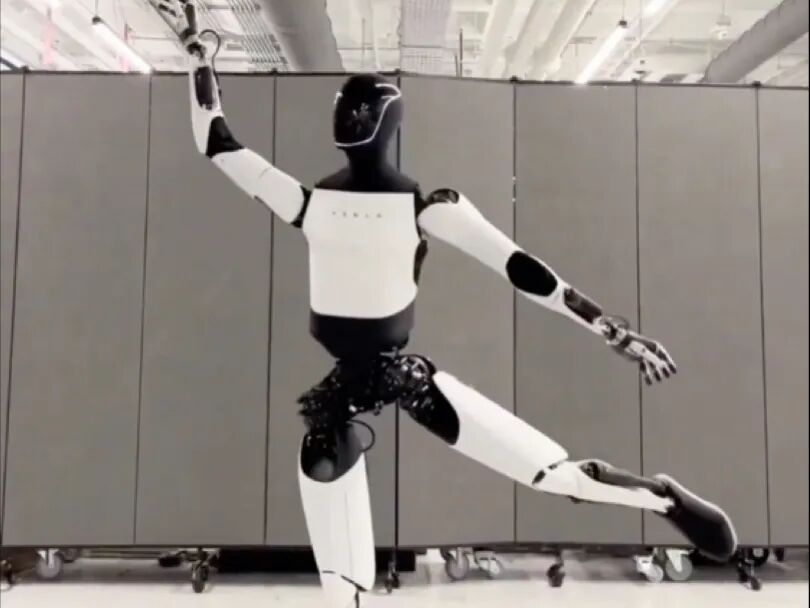
The third-generation robot that Tesla is about to launch will focus on improving the tactile sense and joint flexibility of the hands, making them truly comparable to human hands.
To build Optimus, Tesla has to establish a brand-new supply chain from scratch.
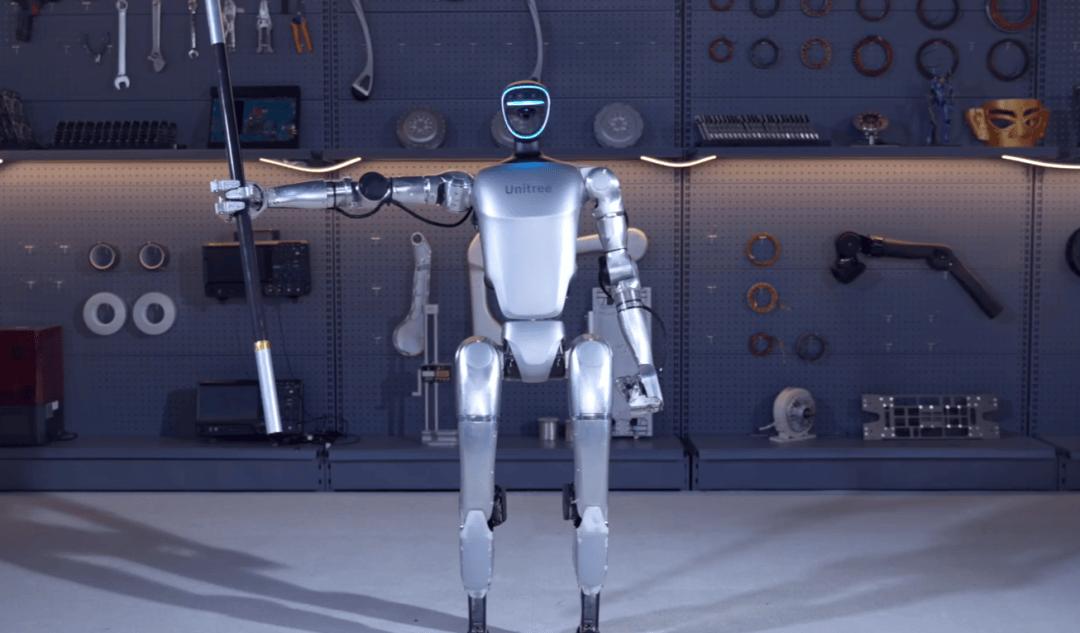
“There isn't a well-established robot supply chain yet. Some components may not even be available on the market, so we have to develop and manufacture them ourselves.”
Tao Lin compared this process to Ford's establishment of the automotive supply chain a century ago. Currently, Tesla's robot components mainly rely on self-development and global procurement, and there is no ready-made system to rely on.
“Once we start mass production, it means that there will be a preliminary robot supply chain worldwide.” This may be Tesla's greatest contribution to the industrial world – it will drive an entire new high-precision manufacturing industry chain.
Tesla refuses to limit Optimus to a single application scenario, such as “industrial” or “service.”
“I don't think it's necessary to distinguish between industrial-grade and other-grade robots. Simply put, if you train a person to work in a factory today, they'll work in the factory. If you train them to work at home tomorrow, they'll work at home.”
This “versatility” comes from Tesla's unified large AI model. Whether it's a car (Robotaxi) or a robot (Optimus), they share the same “brain” but have different execution terminals.
At the end of the interview, the topic returned to Tesla's ultimate vision. In Musk's new book, the proportion of content about cars seems to be decreasing, while the proportion of AI and energy is increasing.
Tao Lin responded: “Cars will still be very important AI carriers for a long time, but we're not just a car manufacturer.”
Tesla is playing a long game: using photovoltaic and energy storage to solve the problem of energy acquisition, using FSD and Robotaxi to solve the problem of physical movement costs, and using Optimus to solve the problem of labor shortage.
“The economic development of humanity expands with our activity radius. Suppose cars can drive autonomously. Then, human economic activities will become more prosperous.”
In 2026, for Tesla, it is a crucial year to verify whether the underlying logic of this “AI physical world” can work. As Tao Lin said: “We're using various methods to drive the industry forward faster and show that this path is viable.”
This article is from the WeChat official account “Phoenix Tech.” Author: Yu Hao, Editor: Dong Yuqing. Republished by 36Kr with permission.