How can ordinary people seize opportunities with AI? We've found four pioneers.
We interviewed four AI entrepreneurs who were all "outsiders" in artificial intelligence just a few years ago. They used to be overworked employees in big companies, an advertising director, a Bilibili content creator, and an editor - in - chief. However, they are also part of the "AI native generation" and have achieved a life turnaround with the help of AI.
Just around the New Year, Elon Musk's declaration of the "1000 - day countdown to the old world" added fuel to the fire of AI panic.
The influence of tech giants and related prophecies is far from ordinary people and is just the tip of the iceberg in the AI era. What we focus on are the success stories that ordinary people can replicate.
Recently, we found four "pioneers." They have one thing in common: they are not very professional, and some are even liberal arts students. However, they have all seized the opportunities brought by the AI era.
For Wang Boyuan, the explosion of AI is not so much a source of anxiety about being replaced as it is an exciting moment when he finally has the tool to "create his own universe." On the last day of 2025, this 38 - year - old former media journalist with no IT background launched his Dolby Atmos music app "Panoramic New Sounds" on the TestFlight of the App Store.
A serial entrepreneur who can't draw at all created a quite good - quality workplace satirical short film with AI and came up with the "Overworked Employee" IP, which is well - received by netizens.
There is also an experienced commercial advertising director who, with the help of AI, makes his works more distinctive and has become a popular advertising partner for AI startups. However, he also gets sad at night because he realizes that his proud creative style, honed over decades, "might just be a seed in the future AI era."
They have similar experiences. They actively learn about AI and integrate it into their daily lives or work. As a result, some things have been reshaped.
These cases may inspire us. When facing AI, blind panic or turning a blind eye is not constructive. Whether at a macro or individual level, we can find ways to benefit from AI.
A 38 - year - old liberal arts student wrote 110,000 lines of code with AI
Wang Boyuan is 38 years old this year. After graduating with a degree in English, he has been involved in technology reporting and dealing with words for more than a decade.
However, Wang Boyuan, who disassembled computers when he was a teenager, has been waiting for an opportunity to "create" freely without being restricted by programming languages.
Finally, his chance came.
Wang Boyuan is a passionate fan of Dolby Atmos music.
When Apple Music launched the Dolby Atmos feature in 2021, the auditory shock of 128 channels made him discover many new details in Linkin Park's "Hybrid Theory," a song he had listened to countless times before. However, Apple Music couldn't query Dolby - format music in batches, so he created a database website for Chinese Dolby Atmos music using Notion and manually entered 7333 tracks.
As a result, Wang Boyuan became well - known in the music enthusiast circle. However, the website had limited functions, couldn't support searches, and became slower as more tracks were added.
He asked a coder friend whether it was feasible to turn the website into an app. His friend kindly advised him to think it through carefully.
But AI encouraged him, saying, "This can be achieved!" Then it suggested that he start from registering a server, learn how to deploy, and download AI programming development tools. At first, he used several tools like Cursor alternately, but since Cursor was too expensive, CodeBuddy gradually became his main platform.
Wang Boyuan thus entered the new world of vibe coding.
Surprisingly, the beginning was easier. At first, when he talked to AI about his requirements, AI would take on everything and provide a very complete solution. However, when he tried to run it, he found that there were either errors or the result didn't meet his expectations.
On this code foundation, he checked AI's in - depth thinking records and optimized the code by chatting with AI - making sure all search results were displayed, aligning the icons, and automatically fetching data...
Sometimes, AI is like a hard - working but head - down worker. When it modifies the code, it may accidentally change some stable functions. The most frustrating situation for him was when the error message persisted. He kept chatting with AI, and it always told him the problem was fixed, but it still remained. "It was extremely frustrating."
However, when Wang Boyuan had a series of "successes" - making requests in natural language, having AI modify the code, and then running it successfully - he felt like he "entered a state of flow and it was extremely satisfying! He even had the illusion that he had superpowers."
After ten days of programming, the "Panoramic New Sounds" mini - program was launched on June 9, 2025. Although its functions were simple, mainly for data retrieval and display, the experience was smooth and the interaction was complete.
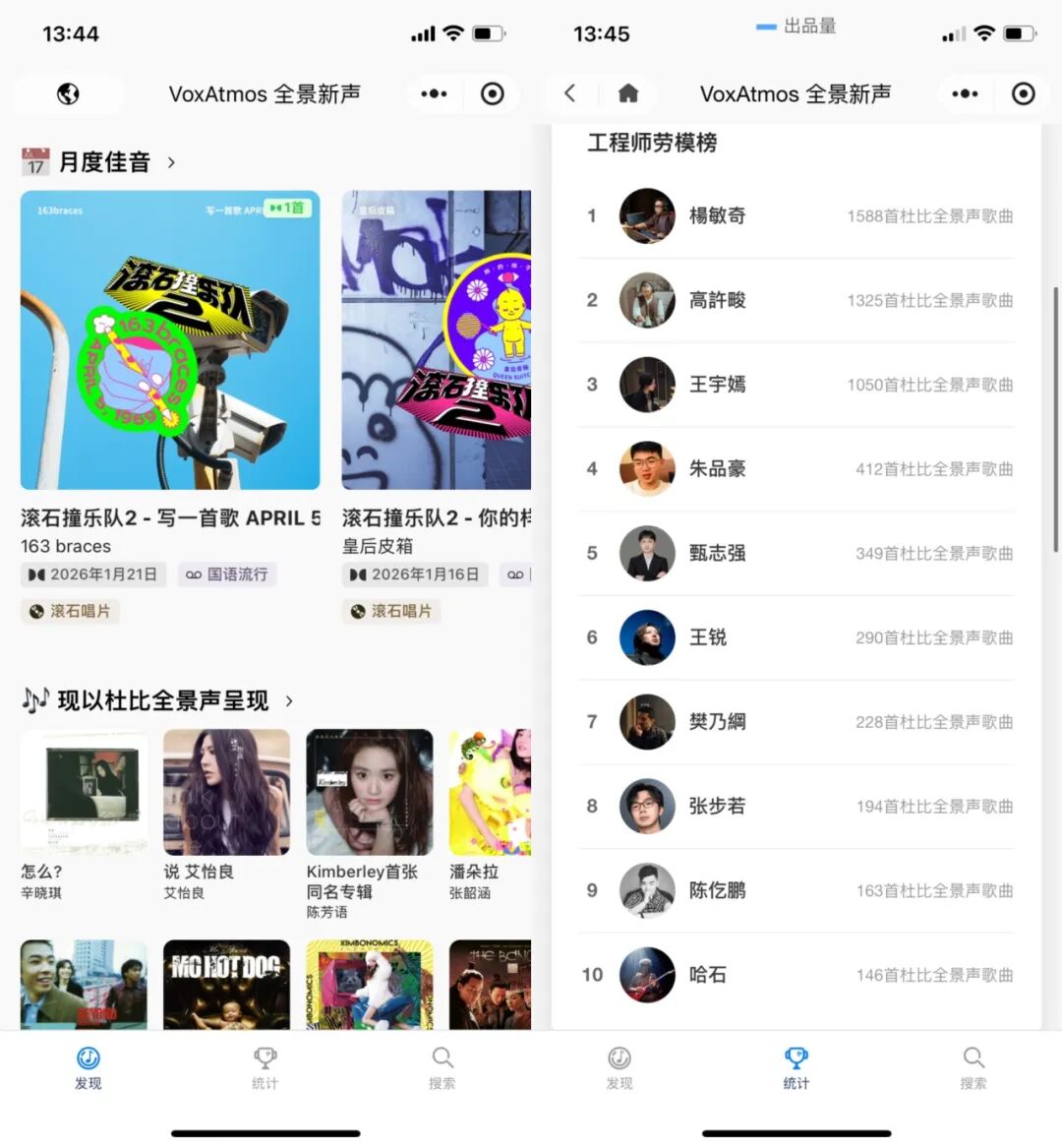
Over the next six months, the mini - program received a lot of feedback in the industry. Some people showed screenshots of their record label's interface using the app to investors, and some sound engineers used the data page of Panoramic New Sounds to submit monthly reports. Someone in a Xiaohongshu group commented, "It's a masterpiece by a craftsman. It's so rare. The creator really knows Dolby music well," which deeply touched Wang Boyuan.
His friend praised him, saying, "You have a programmer's mindset now."
Wang Boyuan sighed, "All my friends, including myself, are very surprised." Who would have thought that a middle - aged liberal arts student who still can't understand code could independently develop a mini - program in just ten days.
He can even find bugs on his own and instruct AI to debug them according to his logic.
When the first version of the mini - program loaded extremely slowly, he thought about where the problem might be and directly ordered CodeBuddy to list all the steps from the first opening to the first full load. He found that the content of three tags was pre - loaded. In fact, only the home page needed to be loaded.
"That was the first time I questioned AI. I said it must be wrong. AI replied that I was right." After the modification, the loading speed returned to normal immediately.
On the last day of 2025, Wang Boyuan launched the iOS app of Panoramic New Sounds on TestFlight, which was very meaningful. This is a more complex project than the mini - program in terms of data, interaction, interface, and compliance, and it also added the music listening function, completing a closed loop of user behavior logic.
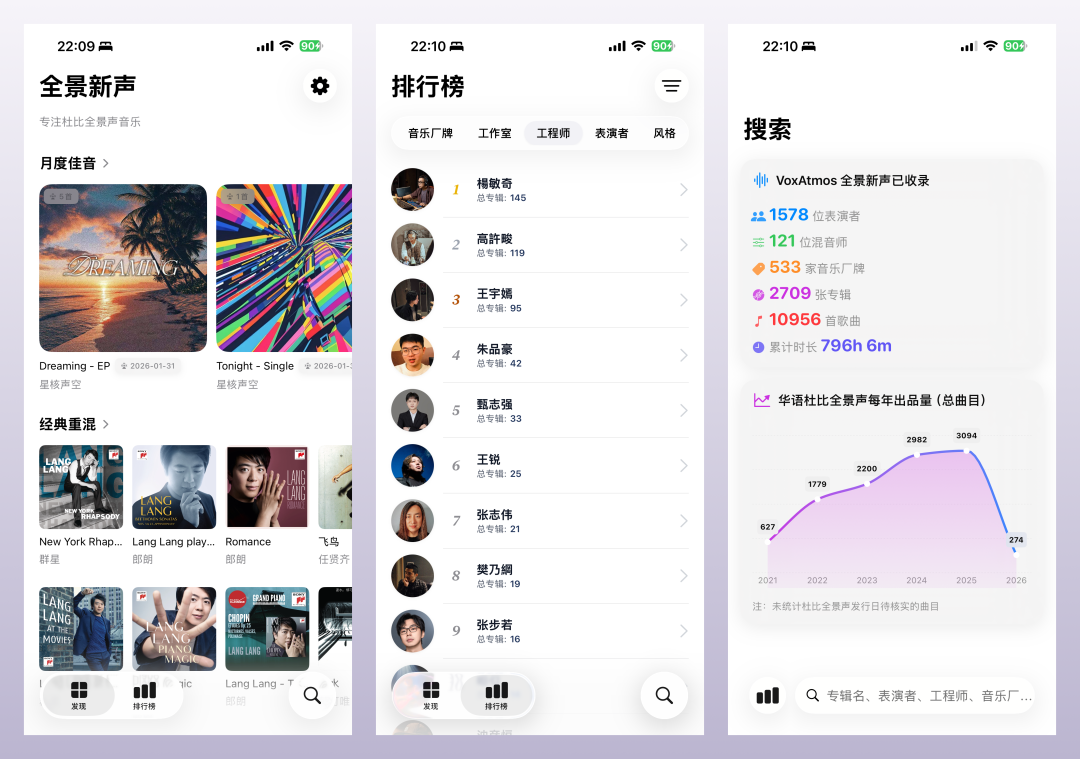
iOS app interface
This was still developed by Wang Boyuan independently by chatting with CodeBuddy.
Behind this is the rapid progress of AI programming tools. They are becoming smarter, better able to understand requirements, and don't require specialized prompts. Take CodeBuddy, his main platform, as an example. It has more and more functions. After supporting MCP, it can be directly debugged. After the launch of skills, iOS effect programming has become simpler, and gradually it gives a more one - stop feeling.
Over the past six months, he has been extremely enthusiastic about programming and creation. He hardly plays games anymore and spends more than eight hours a day debugging his app. The average daily usage time of his app exceeds eight hours.
"I'm not competing with others. I just want to make an app that satisfies myself." The sense of achievement from creating something with his own hands is completely different from what he felt when working in the media. It's a more complex form of interaction.
Tool list:
CodeBuddy, as a one - stop development platform, is mainly used for natural language programming in the plan mode and iOS effect programming with skills. DeepSeek3.2 or Hunyuan models are often selected.
Xcode, as an iOS running simulator.
Created an anime IP with AI without any painting skills, resonating with office workers
Zhu Xu came to Beijing in 2016 and entered the Internet marketing and training industry, which was a rising industry at that time.
After working in a big company for a few years, he started his entrepreneurial journey under the guidance of a senior. At first, Zhu Xu appeared in person in videos to teach people how to integrate resources to make short videos, but he found that his on - camera performance was not good enough. He also partnered with friends to start a teaching project for medical escorts, but as the platform tightened regulations on medical finance and other aspects, it became difficult to do projects related to medical content.
Zhu Xu's first two entrepreneurial experiences were mainly based on his past experience.
In May 2024, when Zhu Xu saw his friends use AI to generate videos in just a few minutes, and the effects were no less than the shots he used to produce with a lot of equipment, lighting, actors, and props, his perception of the industry was completely changed. He realized that this was an epoch - making leap in productivity. "At that moment, I thought I should give it a try!"
This time, Zhu Xu chose the workplace track because it was the field he was most familiar with. His years of workplace experience had given him a lot of inspiration for topics. "Even before the first completed work was released, I felt that this project might succeed."
Soon, "Midnight Company Horror Stories" became an instant hit. In this short film, a cow wearing a T - shirt was working overtime in the company. The company's internet was down because the network cable was not plugged in properly. But "to plug in the cable, a project needed to be initiated first. The director gave approval three days later, and an overnight meeting was needed to discuss... The budget was insufficient, so the HR department proposed adding an internal position, and Xiao Li was asked to handle plugging in the cable..."
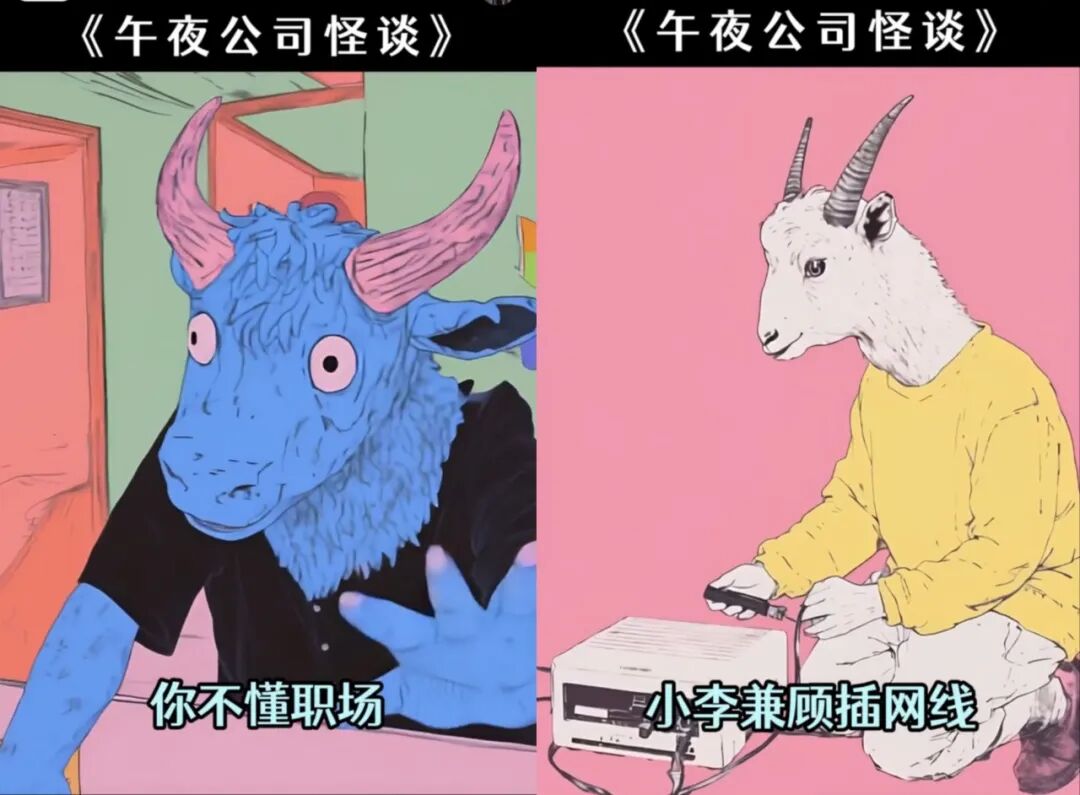
Netizens were deeply touched. "I always thought this kind of formalism only existed in the public sector," "This is exactly what happens in our company. We need to buy two batteries, but the supplier only sells in batches of five. So the company said to find a new supplier, and the price can't be higher than before... It's been almost half a month and there's still no result..."
The "Zhu the Overworked Employee" IP was thus established. Zhu Xu gradually expanded his team and began to produce poignant content regularly.
At first, overseas software had better effects. Zhu Xu used ChatGPT to generate words and runway, Luma to generate videos. After several major breakthroughs in AI applications, Zhu Xu changed his tools several times and gradually formed a stable workflow.
Now, Zhu Xu uses Yuanbao to generate lyrics. Yuanbao has folders that facilitate the team's work. Given a topic, a story direction, and a rhyme scheme, he asks it to expand the scene and story in a black - humor style with a twist at the end.
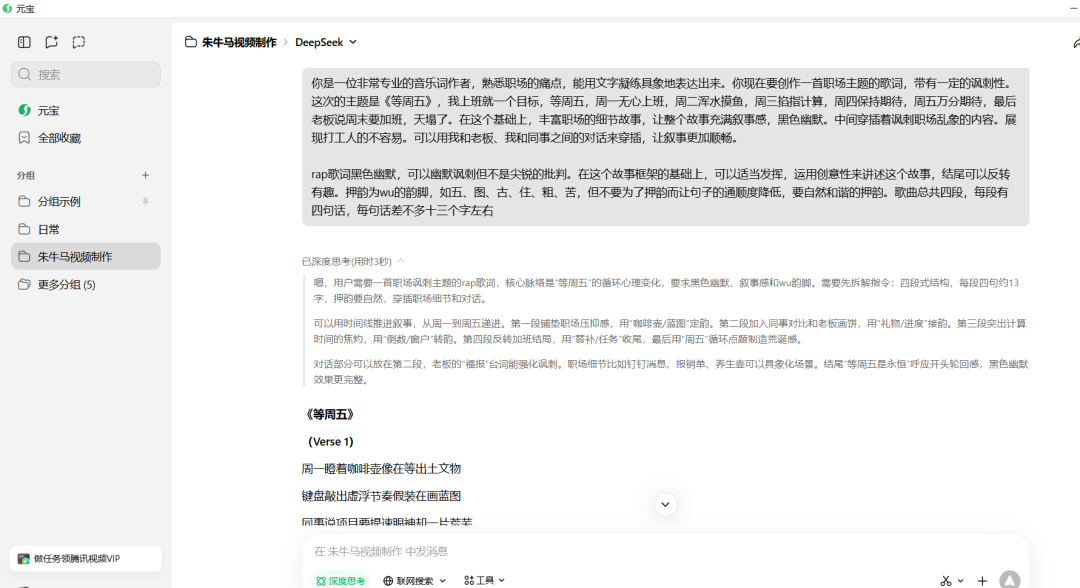
Workflow of creating with Yuanbao
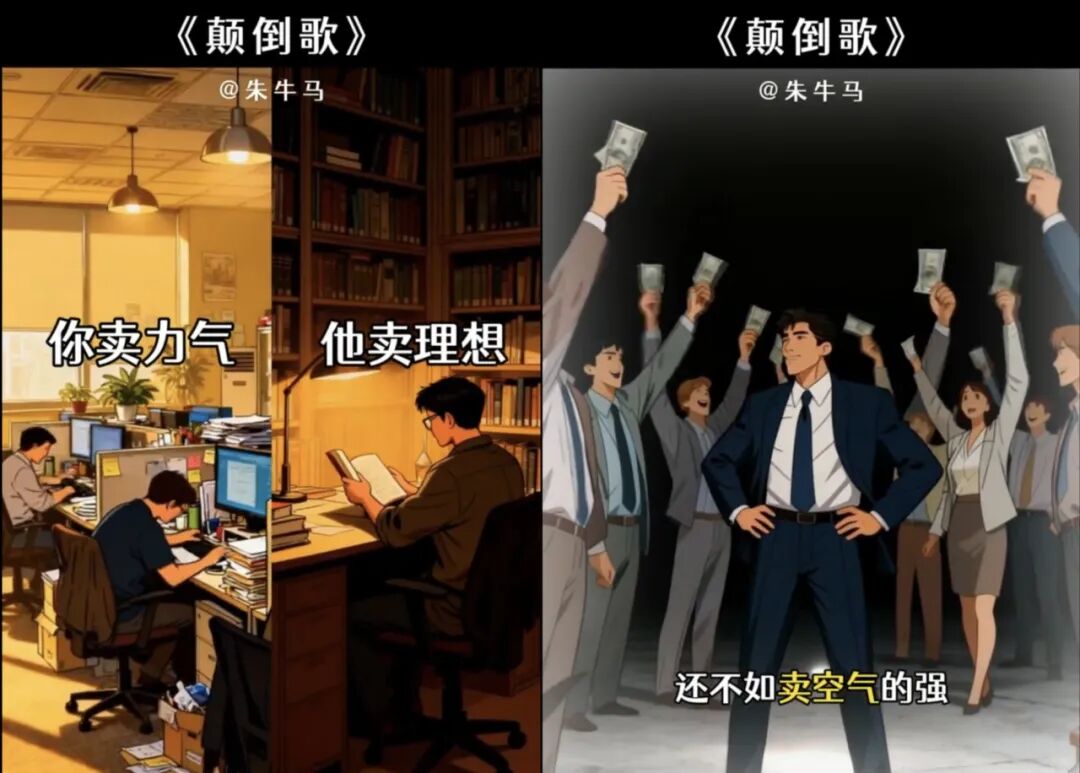
When the topic is not clear enough, AI can also provide inspiration. For example, Yuanbao came up with the core idea for "The Reversed Song," "Mice tying bells on cats, parrots giving speeches in the meeting room..." The description and satire of the phenomena are even sharper than those of humans.
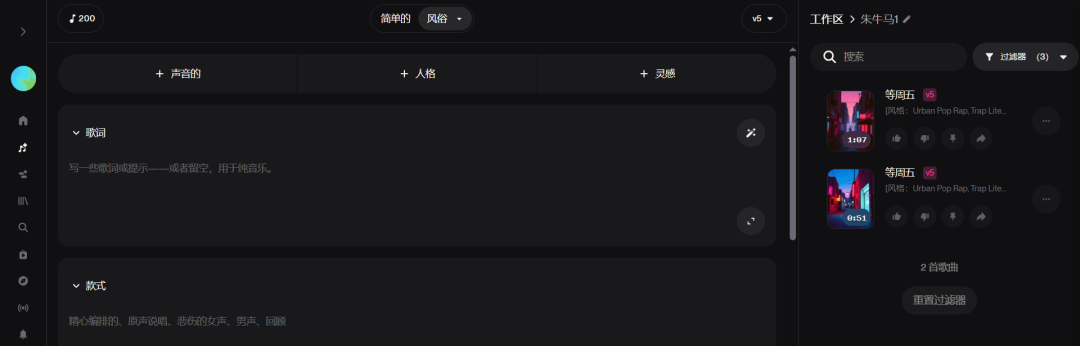
For song generation, Suno is often used.
Zhu Xu considers himself "tone - deaf," so he often chooses melodic rap for the generated songs. For so many songs, humans still need to be the final "judges." His first criterion is clear enunciation, and the second is a fast rhythm - because the back - end data feedback shows the algorithm's preference. Slow and lyrical songs have poor data. The content should be dense and have a twist.
And Suno's capabilities have also evolved rapidly. It's obvious that as time goes by, the rap rhythm and flow of "Zhu the Overworked Employee"'s works have become more and more sophisticated.
Zhu Xu can most feel the impact of technological leapfrog in the video generation step.
At first, to avoid the uncanny valley effect, Zhu Xu chose the 2D anime style. At the beginning, he mainly used Midjourney and long stylized prompts to control consistency. Later, Vidu launched the "multi - subject reference" feature, which was a huge improvement and solved the fundamental problem of "subject consistency." Later, it became a common feature on various platforms. Now, functions such as motion transfer and complex camera movements like panning, tilting, and zooming are also available, making the "PPT - like" feeling of "Zhu the Overworked Employee" animations less and less obvious.
After the entire workflow became smooth, Zhu Xu's studio also achieved some commercial success. "Zhu the Overworked Employee" is used by Zhu Xu as a window to showcase AI - generated content. On the one hand, it is used to connect with non - standard business orders from the B - side, such as advertising production and account operation. On the other hand, it tries C - side business, such as creating standardized courses like "AI Short - Video Combination Skills."
In Zhu Xu's view, AI plays a "leveling - the - playing - field" role to a large extent. For a creator like him who can't draw or compose music and sing, it lowers the creative threshold and enables him to create comprehensive works like "Zhu the Overworked Employee." It can make up for people's shortcomings and expand their imagination.
However, this may require a premise, that is, as an individual, one needs to show initiative and learn new things.
Tool list:
Yuanbao: Topic planning + lyric generation + script storyboarding
Suno: Music generation
Midjourney: Static image generation
Vidu: Video generation
Developed an AI - assisted creation tool to support human subjectivity
For most Internet users, the AI era seems to have arrived overnight. There are also a very small number of people who, although not