When Jia Yueting also tries to ride on the coattails of the trend, it shows that car manufacturers are serious about building robots.
Shortly after Elon Musk announced that Tesla would transform into a robotics company, Jia Yueting followed suit.
On February 5th, Jia Yueting held a product launch event for FF's first batch of embodied intelligent robots in the United States, unveiling three series at once. There were all - around and athletic humanoid robots, as well as companion - type quadruped robots. Recall that when FX launched its new car, the FX Super One, last July, netizens quickly pointed out that it seemed to be a "copy" of Great Wall's WEY Gaoshan. I think it's necessary to ask, "Will the robots also be copies?" Moreover, the more you look at them, the more they resemble the Zhipu robots developed by Zhuo Jun's company...
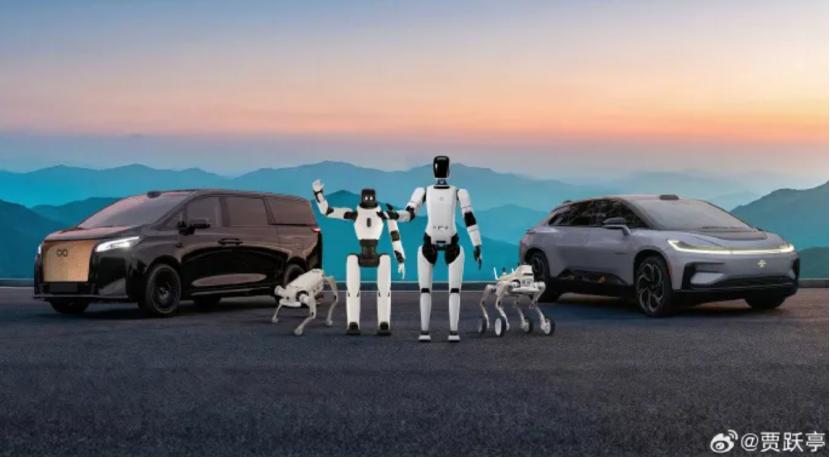
It's no wonder that Mr. Jia wants to jump on the bandwagon. It has become a consensus among China's new - energy vehicle startups that the future of automobile companies lies in robotics. XPeng was the first to start "making humans" (developing humanoid robots), but it also stumbled the fastest.
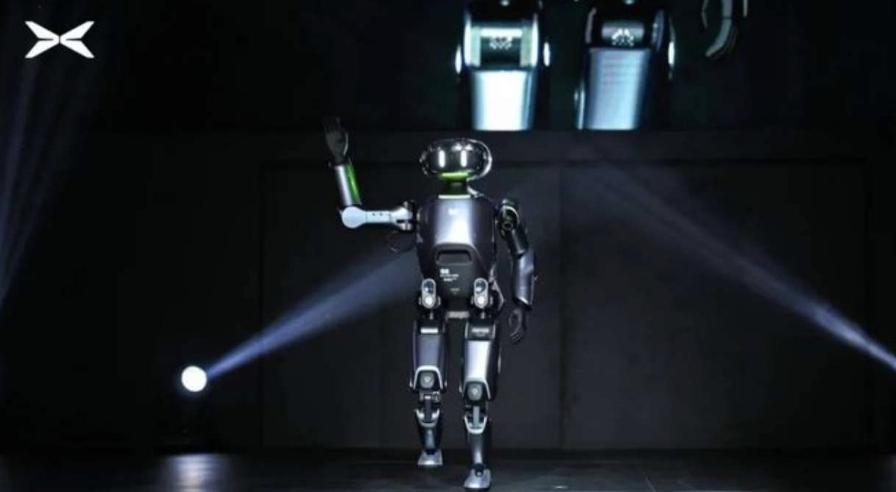
A few days ago, XPeng's humanoid robot, IRON, made its first offline appearance and promptly fell on flat ground before being carried off the scene. Subsequently, on February 2nd, when the Hong Kong stock market opened, XPeng Motors' stock price dropped by more than 9% at one point.

Of course, the main reason for this decline was a collective correction of automobile stocks in the Hong Kong stock market. On the same day, BYD's stock price dropped by nearly 8% at one point, NIO fell by nearly 7% during trading, Leapmotor dropped by more than 5%, Great Wall Motors dropped by more than 4%, Li Auto and GAC Group dropped by more than 3%, and Geely Auto and Xiaomi Group dropped by more than 2%.
In the short term, the stock price is a voting machine, and only in the long term is it a weighing machine. There's no need to attach too much significance to the single - day gains of automobile stocks. However, XPeng's robot falling, accompanied by the stock price decline, is still a metaphor that's gradually coming to light:
Automobile companies have reached a critical juncture in crafting new narratives, and embodied intelligence is the most popular new story.
Once again, Tesla was the first to tell this new story.
Tesla is no longer just an automobile company. Elon Musk has promised that Tesla will develop the Optimus robot and also launch the Cybercab autonomous taxi service. He even claims that Tesla will transform into a robotics company valued at $25 trillion.
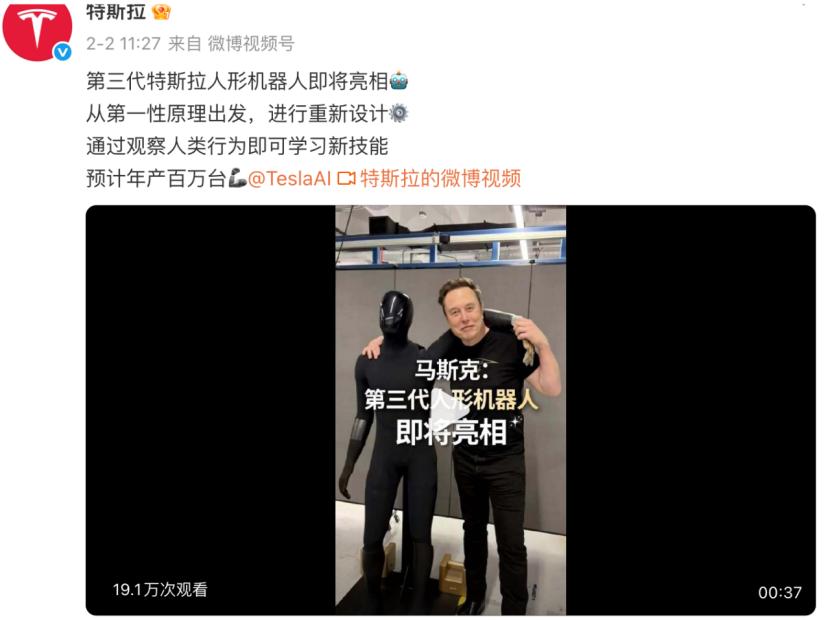
Recently, with the news of SpaceX's acquisition of xAI, Musk's intention to reshape his entire business empire around commercial spaceflight has become even more evident. As the one who always "points the way" for the industry, Musk's narrative has changed.
Domestic automobile companies are also changing their strategies.
Since the press conference in the third quarter of last year, XPeng has started to adjust its narrative. In November last year, He Xiaopeng announced that XPeng Motors aims to become an embodied intelligent company in the next decade.
As 2026 began, more automobile companies changed their narratives: Li Auto restarted its research and development of embodied robots, stating that it would strengthen its brand positioning in "embodied intelligence" rather than just creating a "mobile home." Xiaomi announced that it would make new progress in robotics in 2026.
Suddenly, robotics has become a new story that every automobile company wants to tell.
Embracing embodied intelligence theoretically allows automobile companies to achieve a higher market value and enhance their financing capabilities. Jiang Yi, the founding partner of Hengye Capital, said that in the US and Hong Kong stock markets, the price - earnings ratio of pure "manufacturing enterprises" is extremely low, while "AI technology companies" have a high valuation potential. Through robot iteration, automobile companies are trying to shift from the manufacturing logic of selling hardware to the AI logic of selling intelligent services.
As Elon Musk said, the value of robots will far exceed Tesla's existing business. He Xiaopeng also hopes that "XPeng's robots are expected to make a breakthrough in 12 - 18 months, driving up XPeng's market value."
However, companies like Unitree are the leaders in the embodied intelligence field. Compared with robotics startups, automobile companies are clearly lagging behind. The startups have already started mass - production, aimed for the Spring Festival Gala, and are preparing for IPOs, while automobile companies are just starting to tell stories.
01
Among domestic automobile companies, XPeng entered the field of embodied intelligence early, almost at the same time as startups like Zhipu and Galaxy Universal, and it also has experience in developing quadruped robots.
As early as 2020, He Xiaopeng considered exploring new growth avenues. One direction was flying cars, and the other was the then - popular quadruped robot dogs.
At that time, Unitree and Ubtech's quadruped robot dogs appeared on the Spring Festival Gala, and Xiaomi launched its "Iron Egg." XPeng Motors acquired the quadruped robot dog company Dogotix and established Pengxing Intelligence to handle its robotics business, with Zhao Tongyang, the founder of Dogotix, serving as the general manager.
According to Lei Feng Network, He Xiaopeng attached great importance to Pengxing, spending a lot of effort. He not only participated in offline regular meetings every week but also followed up on the R & D progress online. During this period, Pengxing launched the quadruped robot horse, "Xiaobailong."
In 2022, Elon Musk introduced Optimus, and with the explosion of large - scale AI model technology and the significant improvement of embodied intelligence software capabilities, this field reached a turning point. Robots quickly evolved from quadruped to biped, greatly enhancing their "human - like" qualities.
Under Zhao Tongyang's leadership, Pengxing began to shift from quadruped to humanoid robot R & D and launched its first humanoid robot, the PX5, in October 2023.
During the same period, the domestic humanoid robot industry witnessed its first "launch wave" - Unitree launched its first humanoid robot, the H1, and Zhipu launched the Expedition A1.
However, after just creating the PX5, Zhao Tongyang left Pengxing to found the embodied intelligence company Zhongqing Robotics. At the end of 2025, Zhao Tongyang was kicked over by his own robot during a test, attracting a lot of attention.
After the departure of the key figure, Mi Liangchuan, who was in charge of autonomous driving at XPeng, was urgently transferred to lead XPeng's robotics business. Mi Liangchuan had extensive experience in autonomous driving and AI at NVIDIA and also had a brief experience in robotics entrepreneurship.
Despite the personnel changes, XPeng's robots have still been recognized by the industry.
At the NVIDIA GTC AI Conference in 2024, Jensen Huang appeared in a black leather jacket and announced "a new industry has emerged." Among the nine robots on stage with him, two were from China, namely Unitree's and XPeng's PX5.
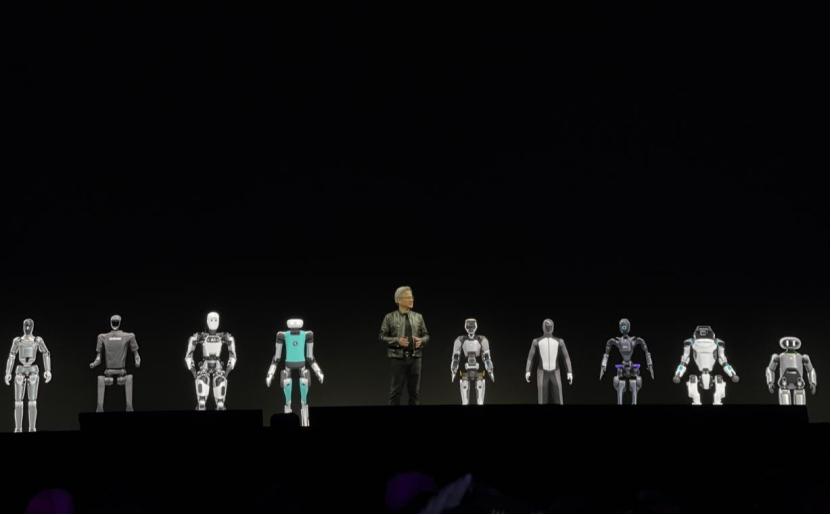
At the following year's CES, Jensen Huang was again on stage with 14 humanoid robots on the Cosmos platform. Among the six Chinese companies, XPeng was the only automobile company.
It can be said that XPeng is one of the automobile companies with relatively fast progress in robotics, but the embodied intelligence field is developing even faster. Unitree's robots danced on the Spring Festival Gala, Zhipu's robots achieved mass - production in early 2025, and Galaxy Universal's robots were making coffee on Wangfujing Street.
XPeng's robot, IRON, didn't make its official debut until the XPeng Technology Day in November 2025. When IRON walked the runway with a catwalk, its high level of realism led people to question whether there was a human inside. He Xiaopeng had to urgently release an unedited video to prove it, even choking with emotion as he said, "I hope this is the last time I have to prove that the robot is itself."
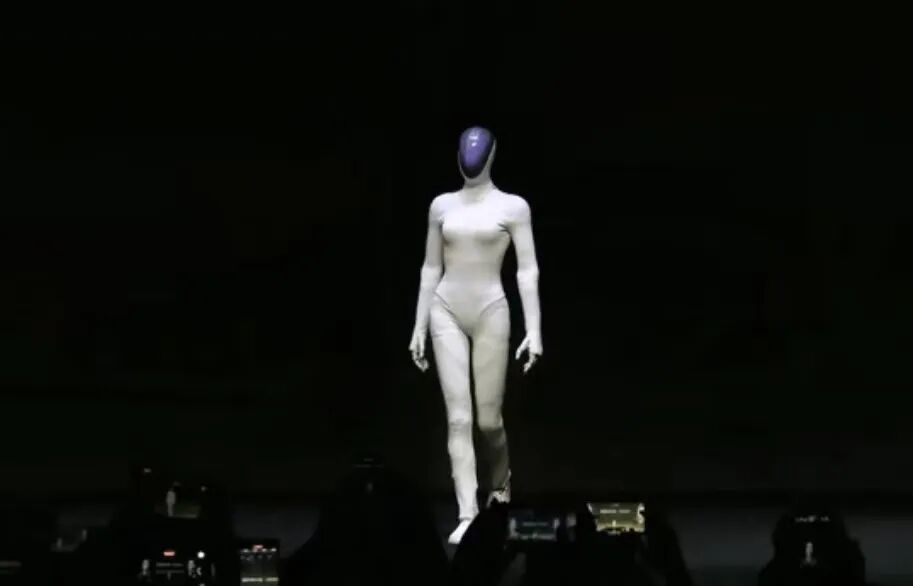
According to XPeng, IRON uses the technical route of the physical world model, is equipped with three self - developed Turing AI chips by XPeng, and is supported by multiple R & D teams at XPeng, including those for robotics, the whole vehicle, and power.
In November last year, He Xiaopeng announced XPeng's new positioning, stating that the company's new ten - year vision is for XPeng Motors to become a "global embodied intelligent company." According to his expectations, IRON will achieve large - scale mass - production by the end of this year and enter XPeng's showrooms, office parks, and factories.
Elon Musk plans to mass - produce one million Optimus robots this year, while He Xiaopeng has set the goal of mass - producing one million robots by 2030.
But in Jiang Yi's view, if XPeng's robot mass - production schedule fails to meet expectations, the market will question whether its new narrative as an "AI automobile company" can be realized, and thus revise its valuation model.
02
In the automobile industry, Elon Musk has always been at the forefront of the trend. From electric vehicles in the early days to humanoid robots today, he has been leading the industry.
As early as 2021, Musk proposed the Tesla Bot, hoping to use robots to replace humans in performing dangerous and repetitive tasks. In October of the following year, Musk introduced Optimus, igniting the world's enthusiasm for embodied intelligence.
In 2026, Musk's steps have become even more aggressive. To make room for the mass - production of Optimus, Musk announced the discontinuation of the Model S and Model X, and even his trillion - dollar salary plan is deeply tied to the robotics business.
Musk has set an example for automobile companies, and domestic automobile companies are following suit.
On January 26th, Li Xiang held an online all - staff meeting, stating that Li Auto would fully invest in the field of artificial intelligence and confirmed its plan to enter the humanoid robot business. In addition, Li Auto will further strengthen its brand positioning in embodied intelligence, rather than just creating a "mobile home."
Meanwhile, Xiaomi has also accelerated its layout in the humanoid robot business. Lei Jun revealed at the beginning of the year that Xiaomi's robotics business will see new progress this year.
Xiaomi entered the robotics field early, launching the "Iron Egg" robot dog in 2021 and the "Iron Man" humanoid robot in 2022. However, after the wave of embodied intelligence enthusiasm hit, Xiaomi went into hiding for a while and didn't launch any iterative versions of humanoid robots.
It wasn't until October 2025 that Xiaomi quietly completed the copyright registration for its "Third - Generation Humanoid Robot CyberOne." Lei Jun predicts that in the next five years, humanoid robots will be widely deployed in Xiaomi's factories. "This is just the first step. The demand for humanoid robots in households is greater, the requirements are higher, and the market is even larger."
Unlike XPeng, Li Auto, and Xiaomi, which are developing robots independently, NIO doesn't plan to get directly involved in R & D.
In November last year, while other companies were talking about robots, Li Bin still hoped that NIO would focus on automobiles. "There's no doubt that robots have a future, but we won't start today. Instead of getting involved now, we're more interested in which company's robots will use our chips."
Although NIO isn't directly involved in robot development, Li Bin hasn't missed this trend and has made investments through NIO Capital.
From investing in Standard Robots in 2022, to investing in Zhujidongli and Yuanlilingji in 2025, and then reinvesting in Zhujidongli and leading the investment in Linghou Robotics in 2026, NIO has been actively investing in the embodied intelligence field, and the frequency of its investments has been accelerating.
In general, domestic automobile companies have fully entered the robotics field.
According to Kaiyuan Securities, 15 domestic automobile companies have entered the humanoid robot field. Companies like XPeng, Li Auto, and Chery choose to directly engage in R & D and production, while companies like BYD make investments to build an ecosystem.
03
For listed automobile companies, embodied intelligence is indeed a good story. On the day when it was reported that Li Auto restarted its embodied intelligence R & D, its US - listed stock price soared by about 7% at the opening.
But a good story isn't enough; it needs to be supported by products. The reason why embodied intelligence startups can raise funds and develop well is that their products have actually been launched. For example, Unitree achieved a mass - production of 5,500 units in 2025, and Zhipu expects its revenue to exceed one billion in the same year.
So for automobile companies, stories alone aren't enough; the key is whether the products can be launched. Although XPeng's robot fell, at least XPeng is ahead of other automobile companies and has a mass - production plan.
Automobile companies actually have certain advantages in making robots.
Autonomous driving and embodied intelligence share similarities in technology and hardware. Jiang Yi analyzed that the software and hardware of humanoid robots highly overlap with the autonomous driving systems of intelligent vehicles, and the technology and components of the latter can be reused.
Moreover, automobile companies have mature large - scale manufacturing supply chains, which can reduce the cost of robots. They also have an advantage in data, as the road condition data collected during vehicle driving is highly interoperable with the indoor navigation data of robots.
For these reasons, in recent years, many talents from the autonomous driving field have left automobile companies to start businesses in embodied intelligence and have quickly raised large amounts of funds.
For example, Chen Yilun, the former chief scientist of Huawei's automotive BU