Between refraining from reckless moves and delivering tangible outcomes, gain insight into vivo's "unwavering resolve and steadfast execution"
As the New Year is approaching, the competition in China's mobile phone market is more intense than the pre-festive atmosphere.
Data released by IDC in January shows that in 2025, the shipment of China's smartphone market reached 285 million units, a slight year-on-year decrease of 0.6%. Behind the peaking of the market lies a competitive state of "progress or perish".
In particular, the top five mobile phone manufacturers all hold a market share of over 15%, while the shipment gap between the first-ranked and fifth-ranked player is only over 3 million units. In this red ocean market, vivo, which has always adhered to the principle of "steady progress leads to far-reaching achievements", has begun to explore the future form of smart terminals and the boundary of imaging technology.
Where does vivo's confidence come from? On February 3, "2026, Stay Focused and Stay Committed" published by Shen Wei, Founder, President and CEO of vivo, gave the answer. Instead of dwelling on the shift of the market landscape, Shen Wei put forward a proposition worthy of deep thinking for all: making user orientation the core competence of the organization.
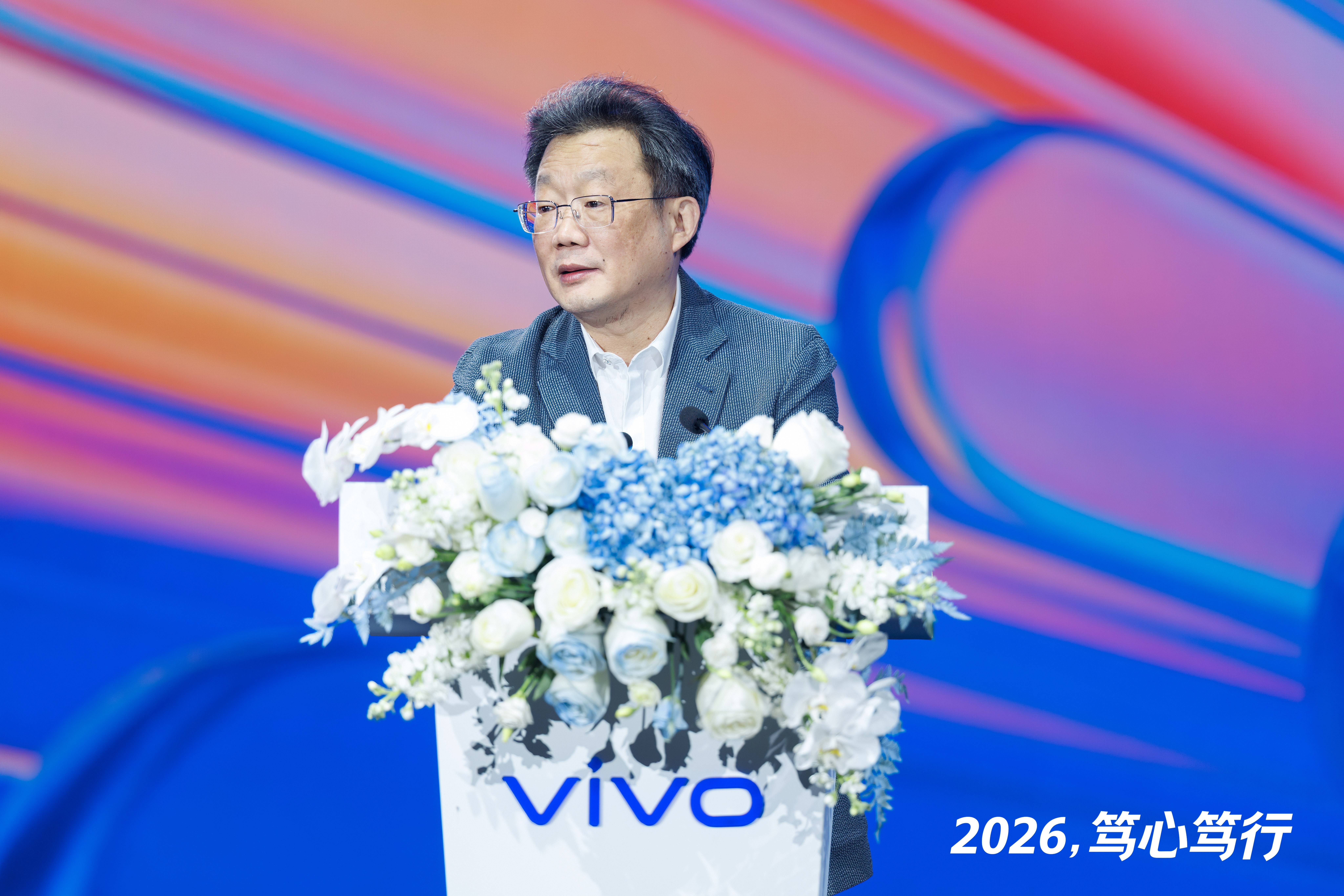
"Awareness does not equal capability, and consensus does not equal result". In Shen Wei's view, vivo needs to transform user orientation from conceptual emphasis into a reusable and precipitatable systematic insight, cognition and practice system.
This kind of "inward evolution" brings a new way of thinking. Because in the fully competitive mobile phone industry, "user-centric" has long been a slogan that has been used repeatedly. However, vivo, which has entered its 30th year, is going to do a more difficult thing - turn consensus into capability, and turn the concept into an organizational instinct as natural as breathing.
I. The difficulty of choosing not to do certain things forges vivo's ordinary mind to go through fluctuating periods
"Be greedy when others are fearful, and be fearful when others are greedy" -- Buffett's timeless investment motto has become a true portrayal of vivo when placed in the current mobile phone industry.
In China's mobile phone market in 2025, the uncertainty brought by competitive pressure is far greater than expected. On the one hand, the user's phone replacement cycle has been extended to 33 months, and the incremental demand of the industry has long peaked; on the other hand, the sharp rise in the price of memory chips in the second half of the year has also begun to shake the stability of supply chain costs.
Over the past year, there has also been FOMO sentiment brought by AI phones. From embedding large models into mobile phones to the penetration of AI into the underlying layer of the operating system, intelligent agents have begun to reshape the human-computer interaction paradigm, and the smartphone industry has staged a blossoming show of AI functions. Just when all manufacturers believed that their AI phones represented the future, an AI phone launched by a large Internet enterprise at the end of last year directly shook the traditional mobile phone industry's right to define innovation.
This AI phone with the ability to perform complex tasks across APPs directly tore a gap in the balanced ecology that traditional mobile phone manufacturers and application APPs have maintained for many years: AI phones are no longer defined by a single manufacturer, but jointly participated by large model companies and ecological partners.
When users see that AI can make "ordering takeout with one sentence" a reality, the decentralization of this innovation discourse power essentially means that user demands in the AI era have begun to force traditional mobile phone manufacturers to rethink what real innovation is.
In the current mobile phone market, the pressure brought by full competition and the excitement triggered by innovation opportunities are intertwined. For those manufacturers still at the gaming table, the competition logic has long changed. The past practice of stacking hardware configurations can no longer guarantee to maintain a leading position in the current market stage.
This is a fluctuating period when innovation constantly creates imagination and is pulled back to reality by the market. But for vivo, the more such a period is, the more it needs to stick to an ordinary mind and deeply cultivate the "cause" of user orientation. In the view of Shen Wei, founder of vivo, vivo has cultivated a "choose what not to do" with an ordinary mind.
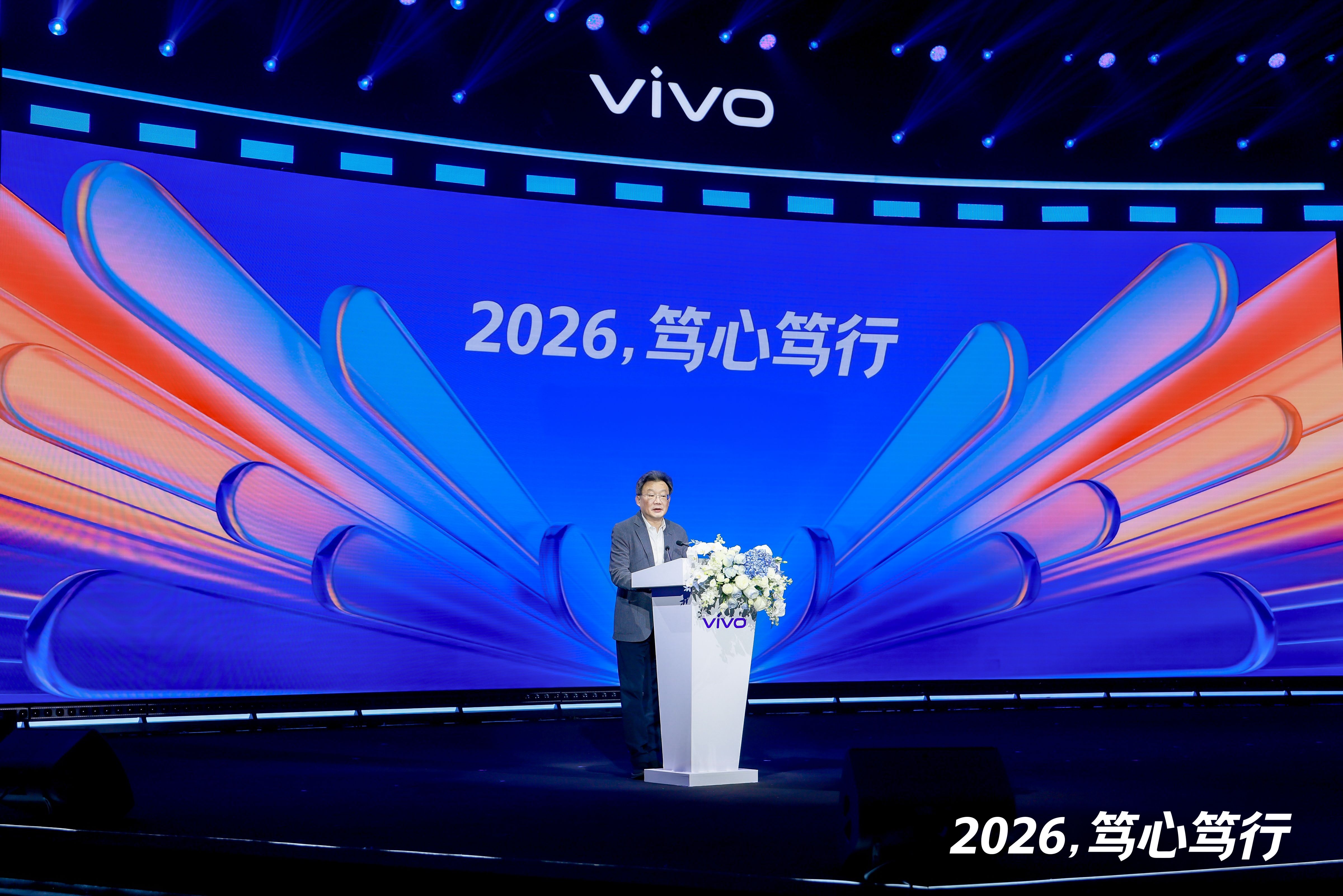
This philosophy of "not doing certain things" means that vivo does not compete for temporary speed, but only for long-term far-reaching development. Facing the emerging innovation opportunities, vivo shows strong strategic determination, does not blindly enter the market to chase market gimmicks, and does not pass on the cost pressure of the supply chain to partners, but chooses to pursue co-prosperity and co-existence.
"The change of industry cycle is essentially the change of user demands and the displacement of expectations. As we are in the eve of innovation and the deep water area of stock game, the deeper our understanding of users is, the more stable the innovation results will be", Shen Wei talked about the current cycle fluctuation in this way.
If Buffett's counter-cyclical motto emphasizes a kind of determination not affected by emotions, then vivo's philosophy of "not doing certain things" represents a restrained original intention after seeing through the 30-year law of the industry.
II. The difficulty of doing valuable things cultivates vivo's enterprising spirit of upward growth
If the difficulty of choosing not to do certain things forges an ordinary mind for vivo; then the difficulty of doing valuable things cultivates vivo's enterprising spirit of upward growth.
In the 2025 cycle full of fragmentation, Shen Wei defined this dialectical relationship in the year-end summary: "Choosing what not to do" is determination and wisdom, which determines the bottom line of the enterprise's existence; "Acting proactively to achieve something" is responsibility and pursuit, which determines the upper limit of the enterprise's development.
For vivo, an ordinary mind alone is far from enough. The more uncertain the environment is, the more it needs to be proactive and stay focused on its goals. Therefore, this enterprising spirit is also driving vivo to focus on laying solid foundations, and its persistent dedication to the four long tracks has lasted for seven years.
Design, imaging, system and performance - these technology tracks have a common feature : all of them directly determine user experience and have extremely high ceiling of technical barriers. Vivo chooses to "persist to the end" on these tracks, which essentially aims to build a "compound interest of innovation" centered on user experience: the Blue Technology Matrix.
The causes planted with dedication finally bear fruits. Taking the most representative imaging track as an example, the X300 series, which further consolidated its professional imaging status in 2025, adopts the dual-core combination of Dimensity 9500 chip and vivo self-developed imaging chip V3+, and redefines the new standards of system fluency and flagship imaging from the underlying technical architecture.

This is backed by a complete set of imaging capabilities. Vivo, which has been deeply cultivating the three underlying technologies of optics, algorithms and computing power, has independently developed the Blue Sensor technology, Blue Algorithm Matrix and Blue Imaging Chip. From sensors and optical systems to the collaboration between imaging chips and algorithms, imaging capabilities have long been broken down by vivo into a complete set of systematic projects.
More importantly, this capability is constantly moving closer to users' life scenarios. In scenario shooting such as concerts, night scenes and portraits, the X series has become a "magic camera" for countless photography enthusiasts and young users.
This enterprising spirit also drives vivo to grow from a traditional mobile phone manufacturer into a platform-based technology ecological company.
At the Boao Forum for Asia in May 2025, vivo announced the establishment of a Robot Lab and an AIoT Smart Terminal Division, formally entering the robot industry, taking home robots as the main direction of attack in the future and investing in a team of thousands of people; in the same period, vivo also appeared with its first MR headset, vivo Vision Explorer Edition.
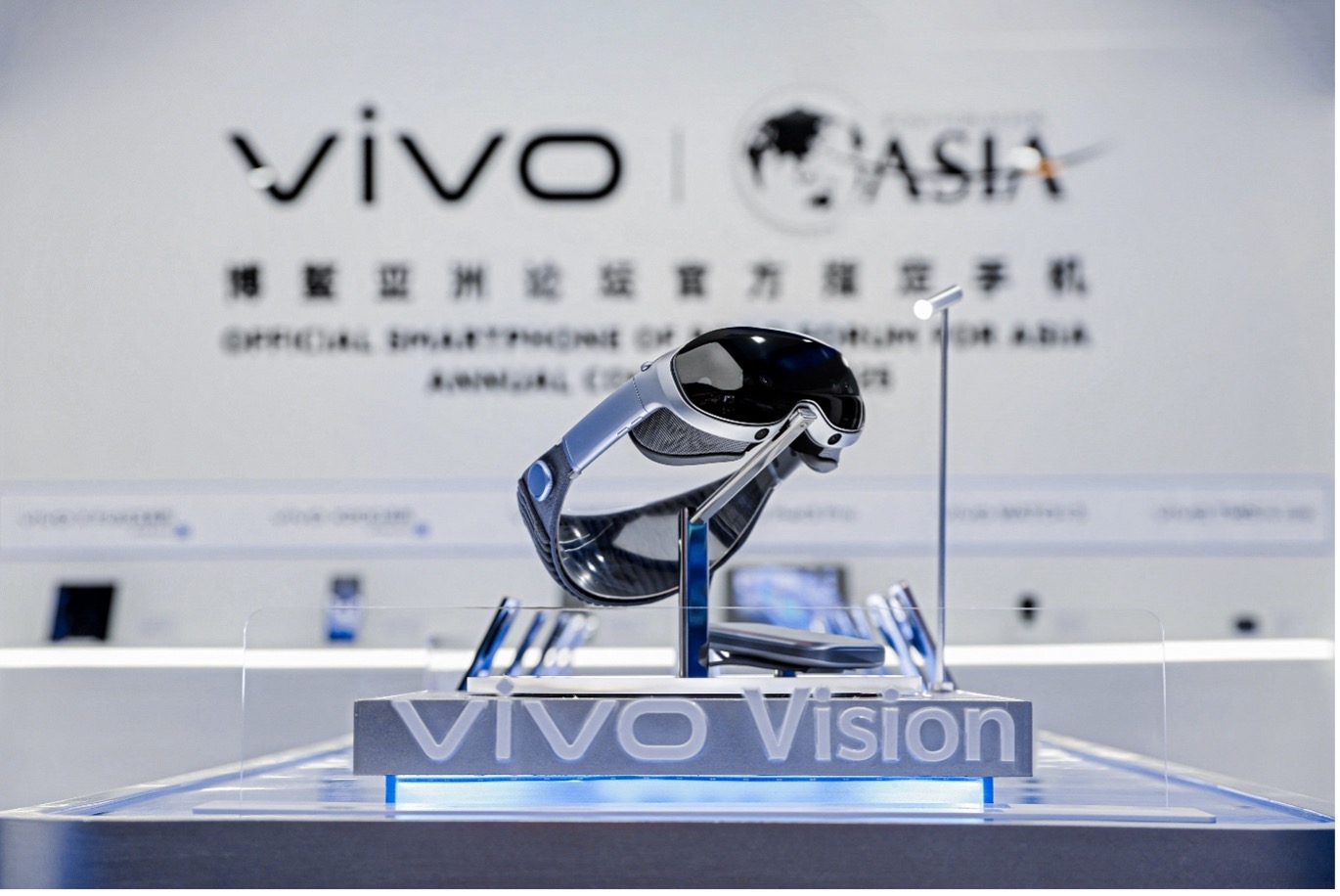
As a bet on the next-generation computing platform, it marks that vivo has officially entered the mixed reality field and launched a challenge to Apple, the global technology giant.
These forward-looking technology layouts clearly send a signal: vivo has long stepped out of the comfort zone of the traditional mobile phone track, but at the same time refuses to follow the trend of innovation blindly, but chooses tracks such as XR and robots that have huge imagination space and can shape a brand new industry to open up the future.
As Shen Wei said, vivo will still maintain the strategic determination of "making few bets but heavy bets", "steadily expand multi-scenario ecological products beyond mobile phones, reserve core key technologies such as XR and home robots, and gradually move towards an ecological technology platform enterprise."
vivo's upward growth is essentially a user experience-oriented persistent dedication driven by the enterprising spirit. For vivo, the sparkle in users' eyes is the key indicator for testing innovation. "Innovation is not only our response to user expectations, but also the final ruler to test whether we have practiced user orientation to the extreme."
III. Inward evolution: vivo wants to make "user orientation" penetrate into the capillaries of the organization
A great enterprise not only has great innovation, but also has the organizational instinct to continuously produce great products.
The functional structures such as the design department, hardware department and software department built by Apple allow professionals to manage professional affairs. Under this structure, no single department can independently complete the production of an iPhone, and the organizational capability reaches the extreme in this high-frequency and high-pressure collaboration.
Huawei spent 4 billion yuan to learn from IBM, and introduced management systems such as IPD and ISC to precipitate personal experience into organizational assets, so as to avoid the loss of capabilities with personnel turnover. To a certain extent, the real commercial watershed lies not in products or marketing, but in whether the enterprise has built organizational capabilities that can go through cycles.
In the matter of inward organizational evolution, vivo has gone a step further. In Shen Wei's view, user orientation should never stop at a slogan or concept, but needs to be implemented as an instinct of the organization.
"User orientation must run through all fields of the system and become the air and water of the vivo ecology", Shen Wei set a new goal for vivo in the year-end summary: in the new year, vivo will implement "user-oriented innovation" in every product and every decision.
From product definition, design to technology research and development, from procurement, manufacturing to marketing and sales, quality control, and even public administration and warehousing logistics, every department in every field of the whole system needs to return to its own business scenario, design and implement with the 7S model, so as to build a set of continuously verifiable user orientation practice system.
This is a breakthrough of the unity of knowledge and action, a leap from concept to capability, and a key step for user orientation to truly transform from values to organizational instinct.
For vivo, user orientation is more like an invisible self-restraint ruler. In an era when almost all mature enterprises are prone to fall into the big company disease, vivo makes user orientation penetrate into the capillaries of the organization, which essentially introduces a long-term effective external coordinate for the organization to continuously calibrate decisions and actions.
In this way, vivo can achieve 30 years of dedicated foundation-laying and steady long-term development. As Shen Wei said, only when the emphasis on users is solidified into the organization's systems, processes and methodologies and penetrates into the capillaries of the organization, can user orientation take root truly.
Then, the final question is ready to come out: where will user orientation lead vivo eventually?
The answer is gradually becoming clear in the "Imaging Technology Strategy" newly proposed by vivo. In vivo's view, imaging technology is no longer just the upgrade of mobile phone shooting capabilities, but a "platform-based core capability" that can be reused across devices, scenarios and industries. Extending from mobile imaging to professional creation equipment, medical imaging, and then to the external empowerment of optics and algorithms, imaging technology is becoming the key fulcrum for vivo to build a "platform-based technology ecological company".
For this reason, the outside world's expectations for vivo's next-generation flagship products are changing. Focusing on the next-generation "V flagship" X300 Ultra, the market is no longer only concerned about the refresh of imaging configurations, but whether vivo can fulfill the imaging technology capabilities accumulated over years with full humanistic care.
The most beautiful appearance of technology must be with human warmth. As Shen Wei envisioned, when users get a product with extremely simple and elegant design, they will sigh "This is so vivo"; when users experience a service that is deeply understood and carefully cared for, they will say "This is so vivo"; when users see technology breaking through barriers and conveying warmth, they will sincerely feel "This is so vivo".
Thirty years later, when vivo is sublimated into an adjective that represents extreme performance, warmth, reliability and even surprises, "This is so vivo" will also become an indelible mark of this era.