With an annual revenue exceeding 2.8 billion yuan, Beijing Badaling Outlet is quietly changing hands, with a group of financial tycoons standing behind it.
Acquiring SKP, known as "China's most powerful shopping mall", taking over Badaling Outlets, a "cash cow", and bringing Starbucks China under its wing. Three major acquisitions in less than a year. This makes people can't help but wonder: What exactly is the background of Boyu Capital?
Has the "luxury shopping mall" with an annual revenue of over 2.8 billion yuan been quietly sold at the beginning of the year?
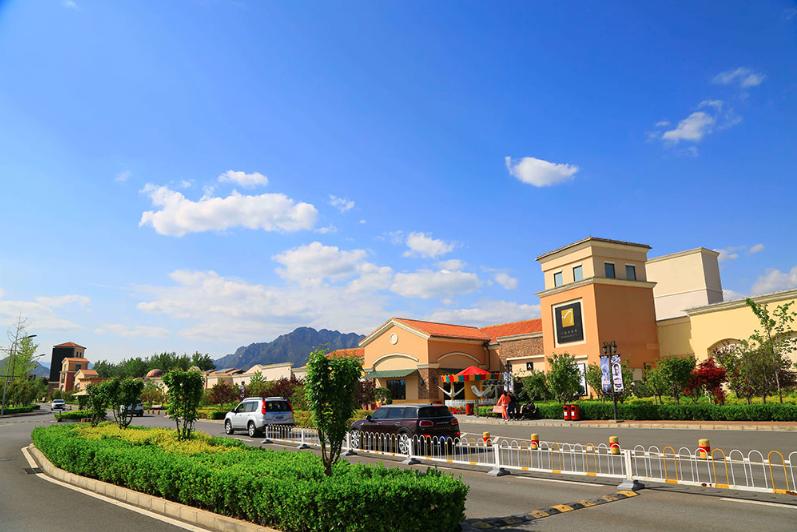
Recently, the official website of the Beijing Market Supervision Administration announced that Ruid Fashion plans to acquire 75% of the equity of Beijing Badaling Outlets. After the transaction is completed, it will form a joint - control pattern with the original shareholders.
▲
This transaction has brought Boyu Capital, the mysterious capital behind Ruid Fashion, back into the public eye.
Last year, this private - equity giant just acquired Beijing SKP. Previously, Starbucks China, which once triggered a global PE hunt, was finally taken into the arms of Boyu Capital.
Three major acquisitions in less than a year. This makes people can't help but wonder: What exactly is the background of Boyu Capital?
What's the plan of the capital behind the acquisition of Badaling Outlets, a "cash cow"?
Speaking of it, Badaling Outlets is far from the urban area and the surrounding area is very desolate. According to the location logic of shopping malls, opening a mall in such a place would probably end up in failure, but it is doing extremely well.
Why is this? The key lies in accurately targeting customers. Many netizens who have been there joked that this is a "luxury mall that one can afford", and some people said it is a "paradise for bargain - hunting".
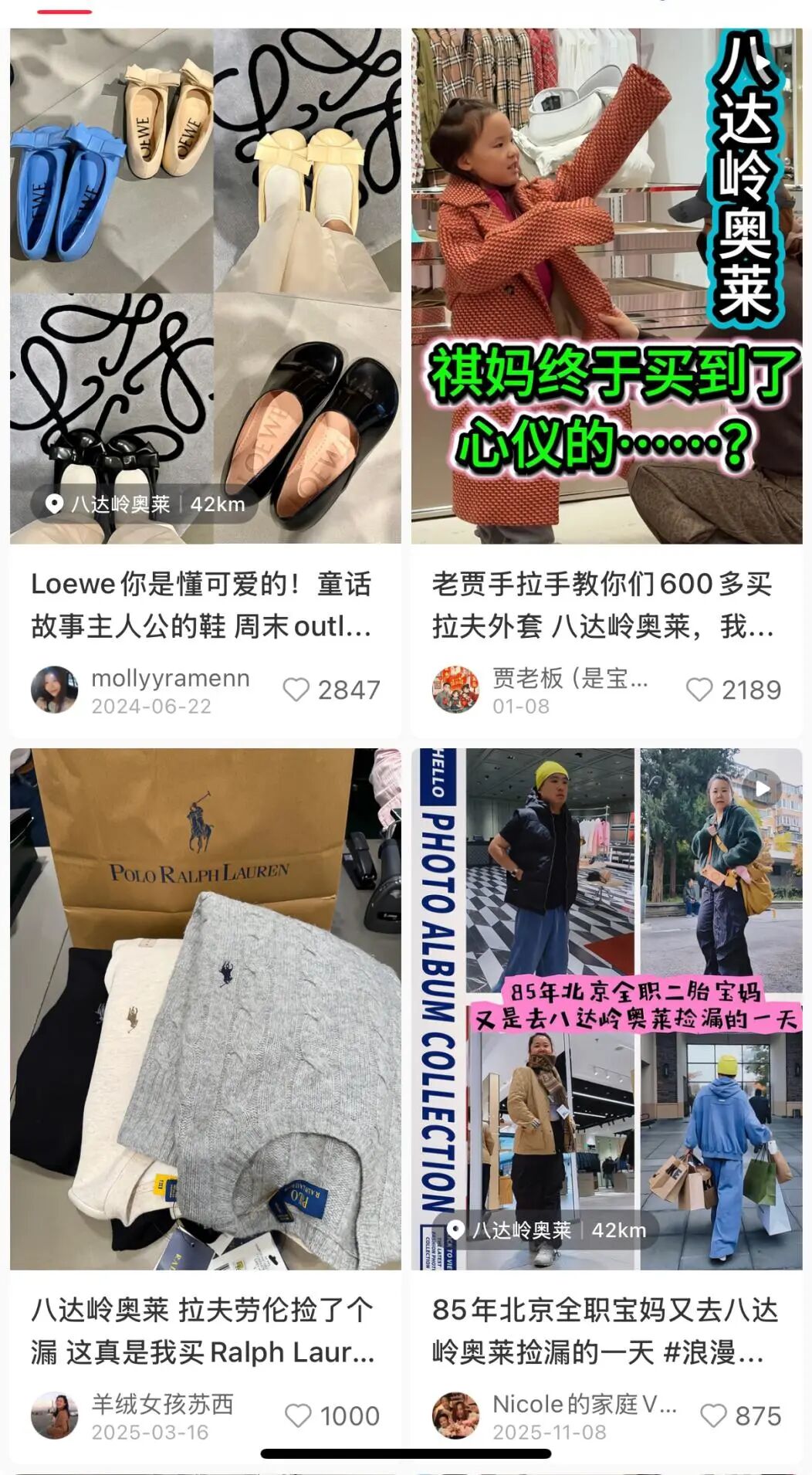
The consumption psychology of the middle class is often a bit contradictory: they want to save face and buy big - brand products, but they don't want to be taken advantage of. A bag in a regular mall can easily cost twenty or thirty thousand yuan, but in Badaling Outlets, you may be able to get it at a 50% discount. Although they are out - of - season styles, who can tell which season they are from? In this way, both face and practicality are taken care of.
This kind of cost - conscious consumption psychology has become more and more common in recent years. People are not not spending money, but they hope that every penny is spent worthily.
Badaling Outlets has smartly grasped this point. Since its opening in 2015, it has introduced nearly 300 brands, including luxury brands such as Prada, Gucci, Burberry, and BVLGARI. It helps brand owners dispose of out - of - season inventory and clear discontinued items, while making consumers feel that they have "found a treasure". Both parties are satisfied.
Coupled with the "garden town" design, this place has directly become a regular destination for middle - class families in Beijing to take their children out and go shopping on weekends. During holidays or discount seasons, there will be long queues in front of luxury stores.
Capital is profit - seeking. At this time, Boyu Capital's move to acquire Badaling Outlets is precisely a shrewd grasp of the middle - class consumption psychology.
In addition to Badaling Outlets, last year, Boyu Capital also acquired SKP, known as "China's most powerful shopping mall". Data shows that in 2024, the sales of Beijing SKP declined by about 17% year - on - year, and it directly lost its position as the "No. 1 shopping mall in terms of sales in the country" for many years.
In contrast, the performance of Badaling Outlets has been on the rise. Its revenue has increased from 1.8 billion yuan in the year of opening to 2.84 billion yuan in 2024, and the profit in 2024 was about 900 million yuan, with a net cash flow of more than 800 million yuan. It is known as a "cash cow" in the industry.
Therefore, some industry analysts said that Boyu Capital seems to have taken a fancy to this trend and included Badaling Outlets in its high - end retail map to complement SKP.
A friend in the investment circle told Sister Ba that nowadays, outlets are more like stable "ballast stone" assets in the eyes of capital, with a full - fledged anti - cycle attribute.
In addition, last year, Boyu Capital also included Starbucks China, a high - quality asset, in its capital map in the competition among many star - studded capitals.
Three major acquisitions in less than a year. Boyu Capital seems to be building a high - end consumption ecosystem covering all scenarios.
From the "Working Emperor" to the "Godmother of Venture Capital", financial circle bigwigs have built a private - equity giant
Although Boyu Capital's achievements are remarkable, compared with the well - known star capitals, such as the famous private - equity giants Sequoia and Hillhouse in the market, this capital seems low - key and mysterious.
Founded in 2011, Boyu Capital is an alternative asset management company deeply rooted in the Chinese market and with a global layout. It currently manages funds with a total raised scale of about tens of billions of US dollars and is one of the largest private - equity investment companies in China. Despite being low - key, Boyu's investment portfolio includes more than 200 enterprises, and its team has more than 170 people.
Then, what enables it to acquire top - notch assets like SKP and Badaling Outlets in the hunt among numerous capitals as soon as it makes a move?
Although the official website only has a few words to introduce the company's business, the team behind it is actually very powerful. This private - equity giant is a capital game put together by financial circle bigwigs, a typical case of "doing things high - key, being a person low - key".
First of all, Zhang Zixin is worth mentioning. Before co - founding Boyu, he was already a legendary figure in the financial circle.
In the year 2000, he joined Ping An from McKinsey, a global top - tier strategic consulting firm, and was one of the early "external brains" invited. After joining Ping An, he led a series of key battles, including A - share listing, overseas listing, and the strategic layout of integrated finance. He was one of the important behind - the - scenes promoters for Ping An to grow into a financial giant.
During his tenure as the general manager of Ping An, Zhang Zixin's annual salary once exceeded 10 million yuan and he was called the "Working Emperor". After working at Ping An for 10 years, he retired and switched to private - equity investment and became one of the founding partners of Boyu Capital.
Another soul figure in Boyu's founding team is Ma Xuezheng, who is known as the "Godmother of Venture Capital" and the "No. 1 woman in the Chinese capital market".
Before joining Boyu, she was the CFO of Lenovo Group and handled Lenovo's acquisition of IBM's personal computer business. She was crowned the "Queen of Investment" with this deal. However, after completing the acquisition, she firmly resigned and turned to be an investor, representing TPG to make large - scale investments in Dafu Ni and Wumart.
In 2011, Ma Xuezheng founded Boyu Capital and served as its chairperson. She has invested in enterprises such as Alibaba, NetEase Cloud Music, Megvii Technology, and WuXi AppTec. The total raised scale of the funds is nearly tens of billions of US dollars. She has been rated as "One of the most powerful women in the world", "One of the most influential business women in the world", and "The No. 1 business woman in Asia" by financial media such as Forbes many times. Unfortunately, she passed away in 2019, and the PE market has since lost a heavy - weight investment bigwig.
Of course, the other two co - founders in this core circle, Tong Xiaomeng and Jiang Zhicheng, also have prominent backgrounds.
Tong Xiaomeng worked at Morgan Stanley in the early years and later served as the managing director of General Atlantic and Providence Equity Partners. Then he joined Boyu Capital to be responsible for private - equity investment business. Jiang Zhicheng came from the direct investment department of Goldman Sachs Asia, a top - tier investment bank.
Sister Ba checked Tianyancha and found that in addition to the founding team, there are also two financial circle bigwigs among the current core members of Boyu Capital. Chen Zhiyi has worked at Morgan Stanley and a hedge fund focusing on the Asia - Pacific region, and Huang Kai has been responsible for medical investment at multinational pharmaceutical giants and top - tier investment institutions.
It is precisely because of the gathering of such a group of financial circle bigwigs that Boyu Capital has got rid of the grass - roots atmosphere from the very beginning and entered the primary market in a "dimensionality - reduction strike" posture.
Behind the major acquisitions of the capital giant: quietly buying properties, investing in technology, and developing hydrogen energy...
In addition to the three major acquisitions of acquiring SKP, known as "China's most powerful shopping mall", taking over Badaling Outlets, a "cash cow", and bringing Starbucks China under its wing, what other projects has Boyu Capital invested in in the past two years?
Last year, Boyu Capital also invested in the property sector. The most typical move was to buy a listed property management company called Jinke Services and then privatize it at a high price.
Capital never acts on a whim. At the end of 2021, Boyu Capital first acquired 22% of the shares for HK$3.734 billion (HK$26 per share). Later, it increased its holdings and participated in auctions many times, spending more than HK$5.3 billion in total. Finally, it obtained the controlling stake and decided to delist the company.
This move is quite confusing. According to Boyu Capital's privatization plan, if it conducts a tender offer and completes the delisting, it may have to pay an additional HK$2.3 billion, and its total investment may reach HK$7.7 billion, far higher than the market value of Jinke Services. Is this a losing deal?
Actually, it's not. Some experts analyzed that after Jinke Services is delisted, Boyu Capital no longer needs to be restricted by public shareholders and can quickly dispose of assets, shrink the business, or conduct consolidation and restructuring, thus turning Jinke Services into a "cash cow" or an "asset package" and achieving capital exit more flexibly.
To put it simply, this idea is a bit like contracting an entire pond at a low price when no one pays much attention to it, planning to manage it well by oneself and then make further plans when the water is clear and the fish are fat in the future.
In contrast, its relationship with another property giant, Vanke Property Service, is more like an old friend who has accompanied it for many years. It invested in Vanke Property Service in 2017, sold a part of its shares when the company went public, and made a lot of money. But it is still an important shareholder to this day. This in - and - out operation shows a clear understanding of the capital's characteristic of "buying low and selling high".
Boyu Capital is also very willing to spend money on technology and data, which represent the future. For example, in 2024, it joined hands with other investment institutions and spent nearly 600 million US dollars to buy a large stake in the overseas data center business of GDS.
Some people say that this shows that capital is optimistic that no matter how the economy fluctuates in the future, society's demand for computing and storing data will be as indispensable as the need for water and electricity, and will only increase.
More forward - looking, they have also laid out in the new energy and biotechnology sectors that require long - term investment. In 2024, they invested in a company called Taiqingchen, which is engaged in hydrogen energy, a new track in clean energy. In the same year, they also continued to increase their investment in Positive Sequence Biotech, a biotech company researching gene - editing technology.
Even in the familiar consumer field, Boyu Capital has taken actions. For example, there were rumors in the market that it wanted to acquire the high - end down jacket brand Canada Goose. In addition, it often acts as a cornerstone investor and invests in well - known enterprises such as Mixue Bingcheng and Hengrui Medicine when they go public.
Looking at these layouts together, we can find a clear trajectory. This private - equity giant led by financial circle bigwigs is no longer satisfied with success in a single track but has quietly woven a large capital network in multiple tracks such as consumption, technology, and healthcare.
Of course, there are always a lot of fancy gimmicks in capital's layouts. Buying SKP is to "reshape the high - end retail ecosystem"; buying an outlet is to "grasp the trend of rational consumption"; privatizing a property management company is to "help release the asset value"; even investing in hydrogen energy and gene - editing has become "laying out for a better life in the future".
Buffett once said: "Only when the tide goes out do you discover who's been swimming naked." It's hard to say if there will be anyone swimming naked when the tide goes out, but those who have bought the whole beach in advance are doomed not to get their shoes wet.
This article is from the WeChat official account "Financial Gossip Girls Channel" (ID: baguanvpindao), author: Yueyue Yueyue. Republished by 36Kr with authorization.