Der jährliche Umsatz beträgt über 2,8 Milliarden Yuan. Das Beijing Badaling Outlet Center wird stillschweigend in neue Hände übergehen, und dahinter stehen eine Gruppe von Großnamen aus der Finanzbranche.
The acquisition of SKP, hailed as the "best shopping center in China", the takeover of the "cash cow" Badaling Outlets, and the acquisition of Starbucks China - within less than a year, three sensational acquisitions. This can't help but make one wonder: Who is actually behind Boyu Capital?
Was the "luxury shopping center" with an annual turnover of over 2.8 billion yuan quietly sold at the beginning of the year?
Recently, the official website of the Beijing Market Supervision Administration announced that Ruide Fashion intends to acquire 75% of the shares in Beijing Badaling Outlets. After the deal is completed, there will be joint control with the original shareholders.
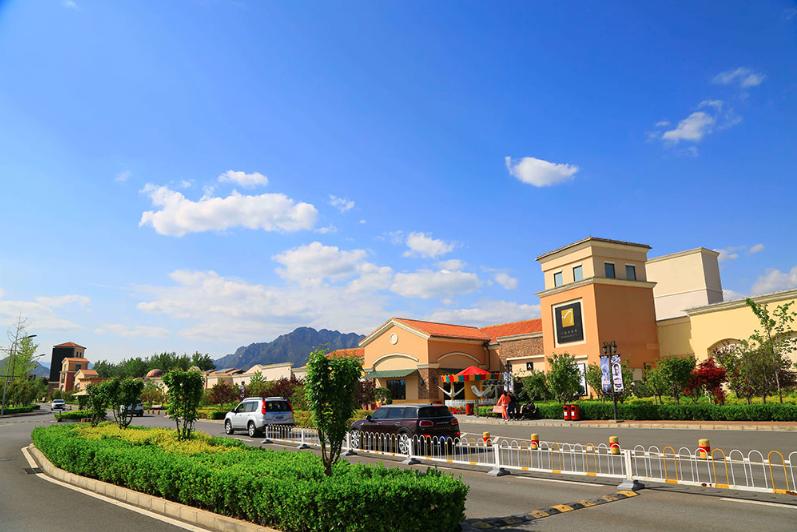
▲
This deal has once again brought the mystery capital behind Ruide Fashion, namely Boyu Capital, into the public eye.
Last year, this private - equity giant took over Beijing SKP. Previously, Starbucks China, which was courted by many PE firms worldwide, finally fell into the hands of Boyu Capital.
Three sensational acquisitions within less than a year. This can't help but make one wonder: Who is actually behind Boyu Capital?
What is the plan behind the takeover of the "cash cow" Badaling Outlets?
Actually, Badaling Outlets is far from the city center and the surrounding area is quite desolate. According to the logic of shopping - center location selection, it would have a high probability of failure. But it is doing extremely well.
Why is this so? The key lies in the right target group. Many netizens who have been there jokingly say that there is "luxury for everyone" here. Others call it a "paradise for bargain hunters".
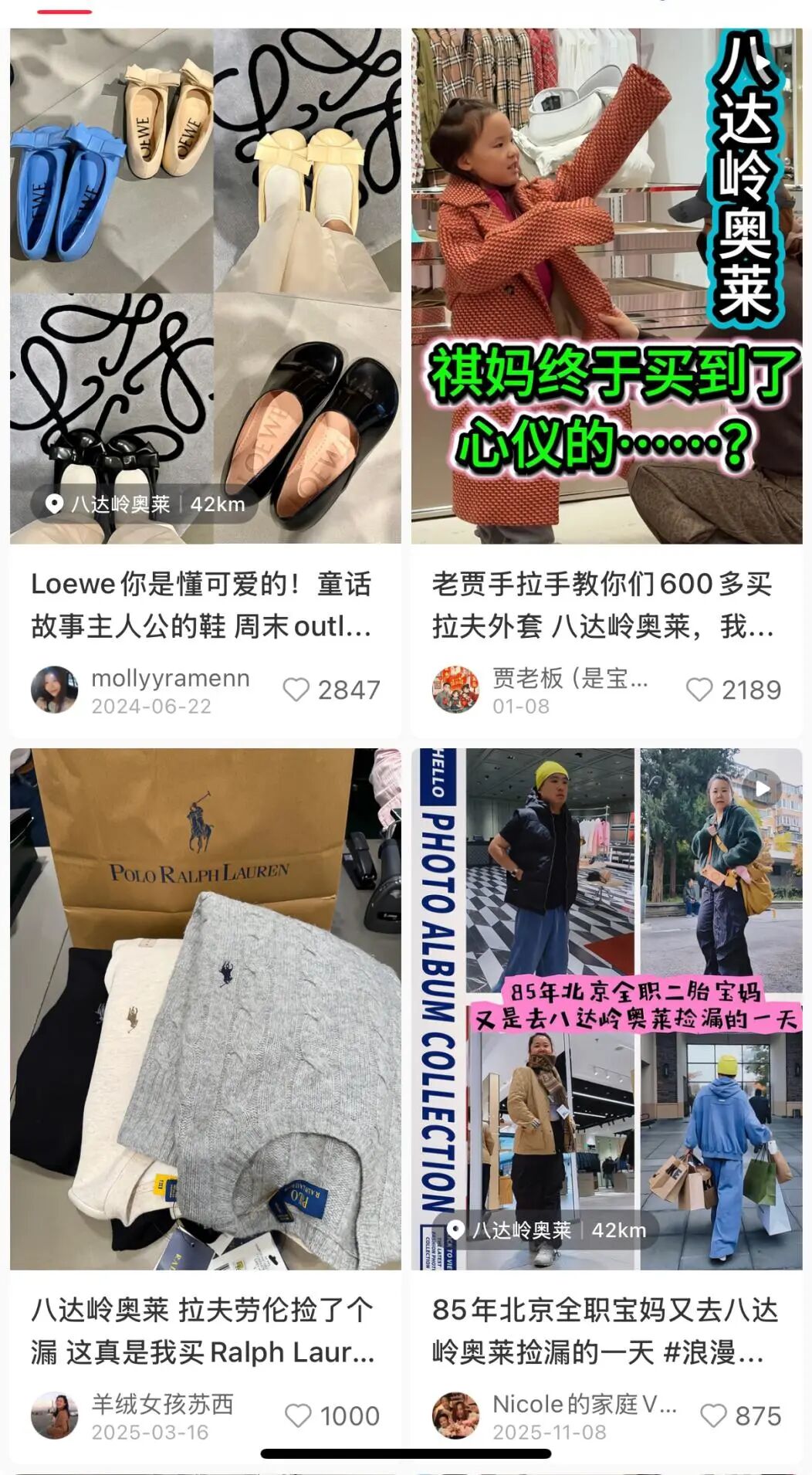
The consumption behavior of the middle class is often contradictory: They want to save face and own brand - name products, but don't want to be taken for a ride. A backpack in a regular shopping center can easily cost two to three thousand yuan, while in Badaling Outlets, one might get it for half the price. Although they are out - of - season models, who can tell which season they are from? In this way, one can save face and get the value.
This thrifty consumption behavior has become more and more common in recent years. People are not spending less, but want to make sure that every yuan is well - spent.
Badaling Outlets has shrewdly recognized this. Since its opening in 2015, it has introduced nearly 300 brands, including many luxury brands such as Prada, Gucci, Burberry, and BVLGARI. It helps brand manufacturers dispose of their out - of - season inventory and missing sizes, and makes consumers feel like they have "found something special". Both sides are satisfied.
In addition to its "garden - city" architecture, this place has become a regular meeting point for middle - class Chinese families on weekends to go out with their children and go shopping. During holidays or sales periods, there is a long queue in front of the luxury stores.
What's more important is that these people don't just come to look around, but also to really shop. During the seven - day National Day holiday in 2025, the sales reached 520 million yuan and the number of visitors reached 620,000, setting a new record.

Capital is profit - oriented. Boyu Capital recognized exactly this consumption behavior of the middle class when it made the takeover.
Besides Badaling Outlets, Boyu Capital also took over SKP, hailed as the "best shopping centers in China", last year. Data shows that the sales of Beijing SKP in 2024 decreased by about 17% compared with the previous year, and it lost its position as the "top - selling shopping center in the country".
In contrast, Badaling Outlets has continuously improved its performance. The turnover has risen from 1.8 billion yuan in the initial year to 2.84 billion yuan in 2024. In 2024, the profit was about 900 million yuan and the net cash on hand was over 800 million yuan. It is referred to as a "cash cow" in the industry.
Therefore, industry experts analyze that Boyu Capital recognized this trend and included Badaling Outlets in its premium - retail portfolio to complement SKP.
A friend in the investment industry told me that outlets are now regarded by capital as stable "ballast" assets, and their cycle - resistance is very high.
Moreover, last year, in a race with many well - known capital firms, Boyu Capital also added Starbucks China, a first - class asset, to its portfolio.
Three sensational acquisitions within less than a year. Boyu Capital seems to be creating a premium - consumption ecosystem that covers all scenarios.
From the "King of Employees" to the "Goddess of Venture Capital" - Financial experts found a private - equity giant
Although Boyu Capital's achievements are impressive, compared with well - known capital firms like Sequoia Capital and Hillhouse Capital, it is rather low - key and mysterious.
Boyu Capital was founded in 2011 and is an alternative asset management company that focuses on the Chinese market and operates globally. Currently, it manages funds with a total volume of about ten billion US dollars and is one of the largest private - equity firms in China. Despite its low - key nature, Boyu Capital has a portfolio of over 200 companies and a team of over 170 people.
Why can it repeatedly acquire first - class assets like SKP and Badaling Outlets in a race with other capital firms?
The company's business is only briefly described on the official website, but the team behind it is very strong. This private - equity giant is a capital project by financial experts, a typical case of "doing great things quietly".
First, Zhang Zixin should be mentioned. Before he co - founded Boyu Capital, he was already a legend in the financial industry.
In 2000, he switched from the world - leading consulting firm McKinsey & Company to Ping An and was one of the early "external brains". After arriving at Ping An, he led a series of key projects such as domestic and overseas listings and the strategy for integrated financial business. He was one of the most important masterminds who made Ping An a financial giant.
During his tenure as the general manager of Ping An, Zhang Zixin earned an annual salary of over ten million yuan and was referred to as the "King of Employees". After ten years at Ping An, he switched to the private - equity field and became one of the co - founders of Boyu Capital.
Another key figure in the founding group of Boyu Capital is Ma Xuezheng, who is known as the "Goddess of Venture Capital" and "Number One on the Chinese capital market".
Before she joined Boyu Capital, she was the CFO of Lenovo Group and led the acquisition of IBM's PC business. With this deal, she became the "Queen of Investments". However, after the acquisition was completed, she resolutely stepped back and switched to the role of an investor. She made large - scale investments in companies such as Daphne and Wumart on behalf of TPG.
In 2011, Ma Xuezheng founded Boyu Capital and took the position of chairperson. She has invested in companies such as Alibaba, NetEase Cloud Music, Megvii Technology, and WuXi AppTec. The total amount of funds raised is nearly ten billion US dollars. She has been repeatedly named by financial media such as Forbes as "one of the most powerful women in the world", "one of the most influential businesswomen in the world", and "the best businesswoman in Asia". Unfortunately, she passed away in 2019, and the private - equity market has since lost an important investor.
Naturally, the other two core co - founders, Tong Xiaomeng and Jiang Zhicheng, also have impressive backgrounds.
Tong Xiaomeng used to work at Morgan Stanley and then switched to General Atlantic and Providence Equity Partners, where he served as the general manager. Later, he joined Boyu Capital and took charge of private - equity investments. Jiang Zhicheng comes from the direct - investment department of Goldman Sachs Asia.
I checked on Tianyancha and found that in addition to the founders, there are two other financial experts in Boyu Capital's core group. Chen Zhiyi has worked at Morgan Stanley and a hedge fund focusing on the Asia - Pacific region. Huang Kai has taken charge of medical investments in an international pharmaceutical company and a leading investment firm.
Precisely because of the presence of these financial experts, Boyu Capital has had a professional touch from the start and enters the primary market in a "superior" position.
Behind the sensational acquisitions of the capital giant: Quietly acquiring real estate, investing in technology and hydrogen...
Besides the three sensational acquisitions - the takeover of SKP, hailed as the "best shopping centers in China", the takeover of the "cash cow" Badaling Outlets, and the acquisition of Starbucks China - in which projects has Boyu Capital invested in recent years?
Last year, Boyu Capital also invested in the real - estate industry. A typical example is the takeover of the listed real - estate management company Jinke Services and the subsequent privatization at a higher price.
Capital never acts impulsively. At the end of 2021, Boyu Capital first acquired 22% of the shares in Jinke Services for HK$3.734 billion (HK$26 per share). Later, it bought and sold shares several times, and in total, it spent more than HK$5.3 billion to gain a controlling majority. Then it decided to delist the company.
This step is a bit confusing. According to Boyu Capital's privatization plan, it might have to spend another HK$2.3 billion on buy - out offers and invest up to HK$7.7 billion in total. This is far higher than the market value of Jinke Services. Is this a loss - making deal?
Actually, this is not the case. Some experts analyze that after the delisting of Jinke Services, Boyu Capital will no longer be hindered by public shareholders and can quickly carry out asset sales, business cut - backs, or corporate mergers. In this way, it can turn Jinke Services into a "cash cow" or an "asset package" and plan its capital exit more flexibly.
Put simply, this is like buying an entire pond at a low price when no one is paying attention. One plans to manage it well and then decide what to do with it in the future.
In contrast, Boyu Capital is more like an old friend to the real - estate giant Vanke Property Service. Since 2017, it has bought and sold some shares when the company was listed and has made a lot of money. To this day, it is still an important shareholder. Through these buying and selling operations, it understands very well the capital logic of "buy low, sell high".
Boyu Capital is also willing to invest a large amount of money in technology and data, which represent the future. For example, in 2024, together with other investment firms, it spent nearly 600 million US dollars to acquire a large stake in GDS's overseas data - center business.
Some people say that this shows that capital believes that society's demand for computing power and data storage, regardless of the economic situation, will always increase, just like the demand for water and electricity.
Looking even further ahead, it has also invested in the long - term and demanding renewable - energy and biotechnology industries. In 2024, it invested in Taiqingchen, a company dealing with hydrogen, a new area of clean energy. In the same year, it also invested in Shanghai Precigen Biotech, a biotechnology company dealing with gene editing.
Even in the well - known consumer sector, Boyu Capital has been active. There were rumors that it wanted to acquire the luxury jacket manufacturer Canada Goose. Moreover, it is often involved as an anchor investor in the listings of well - known companies such as Miss Fresh and Hengrui Medicine.
When looking at all these investments together, one can clearly see a line: This private - equity giant led by financial experts is no longer satisfied with success in a single industry, but has built a large capital network in areas such as consumption, technology, medicine, and others.
Naturally, there are always many elaborate justifications for capital investments: The takeover of SKP is the "reshaping of the premium - retail ecosystem", the takeover of the outlets is the "recognition of the rational consumption trend", the privatization of the real - estate management company is the "promotion of the release of asset value", and even the investments in hydrogen and gene editing are referred to as "investments in the future good life".
Warren Buffett once said