Don't rush to say that 2026 is the year of solid-state batteries. There are some hidden mysteries in these issues.
The hype around solid-state batteries seems to resurface every few days.
Recently, the first prototype vehicle equipped with FAW Group's self-developed Hongqi all-solid-state battery rolled off the production line, sparking intense discussions in the industry. Has the long-rumored "Year of Solid-State Batteries in 2026" really arrived?
Before getting carried away by the technological euphoria, a recent report from J.P. Morgan has poured a bucket of cold, rational water on this solid-state battery craze. The report points out that the performance of all-solid-state batteries in tests has fallen short of expectations, and their claimed absolute safety advantage is also being questioned.
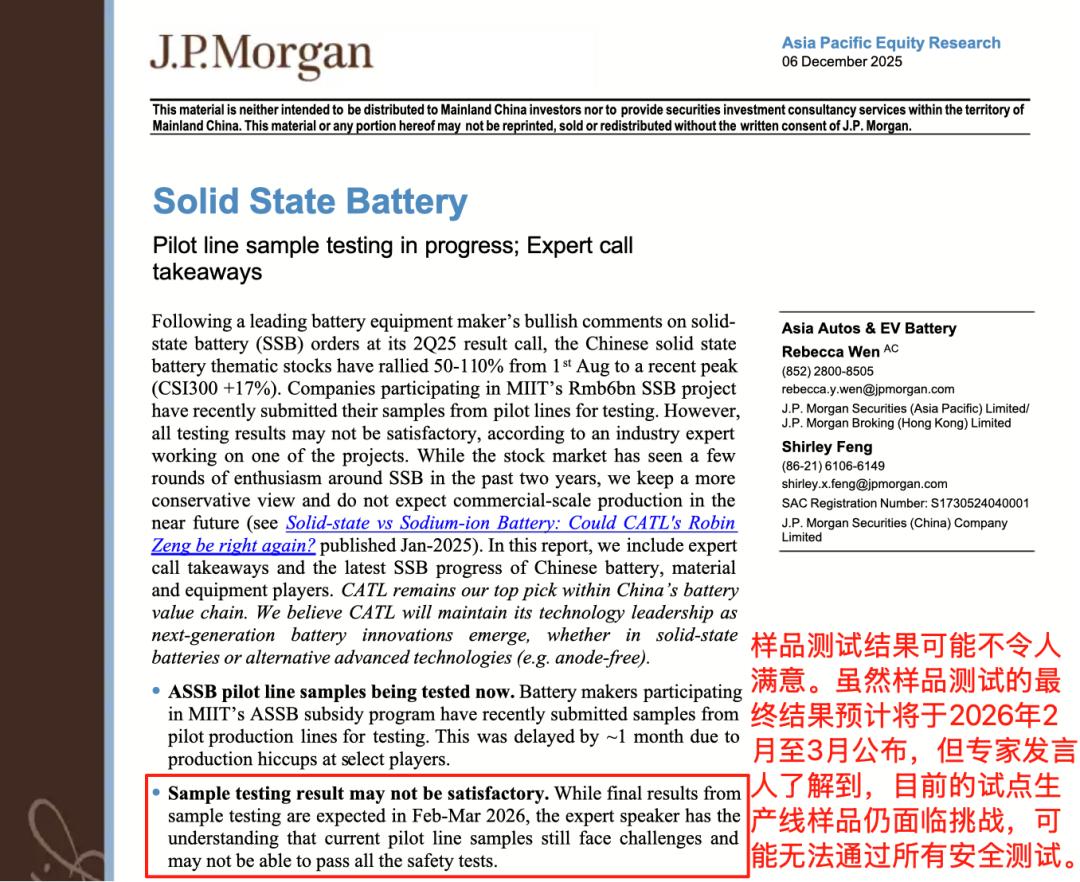
Image/J.P. Morgan's ASSB test results (AI translation) Source/Screenshot from Internet, New Energy Outlook
The report echoes the judgment of industry giant CATL: The large-scale mass production of all-solid-state batteries is more likely to happen around 2030, and only small-scale production might be achieved in 2027.
On one hand, the declarations of the "Year of Solid-State Batteries" are deafening; on the other hand, the frontier R & D is proceeding with caution. This huge gap makes us ask three questions: Has the safety of solid-state batteries met expectations? How far is it from real large-scale mass production? Is the price too high?
Without answers to these questions, the hype around solid-state batteries may well be nothing more than a "mirage" painted by the industry and capital.
Breaking the Cognitive Trap: "Absolute Safety" Is the Biggest Misconception about Solid-State Batteries
When you walk into a new energy vehicle showroom, the sales consultant might enthusiastically introduce, "Our vehicles will soon be equipped with cutting-edge solid-state batteries, offering a range of over 1,000 kilometers and absolute safety!" It sounds appealing, but hold your horses. Is this a tangible technological dividend or just an inflated "empty promise"?
The claim that "solid-state batteries are absolutely safe" was once a widely accepted statement. The logic seems simple: Replacing the flammable liquid electrolyte with a solid electrolyte is like removing the gasoline from a fuel tank, which should eliminate the risk of fire. However, the actual test data tells a different story.
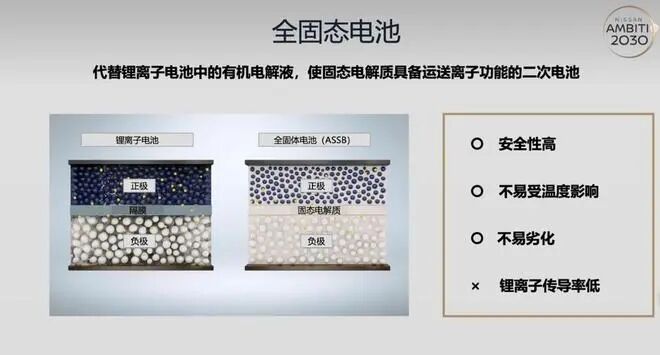
Image/Structure of all-solid-state batteries Source/Screenshot from Internet, New Energy Outlook
According to J.P. Morgan's 2025 research report, even the most promising sulfide-based all-solid-state batteries still experienced thermal runaway in extreme tests such as nail penetration and extrusion — If the huge heat generated during an internal short - circuit cannot be dissipated quickly, it may still cause material decomposition and high temperatures.
The report sharply points out that their safety advantage is not absolute, and the high - voltage operating environment required for high performance poses a severe challenge to vehicle integration. What's more confusing is the "nomenclature game" in market promotion. Many consumers think a revolution is coming when they hear "solid-state," but little do they know there's more to it.
In early 2024, Dongfeng Motor claimed to have delivered "solid-state battery vehicles," but in fact, they were equipped with solid-liquid hybrid batteries. Similarly, for the "Light-Year Solid-State Battery" promoted by IM L6, Feng Yuchuan, the founder of its cell supplier QingTao Energy, admitted to the media that it is a semi-solid-state battery, still using liquid electrolyte with a content between 5% and 15%. The industry has even coined vague terms like "quasi-solid-state," leaving consumers bewildered.
What's most "deceptive" is that Finnish startup Donut Lab suddenly announced the launch of the "world's first mass-producible all-solid-state battery" at CES 2026. However, soon after, Yang Hongxin, the chairman of SVOLT Energy, bluntly said, "That battery doesn't exist in the world. All the parameters are contradictory... Any technician with a basic understanding of the technology would think it's a fraud."
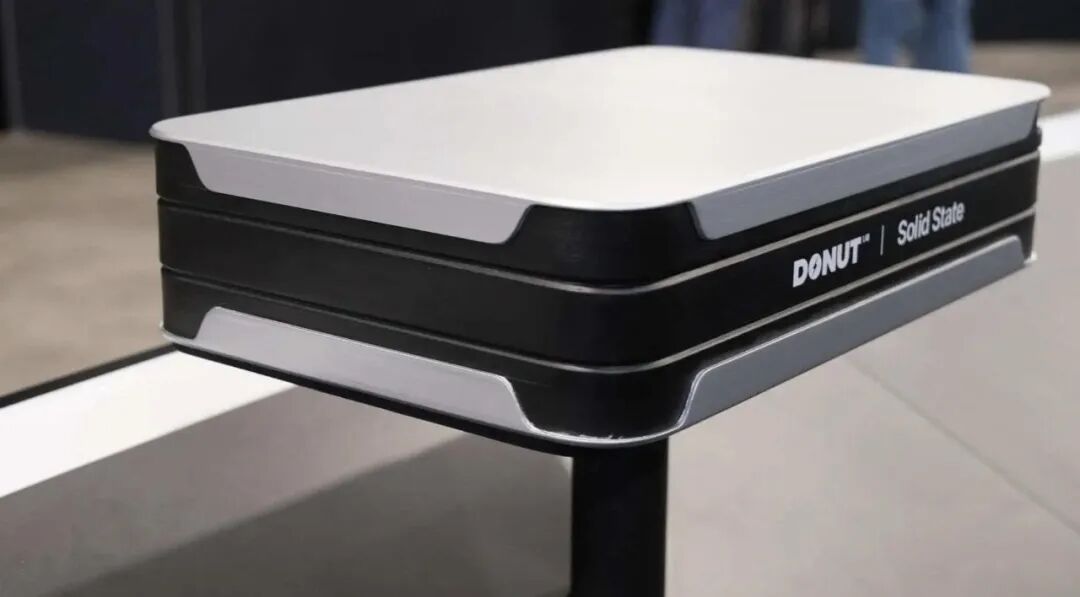
Image/The battery launched by Finnish Donut Lab Source/Screenshot from Internet, New Energy Outlook
The essence of this chaos is packaging transitional technologies as an ultimate revolution. We must be clear: Far from being the consumer's year for all-solid-state batteries, 2026 is actually a year when consumers need to be extra vigilant to avoid being deceived by "semi-finished" concepts.
When the safety myth is in question and the technical terms are hard to distinguish between true and false, is the foundation behind the hype still solid? Beyond the safety cognitive trap, the deeper dilemma of solid-state batteries lies in the fog of technical paths. Forget about the so - called "Year of Solid - State Battery Mass Production." The industry still hasn't reached a consensus on the core question of "what solid electrolyte material to use"!
The Fog of Technical Paths: We Haven't Even Chosen the "Right Material"
This is like a race that will determine the fate, but the contestants haven't even agreed on the track. Currently, the three mainstream routes of polymers, oxides, and sulfides all have fatal flaws.
The polymer route, like the early French Bolloré batteries, is easy to process, but has extremely low ionic conductivity. It's like a "slow healer" and needs to be heated to 60 - 80°C to work, which is obviously not suitable for all - weather use in electric vehicles.
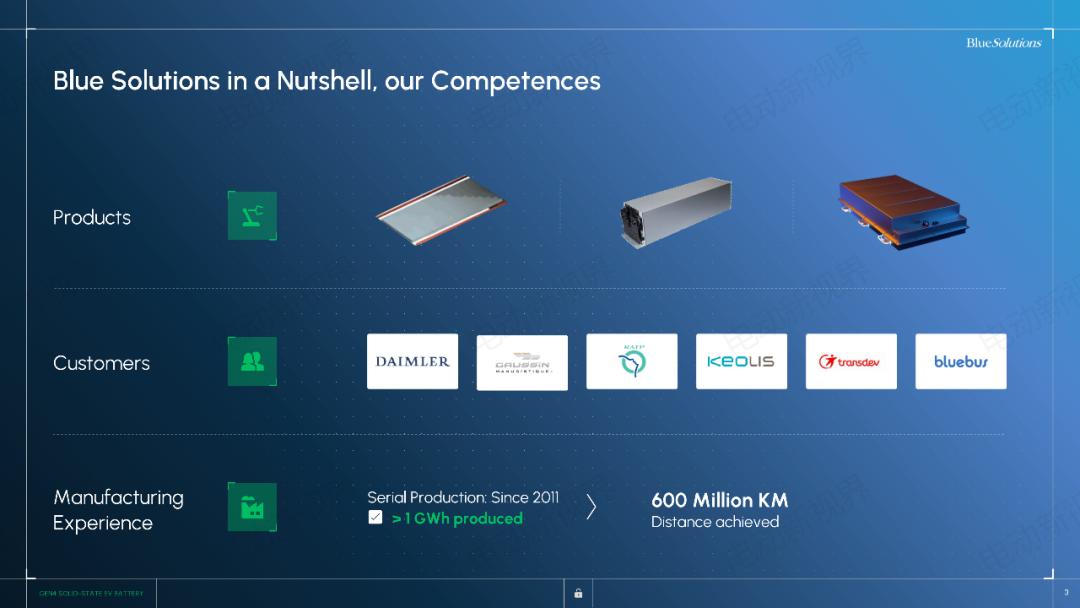
Image/Iteration of French Bolloré batteries Source/Screenshot from Internet, New Energy Outlook
The oxide route has good stability, but is as hard as ceramic. The contact between the oxide and the electrode is like "hard hitting hard," resulting in a large interfacial resistance, slow charging, and poor power output.
The sulfide route, represented by Toyota, has the greatest performance potential and can be regarded as a "straight - A student." However, it is also the most "temperamental" — It decomposes to produce toxic gases when exposed to water or air, requiring extremely harsh production environments and resulting in sky - high costs.
Since there is no perfect solution, industry giants generally choose to "bet on multiple horses": CATL is simultaneously exploring the sulfide and oxide routes; Toyota has been deeply involved in the sulfide route for decades but hasn't given up on other explorations. This strategy reflects the industry's confusion, as no one can be sure which route will ultimately prevail.
The so - called "semi - solid" batteries promoted by current automakers mostly involve adding gels or a small amount of solid electrolyte to existing liquid batteries or replacing the composite separator. This is more like a "patch" on a mature system, with limited improvement in energy density and a generational gap from the theoretical all - solid - state batteries. Ouyang Minggao, an academician of the Chinese Academy of Sciences, has repeatedly pointed out that the solid - liquid hybrid is a practical transitional path, and all - solid - state is the ultimate goal.
Even if the technical route can be determined tomorrow, "sky - high costs" and the "manufacturing gap" remain two huge mountains. Industry estimates show that the current cost of all - solid - state batteries may be more than four times that of high - end liquid batteries.
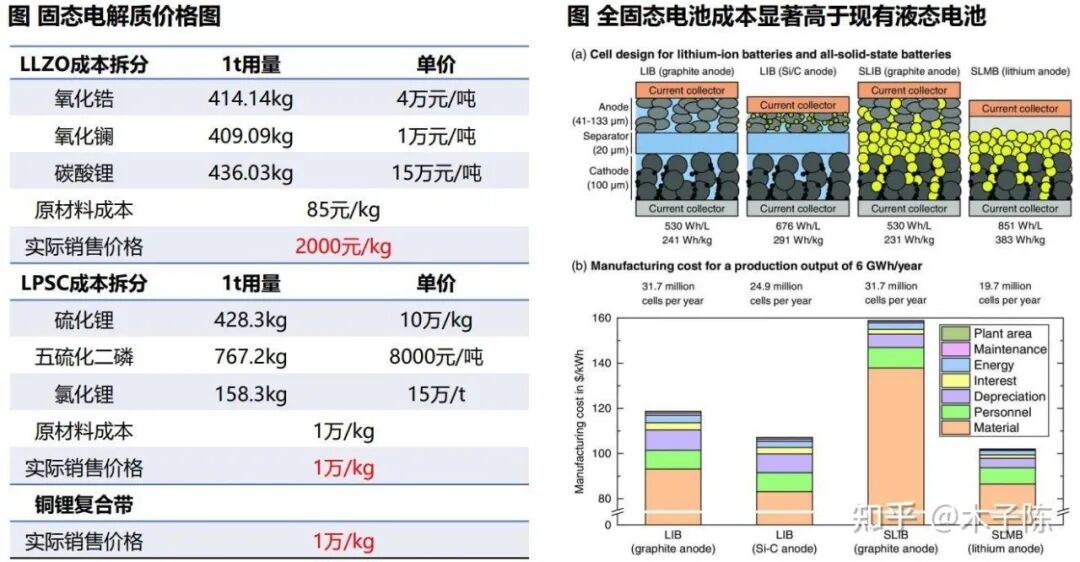
Image/Related costs of solid - state batteries Source/Screenshot from Internet, New Energy Outlook
The high cost is due to rare metals (such as germanium), complex processes (such as vacuum evaporation), and the extremely dry production environment. More importantly, the existing large - scale liquid battery production lines can hardly be reused. Manufacturing solid - state batteries requires brand - new equipment, processes, and standards, which is equivalent to building a whole new industry.
From upstream materials to mid - stream manufacturing equipment and downstream packaging and testing, the entire supply chain is in its infancy. Without a mature industrial chain, any "mass production" declaration is like building a high - rise on sand.
So, the question is, how should consumers make rational decisions in the face of the technical fog and the hype? This is the ultimate focus of all our discussions.
Consumer's Guide to Avoiding Pitfalls: Question the Term "Solid - State"
To avoid pitfalls with solid - state batteries at this stage, consumers should first understand the industry's timeline. When CATL mentions "small - scale production in 2027," the key word is "small - scale." This refers to the stages of process verification, supply chain coordination, and extreme testing. The products may be initially used in high - end test vehicles or specific fields, and their cost and reliability are far from meeting the requirements of ordinary household vehicles.
Here's a key point to note: "Small - scale production in 2027" is fundamentally different from "large - scale mass production and popularization." So, what should consumers who plan to buy a car in the near future do? Here's a practical guide:
First, learn to ask the right questions. When you hear the promotion of "solid - state batteries," directly ask: Is it an all - solid - state or semi - solid (solid - liquid hybrid) battery? What's the proportion of the liquid electrolyte? If the answer is vague, the claim's credibility is naturally in doubt.
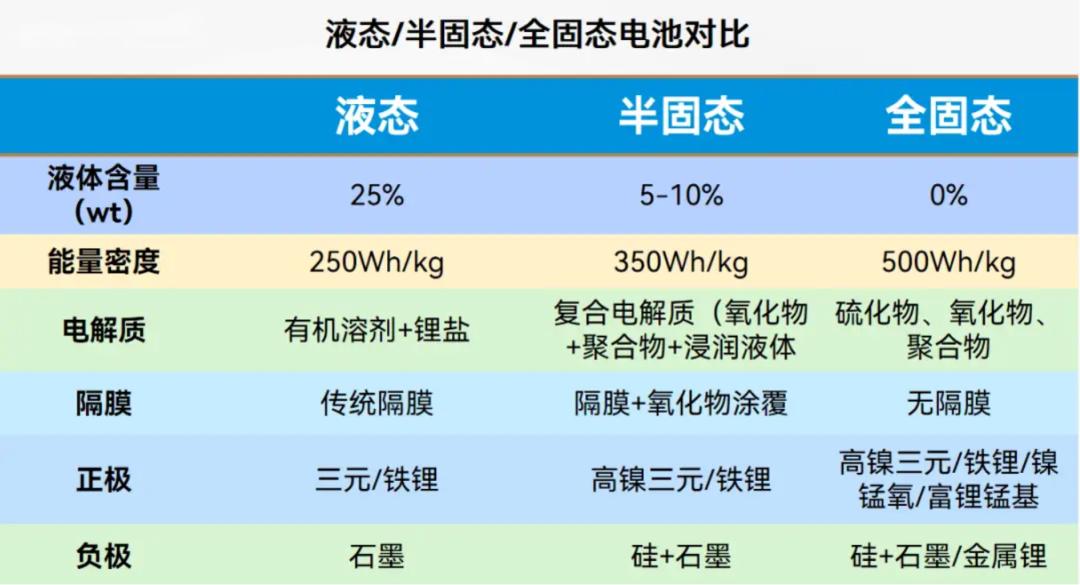
Image/Comparison of three types of batteries Source/Screenshot from Internet, New Energy Outlook
Second, understand the essence of the technology. Recognize that the current "semi - solid" batteries are essentially enhanced versions of liquid batteries. Their performance improvement is not revolutionary, so evaluate calmly: Is the increased range (e.g., from 700 to 900 kilometers) worth the high premium? Is there sufficient long - term reliability data?
Third, trust mature technologies. After decades of iteration, the current liquid lithium - ion batteries (such as lithium iron phosphate and ternary lithium) have achieved a high - level balance between safety, cost, lifespan, and performance. For most household needs, vehicles based on mature battery technologies are still the safest and most cost - effective choice.
Finally, pay attention to real progress. Shift your focus from the fancy marketing to the industry's substantial actions: Keep an eye on the formulation and unification of national standards; Pay attention to the specific breakthrough data and clear mass - production planning nodes disclosed by leading enterprises at technology press conferences.
The journey from technological breakthrough to real popularization of solid - state batteries follows strict R & D rules. The industry consensus is that the whole cycle may take 10 - 15 years. Currently, all - solid - state batteries are still in the middle stage. According to the judgments of authoritative experts like Academician Ouyang Minggao and enterprises like CATL and Toyota, the industrialization can be roughly divided into several key time periods:
Around 2025, the focus is on solving basic problems such as solid electrolyte film formation and interface stability; from 2025 to around 2027, it enters the core technology verification and small - scale trial - production stage. Automakers and battery manufacturers will conduct vehicle - loading tests and build pilot production lines, but the cost is extremely high and the production capacity is limited. Real large - scale mass production and cost reduction are generally expected to happen in 2030 or even later, when the industrial chain may be initially mature.
Speaking of the first prototype vehicle with an all - solid - state battery from Hongqi at the beginning of this article. According to reports, after the prototype rolled off the production line, it will undergo real - vehicle testing instead of immediate mass production. According to FAW's timeline, in 2026, the focus will be on testing the reliability of the battery system under different working conditions. Small - scale production is planned to be achieved by the end of 2027, and the technical reserves for large - scale mass production will be completed by 2030.
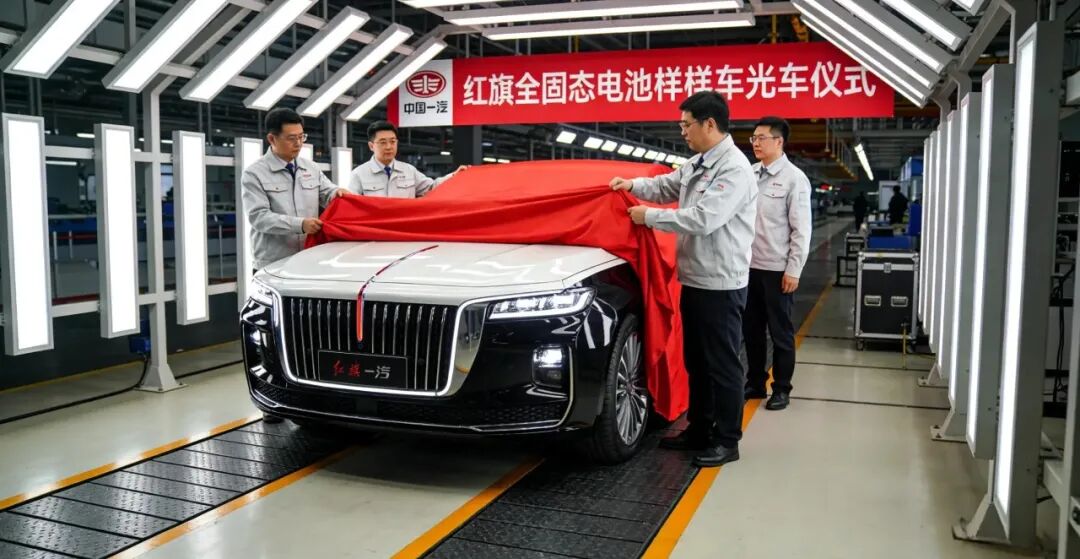
Image/The first prototype vehicle with an all - solid - state battery from Hongqi rolls off the production line Source/Screenshot from Internet, New Energy Outlook
A real technological breakthrough will surely make a resounding impact. Looking at the current situation, with safety in question, the technical path undecided, and the industrial chain in its infancy, these three facts jointly declare that 2026 is far from being the year of mass production and popularization of all - solid - state batteries. Rationally speaking, from now to 2027 should be a critical period for the industry to tackle core technologies, choose the right path, and conduct small - scale trial production.
Before that, let technology be about technology and the market be rational. For consumers, it means staying vigilant and patient; for the industry, it means abandoning the hype and returning to the original intention of R & D. Only when a consensus is reached on the material system, the cost drops to an acceptable level, and the industrial chain takes shape will the real era of solid - state batteries arrive.
This article is from the WeChat official account "New Energy Outlook" (ID:xinnengyuanqianzhan), written by a New Energy Observer and published by 36Kr with authorization.