7-year loan + feature reduction, a big reveal of the "tricks" in car buying
More than 20 brands and over 75 models of cars are having crazy promotions. At the beginning of 2026, the automotive industry has gone wild! Ads like "direct cash discounts", "drive away with zero down payment", and "monthly payment of only 1,300 yuan" are everywhere, making it seem like you'll lose out if you don't buy.
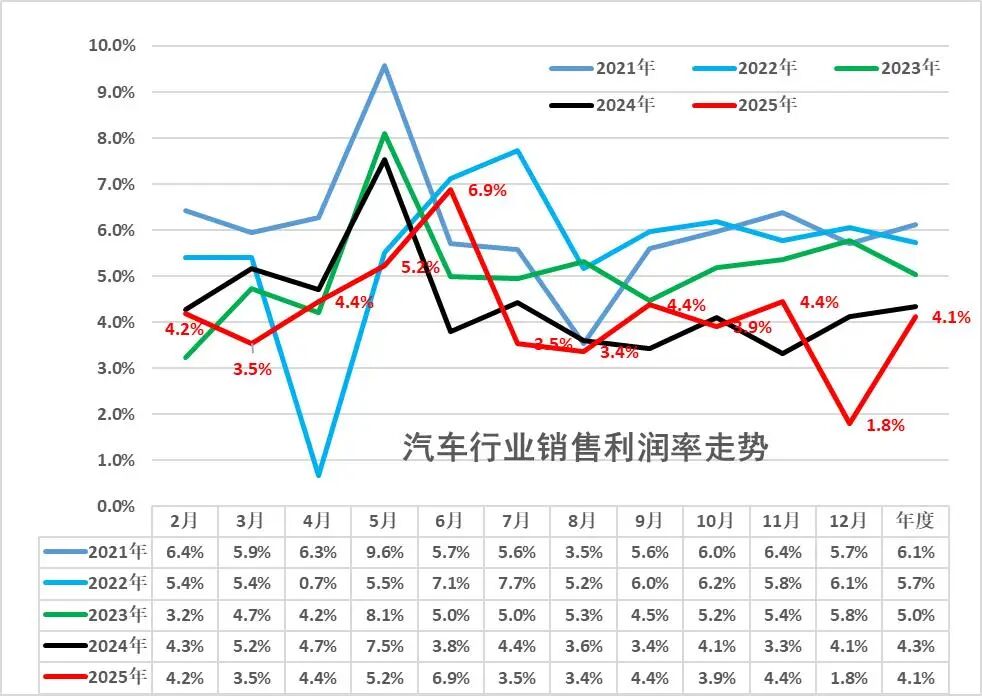
Behind this wave of bustling promotions, there's a data point that has the industry in silence: In December last year, the sales profit margin of the entire automotive industry dropped to just 1.8%. What does that mean? It's directly halved compared to the same period last year, and even lower than the returns of many capital - guaranteed wealth management products.
Data source: Cui Dongshu
Even looking at the whole year, the average profit margin of 4.1% has been at rock - bottom for two consecutive years, lower than the industrial average of 5.9%.
More and more cars are being produced. In 2025, 34.78 million vehicles were produced, a 10% increase. However, "increased production but no increase in profit" is ultimately weighing down the car manufacturers.
So, the question is: Where has the profit gone? Will the tactics used by car manufacturers to survive affect our car - buying decisions?
Three Major Pressures Crushing Car Manufacturers
With such thin profit margins, what are the major pressures crushing car manufacturers?
The first pressure: A sharp rise in raw material prices.
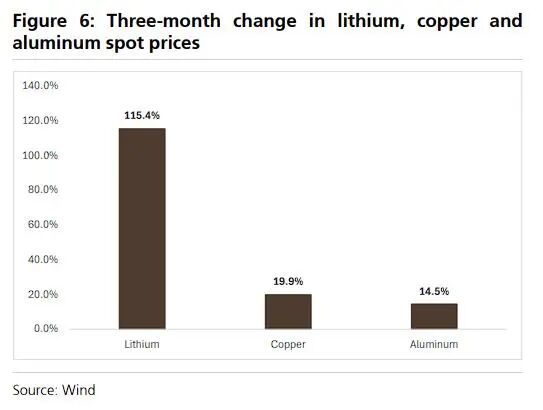
According to a recent research report from UBS, in the past three months, the price of aluminum has risen, adding about 600 yuan to the cost of each vehicle; the price of copper has also increased, adding another 1,200 yuan. But these are just small parts. The most volatile is lithium. For a pure - electric vehicle with an 80 - kWh battery, the cost of lithium alone has increased by about 3,800 yuan!
Just for the metal part, the cost of each electric vehicle has increased by 5,600 yuan.
Do you think that's all? There's more - memory.
Li Bin of NIO was right in his earlier warning: By 2026, the biggest cost pressure for car manufacturers may not be the battery, but the memory!
The data dug out by UBS is more specific: The memory cost of a smart car is about 700 yuan, but the memory price has skyrocketed by 180% in the past three months, reaching 2,000 yuan per vehicle.
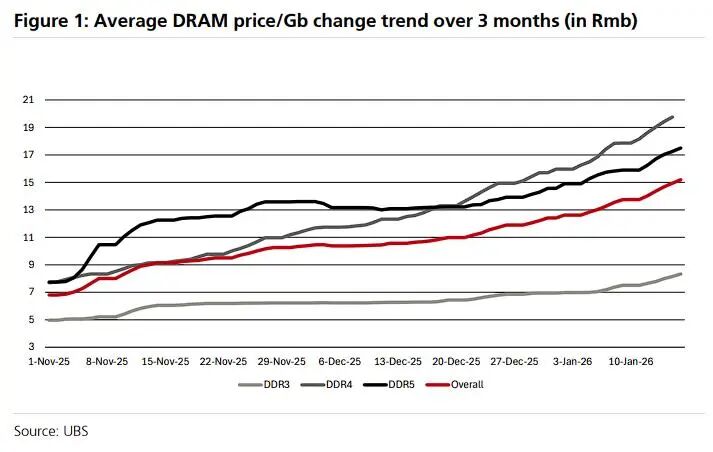
Calculated like this, the cost of each vehicle has increased by 4,000 - 7,000 yuan out of thin air. For car manufacturers with already meager profit margins, this is a burden that's hard to bear.
The second pressure: Policy changes.
At the end of last year, the "trade - in" subsidies gradually phased out, and many people chose to wait and see. This year, two major changes have made consumers even more hesitant: The new - energy vehicle purchase tax has changed from being fully exempted to being halved, which may cost consumers over 10,000 yuan more; the "trade - in" policy has been changed to a subsidy based on the vehicle price with an upper limit.
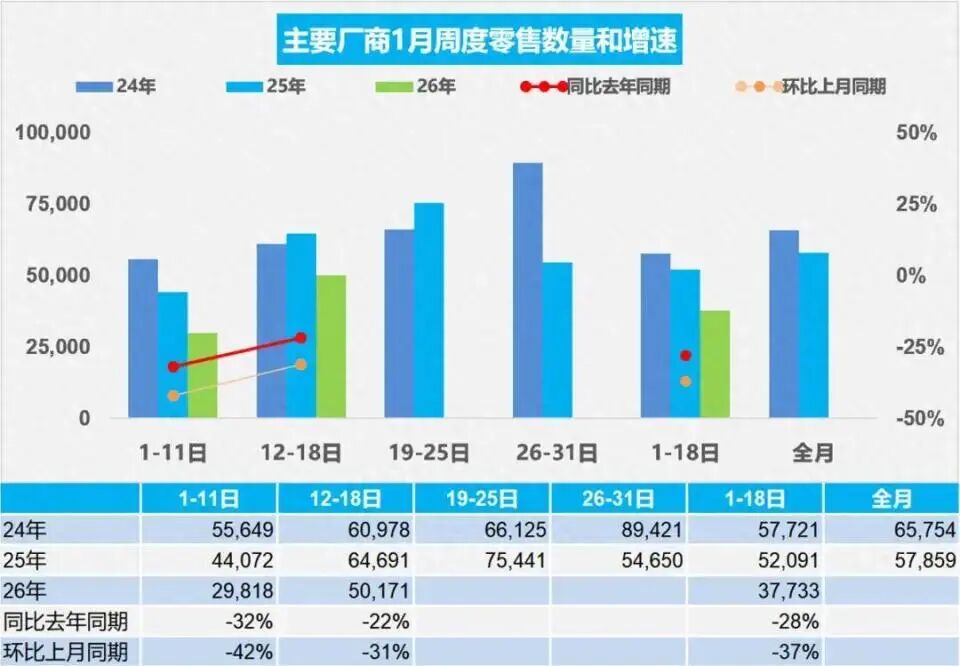
The reaction is quite real: In the first 18 days of January, the sales of passenger cars decreased by 28% year - on - year, and the month - on - month decline reached 37%.
The pressure is back on the car manufacturers - even though the costs have increased significantly, many car manufacturers are still covering the purchase tax, which undoubtedly further squeezes their profit margins.
The third pressure: New national standards.
The new national standard for battery safety is coming, which requires that after a thermal runaway, the battery must not catch fire within 2 hours. This is good news for car owners, but for car manufacturers, upgrading the battery cell structure and thermal management system are all money - burning operations.
The industry predicts that just for this upgrade, the cost of each low - end vehicle will increase by about 2,000 yuan. Car manufacturers have to bear this "safety cost" even if it hurts.
Two "Drastic Measures" by Car Manufacturers: Cure or Trap?
Facing high costs on one side and a cold market on the other, car manufacturers can't just sit back and do nothing. So, two "drastic measures" have emerged, each targeting consumers' desires and blind spots.
What to do about consumers' hesitation? The first measure: Extend the car loan to 7 years!
Tesla was the first to throw out the "7 - year ultra - low - interest" bomb, and players like Xiaomi, Li Auto, XPeng, and Geely quickly followed suit, instantly turning the market into a red - ocean competition. Traditional car loans usually last a maximum of 5 years, but now it's directly extended to 7 years. The core idea is: Lower the monthly payment!
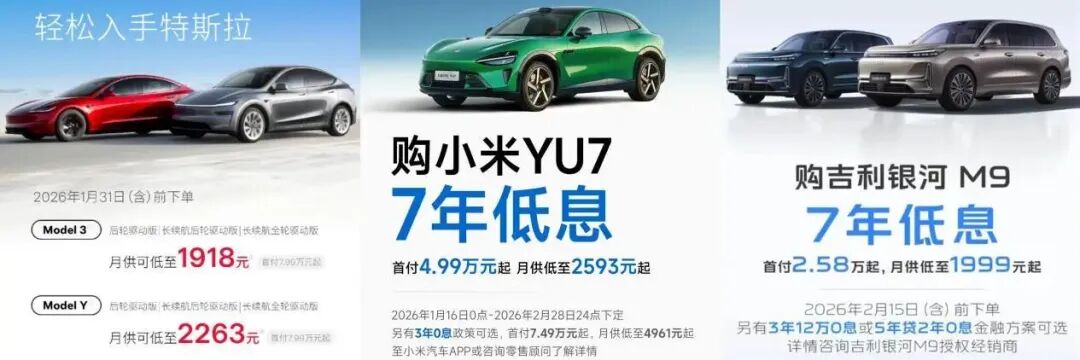
"Pay a few tens of thousands as a down payment and drive a new car with a monthly payment of one or two thousand yuan" sounds great, but consumers need to calculate the total cost. Extending the loan period means that the total interest may increase, and your repayment period will completely cover the period of rapid vehicle iteration and depreciation.
What to do if there's no profit in car - making? The second measure: Cut corners.
An insider from a new - energy vehicle startup told me: "Cutting corners is the norm now, both obviously and subtly to save costs."
For example, to control costs, some models will adjust their supply chains, such as changing the suppliers of certain parts.
There's also the "mixed - battery" practice: For the same model, the batteries in different batches may come from different brands or have different specifications, but car manufacturers will say it's to "ensure stable supply".
This measure may scrape out some profit on the books in the short term, but will it affect the quality and reputation in the long run? The reliability of a car often lies in these "invisible places".
Advice for Prospective Car Buyers
Facing the complex market, here are some practical tips for everyone:
First, understand the essence of the financial plan: Pay special attention to "low - monthly - payment" plans. Some plans are actually "financial leasing" rather than loans, and their ownership, interest rates, and default clauses are significantly different from bank loans. For example, in the direct - lease model, the ownership of the vehicle belongs to the leasing company. After the contract expires and the vehicle is transferred, the vehicle will be registered as a "used car" in the registration information. Before signing any documents, make sure to read and understand the ownership and liability clauses line by line.
Second, pay attention to the full - life - cycle cost of the vehicle: New - energy vehicles are essentially "electronic products on wheels", and their technology is evolving at a breakneck speed. There are minor upgrades every year and major overhauls every three years.
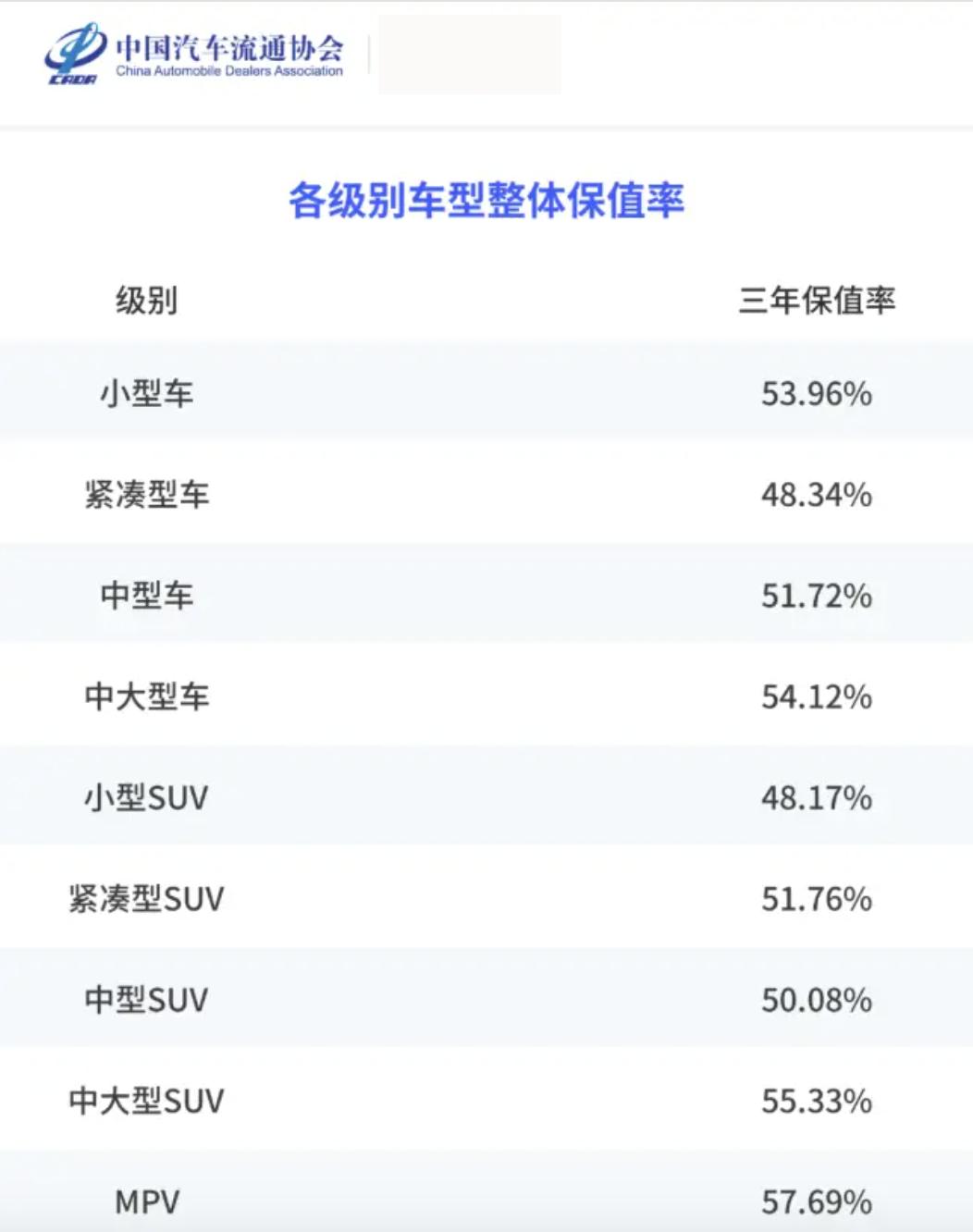
According to data from the Circulation Association, the 3 - year resale value of a car is about 50%. Car manufacturers' intention is to lower the threshold for you to buy a car, but the 7 - year ultra - long loan period doesn't conform to the laws of the automotive product. The 7 - year technology iteration and vehicle depreciation also bring greater uncertainty to consumers.
At the same time, the "parts - to - whole ratio" of some brand vehicles is relatively high, which may lead to high subsequent maintenance costs. When calculating the cost, consider depreciation, interest, insurance, and maintenance.
Finally, rely on the contract and do your homework: Take what the salesperson says with a grain of salt. Before deciding to buy, check the detailed configuration list of the vehicle on the brand's official website, focusing on core information such as the battery type and chip specifications. All promised discounts, configurations, and services should be clearly written into the car - purchase contract.
Currently, car manufacturers' "long - term loans and cost - cutting" are a helpless gasp due to thin profit margins. Fortunately, the regulatory authorities have spoken out several times recently, opposing unfair price practices and guiding the industry back to a healthy track of competing in technology, safety, and service.
This article is from the WeChat official account "Automotive Market Stories" (ID: autostinger), author: Peng Fei. It is published by 36Kr with permission.