Cutting off the core business and halving the revenue, a veteran OEM robot vacuum cleaner company's bold bet on transformation | Insight Global
Author | Ou Xue
Editor | Yuan Silai
Editor's Note: As going global becomes an increasingly core strategy for Chinese companies, how to conquer the global market has become an extremely professional topic. In the evolution of globalization, many Chinese brands have stood at the forefront. In view of this, Yingke has launched the "Insight Global" column to explore the cutting - edge directions and opportunities for Chinese brands to go global from the perspective of brand growth and change, providing thoughts and inspiration for global players and the industry.
This is the 60th issue of our column - ILIFE was once an OEM factory for floor - sweeping robots with an annual output of over 2 million units. In 2024, it decided to completely terminate its OEM business and fully shift to its own brand. In 2025, the brand's sales on the AliExpress platform increased by over 300% year - on - year, exceeding 10 million US dollars in the Polish market. On average, one in every ten households uses its products. ILIFE's path well demonstrates the transformation of Chinese manufacturing from OEM exports to brand - led globalization.
In Poland, one in every ten households uses the Chinese floor - sweeping robot brand ILIFE.
In 2025, ILIFE's sales on the cross - border e - commerce platform AliExpress, owned by Alibaba, increased by more than 300% year - on - year. It exceeded 10 million US dollars in the single Polish market alone. During the overseas "Double 11" in 2025, its AliExpress sales exceeded those on Amazon for the first time, marking a key turning point in the brand's channel structure.
Behind this figure is a full - fledged gamble.
Its predecessor was a typical OEM factory in Shenzhen, which once manufactured products for more than a dozen domestic and foreign brands such as Ecovacs and German Lukas. At its peak, the annual output exceeded 2 million units. Later, the company made a strategic decision: completely cut off the OEM business and go all in on its own brand.
"A decision that makes you hesitate must be problematic. The simplest way is to just cut it off, and everything will become clear." Miao Qunyi, the general manager of ILIFE, told Yingke.
From OEM production to facing consumers directly, from relying on customer orders to independently defining products, ILIFE's decade - long transformation reflects the profound evolution of Chinese manufacturing from "going global" to "brand - led globalization."
The core technologies and industrial chains of floor - sweeping robots are basically in China. From the "Four Little Dragons of Robotics" in Hangzhou to the hardware innovation clusters in Shenzhen, China has formed a globally leading ecosystem in algorithms, hardware, and manufacturing. According to AliExpress data, from January to November 2025, the overall growth of the cleaning appliance category on the platform reached 85%, and leading Chinese brands became the main driving force for growth.
"This is an era of great exploration." Miao Qunyi summarized. Chinese enterprises have decided to climb the two ends of the "smiling curve."

Cutting off OEM and Shifting from "OEM Thinking" to "User Thinking"
Before the establishment of ILIFE, doing ODM business in the factory was a tough job.
The factory once served more than 10 brand customers, and at its peak, the annual output exceeded 2 million units. The factory was extremely busy.
However, behind the prosperity, a crisis had long been lurking.
As competition in the floor - sweeping robot industry intensified, leading brands such as Ecovacs, Roborock, and Dreame have established their own supply chain systems, continuously squeezing the profits of OEM orders.
"The profit was as thin as paper, and we also had to provide a lot of services." Miao Qunyi described. The deeper dilemma was the distortion of information: the market feedback they received was "polished" by the brand owners and was not first - hand information.
The OEM model always put a "veil" between ILIFE and end - consumers. Product R & D was more to meet the customized requirements of brand customers rather than directly respond to market demand. "Ten customers, ten different requirements. R & D was busy satisfying the clients but didn't know where to really go."
The turning point came in 2024. AliExpress launched the "Brand - led Globalization" plan. Almost at the same time, after intense discussions within ILIFE, a decisive choice was made: completely stop the OEM business and focus resources on promoting its own brand.
"When we wanted to do both OEM and build our own brand and also balance the relationship between the two, we would be in a dilemma. And things that put you in a dilemma are often wrong." Miao Qunyi said.
Cutting off OEM meant a short - term contraction in revenue scale. ILIFE's annual revenue dropped from over 1 billion yuan at its peak to less than 500 million yuan. But Miao Qunyi never regretted it. "We only need to consider what users like. If we think a product is acceptable to us, users won't dislike it too much."
More importantly, the transformation allowed ILIFE to truly obtain "first - hand information" from the market. Through the platform's instant messaging tools, customer service can directly communicate with overseas consumers to understand where the product has problems and why it can't return to the charging base. These real - time feedbacks can be quickly transmitted to the R & D department, forming a closed - loop for product iteration.
"Previously, it might take two or three months for a user feedback to be translated into an improvement. Now, the problem can be clearly identified within a few days, and the next - generation product can solve it." Miao Qunyi gave an example. Once, a user reported that the side brush got tangled with hair. The team quickly changed the "flip - type side brush" to a "two - claw type," solving the pain point.
ILIFE proved the feasibility of the transformation in one year. In 2025, its performance on AliExpress tripled, and it achieved sales of 10 million US dollars in the Polish market, becoming a "national - level" cleaning brand there.
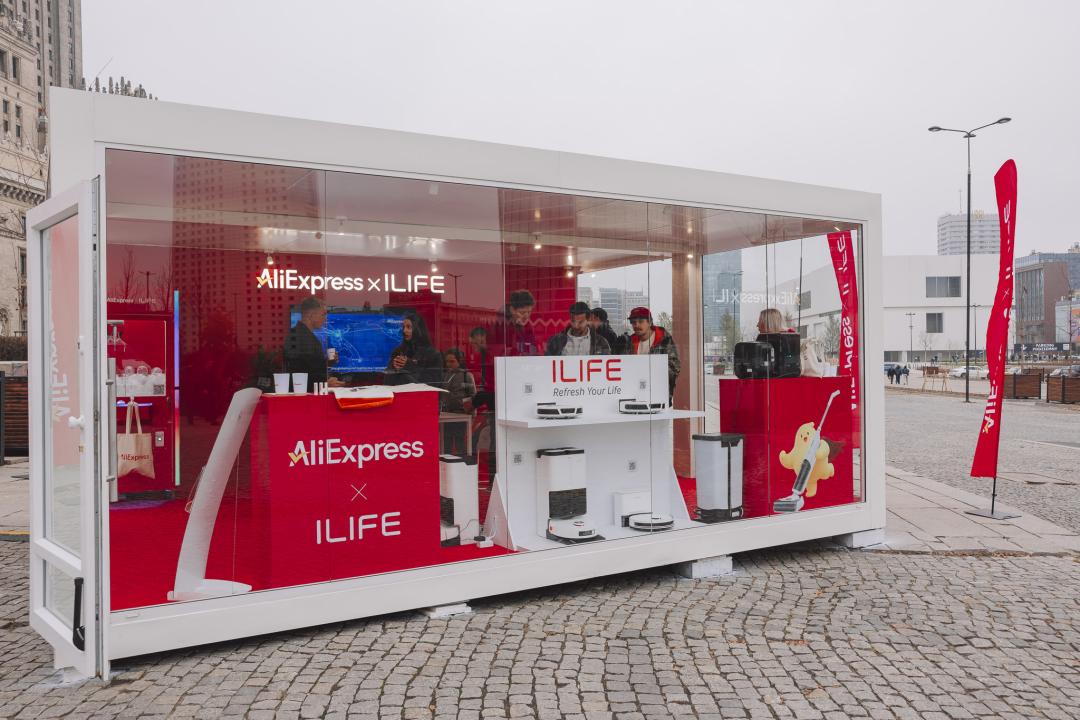
ILIFE's offline activities in Poland (Photo source/Enterprise)

Not Doing "Function Stacking", Focusing on the Essence of Cleaning and Cost - effectiveness
The current floor - sweeping robot industry is in the midst of a "function - centric competition."
Functions such as aromatherapy, drying, voice interaction, and AI recognition are continuously being added to products. In the Chinese market, high - end all - in - one base station products have become the absolute mainstream. Leading brands such as Roborock, Ecovacs, and Dreame are in a fierce competition in algorithms, obstacle avoidance, and navigation.
However, ILIFE has chosen a seemingly "contrarian" path: not doing function stacking, focusing on the essence of cleaning, and emphasizing cost - effectiveness.
ILIFE focuses on the middle and lower segments of the market. Miao Qunyi compares the global market to a pyramid: the top consists of high - end users who pursue cutting - edge technology and are willing to pay a premium; the middle and bottom are the mass markets that value practicality, cleaning effect, and price more.
ILIFE smartly avoids the main battlefield of leading brands and focuses on mid - range users. Their strategy is to apply the navigation and obstacle - avoidance modules originally used in high - end models priced at 300 - 400 US dollars to mid - range products priced at 100 - 200 US dollars.
Their products have a clear tendency, which is balance. Many peers will try their best to increase suction power. But high suction power means fast power consumption, and the robot may run out of power in 5 minutes. ILIFE pays more attention to actual cleaning indicators such as air flow per unit time and one - time dust pick - up rate. There may be no flashy features, but they are practical enough.
This strategy is also reflected in cost control. From R & D design, mold development to production, manufacturing, warehousing, and logistics, they complete everything independently, greatly reducing intermediate links and external costs.
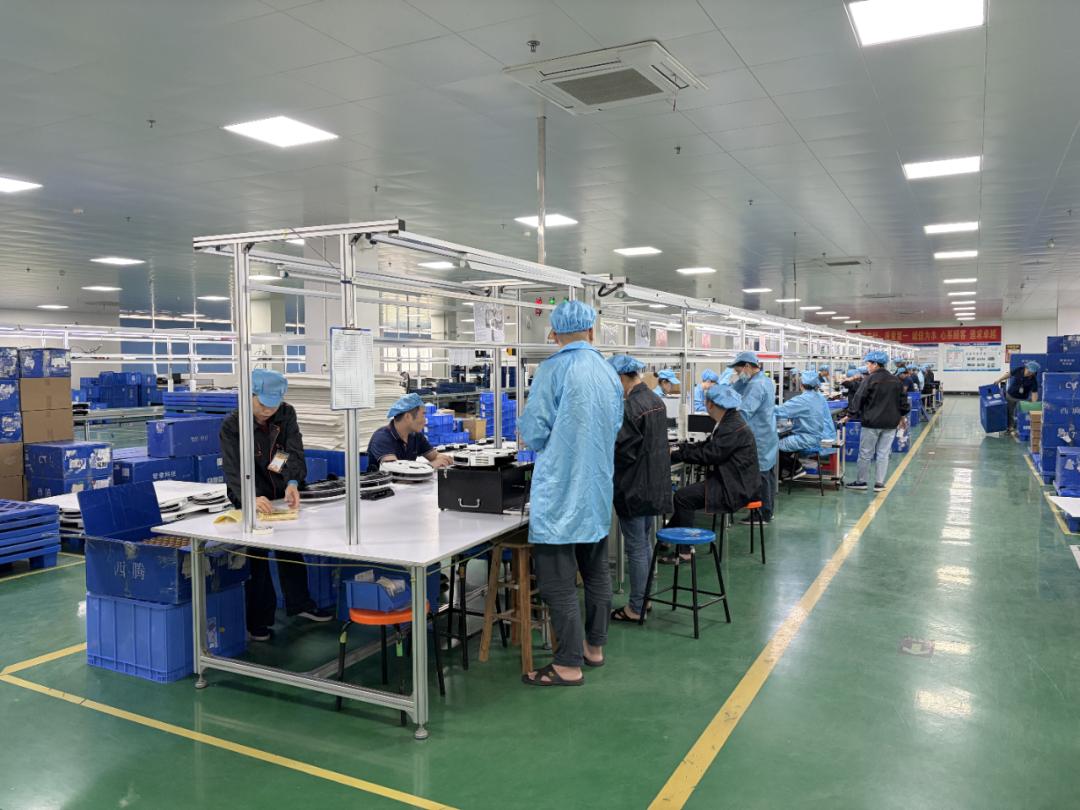
ILIFE factory site (Photo source/Enterprise)
Yingke learned that this cost advantage is ultimately translated into price competitiveness at the terminal: Similar products from ILIFE are usually 10 - 20 US dollars cheaper than competitors.
In terms of channel strategy, ILIFE also shows precise differentiation. On AliExpress, it mainly promotes the more fully - functional "sweeping and mopping integrated" models; on Amazon, it lists cost - effective models with single functions and stronger stability. The reason is that the return rate on the AliExpress platform is lower, and it can directly communicate with consumers through instant messaging tools, which is convenient for solving problems that may arise from complex functions.
This ability to "face users directly and iterate quickly" enables ILIFE to capture market demand more keenly. For example, seven years ago, some European and American users proposed the demand for "live water floor cleaning." Based on this, ILIFE launched the live water floor - cleaning robot six years ago, nearly one year earlier than most peers. For pet - owning families, it continuously optimizes anti - entanglement bristles and hair - cutting functions, all based on direct user feedback.
From the OEM production line to the living rooms of Polish families, ILIFE's decade is a microcosm of the transformation and upgrading of Chinese intelligent manufacturing. It proves a path: as long as a brand finds its right positioning and relies on China's manufacturing capabilities, it can gain a foothold in the overseas market.