The last 2000 days for humanity. Can liberal arts students stage a comeback from a desperate situation?
When I first entered the field of technology media, most technicians were extremely considerate to us word - wielding folks during interviews. When talking about technical details, they would habitually add, "Let me put it simply." This unthinking, simplified explanation was like a mirror, reflecting the marginal position of liberal arts backgrounds in the technology field.
This sense of marginality is even more deeply felt by those doing technology public relations in technology companies.
In the complaints from friends in corporate public relations, there is always a word: frustration. The abilities they are good at, such as communication, creativity, and interpersonal skills, are mostly polished by liberal arts education. However, in technology - dominated organizations, they are always classified as auxiliary. Internally, they have to accommodate and cooperate with the R & D rhythm, unable to get into the core and having little say. Externally, they have to maintain good media relations and explain their company's obscure technologies clearly. They are caught in the middle and get the blame from both sides.
Now, the trend has quietly changed. A peculiar admiration for liberal arts is spreading among the science and engineering community.
In industry groups, programmers joke that in the past, it was "talk is cheap, show me the code", but now it's "code is cheap, show me the talk". Compared with coding, liberal arts skills like talking to AI and storytelling are more important.

Opening my WeChat Moments, a programmer friend working on algorithms in a big company said that if liberal arts students can cross the basic IT threshold, they often have more advantages in subsequent development.
It seems that in an instant, the entire science and engineering community has rediscovered the value of liberal arts.
Ge Zhaoguang, a historian, once said that whether in China or abroad, the humanities seem to be in jeopardy. The self - defense of the humanities has been repeated countless times over the years. Saying too much turns absolute truth into cliches.
However, when these "cliches" of liberal arts self - defense are spoken from the mouths of the science and engineering community, they become more humorous and thought - provoking.
The change in the attitude of the science and engineering community towards liberal arts, from marginalization to admiration, is essentially because in the face of the full - scale penetration of AI into various basic positions, both liberal arts and science and engineering have become the targets submerged by technology. So, the science and engineering community is eager to use the power of the humanities to make up for their own technical shortcomings and avoid the crisis of being replaced by AI. Unfortunately, liberal arts cannot be the life - saving straw for science and engineering and is unable to launch a desperate counter - attack against AI.
01 Sudden Praise
In November 2025, at the Floating Light Auditorium in the 798 Art District in Beijing.
I was in this space full of humanistic aesthetics, attending a technology press conference. An established ToB company announced that it was entering a new AI - driven stage and launched a 2C product, an emotional companion intelligent agent. Giving the intelligent agent a warm - hearted persona requires a bit of imagination. So, a media person on - site asked: Can employees with a science and engineering background do well in things that liberal arts youths are good at?
The company's leader smiled and said that when debugging the emotional companion intelligent agent, the two most outstanding team members were actually from liberal arts backgrounds.
He even thought that it might be a more appropriate division of labor to let liberal arts youths be AI product managers and let science and engineering engineers focus on their own work.
The importance of liberal arts abilities being brought to the forefront is inseparable from the current reality of enterprises' large - scale application of large models.
From 2023 to 2025, the large - scale acceleration of enterprises' AI transformation has been on the rise. The report "The State of Artificial Intelligence in 2025: Agents, Innovation, and Transformation" released by QuantumBlack surveyed nearly 2,000 respondents in 105 countries, covering different industries, enterprise sizes, professional fields, and seniority levels. The use of AI has increased in almost all industries.
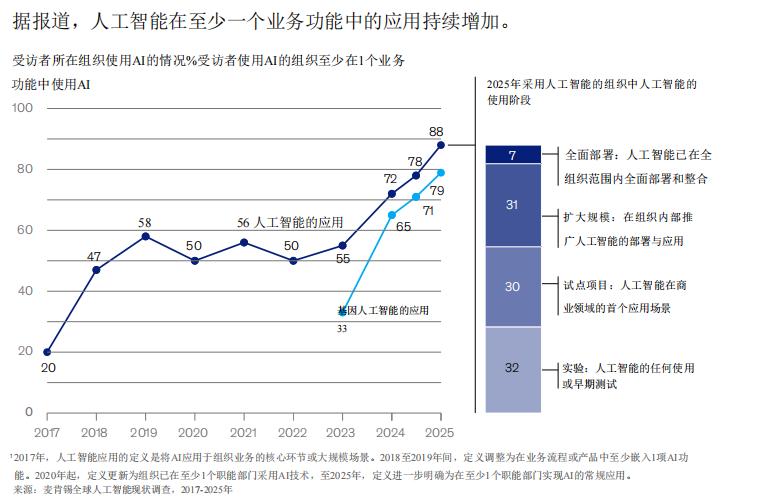
In the process of AI transformation, in addition to the demand for technical R & D positions, a large number of newly - added positions clearly point to humanities and social science abilities. Several types of newly - added positions seem to be able to absorb many liberal arts students:
Firstly, AI Storytellers, commonly seen in the game, intelligent agent, and short - video industries. For example, when an IT company is building an emotional companion intelligent agent, it needs this type of position to construct a complete character persona, dialogue logic, and storylines. These positions prefer people with creative abilities, such as those with a background in art design, psychology, or experience in amusement park creative planning or public opinion management.
Secondly, AI Annotators. Large language models need more high - quality corpora. They need humans to be their "Chinese teachers" to teach them to understand the subtext in human language. Annotators not only simply label but also need to have sociological and linguistic qualities to understand the emotional tendencies and cultural context differences in texts.
Thirdly, AI Ethicists, who are responsible for conducting moral reviews on AI to prevent it from saying inappropriate things that offend vulnerable groups or making ethical mistakes like helping users write blackmail letters. Companies like Google and Anthropic have added this position, which requires sensitivity in philosophy, law, and sociology.
There are also AI Art Designers, who are responsible for optimizing the aesthetic quality of AI - generated content and verifying the artistic compliance of the content. The red team recruited by OpenAI for the Sora model belongs to this type.
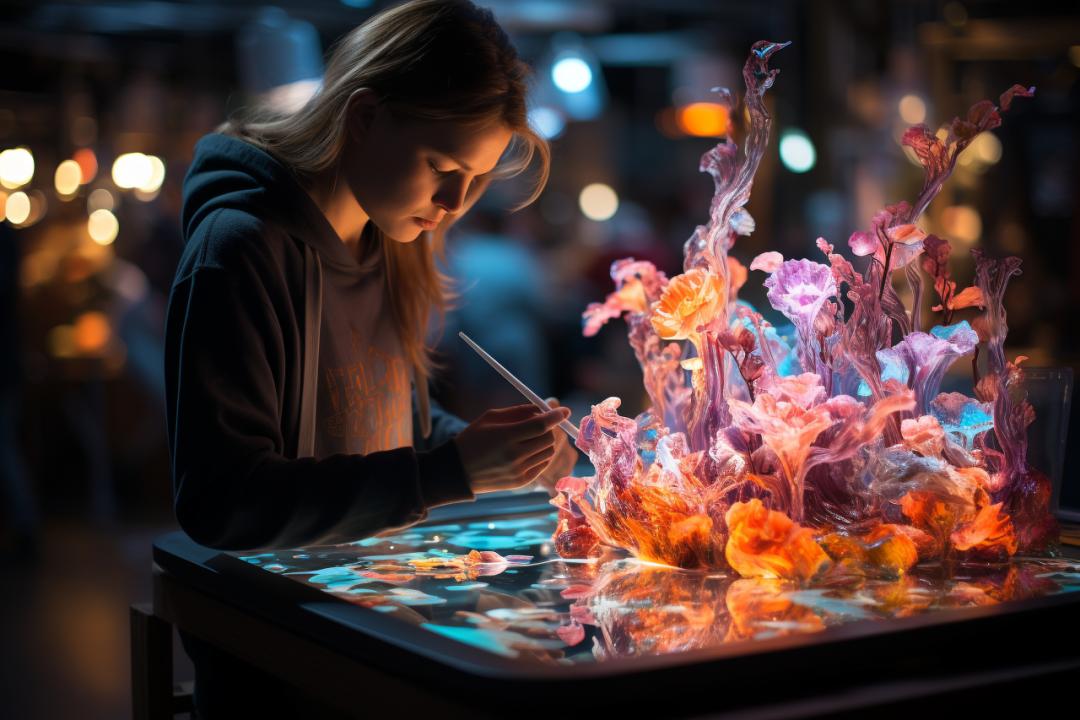
The preference for humanities and social science abilities in these positions is essentially because the technical shortcomings of AI happen to meet the strengths of liberal arts students. This has made the saying of "liberal arts students' counter - attack" quickly popular and become one of the hottest narratives in the current technology industry.
Technology influencers like Zhou Hongyi posted that liberal arts students may have more advantages in the era of artificial intelligence. Fei - Fei Li, the director of the Stanford AI Lab, called on every top - tier AI lab to have anthropologists, sociologists, and psychologists. There are even rumors that a dropout art student created important AI infrastructure.
For decades, liberal arts have been regarded as a burden on the path of technological progress and have been in continuous decline. For example, the lag in the development of European artificial intelligence is often attributed to the excessive adherence to ethical rules such as data security and privacy protection, believing that the constraints at the humanistic level have hindered the pace of technological innovation.
Why are liberal arts now being pursued by technical people and able to have a "dimensionality - reducing strike" on science and engineering?
02 Liberal Arts Submerged by AI and the Non - existent Counter - attack
Not long ago, at the World Economic Forum in Davos, Elon Musk made a prediction: In 2030, the intelligence of AI will surpass the total intelligence of all humans. There are only 2,000 days left for the old world.
Under such a desperate prediction, liberal arts are regarded as the last barrier for humanity, saying that it can use the humanistic spirit to launch a desperate counter - attack against AI on behalf of humanity.
But the reality is that on this low - lying land of liberal arts submerged by AI, no fortress can be built.
The continuous improvement of AI capabilities has quietly raised the tide of technology, gradually devouring the career opportunities of liberal arts students.
Firstly, it is the lower - level liberal arts students who are submerged.
In cheap apartments in Kenya and Uganda, a group of young people who have studied literature, education, and publishing are clicking on "angry", "joyful", or "neutral" on the screen. They are AI annotators hired by Meta through the outsourcing company Appen, with the task of teaching algorithms to understand the irony, slang, and cultural unwritten rules in human language.
Their writing skills have become the fuel for large language models. This data - worker job obviously has nothing to do with metaphysics, and the so - called humanistic value is out of the question.
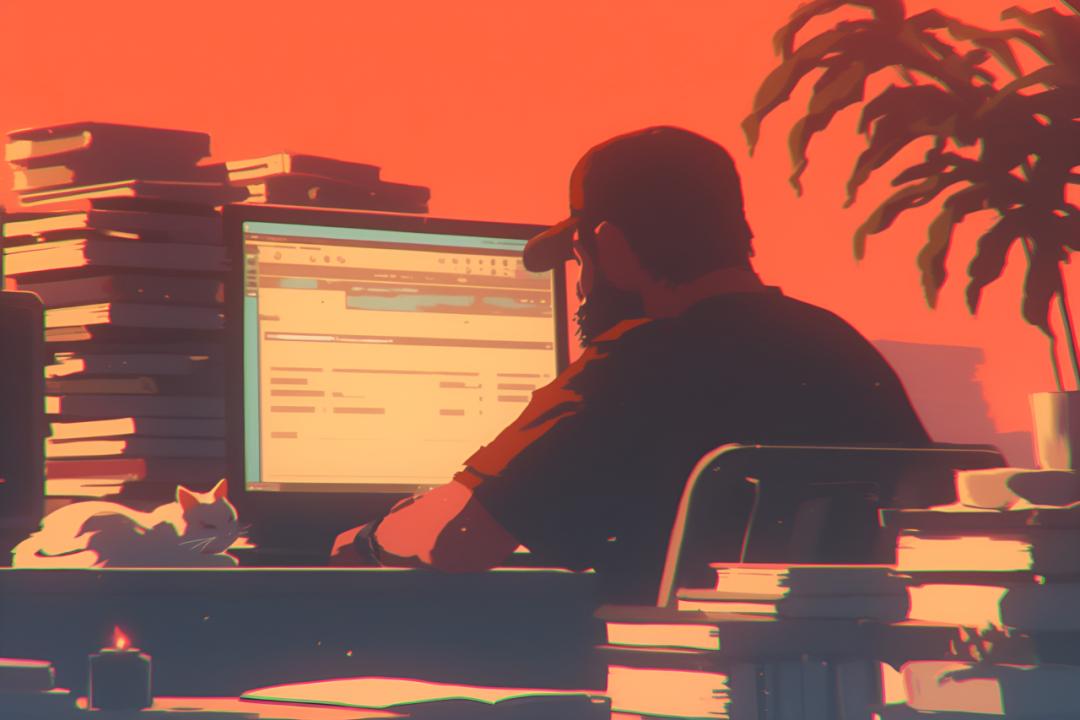
In 2025, the tide of AI flooded the desks of white - collar workers.
While Selina and Evon in Beijing and Shanghai were still celebrating the Spring Festival in their hometowns, DeepSeek - R1 hit the hot search. Overnight, white - collar positions such as brand copywriting, public relations planning, and government secretarial work, which were once regarded as decent destinations for liberal arts students, collectively fell.
This type of clerical work has high requirements for text rigor and format standardization but lacks a core creative barrier, making it the perfect target for AI's precise strikes.
"My spiritual will is broken. What has my more than 20 - year effort been for?" A writer posted in despair on a social platform.
AI scientists and technical bigwigs all say that liberal arts abilities are important. But it doesn't mean that liberal arts students are important. This is the bitter reality that 99% of ordinary liberal arts students are swallowing.
What about the remaining 1%?
In April 2024, the Sora video - generation model broke into the film industry, and for a while, the public opinions of "AI replacing directors" and "AIGC's first sword, cutting down the extras first" erupted. OpenAI urgently announced that it would recruit human artists to form a red team to debug and optimize the content generated by AI. It seems that liberal arts workers can still co - exist with AI.
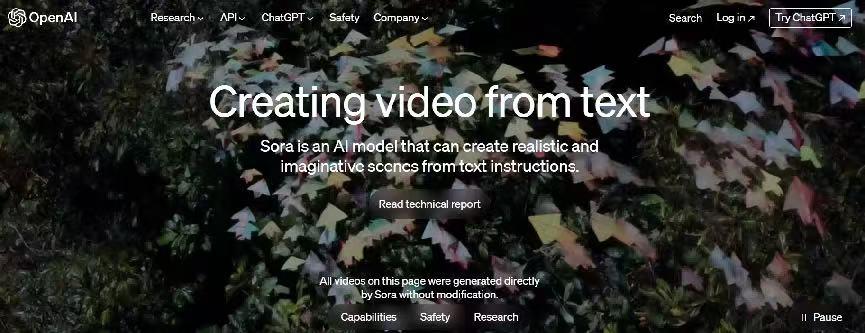
But ironically, these invited artists later collectively sued OpenAI: their works were used to train the model without authorization. The so - called high - level liberal arts are also discarded by AI after use.
Liberal arts students are submerged by AI. Then what exactly are the liberal arts abilities pursued by technology companies?
Currently, no one can say clearly.
A company that develops intelligent agents once invited a senior game world architect to build the story engine for an emotional companion intelligent agent. There is no doubt about the person's writing ability, but the actual operation effect was not ideal.
The core problem is that in addition to literary creation ability, one also needs to combine the technical advantages and disadvantages of AI and transform creativity into practical operations such as prompt - engineering. As a product manager, one must be able to independently complete the closed - loop from creativity to implementation. Relying solely on single - dimensional humanistic qualities is not enough.
Whether these new opportunities and positions at the intersection of humanities and technology are tenable and can last is still unknown, so they naturally cannot be the way out for liberal arts students.
The tide of technology is rising quietly and has already submerged the silent majority. The so - called desperate counter - attack of liberal arts is just an illusion full of high hopes.
03 AI, an Equalizer for All
When the humanities have to prove their usefulness to AI to be recognized and to gain a foothold in the technological era, their self - value has already disappeared.
Some scholars believe that the reason why the humanities flourished from the 16th to the 18th century and humanists at that time did not need to be self - anxious or self - defensive was that during the historical change period, they were always criticizing and questioning. They criticized what people wanted to criticize but were unable to express, and they questioned what people wanted to question but didn't know how. In that era, the humanities influenced the public and in turn established the value of their own discipline.
In contrast, currently, when liberal arts have to prove their usefulness to AI, they have already lost their most precious transcendence.
Just when the humanities are self - dissolving, the science and engineering community suddenly starts to call for the humanities and advocate liberal arts education. Why?
Because the tide of AI has finally flooded their embankments and reached the door of the technology camp.
Silicon Valley has experienced the most intensive wave of technology layoffs in its history. Google, Meta, and Amazon laid off more than 200,000 people in three years, mostly junior programmers and test engineers. In India, the industrial empire that once relied on cheap labor to undertake global code outsourcing has also lost its advantage in the face of AI. With a monthly fee of $200, a large model can complete the work that an entire team used to do in a week.

A company posted a radical tweet, announcing that it had archived the last line of code written by humans.
This survival crisis has forced the science and engineering community to start reflecting: When programming can be done by AI and human craftsmanship has no cost advantage in the face of AI, how can they gain a foothold?
So, they turn their attention to liberal arts, to those humanistic abilities that AI is still difficult to replicate at present, such as empathy, creativity, and critical thinking. The pursuit of liberal arts is the self - redemption of the science and engineering community in the face of the crisis.
In 1952, Kurt Vonnegut predicted in "Player Piano": "Machines will first replace physical labor, then routine work, and finally, perhaps, real mental work."
The process may be different, but the result may have been predicted. That is, AI doesn't favor liberal arts or science and engineering. It is an equalizer, equally flooding the embankments of every discipline.
04 Traditional Disciplines Try to Swim
Liberal arts are on one side and science and engineering are on the other, with a clear - cut distinction between them. This is the disciplinary divide left over from the industrial era in the 19th century, which once efficiently trained the specialists needed for industrialization. However, in the face of the flood caused by AI, it appears so rigid and fragile.
Traditional disciplines are starting to actively jump into the water and try to learn to float and sink in the new era.
One day in 2021, Professor Lü Peng from the School of Social Sciences at Lanzhou University sent a message to the ecological director of an AI company: "You've made such a big deal out of your AI training courses with computer teachers. Our teachers from the School of Social Sciences are a much larger group. Why don't you consider them?"
After they talked, they found that all aspects of social sciences are related to national economy and people's livelihood, and many fields really need to use artificial intelligence to