The "pioneering work" of the Nobel Memorial Prize in Economic Sciences injects theoretical impetus into the current investment boom.

In 2025, the Nobel Prize in Economics was awarded to three pioneers of "innovation-driven growth". The framework of "creative destruction" they laid is derived from Schumpeter's The Theory of Economic Development.
Let's return to this original work. The original propositions such as "innovation is the only endogenous driving force of the economy" and "entrepreneur = profit engine" first proposed in the book were quantified by the new Nobel laureates into the operable "Schumpeterian growth model", which directly injected theoretical impetus into the current investment boom in the fields of AI, new energy, and new consumption.
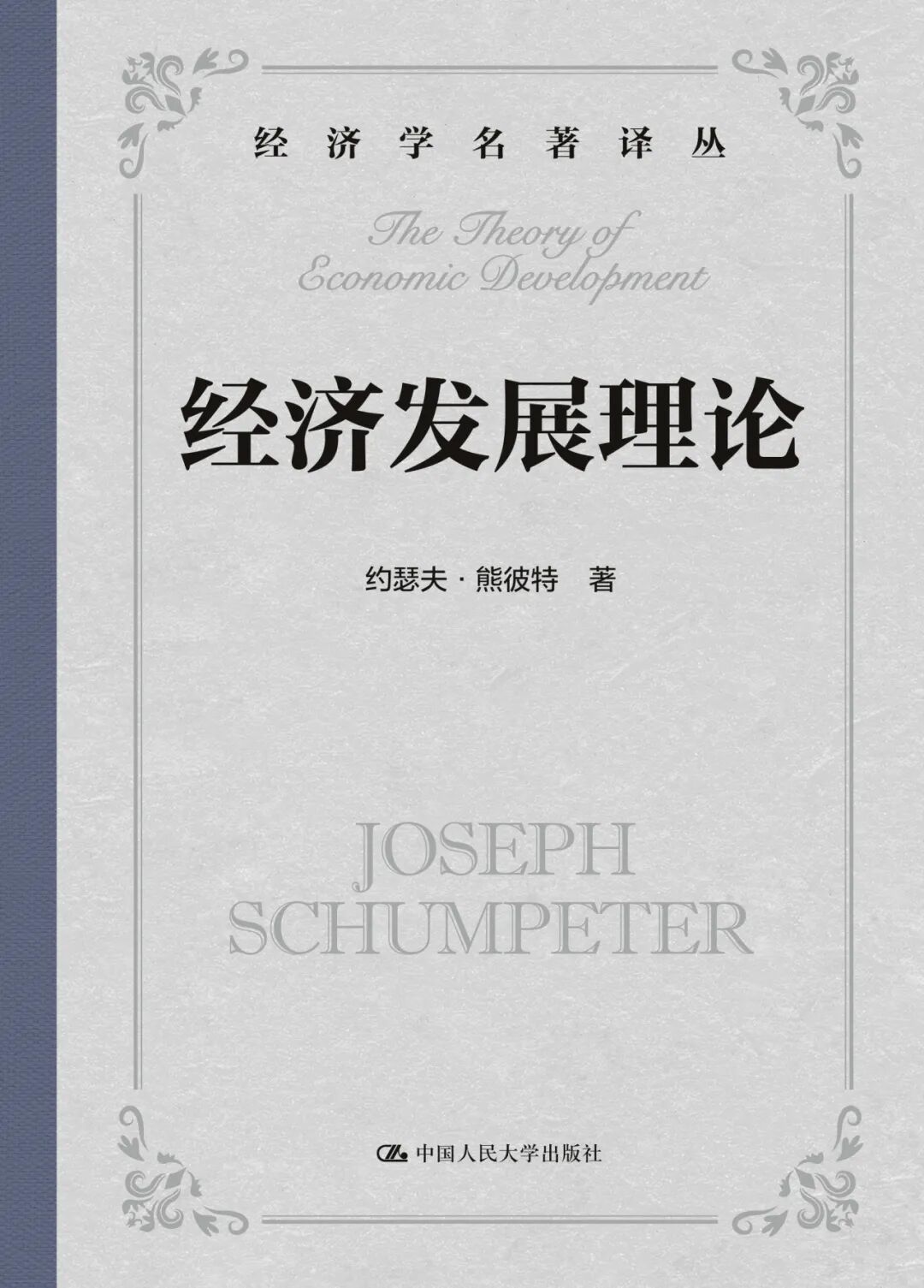
The Theory of Economic Development
Author: Joseph Schumpeter
Publication date: October 2025
China Renmin University Press
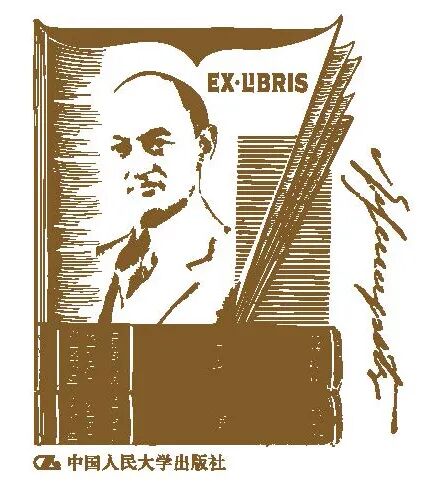
Book Introduction
This book is an early masterpiece of the American economist Joseph Schumpeter and one of the most important economic works in the 20th century. It summarizes the main economic phenomena of the emergence and development of capitalism from different perspectives. While describing the historical development process, it makes pioneering and profound discussions, integrating historical narration and theoretical argumentation, which reflects Schumpeter's writing style.
With its unique perspective and profound insights, this book conducts a comprehensive and in - depth exploration of issues such as the core driving force of economic development, entrepreneurial spirit, innovation, and economic cycles. Chapters One and Two are the most important. From the circular flow of economic life restricted by the given environment to economic development as a basic phenomenon, Schumpeter makes pioneering and incisive discussions, which are both theoretical explorations and overviews of the historical development process. Chapters Three, Four, and Five further elaborate on credit and capital, entrepreneurial profit, and interest on capital respectively. Generally speaking, the "innovation theory" is the core of Schumpeter's "theory of economic development". Chapter Six uses the innovation theory to analyze the formation and characteristics of economic cycles.
Author Introduction
Joseph Schumpeter, an American - Austrian economist, is one of the most influential economic thinkers in the 20th century. He taught at many European universities in his early years and moved to the United States in 1932, where he taught at Harvard University for a long time. His theory is centered around innovation and he proposed the concept of "creative destruction", believing that the essence of capitalism is a dynamic process in which entrepreneurs break the economic equilibrium through innovation. His representative works include The Theory of Economic Development (1911), which systematically expounds the innovation theory for the first time; Business Cycles (1939), which combines innovation with economic fluctuations; and Capitalism, Socialism and Democracy (1942), which predicts the institutional evolution of capitalism. He is known as the "father of modern innovation theory" and the "father of entrepreneurship theory".
Author's Preface
Some of the ideas I put forward in this book can be traced back to 1907. By 1909, all the ideas in this book had taken shape. At that time, I conceived a general framework for analyzing the pure economic characteristics of capitalist society, and this framework has not undergone any major changes since then. This book was originally written in German and the first edition was published in the autumn of 1911. After the first edition was out of print for ten years, I reluctantly agreed to publish the second edition. In the second edition, I deleted the original Chapter Seven, rewrote Chapters Two and Six, and reduced or supplemented some content in other chapters. That was in 1926. Then came the third German edition, which was just a reprint of the second edition. This English version is also translated from the second German edition.
In this re - edition, I made no changes except adding some explanatory notes. If I said that I did this because I believed that every detail in the book was satisfactory, I would be making a very harmful judgment on everything I have done and thought since the book first came out. Although I do think that the outline of the book - what I call the "perspective" or "vision" - and the conclusions are basically correct, I now have different views on many issues. I'll just mention one of them as an example. When I first proposed the theory of economic cycles (readers can see this theory in Chapter Six of this book), I took it for granted that there was only a single wave - like movement, that is, the cycle discovered by Juglar. But now I think there are at least three such wave - like movements, and there may be more. Currently, for theoretical economists studying economic cycles, the most important problem they face is precisely how to accurately distinguish them and describe clearly the various phenomena caused by their interaction. However, in the subsequent editions of this book, I did not introduce this element, because a book, like a child, becomes independent once it leaves its parents. It has its own life, and the author also has his own life. It is inappropriate for parents to interfere too much with their children who have left home and become outsiders. This book has found its own way. Right or wrong, it has won its own place in the German literature in its era and field. In my opinion, the best way to treat it seems to be to leave it as undisturbed as possible. If it were not for the advice and encouragement of my respected friend, the outstanding economist Professor Taussig, I would hardly have thought of publishing an English translation.
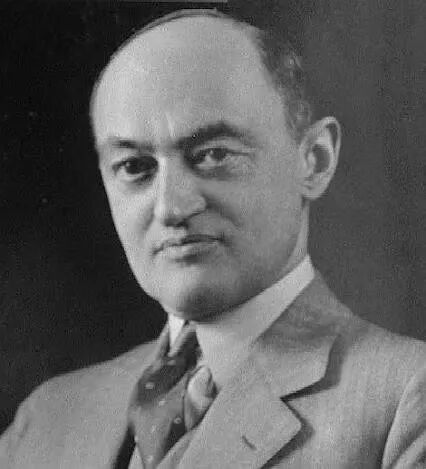
Joseph Schumpeter (Image source: Internet)
For the same reason, I did not follow in the footsteps of my great teacher Böhm - Bawerk in revising my own works. When he re - published his works, he would pay infinite attention to every objection and criticism and respond to them. On the contrary, I tried to limit my disputes with those who put forward serious criticisms of my arguments to a minimum. Of course, this is by no means because I have no respect for them - it is an honor for me to receive their criticism. However, I must admit that I have never encountered any truly convincing objections to any of the substantial issues in this book.
Obviously, in terms of its purpose and method, this book is undoubtedly "theoretical". Although this preface is not a suitable place for me to make a statement of my methodology, I may still say that my current view on the relationship between "factual" research and "theoretical" research is different from what it was in 1911. However, I always believe that, like any other thing, our science must not lose those refined common senses we call "theory", which provide us with tools to examine facts and real - world problems. No matter how important the influence of the large number of newly emerging unanalyzed facts, especially statistical facts, on our theoretical tools is - there is no doubt that the ever - increasing treasure of factual materials will constantly inspire new theoretical models, thus quietly and universally changing all existing theoretical structures - at any given stage, having some theoretical knowledge is always a prerequisite for dealing with new facts, because so - called new facts are those that are not yet reflected in the existing theory. If some knowledge is superficial and subconscious, it can be said to be a bad theory, but it is still a theory. For example, I still cannot convince myself that issues such as the source of interest are neither important nor interesting. Of course, some authors can make such issues seem unimportant and uninteresting, but that is the fault of these authors. In any case, I still hope that through more "realistic" research on money, credit, interest, and economic cycles, more detailed factual materials can be provided in the near future, which is exactly what this book lacks.
Schumpeter's Works
The arguments in this book naturally form a coherent whole, but this is not the result of implementing a well - planned and meticulous pre - arranged plan. About 25 years ago, when I started researching the theory of interest and the theory of economic cycles, I did not expect that as the argument developed, these topics would not only be connected with each other but also closely related to issues such as entrepreneurial profit, money, and credit. But soon it became clear that all these phenomena - including many secondary phenomena - were just events caused by another different process, and the simple principle used to explain these phenomena could also be used to explain that "different process" itself. It turns out that these theories are very useful to us and can correspond to the equilibrium theory, which has always been (either explicitly or implicitly) and still is the core of traditional theory. I originally used the terms "static" and "dynamic" to refer to these two structures respectively, but now, following the advice of Professor Frisch, I have clearly stopped using these two terms in this sense. They have been replaced by other terms, although the replacement terms seem a bit crude. However, theoretically, I still adhere to this distinction because I have repeatedly found this distinction very useful for my current research. This distinction has also been proven useful outside the field of economics, in what we call the theory of cultural evolution. This theory of cultural evolution has amazing similarities with the economic theory expounded in this book in many important aspects. Of course, this distinction itself has also received a lot of objections and criticisms. However, is it really not in line with the reality of life to distinguish between the phenomena of running an existing business and establishing a new business? Is it really just an artificial practice? Is it really necessarily related to some "mechanical analogy"? Those who have a particularly strong interest in studying the history of terms (etymology), if they really think it is necessary, might as well consider a zoological analogy; because the terms "static" and "dynamic" were introduced into economics by John Stuart Mill, although they have different meanings in economics and zoology. Mill may have introduced them from Comte, and Comte told us that he borrowed them from the zoologist de Blainville.
I would like to express my sincere gratitude to Dr. Redvers Opie, my friend, who, with unparalleled kindness, took on the arduous task of translating this book - the German original of this book is very difficult to handle. We decided to delete the two appendices in Chapters One and Three of the German original, as well as some paragraphs or sections in each chapter. In some places, we changed some explanatory texts. Due to the above changes, we also re - numbered many pages. Considering that all the arguments in the book have not changed, I think it is redundant to make a comparison table of the changes.
Joseph Schumpeter
March 1934
Cambridge, Massachusetts, USA
Table of Contents
Chapter One: The Circular Flow of Economic Life Restricted by the Given Environment
Chapter Two: Economic Development as a Basic Phenomenon
Chapter Three: Credit and Capital
Chapter Four: Entrepreneurial Profit
Chapter Five: Interest on Capital
Chapter Six: Economic Cycles
Postscript to the Translation
This article is from the WeChat official account "China Renmin University Press", and is published by 36Kr with authorization.