SpaceX investors: This year's IPO will be the "biggest wealth creation event in history," and Elon Musk is still severely undervalued.
Shaun Maguire, a partner at Sequoia Capital, believes that the upcoming IPO of SpaceX will be "the healthiest wealth creation event in history." The valuation of this company, which he calls "the greatest company in history," has soared from $36 billion in 2019 to $800 billion.
This top investor, who has also invested in five of Elon Musk's companies, recently stated that the market still severely underestimates Musk's value. The excess rocket capacity of SpaceX will give rise to the possibility of a space data center, which could be "one of the largest market opportunities in history."
Highlights of the interview:
The logical victory of contrarian investment: In 2019, the market only regarded SpaceX as a rocket launch company with limited growth. Maguire, with his physics background, predicted the technical feasibility of Starlink. When the market generally gave it a "zero valuation," he made a heavy investment, realizing the transformation of perception from $3.6 billion to $80 billion.
The business philosophy of "potential energy conversion": Unlike regular CEOs who are eager to cash in, Musk is used to long - term accumulation of infrastructure capabilities (such as Gigafactory and Starship) in a zero - revenue state. Once the technology crosses the critical point, it will release amazing kinetic energy in the way of producing millions of units annually or rewriting the industry model.
Laser links reshape global communication: Relying on a vacuum laser communication network composed of more than 9,000 satellites, Starlink has achieved a faster intercontinental data transmission speed than submarine cables, evolving from a simple access tool to the core digital infrastructure for global long - distance traffic.
D2D rewrites the telecom industry landscape: Through the acquisition of spectrum and optimization of V3 satellites, SpaceX's direct - to - cell satellite technology (D2D) is on the verge of explosion. It is expected to be widely popularized by 2028 and may even replace the consumer fixed network as the company's largest revenue source in the next five years.
Starship gives rise to space data centers: As Starship enters the reliable mass - production period in 2026, SpaceX will face the situation of excess rocket capacity. This prompts the company to use the low launch cost to solve the power and land bottlenecks faced by ground - based AI data centers, opening up a trillion - scale space computing power market.
The "atomic" advantage in the AI competition: Maguire emphasizes that the final outcome of the AI competition will be limited by physical resources (atoms) such as electricity and hardware. Through the cross - company collaboration of xAI, Tesla Energy, and SpaceX's space infrastructure, Musk has mastered the underlying support that other pure - software AI giants cannot match.
The healthiest wealth creation event in history: The upcoming SpaceX IPO is regarded as "the largest wealth creation movement in history." Since most of its employees are mission - driven and have endured long - term hardships, the flow of this huge wealth will be more constructive. And due to the existence of grand goals such as the Mars mission, the core team will not leave.
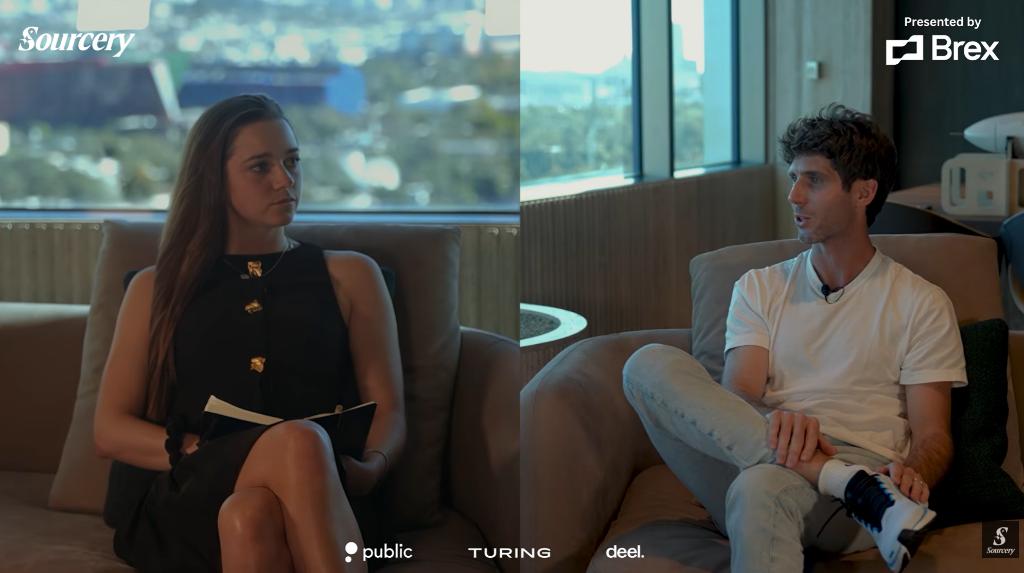
Maguire revealed in an interview on the podcast "Sourcery with Molly O'Shea" that Sequoia Capital has cumulatively invested approximately $1.2 billion in SpaceX since 2019. This investment is currently worth about $12 billion, achieving a ten - fold return.
He said that the investment decision at that time was regarded as "crazy" in the industry. According to the global launch market scale at that time, there was almost no room for SpaceX's valuation to rise. The market's value assessment of businesses such as the Starlink satellite network and the Starship super - heavy rocket was zero.
Maguire pointed out that the soaring valuation of SpaceX mainly comes from the four - wave evolution of the Starlink business: the consumer network has reached 9.2 million subscribers, the enterprise market covers several airlines, the government and defense business has launched the Starshield product line, and the Direct - to - Cell direct - to - satellite service for mobile phones had 6 million users by the end of 2024. He predicts that 2028 will be a crucial year for Direct - to - Cell, and by then, the scale of this business may exceed that of the consumer network.
Even more disruptive is the space data center plan. Maguire said that once Starship operates reliably in 2026, SpaceX will face excess capacity, while the AI data centers on Earth are facing restrictions on power, land, and environmental protection regulations.
He has completed the calculation of the relevant economic model and believes that this will be "one of the largest market opportunities in history." The public will see a complete demonstration in SpaceX's IPO documents.
The contrarian bet in 2019
Maguire's investment decision seemed extremely abnormal at that time. In 2019, SpaceX only completed 13 launches throughout the year, and the global launch market scale was about $5 - 6 billion. Even if SpaceX obtained 100% market share, calculated at an EBITDA profit margin of 40%, the net profit after deducting capital expenditure was only about $1 billion. A valuation of $36 billion was equivalent to 36 times the theoretical maximum profit.
More importantly, the market was completely pessimistic about SpaceX's core growth engine. All previous satellite network companies - Iridium, Globalstar, Teledesic - had failed, and Starlink was regarded as another project destined to lose money. The Starship was still in the early development stage at that time, and commercialization was far away.
Maguire's physics background allowed him to verify the technical feasibility of Starlink in advance. He said that he knew what questions to ask and finally concluded that "this time is different." Sequoia then invested $1.2 billion and became an important shareholder of SpaceX.
The four - wave evolution of Starlink drives the soaring valuation
SpaceX currently operates about 9,000 satellites in orbit. These satellites communicate with each other through lasers, transmitting trillions of bits of data per second. Maguire compared it to the laying of trans - Atlantic submarine fiber by Global Crossing in 1999 and believes that SpaceX has established the same - level infrastructure in space, and the transmission speed of lasers in a vacuum is faster than that of optical fibers.
The first - wave consumer network business had 9.2 million subscribers by the end of 2024. Maguire revealed that it only took 12 months for Starlink to reach an annual revenue of $1 billion from the first revenue. Users only need to install a 10 - to 12 - inch dish antenna to connect to the satellite network.
The second - wave enterprise market breaks through in the aviation industry. Qatar Airways, United Airlines, and JetBlue Airways have successively signed contracts to provide Starlink services on airplanes. Maguire mentioned a marketing effect: many rural passengers found that Starlink on airplanes was faster than their home wired networks, which instead prompted them to subscribe to home services.
The third - wave government and defense market has launched the Starshield product line, serving military drones, battlefield communications, and government security networks.
The fourth - wave Direct - to - Cell may be the most disruptive. Mobile phones can directly connect to satellites without additional equipment. SpaceX's satellites are disguised as base stations and automatically switch when mobile phones cannot receive ground signals. By the end of 2024, this service had 6 million subscribers and was growing rapidly.
In 2025, SpaceX acquired EchoStar's 2GHz spectrum for $17 billion, which was an aggressive signal to enter the mobile satellite market. Maguire predicts that 2028 will be a crucial year for Direct - to - Cell. By then, SpaceX will have enough V3 satellites in orbit, and the spectrum and mobile phone antennas will also be optimized. Large - scale mobile satellite services will become a reality. He believes that the scale of Direct - to - Cell may exceed that of the consumer network business in five years.
Space data centers: Excess capacity gives rise to new opportunities
Maguire believes that space data centers are SpaceX's next major opportunity. The logical chain is clear: Starship is expected to operate reliably in 2026. Once all Starlink and Direct - to - Cell satellites are deployed, SpaceX will face excess capacity. At the same time, the AI industry on Earth is facing serious bottlenecks - insufficient power, difficulty in obtaining land, strict environmental protection regulations, and the NIMBY effect making it increasingly difficult to build data centers.
This creates a supply - demand mismatch: excess capacity at the launch end and explosive demand but limited supply at the ground end. Maguire revealed that six months ago, he said that "the macro - logic is correct, but the micro - mathematics has not been calculated clearly." Now he has completed the calculation of the economic model, and the conclusion is that "this will be very huge."
Musk has publicly talked about the concept of space data centers, but the complete economic model has not been announced. Maguire said that when SpaceX's IPO documents are made public, the market will see how big this opportunity is. He believes that this may be "one of the largest market opportunities in history."
This layout also explains why Maguire believes that Musk is still underestimated. Although Musk's net worth exceeds $400 billion and he is the richest person in the world, Maguire believes that the market should focus on "the derivative of progress" - the speed of change rather than the current position. He pointed out that xAI is building the world's largest coherent training cluster, and Musk is "the person best at dealing with atoms in the world." Atoms refer to hardware, infrastructure, and manufacturing capabilities, which are the scarcest resources in AI.
Maguire's logic is that the bottleneck of AI will soon shift from model ability to inference computing power, and the bottleneck of inference computing power is electricity. The combination of xAI, Tesla's energy business, and SpaceX's space data center capabilities will form a combination that other AI companies cannot replicate.
"The healthiest wealth creation event in history"
Maguire believes that the SpaceX IPO will be very different from past technology IPOs. He calls it "the healthiest wealth creation event in history" because of the characteristics of SpaceX employees.
Those employees who have been with the company for more than 15 years didn't join to get rich but because they really wanted to build rockets and send humans to Mars. They have experienced battles with physical laws, confrontations with environmental groups, and debates with skeptics, and have seen many near - failure moments and then pulled through. This kind of tempering has shaped a thrifty, pragmatic, and mission - driven culture.
Maguire predicts that these people will not squander money like typical tech new - rich but will invest in areas such as public art and scientific research sponsorship. He mentioned that several early employees he knew planned to become artists after the IPO. "These people didn't come for the money in the first place, and it took them a long time to get to this point."
More importantly, SpaceX's mission is not yet complete. The milestones in the next five years include: the regular operation of Starship, the large - scale deployment of Direct - to - Cell, the launch of space data centers, the construction of a lunar base, and the preparation for a Mars mission. Maguire quoted the mindset of SpaceX employees: "Why retire when we are about to send humans to Mars?"
Maguire has also invested in four other companies of Musk: xAI, Neuralink, The Boring Company, and X. His optimism about these companies is based on the same logical framework: Musk builds companies by "accumulating potential energy and then converting it into kinetic energy." These companies may seem to be making slow progress and have limited revenues now, but once they break through the critical point, the growth rate will catch the market off guard.
From $3.6 billion to $80 billion, Maguire's ten - fold return is based on a deep understanding of this unique business model. And his latest judgment is : this is just the beginning.
This article does not constitute personal investment advice and does not represent the platform's views. The market is risky, and investment requires caution. Please make independent judgments and decisions.
This article is from the WeChat official account "Wall Street Insights", author: Zhang Yaqi. It is published by 36Kr with permission.