Free of charge. OpenAI offered a late-night bonus by releasing the Codex application, which can command multiple agents to work.
According to a report by Zhidx on February 3rd, early this morning, OpenAI officially launched the macOS version of the AI programming agent Codex application.
This new application can help developers manage multiple agents working in parallel and collaborate with agents on long - running tasks.
The important update is that through the Codex application, developers can not only perform targeted editing and pairing of a single programming agent, but also supervise a collaborative agent team across the entire software lifecycle of design, construction, release, and maintenance.

Codex main interface
Sam Altman, the co - founder and CEO of OpenAI, posted five consecutive tweets to celebrate the release of the Codex application. He said bluntly that "he was surprised at how much he liked it (Codex)". Altman also revealed that he used Codex to develop an application in the previous few weeks. The AI's suggestions for new features were so good that he felt "a bit useless, which was sad".
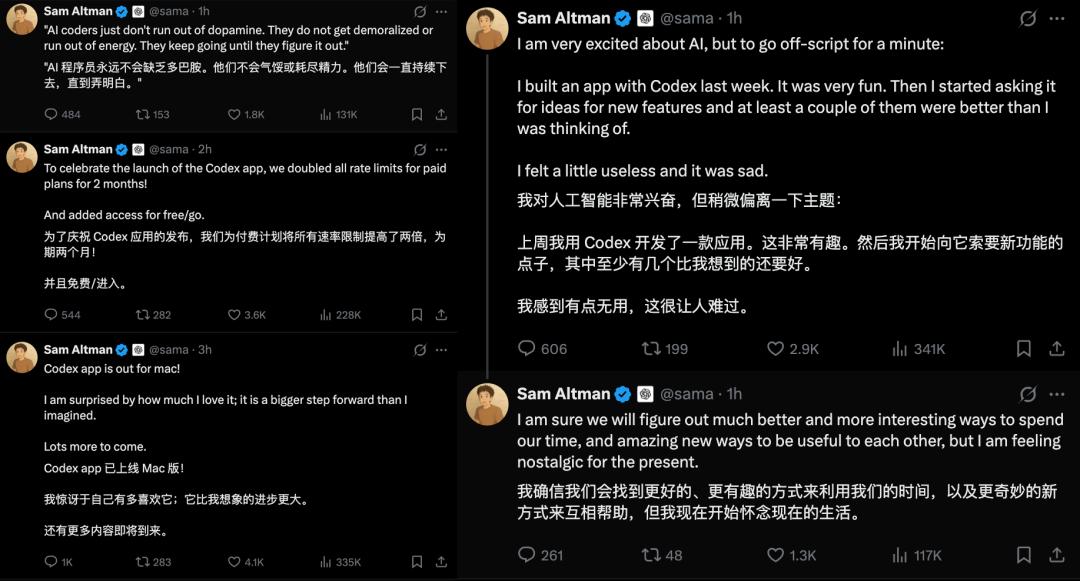
To make it accessible to more people, two months before the release, OpenAI included Codex in the free version of ChatGPT and the economy subscription package Go. It also doubled the rate limits for Plus, Pro, Business, enterprise, and education plans. That is to say, free users can have a limited - time trial, and paid users will have a better experience.
Meanwhile, developers can use Codex in applications, CLI, IDE, and the cloud.
OpenAI's official blog mentioned that nowadays, enterprises and developers are increasingly relying on Codex for end - to - end development. Since the launch of the then - most powerful agent programming model, GPT - 5.2 - Codex, in mid - December, the overall usage of Codex has doubled. In the past month, more than one million developers have used Codex.
01. Handle multi - agent work simultaneously and work independently without conflicts
OpenAI launched the AI programming model Codex in April 2025.
This model can now handle complex, long - running end - to - end tasks. Developers can also coordinate multiple agents in multiple projects based on the model, such as assigning work to them, running tasks in parallel, and letting agents take on major projects that need to be maintained for hours, days, or weeks.
The core challenge behind achieving such capabilities is not just what agents can do, but how people should guide, supervise, and collaborate with agents on a large scale. However, the existing integrated development environments (IDEs) and terminal - based tools currently do not support such forms of collaboration.
Based on this, OpenAI launched the Codex application. The Codex application has an agent space focused on multi - tasking.
Agents can run in independent threads organized by projects, so developers can seamlessly switch tasks without losing context. The application allows developers to view agent changes in threads, comment on differences, and even open them in the editor for manual changes.
The application also has built - in support for the working tree, so multiple agents can work in the same repository without conflicts. Each agent works on an isolated copy of the developer's code, allowing it to explore different paths without tracking how they will affect the codebase.
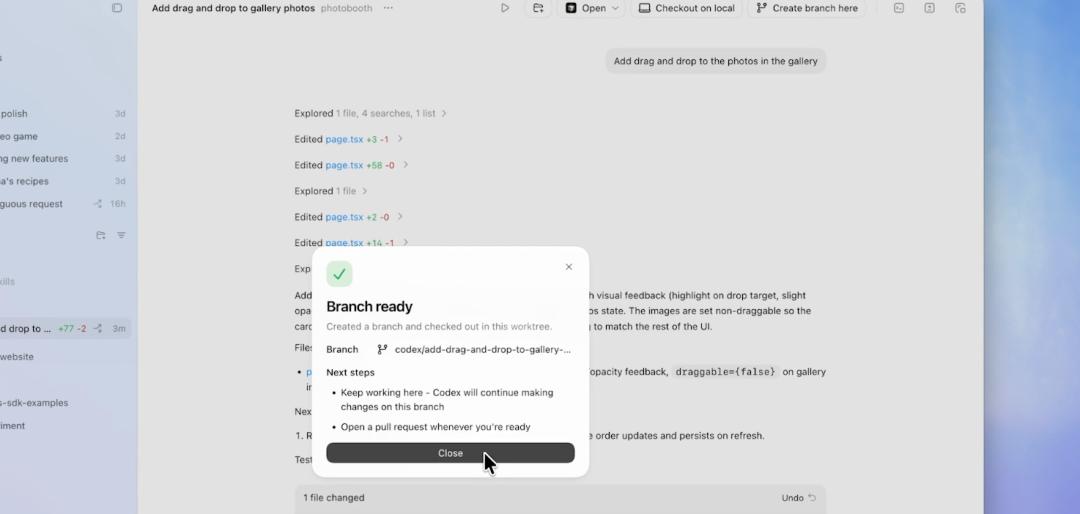
When the agent is working, developers can view the changes it makes locally or let it continue the work without changing the local git status.
Codex will obtain the developer's session history and configuration from the Codex CLI and IDE extensions.
02. Can autonomously use skills and made a racing game based on 7 million tokens
OpenAI's official blog said that Codex is evolving from a code - writing agent to an agent that uses code to complete work on the user's computer.
Based on the new application, developers can quickly extend Codex's functions from code generation to tasks that require collecting and synthesizing information, solving problems, writing, etc. Codex packages skills such as instructions, resources, and scripts together, enabling it to connect tools, run workflows, and complete tasks according to the preferences of the developer team.
The Codex application also provides a dedicated interface for creating and managing these skills. Developers can explicitly require Codex to use specific skills or let it automatically select them according to the current task.
Researchers asked Codex to make a racing game, which includes different racing drivers, eight maps, and items that players can use with the space bar.

Codex worked independently and built this game using more than 7 million tokens based on just an initial user prompt. It can act as a designer, a game developer, and a game QA tester.
Inside OpenAI, researchers have built hundreds of skills to help multiple teams delegate work to Codex. It is worth noting that these tasks are often difficult to define consistently and clearly because their scope covers running evaluations, overseeing training tasks, writing documentation, and reporting growth experiment results.
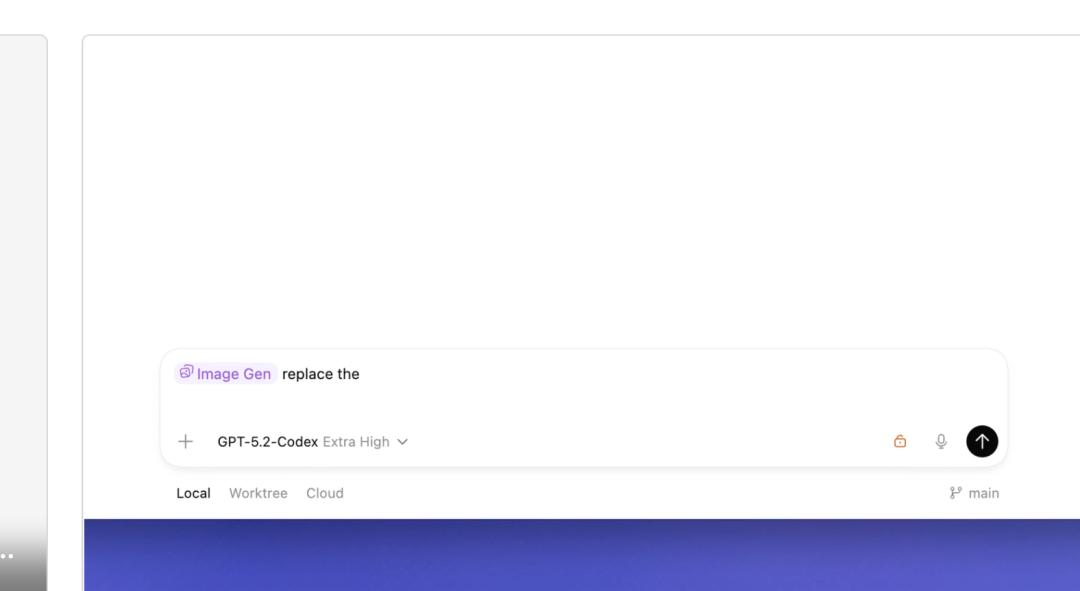
Codex uses skills to complete tasks
The Codex application includes a skill library of a series of popular tools and workflows in OpenAI. Some of the skills are as follows:
Implement design: Obtain design context, resources, and screenshots from Figma and convert them into production - ready UI code that is visually identical to the original.
Manage projects: Filter errors, track releases, manage team workload, etc. in Linear to keep the project running smoothly.
Deploy to the cloud: Let Codex deploy the developer's web application creations to cloud hosts such as Cloudflare, Netlify, Render, and Vercel.
Generate images: Use the image generation function powered by GPT Image to create and edit images for websites, UI prototypes, product visual effects, and game resources.
Build using the OpenAI API: Refer to the latest OpenAI API documentation during the building process.
Create documentation: A set of functions for reading, creating, and editing PDF, spreadsheet, and docx files with professional formatting and layout.
03. Use automation to delegate repetitive work, with two styles to choose from
Using the Codex application, developers can also set up automated tasks to let Codex run in the background according to an automatic schedule. Automated tasks combine instructions with optional skills and are executed according to the schedule defined by the developer. When an automated task is completed, the results will enter the review queue so that developers can re - intervene and continue working if necessary.
At OpenAI, researchers have used the corresponding capabilities to handle repetitive but important tasks, such as daily problem screening, finding and summarizing CI (Continuous Integration) failures, generating daily release briefings, checking errors, etc.
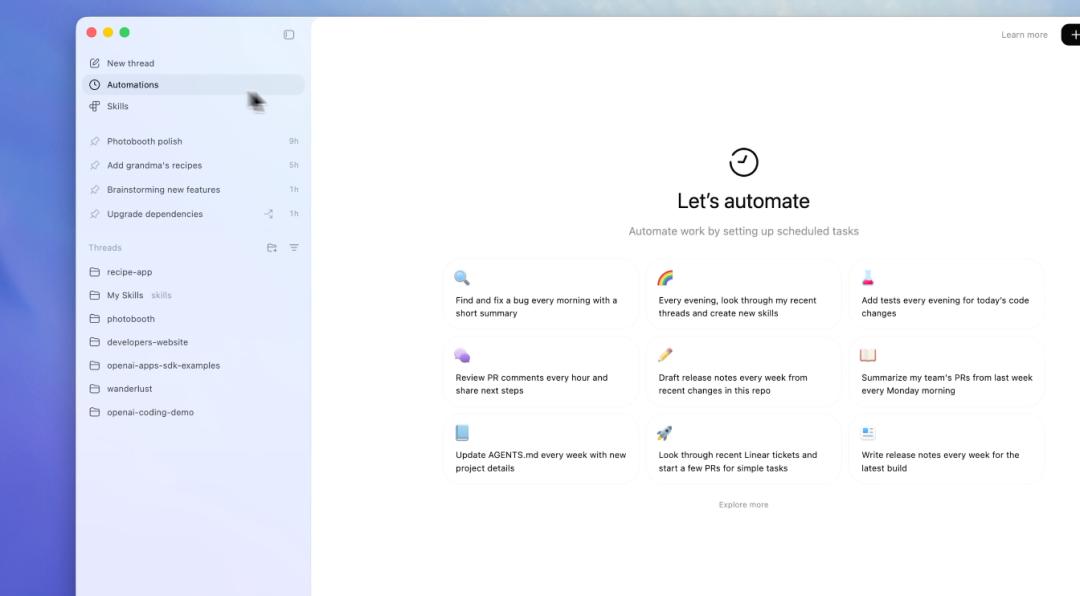
Codex executes automated tasks
In addition, Codex allows developers to choose two personalities, namely a concise and pragmatic style and a more conversational and empathetic style. They can use the /personality command in the application, CLI, and IDE extensions.
In terms of security design, the Codex application uses the same native, open - source, and configurable system - level sandbox as the Codex CLI. By default, Codex agents are limited to editing files in their working folders or branches and using cached web searches, and then request to run commands that require elevated privileges (such as network access). Developers can configure rules for projects or teams to allow certain commands to run automatically with elevated privileges.
04. Conclusion: OpenAI Codex will expand full - scenario capabilities next, and can run even when the computer is shut down
Next, OpenAI will continue to expand where and how developers can use Codex, including providing an application on Windows and launching faster inference capabilities.
In the Codex application, researchers will continuously improve the multi - agent - based workflow based on real - world feedback, making it easier to manage parallel work and switch between different agents without losing context. They are also building an automation function that supports cloud - based triggers so that Codex can continue to run in the background even when the computer is shut down.
OpenAI's official blog mentioned that Codex is built on a simple concept: everything is controlled by code. The stronger an agent's ability to reason and generate code, the more competent it is in all forms of technical and knowledge work. However, a key challenge today is the gap between the capabilities of cutting - edge models and how easily people can use them in practice. Therefore, it tries to help developers guide, supervise, and apply the full intelligence of the model to actual work through Codex, thereby narrowing this gap.
This article is from the WeChat official account "Zhidx" (ID: zhidxcom). The author is Cheng Qian, and the editor is Xin Yuan. It is published by 36Kr with authorization.