The world's best-selling electric vehicle title has changed hands. Tesla's "story" and BYD's "foundation"
In 2025, when BYD's sales of pure electric vehicles exceeded Tesla's by 620,000 units, clinching the global sales crown in this segment for the first time, Fudi Battery, which contributed to BYD's cost advantage, was continuously shipping its battery cells to Tesla's energy storage Gigafactory in Shanghai.
The story behind the awards stage is far more complex than what's on it. The difference between the new and old kings lies in that Elon Musk is painting a future "story" defined by full - self driving and robots, while Wang Chuanfu is leading BYD to build an industrial "foundation" that encompasses everything from batteries and motors to semiconductors. Their development trajectories are gradually diverging, but they are both seizing the initiative on different paths.
Path Selection between Physical AI and Deep - Dive into the Main Business
The fundamental difference in strategic logic determines the divergence between Tesla and BYD in terms of business boundaries and development directions. Tesla's transformation did not start in Q4 2025, but the clear "physical AI" narrative in its financial reports marks its complete departure from the framework of traditional automakers. In Musk's plan, electric vehicles are no longer the ultimate goal but the core carrier for the implementation of AI technology. Autonomous driving, humanoid robots, and computing infrastructure form the "troika" of future growth. The underlying logic is to transform cars into intelligent terminals for data collection, algorithm training, and service monetization. On the other hand, BYD has always taken the automotive business as its core growth engine, with the strategic core being "full - industrial - chain vertical integration + global expansion". In its development framework, the automotive business is a complete ecosystem covering upstream lithium mines, core components, and downstream vehicle manufacturing. The "heavy - asset, full - chain" model aims to consolidate its leading position in the new energy vehicle market through technological autonomy and cost advantages.
The choice of technological paths reflects this divergence:
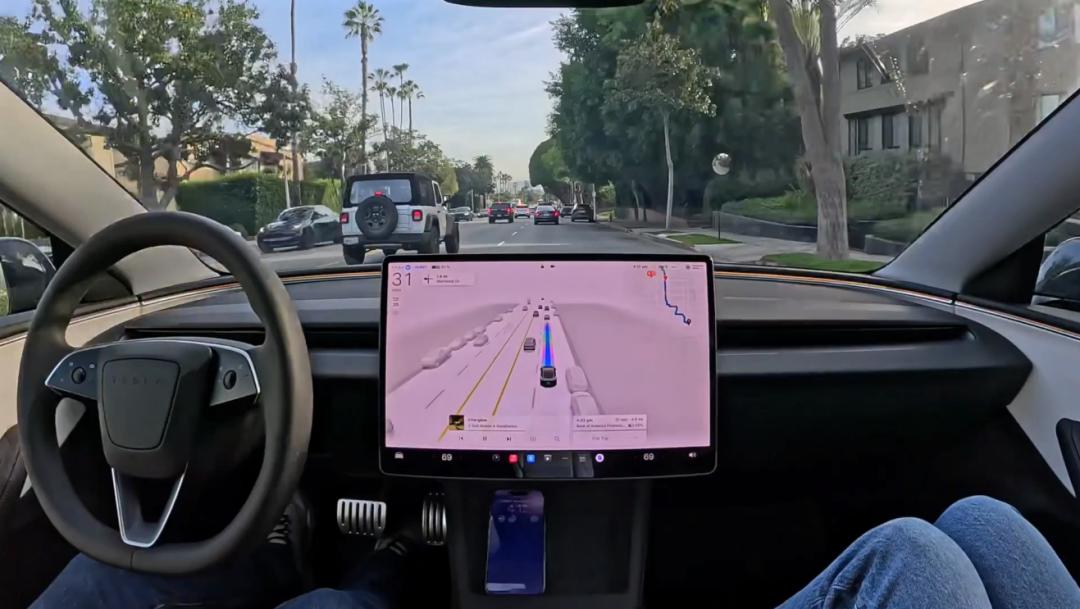
Tesla concentrates its resources on the cross - scenario implementation of AI technology. Autonomous driving is the core strategic fulcrum. The FSD system has been upgraded to version V14, optimizing driving decisions through a pure - vision neural network. Since February 2026, the one - time purchase model has been cancelled globally, and it has fully switched to a subscription - based model at $99 per month. Meanwhile, the Cybercab model, specifically designed for driverless operation, will enter mass production in April 2026, adopting the "Unboxed" deconstructive manufacturing process, with the target production cost controlled below $30,000. Currently, 200 vehicles are being tested without safety drivers in Austin.
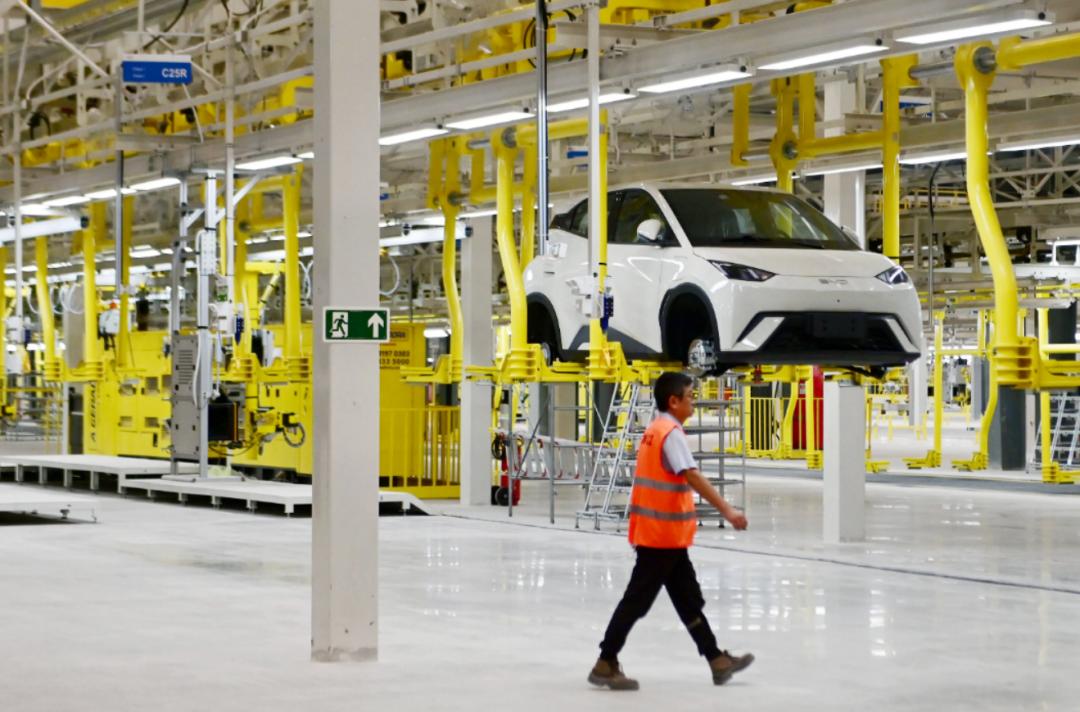
BYD's in - depth technological exploration has always revolved around the automotive main business. From upstream lithium mine exploitation and battery material R & D, to the production of blade batteries and the DM5.0 super - hybrid system in the middle stream, and then to downstream vehicle manufacturing, it has built an industrial system covering the entire value chain. The blade battery has achieved large - scale application and external supply thanks to its high safety and long service life. The DM5.0 technology enables it to maintain a 28.9% global share in the plug - in hybrid market and remains in the leading position even in the face of competition from Geely, Great Wall, and other competitors.
The direction of business extension further highlights the difference between the two: Tesla uses the humanoid robot Optimus to expand the cross - scenario application of AI capabilities. The planned Optimus 3 model will be equipped with the same FSD chip and vision system as its cars, with 45 degrees of freedom throughout the body. It will first be used for repetitive labor in internal factories and then extended to external customers. It has already received an order for 20,000 units from Amazon, with the target unit cost pressed down to $20,000 - $25,000.
BYD's business extension has never deviated from the automotive - related fields. While consolidating its dual - line layout of pure - electric and plug - in hybrid vehicles, it has moderately expanded its energy storage business, building a product matrix covering the price range from $100,000 to $500,000. From the entry - level Qin PLUS and Yuan PLUS to the high - end Denza and Yangwang brands, its pure - electric vehicle sales reached 2.2567 million units in 2025, surpassing Tesla for the first time to top the global sales list. Its plug - in hybrid vehicle sales reached 2.2887 million units, with a domestic market share of over 35%.
In terms of computing power layout, Tesla adopts an aggressive strategy of self - research and self - construction. The performance of the next - generation AI5 chip is 40 times that of the AI4, and it is planned to enter mass production in 2027. At the same time, it is promoting the construction of a "Gigachip Factory", and the Dojo supercomputer is deeply integrated with the Grok3 model of xAI. BYD focuses on the computing power requirements related to the automotive industry, optimizing the intelligent driving system through internal collaboration to improve the product's intelligence level and avoiding the dispersion of resources to non - core fields.
Balancing Short - Term Performance Pressure and Long - Term Value
The difference in strategic choices directly leads to a significant divergence between the two companies in terms of performance, profit models, and valuation logics. How to balance short - term pressure and long - term value has become a common issue for both. Tesla's "physical AI" transformation is accompanied by obvious short - term performance pressure. In the third quarter of 2025, its net profit shrank by nearly 40% year - on - year, and the net profit margin attributable to the parent company dropped to 4.9%. The core reason is the large - scale investment in AI, robotics, and other businesses. The total R & D expenses and capital expenditure in this quarter reached as high as $3.88 billion, and the capital expenditure in the next quarter further increased to $2.87 billion. Meanwhile, problems such as the low paid penetration rate of FSD and the delay in the mass production of Optimus have hindered the realization of the "future narrative".
Although BYD focuses on the mature automotive main business, it also faces growth challenges. In the second quarter of 2025, its net profit attributable to the parent company decreased by 30% year - on - year, the first quarterly profit decline in more than three years. In September, its sales volume shrank by nearly 6 percentage points year - on - year. The industry price war led to a decline in the gross profit margin of vehicle sales to 18.7%, and the net profit per vehicle was only $5,000. The highly vertically integrated heavy - asset model led to a $10,000 increase in the cost per vehicle in the second quarter of 2025 when the market share declined in the short term, partially offsetting the benefits of product price increases.
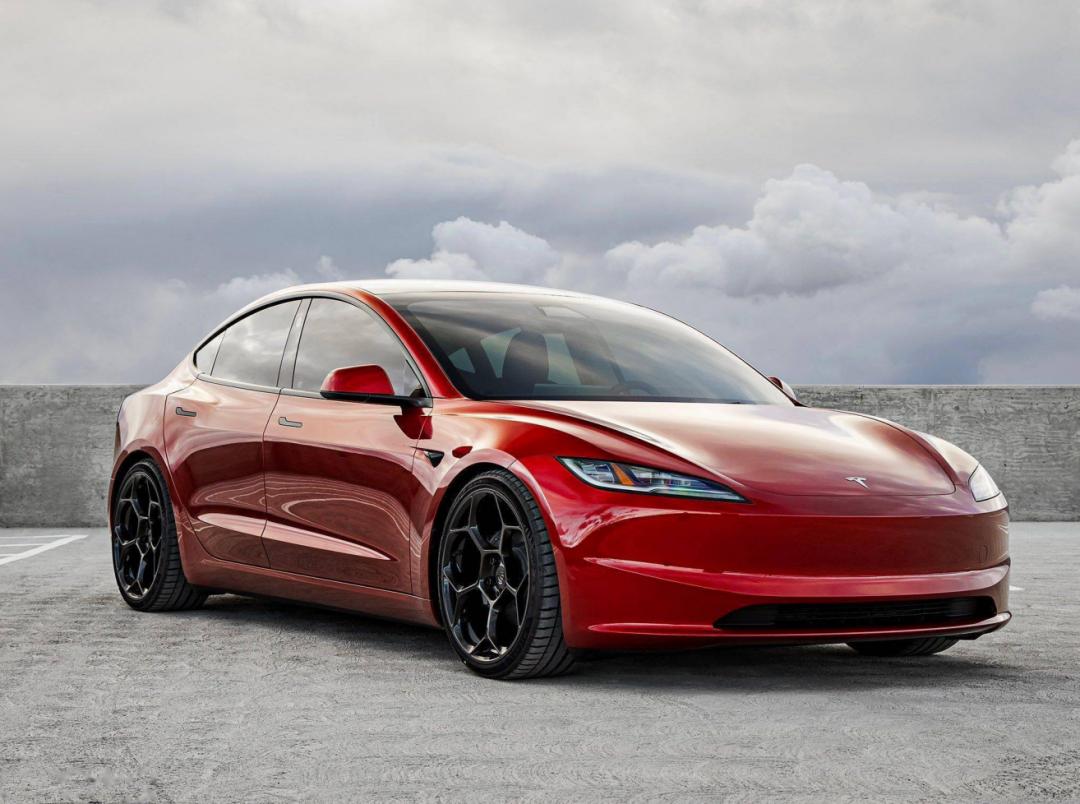
The strategies for dealing with short - term pressure are in sharp contrast: Tesla adopts a transitional plan of "increasing sales volume at a lower price", launching the stripped - down and price - cut standard versions of Model 3 and Model Y to seize market share with low prices and buy time for the commercialization of AI business. This model of "relying on the automotive business for cash flow in the short term and monetizing the AI ecosystem in the long term" has completely decoupled its valuation logic from that of traditional automakers. The current PE ratio of nearly 283 times reflects the market's high expectation of the future potential of its AI business.
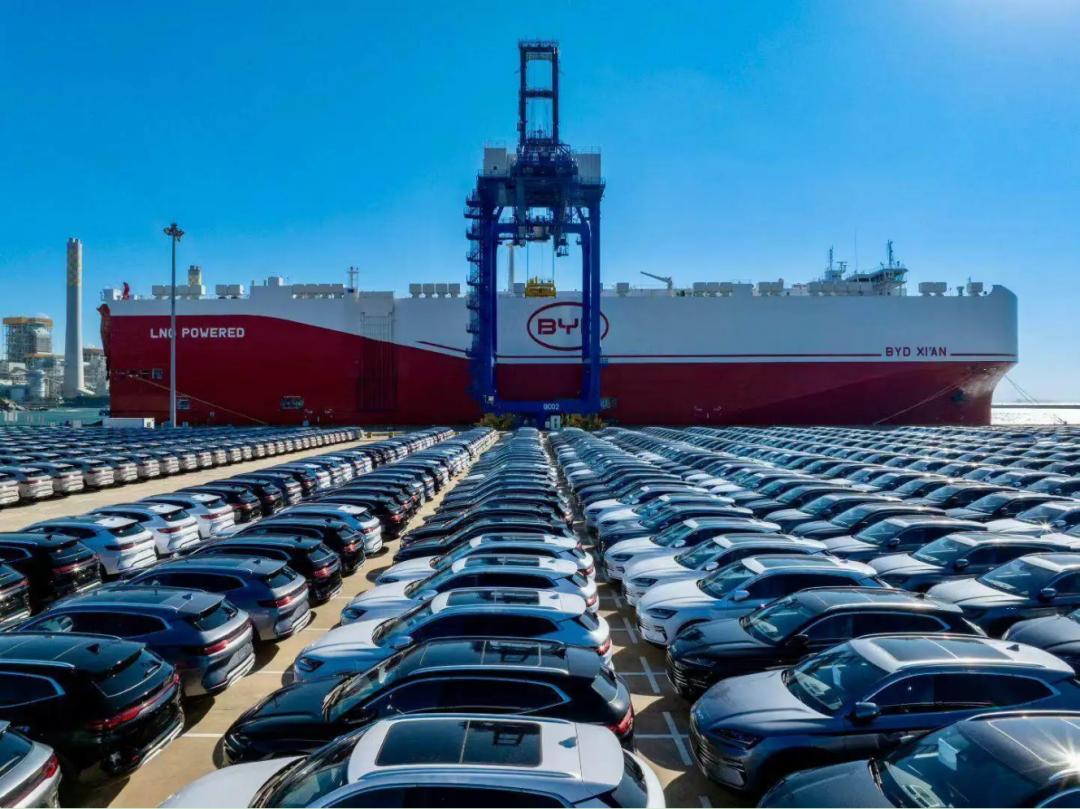
BYD eases the pressure through high - end and global expansion. It is accelerating the implementation of the "going - global" strategy. In 2025, its overseas sales reached 1.0496 million units, a year - on - year surge of 145%. Its factories in Brazil and Thailand have been put into operation one after another. The Thai factory has become a hub radiating Southeast Asia and Europe. From January to November 2025, the registration volume in European markets such as Germany and Spain increased several times. In November, it topped the electric vehicle sales list in the Spanish market. The pricing of overseas models is generally higher than that in the domestic market, forming a new profit pool. At the same time, it increases investment in core technology R & D and improves the penetration rate of the intelligent driving system. Its strategy of "focusing on the core and moderately expanding" keeps its valuation rational. The PE ratio of about 20 times in the Hong Kong stock market reflects the market's value judgment of it as an "automotive stock".
Although the paths for realizing long - term value are different, both have clear plans: Tesla aims to build a complete closed - loop of "chip - computing power - algorithm - scenario". The mass production of the AI5 chip and the establishment of the TeraFab factory will solve the computing power bottleneck. The large - scale production of Cybercab will reshape urban transportation services. The Optimus robot is expected to become the core engine surpassing the automotive business. Musk predicts that the robot business may contribute most of the company's value.
BYD continues to deepen its advantages in the entire industrial chain, consolidating product competitiveness through technological iteration. The high - end brand Yangwang has achieved breakthroughs in performance under extreme road conditions with the "e - Quad" technology platform. The Denza brand has established a differentiated advantage in the mid - to - high - end market through cooperation with Mercedes - Benz. At the same time, it cultivates new growth points such as energy storage without deviating from the automotive main business. It plans to continuously improve profitability and market share through product structure optimization and overseas market expansion. The long - term value of both companies depends on the continuous strengthening of their core capabilities. Tesla bets on the cross - scenario monetization potential of AI technology, while BYD adheres to the scale and efficiency dividends of the automotive industry.
Tesla, with "physical AI" at its core, is gambling on the scenario - based monetization of future intelligent technologies. The risk lies in the uncertainty of technology commercialization, while the potential lies in breaking through the growth ceiling of the automotive industry. BYD, based on the automotive main business, is competing on the efficiency and scale of the entire industrial chain. Its advantage lies in the stability of business and the sustainability of profitability, while the challenge lies in how to maintain competitiveness in the wave of intelligentization. There is no absolute superiority or inferiority between these two choices. They are rational decisions based on corporate genes, technological accumulation, and market environment. Tesla, with its innovative courage and technological foresight, is suitable for exploring the commercialization path of cutting - edge technologies. BYD, relying on its manufacturing foundation and industrial - chain thinking, is good at building competitive barriers in mature markets.
In terms of industry influence, Tesla's transformation has opened up the imagination space for the intelligentization and diversification of the new energy vehicle industry. Its exploration in the fields of autonomous driving and robotics may reshape future transportation and industrial production models. BYD's in - depth development has promoted the popularization and industrial upgrading of new energy vehicles. Its full - industrial - chain model provides a model for the sustainable development of the industry.
In the future, the competition and cooperation between the two companies will continue to shape the global new energy industry landscape: Tesla's AI technology may feed back into the automotive business and enhance product competitiveness. BYD's manufacturing capabilities and market channels may also provide support for its expansion into related businesses.
This article is from the WeChat official account "Automotive Market Insights", author: Yang Shuo. Republished by 36Kr with permission.