Is Xiaomi's cars targeting the US market? Ford is reported to be in talks to build a factory, and both sides have responded.
Is Xiaomi Motors about to enter the US market?
According to reports, Ford Motor is in talks with Xiaomi about a potential partnership to build cars in the US.
As many may know, Ford's CEO has repeatedly praised Xiaomi Motors. He not only had a Xiaomi SU7 flown to the US but also revealed that he had driven it for half a year and didn't want to switch. If this partnership materializes, it could be seen as a case of "what you persistently long for will surely come true."
American netizens are also hoping that the deal will go through, calling the two sides a "match made in heaven":

Both Ford and Xiaomi have responded to these reports.
Ford and Xiaomi to form a joint venture? Official responses are here
According to the Financial Times, citing sources familiar with the matter, Ford Motor is in preliminary talks with Xiaomi about a potential partnership.
The two sides may be planning to establish a joint venture and are discussing the possibility of building a factory in the US to produce electric vehicles.
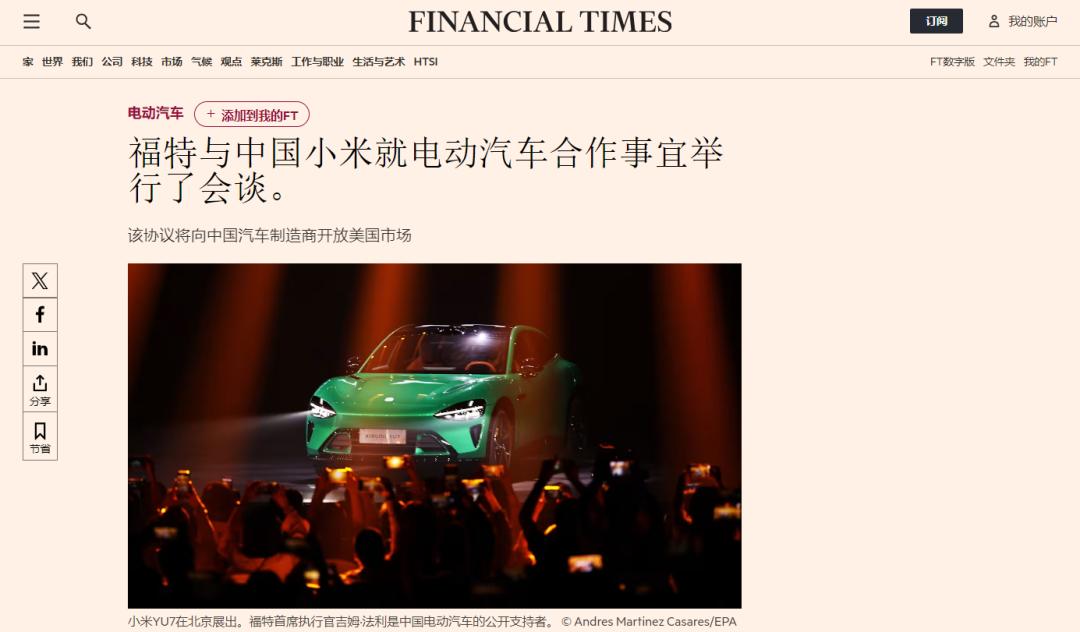
If Ford and Xiaomi do form a joint venture, it wouldn't be entirely unexpected.
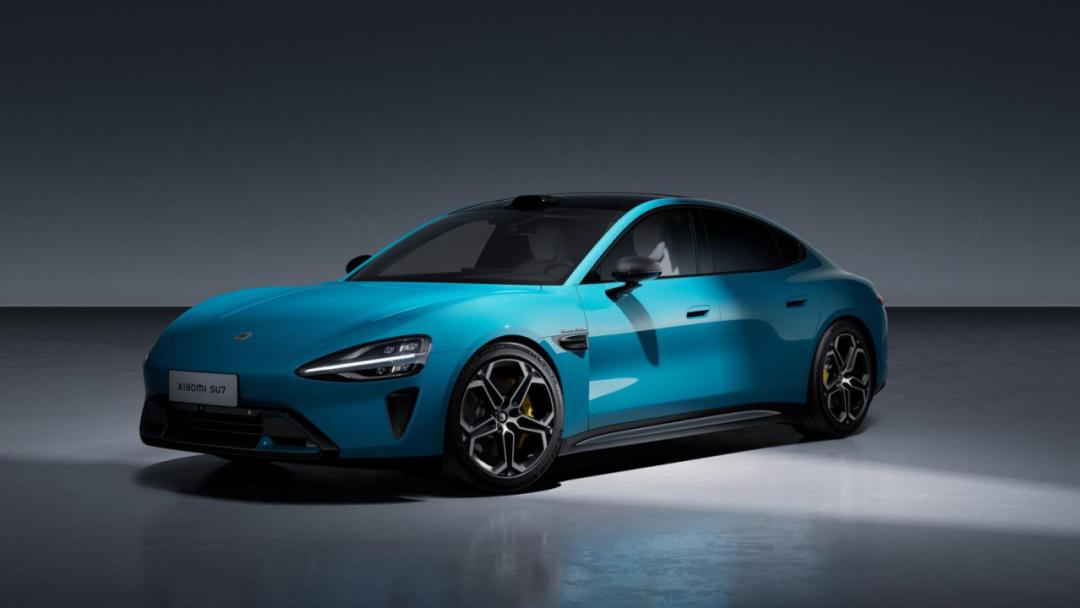
Since the launch of the SU7, Ford CEO Jim Farley has publicly praised Xiaomi Motors on multiple occasions, saying that the SU7 has excellent performance.
In 2024, Farley visited China and asked his team to select five of the most representative Chinese electric vehicles and have them flown back to the US for in-depth analysis of Chinese brands' capabilities. One of the cars was the Xiaomi SU7.
Farley revealed that the SU7 impressed him the most. He also admitted that he had driven it for half a year and didn't want to replace it.

During an interview, he said that he wasn't surprised by Xiaomi Motors' achievements and compared Xiaomi to the "Apple of China":
The car has facial recognition and an in-car AI assistant. When you walk into the car with your phone, there's no need for pairing because the system immediately recognizes the owner. As soon as you get into the SU7, you can feel its technological sophistication.
Farley also revealed that this prompted him to form a new team within Ford to deal with competition from Chinese automakers.
If the two sides were to reach an agreement, it would seem like a good thing. Ford and Xiaomi quickly responded to the reports.
Ford said, "This report is completely false and baseless." Mark Truby, Ford's chief communications officer, also posted on social media to refute the rumors.
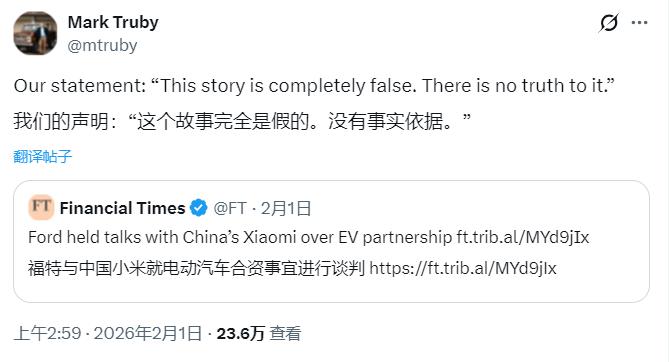
Xiaomi Motors also responded, saying that the report about "Xiaomi in talks with Ford Motor about a joint venture" is false. Xiaomi currently has no plans to sell products or services in the US and is not in talks regarding this.
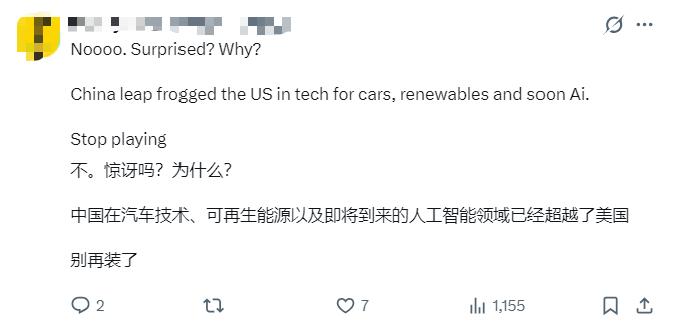
After the rumors were refuted, some netizens expressed disappointment or confusion, believing that China has surpassed the US in automotive technology and renewable energy:
So, why not?
Ford's strategic turning point
The public's expectations for this partnership actually imply concerns about Ford's transformation.
In the global wave of new energy vehicles, Ford was initially an aggressive player in the electrification transformation. However, over the years, it has failed to meet its progress and targets as planned.
Especially in its home market, the US, the reduction of subsidies has hit electric vehicle sales across American automakers. In 2025, Ford's sales in the US reached 2.2 million units, the best performance since 2019.
Among them, the sales of fuel-powered vehicles increased by 5.5% year-on-year, and the sales of hybrid vehicles soared by 21.7% year-on-year. However, the sales of pure electric vehicles decreased by 14.1% year-on-year.
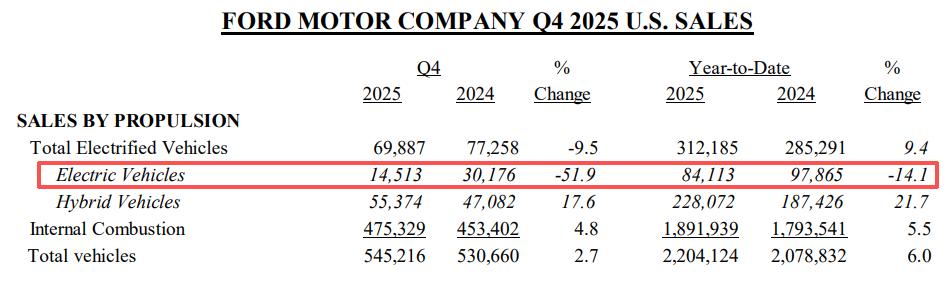
In the fourth quarter of last year, the sales of Ford's pure electric vehicles declined significantly, dropping from 30,000 units in Q4 2024 to 14,500 units, a halving of sales.
Therefore, Ford decided to make a strategic transformation, shifting its focus from pure electric to hybrid vehicles:
It stopped production of its star pure electric pickup truck, suspended subsequent large-scale pure electric vehicle projects, and converted its electric vehicle factory in Tennessee, the US, into a fuel-powered vehicle factory.
Originally, the company planned to have pure electric vehicles account for over 40% of its sales by 2030. Now, the new target is to have the combined sales of hybrid and pure electric vehicles exceed 50% by 2030.
Elon Musk even mocked Ford, saying that it was "self-inflicted doom." In the era of autonomous driving, the operating costs of internal combustion engines will become completely unsustainable.
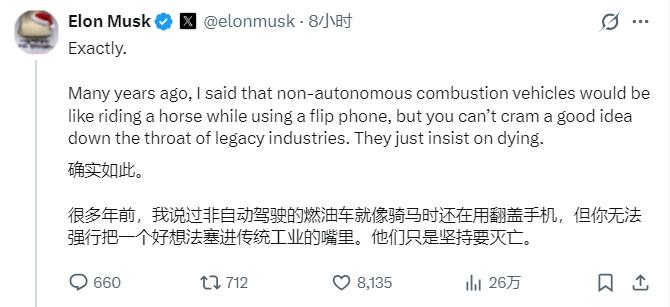
With the rise of Chinese new energy automakers and suppliers, it's not uncommon for foreign automakers to seek partnerships in China. Ford may also have such intentions.
Last year, Ford announced that it would start producing lithium iron phosphate batteries in 2026, planning to supply them both internally and to customers in the public utility or data center industries, using technology licensed from CATL.
According to sources, Ford has also explored the possibility of cooperation in the US with other Chinese automotive OEMs.
For example, about half a month ago, it was reported that Ford was in talks with BYD about purchasing batteries for some of its hybrid vehicles.
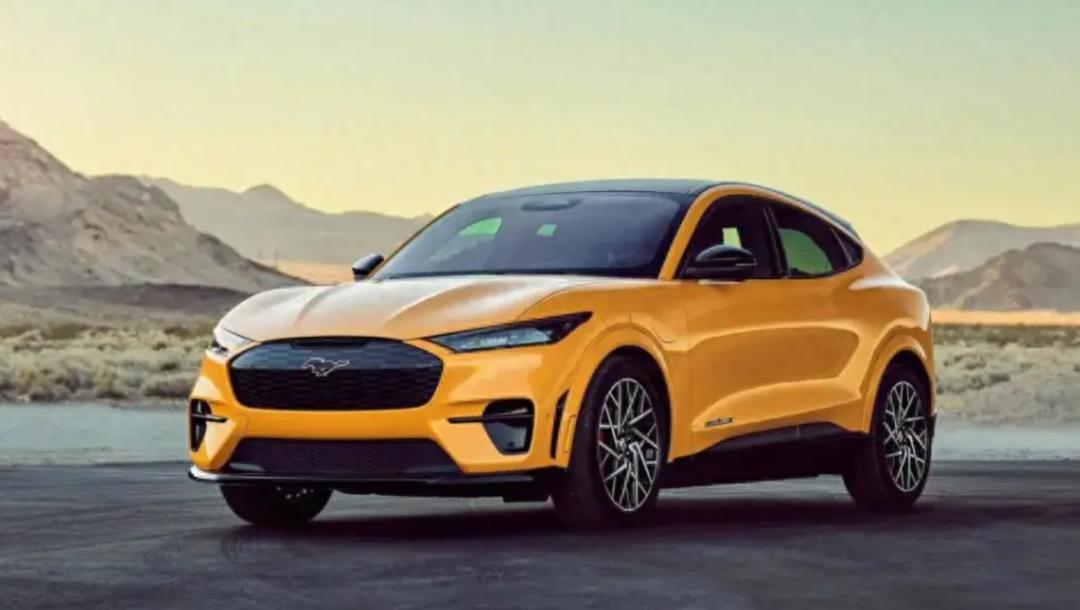
Farley has also praised BYD on multiple occasions, saying that its vertical integration capabilities are remarkable. He had a BYD Seal flown to the US for disassembly and said that the car was "very, very good."
Among foreign automakers' CEOs, Farley may be the one who values Chinese competitors the most. However, while he praises them, he also remains vigilant.
Farley previously warned that Chinese automakers pose a "survival threat" to Western car manufacturers. They have enough production capacity in China to "bankrupt us all."
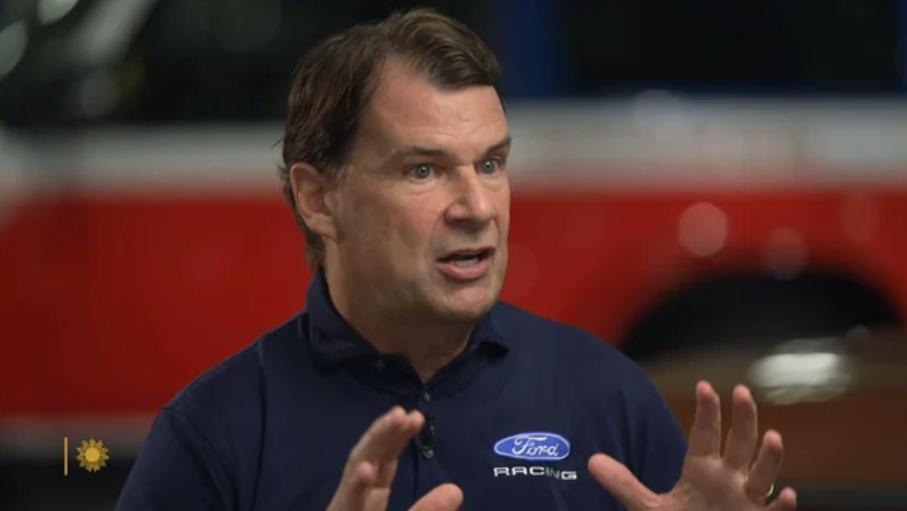
Farley also predicted that it's only a matter of time before Chinese companies enter the US market.
He's not the only one with this view. Ash Sutcliffe, the global communications director of Geely, also said in a recent interview:
For us, the biggest question is when and where (Geely's cars) will enter the US market.
At least for now, although Chinese automakers haven't entered the US market, they have quickly penetrated the European, Southeast Asian, and Latin American markets. It seems that an era led by Chinese cars is not far off.
However, before that, it's more interesting to focus on the competition among Chinese automakers in the domestic market.
The first monthly sales report of the new year shows completely different results from the rankings in 2025:
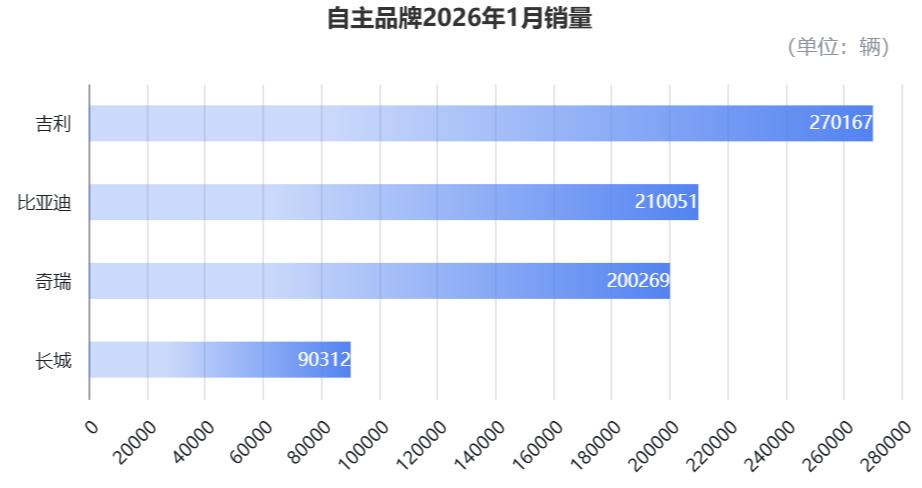
First, let's look at domestic brands:
Geely topped the list with monthly sales of 270,000 units, a 1% year-on-year increase. The previous "leader," BYD, dropped to second place, selling 210,000 units in January, a 30.11% year-on-year decrease.
Chery, in third place, closely followed BYD with monthly deliveries of 200,000 units, a year-on-year decrease of about 10.7%. Great Wall Motors sold 90,000 units in January, a 11.6% year-on-year increase.
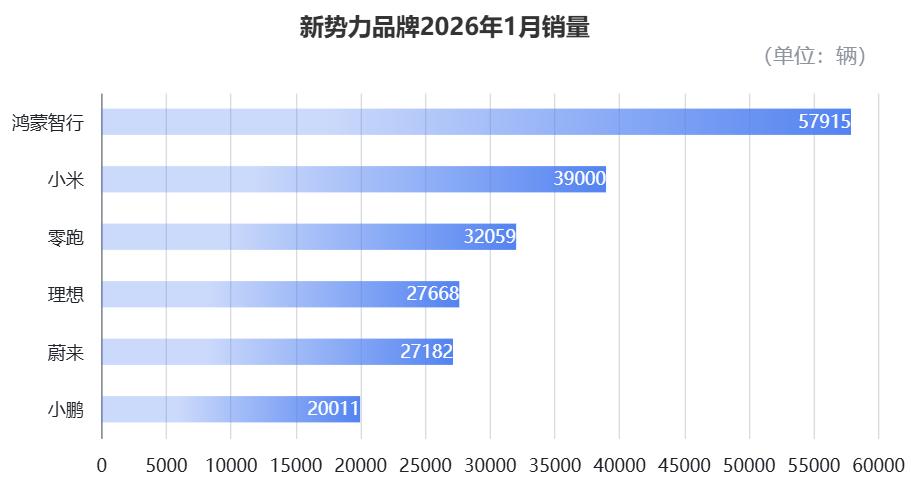
Now, let's look at new energy vehicle startups and brands:
HarmonyOS Smart Mobility delivered a total of 57,915 vehicles, a 65.6% year-on-year increase, firmly in the first tier of new energy vehicle startups.
Among them, Wenjie sold 40,016 vehicles in January, a 83% year-on-year increase, accounting for 69% of HarmonyOS Smart Mobility's total sales.
Following closely is Xiaomi Motors, with deliveries exceeding 39,000 units in January, only about 1,000 units behind Wenjie.
In third place is last year's dark horse, Leapmotor, with 32,059 units delivered in January, a 27% year-on-year increase. Li Auto, NIO, and XPeng all stabilized at around "20,000 units" in January, with sales of 27,668, 27,182, and 20,011 units respectively.
With such a significant reshuffle at the beginning, it's hard to predict the changes in the automotive industry this year.
Two more things
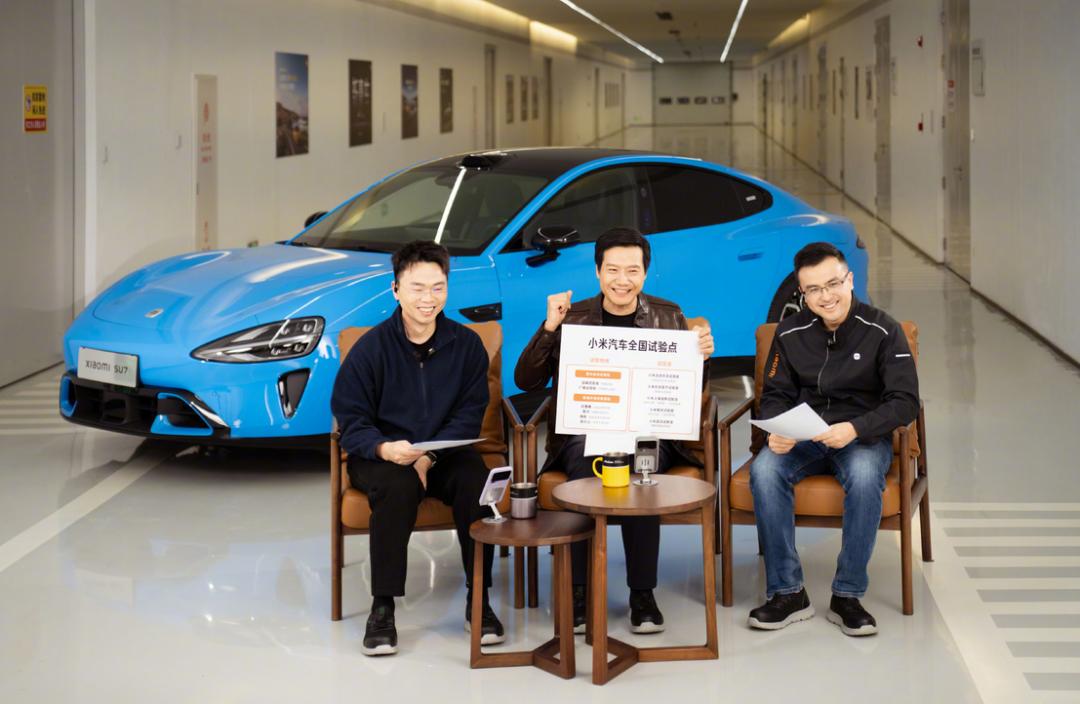
According to Lei Jun's live broadcast, Xiaomi's monthly sales this time are of high "quality."
Because the first-generation SU7 has been discontinued, only a few existing cars, display cars, and second-hand cars are being sold. Most of the deliveries are of the YU7.
The R & D work on the new-generation SU7 has been completed, and mass production is about to start. It is expected that the display cars will be available in stores around February 13th.
In addition to the new SU7, another Xiaomi car is also in the pre - launch stage.
Hu Zhengnan, the former dean of Geely's research institute and a "key figure" at Xiaomi Motors, posted a set of winter test photos of camouflaged test cars on Weibo.
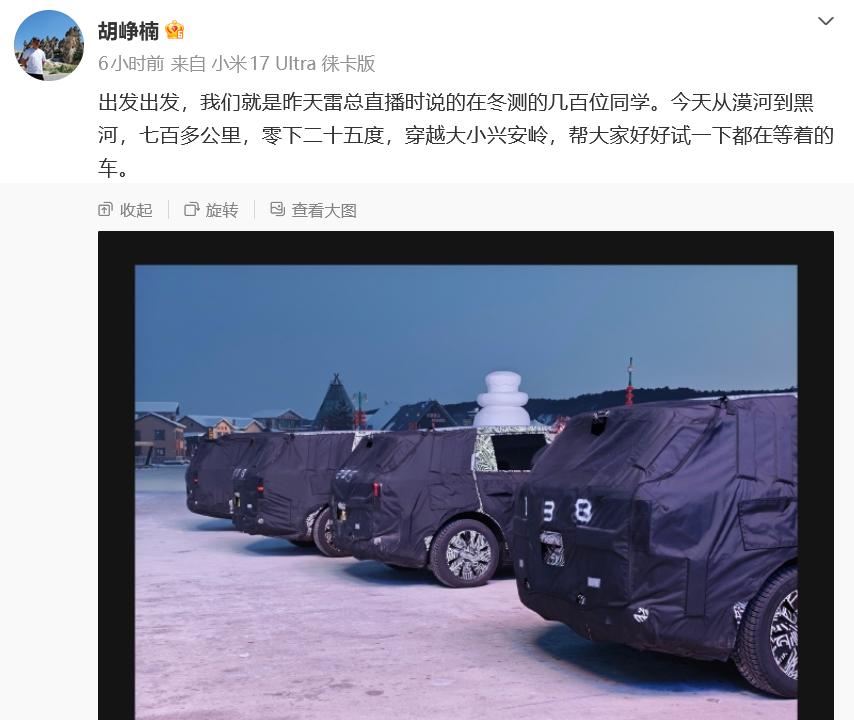
The body contours of these four cars seem to be different. Could it be that Xiaomi's first extended - range SUV, the Xiaomi YU9, is about