With technological breakthroughs, new regulations as safeguards, and correction of misconceptions, how can intelligent assisted driving ensure safety?
The new energy vehicle industry in China has transitioned from the "first half" of scale expansion to the "second half" led by quality. As core competitiveness, intelligent connectivity and autonomous driving are no longer limited to traditional passive protections such as vehicle body rigidity and airbags. Instead, they extend to the technical collaboration across the entire "perception - decision - control" link and the risk management and control of multi - dimensional interactions among "human - vehicle - road - cloud". On the enterprise side, the "2025 Urban NOA Vehicle Assisted Driving Research Report" (hereinafter referred to as the "NOA Report") shows that from January to November 2025, the cumulative sales volume of passenger cars equipped with the urban NOA (Navigation on Autopilot) function in China reached 3.129 million units, accounting for 15.1% of the insured passenger cars, a 5.6 - percentage - point increase compared to the whole - year proportion in 2024, indicating a rapid increase in market sales.
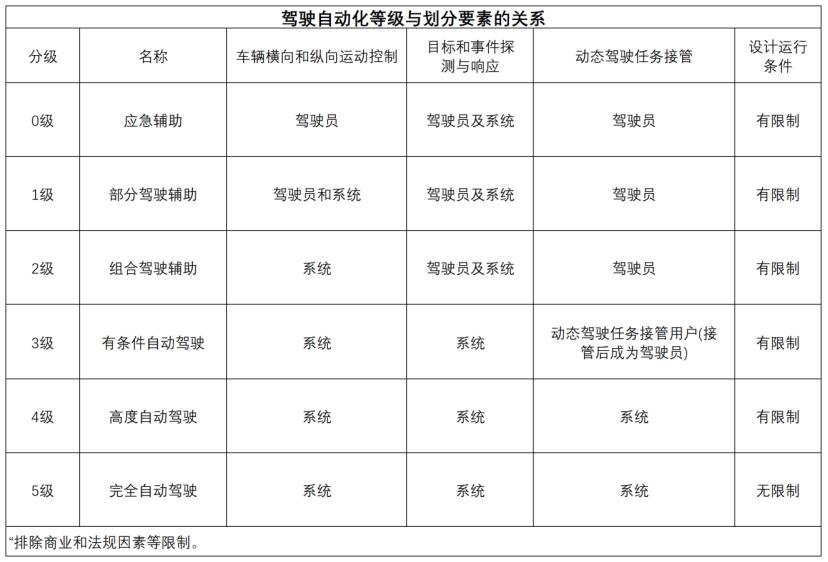
The recently released "2025 New Energy Vehicle Safety Perception Report" (hereinafter referred to as the "Report") also highlights this development status: In 2025, the penetration rate of L2 - level assisted - driving passenger cars in China reached 62.58%. Key technologies such as lidar and high - computing - power chips achieved large - scale application. However, the fuzzy functional boundaries, public perception biases, and data security risks still pose hidden dangers to the industry's safe development.
Advancement of Safety under the Construction of the Technical System and New Regulations
Data from the Auto Quality Network shows that complaints related to intelligent driving have increased year - on - year for seven consecutive years, mainly focusing on issues such as false triggering of automatic braking, assisted - driving malfunctions, and failure of emergency braking. This trend is consistent with the "mismatch between system capabilities and user expectations" pointed out in the "Report".
The autonomous driving safety of intelligent connected vehicles is essentially a "three - dimensional protection network" jointly constructed by hardware redundancy, algorithm iteration, and scenario adaptation. According to the "Report", in 2025, China has developed global competitiveness in the core fields of autonomous driving technology: The multi - sensor fusion solution has become the mainstream. The ranging accuracy of on - board lidar reaches ±2 cm across the full range, with an angular resolution of 0.1°, enabling accurate identification of traffic targets in complex environments such as rain, fog, and at night. The end - to - end intelligent driving technology is accelerating its implementation. Enterprises such as XPeng and Li Auto have achieved rapid iteration of high - speed NOA and urban NOA functions through self - developed chips and algorithms. Some models even support local operation of large models, providing computing power for real - time decision - making.
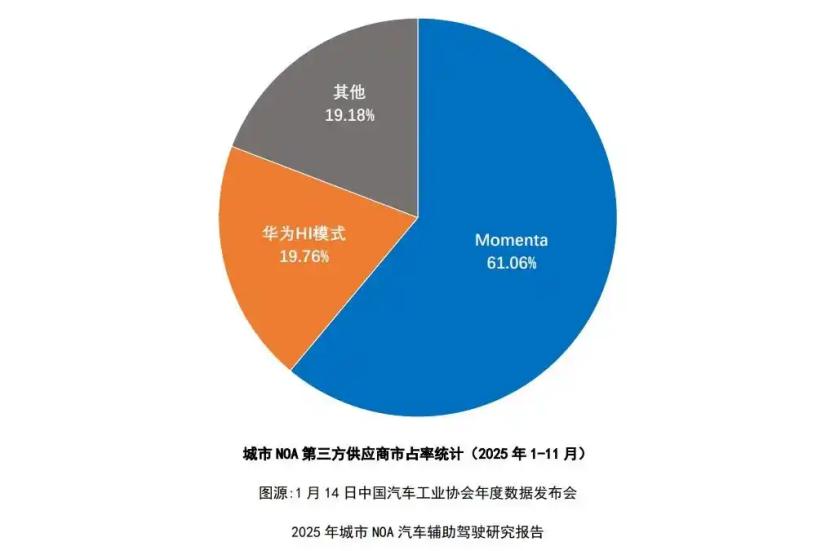
Moreover, according to the "NOA Report", the third - party company Momenta has covered the mainstream passenger car enterprises in China, and 8 out of the top 10 global automakers have cooperated with Momenta. The installation volume of Huawei's HI mode is approximately 134,100 units, accounting for about 19.76% of third - party suppliers.
Meanwhile, the popularization of steer - by - wire and brake - by - wire technologies has broken the response limit of traditional mechanical systems. Coupled with the dual - redundant architecture design, the vehicle can still remain stable and controllable even when a single component fails. These technological advancements together form the "hardware foundation" for autonomous driving safety.
However, technological iteration also brings new safety challenges. The "Report" points out that in recent years, more than 60% of accidents involving assisted driving are due to the "mismatch between system capabilities and user expectations". More notably, these malfunctions often occur in core scenarios such as high - speed driving and urban intersections, and it is often difficult to identify the root cause after - sales, citing "occasional system abnormalities", which reflects the shortcomings of some models in hardware calibration and software optimization. In addition, sensitive data such as driving trajectories and facial information collected by intelligent connectivity functions also face risks of cross - border transmission and leakage.
The new regulations implemented in 2026 precisely address these pain points: The "Autonomous Driving Data Recording System for Intelligent Connected Vehicles" (GB 44497 - 2024) mandates that vehicles at L3 level and above install a "data black box" to record vehicle speed, steering angle, sensor data, and human - machine interaction status in real - time. In the event of an accident, the scene can be restored through the data to clarify the responsibility boundary between the driver and the system. This requirement effectively alleviates the previous situation where automakers and users shifted blame to each other in accidents and provides evidence for similar complaints and disputes. The "Technical Requirements for the Information Security of Whole Vehicles" (GB 44495 - 2024) includes the local storage of sensitive data in the mandatory specifications, prohibiting the cross - border transmission of non - anonymized data, building a data security barrier for intelligent connectivity functions and responding to the "data privacy protection" concern in the "Report".
The advancement of autonomous driving safety requires the synergy of "technology implementation and scenario management and control". The implementation of the L3 - level autonomous driving pilot program in 2026 (models such as Changan Shenlan S7i and BAIC ARCFOX Alpha S HI Edition were approved for operation in five cities including Beijing and Shanghai) is an example of this concept: The pilot areas are clearly limited to highways and urban expressways. The maximum speed is set at 80 km/h in Beijing and Shanghai, and a speed limit of 50 km/h is set for congested sections in Chongqing and Wuhan. At the same time, the L3 function is prohibited from being activated in bad weather such as rain, snow, and fog.
This design of "limiting scenarios and controllable speed" not only provides a safe environment for technical verification but also avoids risks caused by insufficient scenario adaptation, echoing the judgment in the "Report" that "scenario safety is an important part of autonomous driving safety". It is worth noting that the L3 - level pilot program is not just a technical breakthrough. It also forces automakers to improve the "human - machine collaboration" mechanism - the system will remind the driver to take over through multiple means such as sound and light alarms and steering wheel vibrations. If there is no response within 5 - 10 seconds, the vehicle will automatically turn on the hazard warning lights and slowly stop.
How to Correct Public Perception Biases
The realization of autonomous driving safety not only requires the "hard guarantee" of technology and new regulations but also depends on the "soft synergy" of public perception and usage behavior. Data from the Auto Quality Network shows that most complainants believe that automakers exaggerate the intelligent driving functions and have experienced function misguidance. Users have also encountered system misjudgment problems during use. These cases reflect the gap between the "publicity expectations" of automakers and the "actual experiences" of users.
This perception bias stems from multiple factors: The fragmented dissemination of "assisted driving accidents" on the communication side often amplifies extreme cases while ignoring overall safety data; some automakers over - promote the concept of "fully autonomous driving" to seize the market, hiding the functional boundaries; in addition, the long - term operating habits of driving fuel - powered vehicles also lead to misjudgments when users encounter functions such as single - pedal mode and assisted steering.
The new regulations in 2026 address the issue from both "regulating enterprise behavior" and "guiding user operations", providing policy support for correcting perception biases. In response to the chaotic publicity of automakers, the new regulations clearly prohibit packaging L3 - level autonomous driving as "fully autonomous driving", and violators can be fined up to 2 million yuan at most, directly responding to the appeal in the "Report" to "avoid over - beautifying the safety boundaries in technology publicity". Nowadays, automakers need to clearly mark the applicable scenarios of functions in marketing, such as "L3 level is only applicable to designated sections of highways" and "the system cannot handle sudden lane - cutting", so that users can clearly understand the technical boundaries before purchasing a car.
At the same time, regarding the safety issue of the single - pedal mode unique to new energy vehicles, the new regulations require that by default, the vehicle shall not decelerate to a stop simply by releasing the accelerator pedal. Braking must be completed through the brake pedal, and the brake lights shall automatically turn on when the kinetic energy recovery deceleration exceeds 1.3 m/s². This design eliminates the conflict between the driving habits of new energy vehicles and fuel - powered vehicles, reduces accidents caused by operational misjudgments, and helps users understand the positioning of "assisted functions" more rationally.
The "NOA Report" finds that with the substantial improvement in function experience, users' trust and dependence on assisted driving have significantly increased. From January to November 2025, the sales volume of mainstream passenger cars with a starting price of less than 300,000 yuan equipped with the urban NOA function accounted for more than 68.9%, indicating that urban NOA has gradually become a standard configuration for mainstream models from a differentiated configuration for high - end models and has entered a period of rapid penetration among mainstream consumer groups. Meanwhile, the technological breakthroughs, scenario implementation, and industrial chain collaboration opportunities of L3 - level and above autonomous driving have attracted much attention, which will promote the NOA technology to a higher level and further increase the penetration rate of urban NOA.
The adjustment of the new vehicle insurance regulations in 2026 also guides user behavior from the side: Owners with good safe - driving records and an annual driving mileage of less than 10,000 kilometers can enjoy a 10% - 15% premium discount, and the battery protection of new energy vehicles is included in the vehicle damage insurance. This not only encourages users to use autonomous driving functions in a standardized manner but also reduces the economic risk of accidents caused by insufficient understanding. More and more users are actively learning standards such as the "Design and Operating Conditions of Autonomous Driving Functions for Intelligent Connected Vehicles" and giving priority to models that have passed the C - NCAP intelligent safety assessment when purchasing a car. This change in the awareness of "actively paying attention to safety" injects important impetus into the autonomous driving safety ecosystem.
In the future, with the maturity of technologies such as solid - state batteries and vehicle - road - cloud collaboration, autonomous driving safety will break through in the direction of "predictive safety": Vehicles can identify high - risk road sections and the driver's fatigue state in advance through massive road data, achieving "early warning and active intervention"; the coordination and mutual recognition of international standards will also help Chinese intelligent connected vehicles avoid compliance risks when "going global".
This article is from the WeChat official account "Automotive Market Insights", author: Yang Shuo, published by 36Kr with authorization.