China's Commercial Space in 2026: Lead the Way or Drop Out
The biggest breakthrough in cutting - edge technology at the beginning of 2026 belongs to "commercial spaceflight".
With rocket launches, satellite networking, and the surging of concept stocks, commercial spaceflight has been constantly trending with its full - industrial - chain presence. Meanwhile, nearly 10 commercial spaceflight enterprises, such as LandSpace Technology, CAS Space, and Tianbing Technology, are accelerating their sprint towards IPO, officially kicking off a battle for the "first share in commercial spaceflight".
If we look back a bit further, we'll find that this explosion is not accidental. It is an inevitable continuation after China's commercial spaceflight "sharpened its sword for a decade" and achieved an all - round breakthrough in 2025.
In 2025, factors such as policy support, technological breakthroughs, market demand, and the capital environment all came together, directly propelling the entire industry from "technology verification" to "scaled - up and commercialized development". And 2026 will be a crucial verification year for differentiating the strong from the weak and initially shaping the landscape of China's commercial spaceflight.
01
Explosion
If China's commercial spaceflight was previously in the exploration stage of "single - point breakthrough and concept verification", then 2025 was truly the year of breaking the deadlock. There were three most direct driving forces behind it.
First, there was an "official announcement" at the policy level. In November 2025, the National Space Administration established the "Commercial Spaceflight Department" - the world's first national - level dedicated regulatory department for commercial spaceflight. This means that commercial spaceflight has ended its long - standing ambiguous state of "operating outside the system" and has been incorporated into the national space management system, gaining an "official status".
Just one month later, on December 26, the Shanghai Stock Exchange issued "Guideline No. 9", clarifying that commercial spaceflight enterprises are eligible for the fifth set of listing standards on the Science and Technology Innovation Board. In fact, as early as June, the China Securities Regulatory Commission restarted and expanded the scope of application of the fifth set of listing standards on the Science and Technology Innovation Board, explicitly listing commercial spaceflight, artificial intelligence, and low - altitude economy as key supported areas, allowing unprofitable enterprises with core technologies to list and raise funds. At that time, the window for commercial spaceflight enterprises to go public opened. After half a year, the access conditions were further refined, and the path for commercial spaceflight to IPO became rapidly unobstructed.
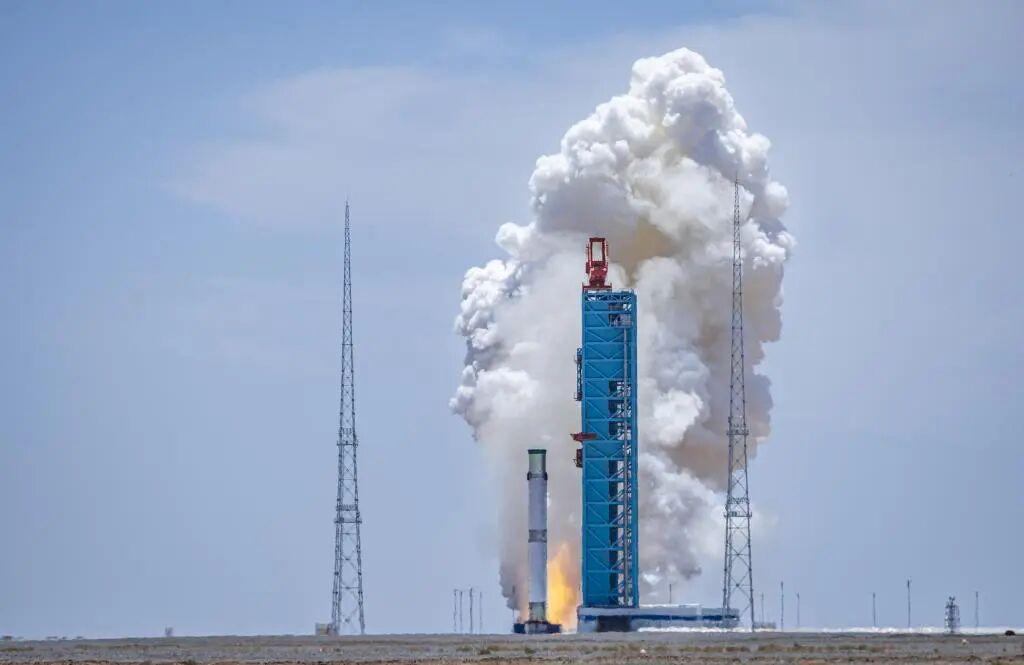
Technological breakthroughs also attracted much attention. On December 3, 2025, LandSpace Technology's Zhuque - 3 carrier rocket was launched at the Jiuquan Satellite Launch Center. Although the recovery of the first - stage rocket failed, the satellite successfully entered the predetermined orbit, and the orbit - insertion accuracy met the requirements, successfully completing the maiden flight mission.
This was the successful orbit - insertion of China's first liquid oxygen - methane reusable rocket, marking that domestic private commercial spaceflight enterprises have completed the crucial engineering verification on the reusable rocket technology route. Even Elon Musk posted that the Zhuque - 3 incorporated some design elements of Starship and had the potential to "defeat the Falcon 9".
The "restlessness" at the capital level cannot be ignored either. According to the "China Commercial Spaceflight Industry Development Report (2025)", the total financing in the commercial spaceflight industry reached 18.6 billion yuan in 2025, a year - on - year increase of 32%. But what's more noteworthy is the change in the source of funds: in the early days, most investors in commercial spaceflight were VCs with a high risk appetite, but now, industrial funds with state - owned backgrounds have started to enter the market on a large scale.
For example, LandSpace Technology received additional investments from two "state - owned" funds in 2024: in February, the National Industrial Investment Fund (SS) increased its investment by 450 million yuan, and in December, the National Manufacturing Transformation and Upgrading Fund entered the market with 900 million yuan. Another example is Deep Blue Aerospace. In July 2024, it received an investment of hundreds of millions of yuan from the Wuxi High - tech Zone Investment and Control Group, and in March 2025, the Taishan Industrial Development Investment Group invested 500 million yuan in it.
When the "national team" gets involved, it shows that the market's value judgment of commercial spaceflight has undergone a fundamental change - it is no longer a high - risk speculative venture in a trendy field but a long - term industrial layout of national strategic significance. Capital is shifting from financial speculation to strategic positioning.
02
Competing for Space
If policies and capital are the "thrust" for the explosion of commercial spaceflight, then market demand is its "gravitational force". However, this gravitational force is more intense and urgent than many people expected.
At the end of 2025, the official website of the International Telecommunication Union (ITU) disclosed that China submitted an application for frequency and orbital resources for approximately 203,000 low - orbit/medium - orbit satellites at one time!
This is China's largest - scale international orbital resource application campaign to date. The data comparison is more intuitive: as of early 2026, the total number of satellites in orbit globally is about 14,000, and the total number of satellites in Elon Musk's Starlink launch plan is only 42,000. That is to say, the number of satellites China applied for at one time is five times that of the Starlink plan and 15 times the total number of existing satellites in orbit globally.
As soon as the news came out, it caused a global stir, especially in the United States, which is in direct competition with China in the commercial spaceflight field. Just a few days after the news was made public, the Federal Communications Commission (FCC) of the United States quickly approved an additional 7,500 Starlink satellites to be deployed by SpaceX, and Elon Musk also announced that the orbital altitude of 4,400 satellites would be lowered from 550 kilometers to 480 kilometers - ostensibly to "reduce the risk of collision", but insiders can see that this is to "occupy positions".
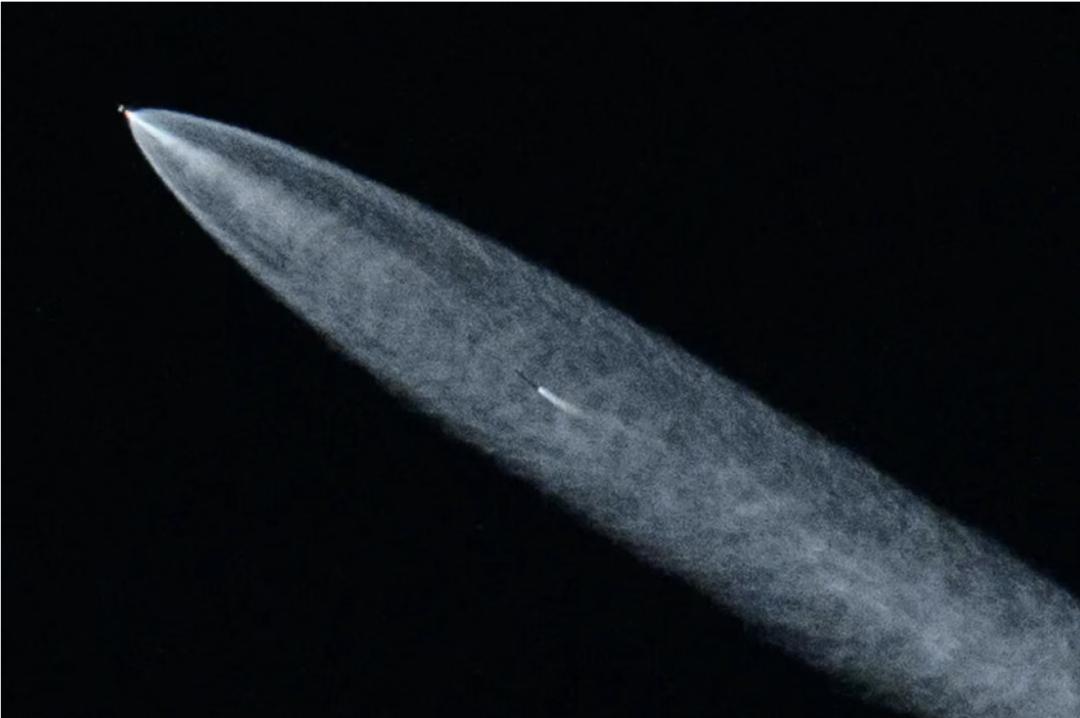
Why are everyone so anxious? Because low - Earth satellite orbits are non - renewable and highly scarce public natural resources, and their capacity has a ceiling - according to calculations, the low - Earth orbit can theoretically accommodate only about 60,000 satellites.
The rule determined by the International Telecommunication Union (ITU) for countries to actually occupy orbital resources is "first come, first served, and expiration invalidation". It also stipulates that the first satellite must be launched within 7 years after the application, 10% of the satellites must be deployed within 9 years, 50% within 12 years, and all satellites must be deployed within 14 years. Otherwise, the application will be automatically cancelled.
What's more severe is that more than 70% of the "golden orbit" at 500 - 600 kilometers (where the signal delay can be as low as 20 milliseconds, the optimal solution for satellite communication) has been occupied by Starlink of the United States, and high - quality spectrum resources for civil communications such as L, S, and C bands have long been divided up by developed countries in Europe and the United States. If China does not accelerate its layout, it may even have "no spectrum available" for the development of 6G in the future.
Therefore, applying for more than 200,000 satellites at one time may seem "ambitious", but it is actually "forced by the situation".
With the 203,000 satellites applied for this time, the total number of satellites China has applied for has exceeded 250,000. This means that in the next 9 years, China must successfully launch at least 25,000 satellites into space, and more than 120,000 in the next 12 years - an average of 27 satellites per day.
With such a large - scale launch volume, it is impossible to achieve it only by the previous state - led model. Therefore, it is imperative to introduce market forces and promote the industrialization and scaling - up of the industry.
03
IPO Race
Now that there is market demand and the policy channel is open, which player can be the first to stand out among the many competitors?
Currently, the domestic commercial spaceflight field presents a competitive landscape of "five rockets taking off simultaneously": LandSpace Technology, CAS Space, Tianbing Technology, GalaxySpace, and iSpace are more active and have made more obvious progress in their IPO processes.
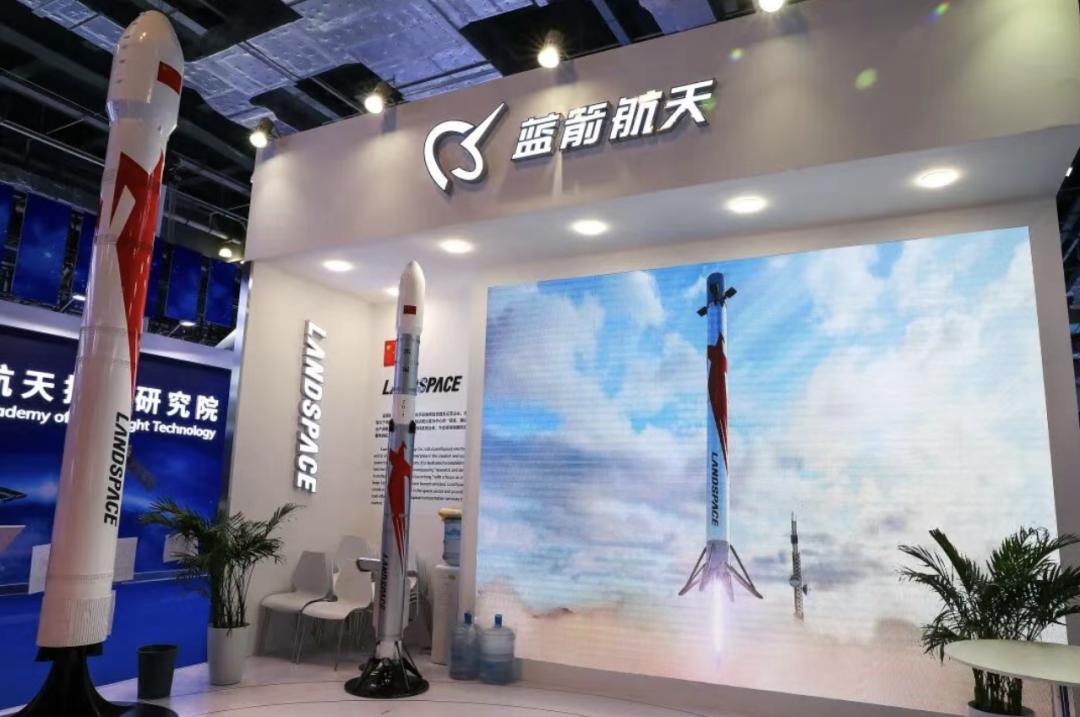
In particular, LandSpace Technology is leading the way. On January 22, it entered the "inquiry" stage, and its listing process has entered a critical stage. It has only been 22 days since its IPO application was accepted on December 31 last year, and its momentum to become the "first share in commercial spaceflight" on the Science and Technology Innovation Board is very obvious. It plans to raise 7.5 billion yuan, of which 4.73 billion yuan will be invested in improving reusable rocket technology, and 2.77 billion yuan will be used for capacity building.
CAS Space follows closely behind. It completed its listing guidance on January 24 and ranks second in the process. Tianbing Technology and GalaxySpace both completed the filing for listing guidance in October last year and recently updated their guidance progress, belonging to the second echelon. On the contrary, iSpace, which started the earliest, has made slow progress in its IPO. It started the IPO guidance as early as December 2020 and is now in its 22nd phase.
The reason for such an obvious differentiation lies in the rigid requirements of the fifth set of standards on the Science and Technology Innovation Board - the first successful orbit - insertion of a payload by a medium - to - large - sized carrier rocket using reusable technology must be achieved.
This is a very clear rigid indicator: if a company fails to meet it, it has no chance of listing, no matter how good its performance is. In this way, enterprises still adhering to the single - use solid rocket technology route are directly excluded from the listing list, and the listing qualification is used as a lever to force the industry resources to concentrate on reusable technology.
Why is this regulation in place? There is only one core logic: to reduce costs.
It's a very simple truth that large - scale satellite deployment requires a significant reduction in launch costs. Without reusable technology, launch costs cannot be reduced; if the costs cannot be reduced, commercial spaceflight will always be an expensive and money - burning game and cannot achieve sustainable large - scale operation.
The data comparison is more obvious. According to the research report of Huayuan Securities, in 2024, the average launch cost of China's commercial spaceflight was about 75,000 yuan per kilogram, while SpaceX, with its mature reusable technology, had controlled the cost to about 20,000 yuan per kilogram. This gap actually represents the generational difference in the business models between single - use rockets and reusable rockets.
This also explains why LandSpace Technology's Zhuque - 3, despite the failed recovery, is still pursued by capital - it is currently the only private enterprise that can meet the rigid requirement of "successful orbit - insertion of a reusable rocket".
04
Gap
However, it cannot be denied that there is still a significant gap between China and the world's leading level in the commercial spaceflight field.
First, the gap with SpaceX is comprehensive. The development of China's entire commercial spaceflight industry lags behind SpaceX by 10 years - in December 2025, LandSpace Technology achieved the first launch and successful orbit - insertion (with failed recovery) of a reusable carrier rocket, while SpaceX first sent a satellite into orbit and achieved a complete recovery through the Falcon 9 in December 2015, a full 10 - year difference.
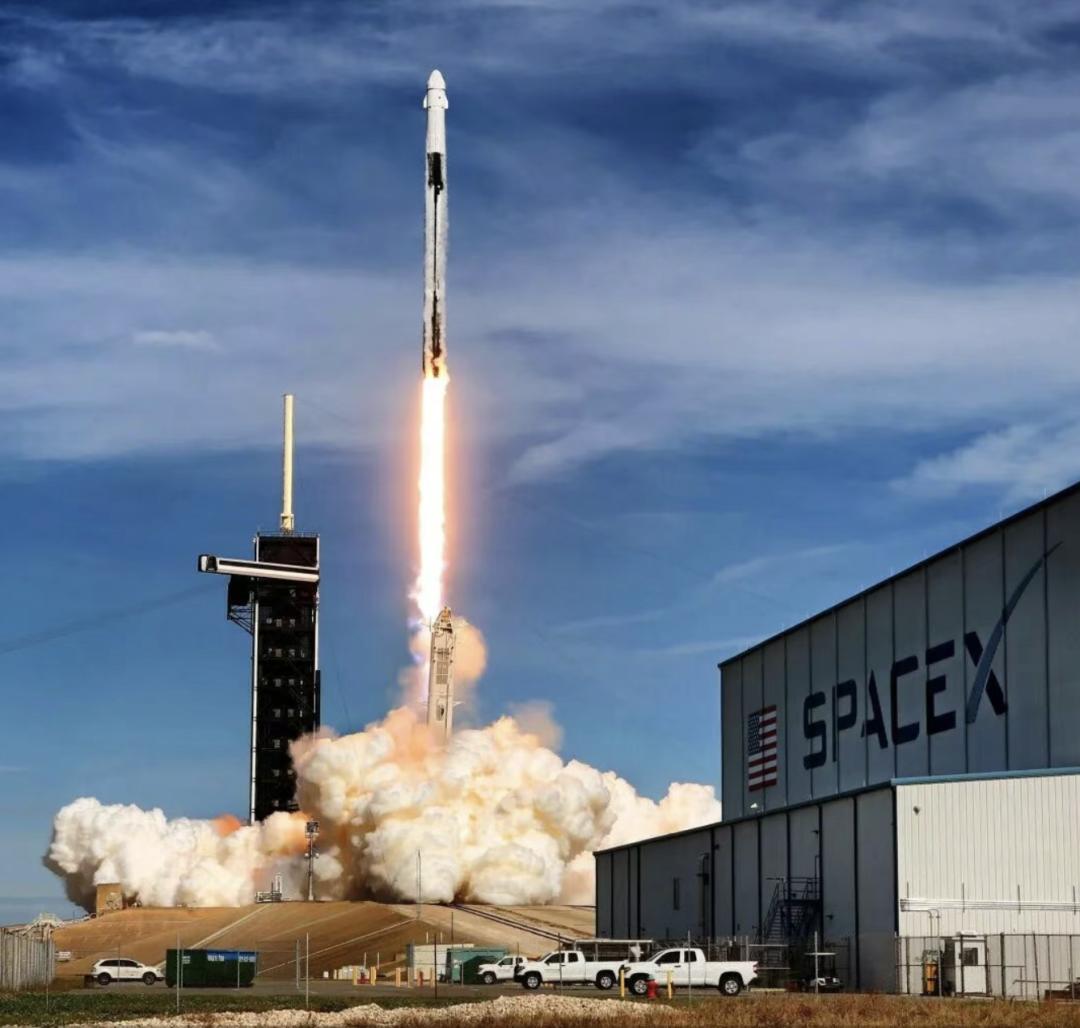
In terms of scale operation and maturity, the gap is even greater. In 2025, SpaceX launched 165 times throughout the year, nearly twice the annual launch times of China's space program. More importantly, the first - stage rocket of the Falcon 9 has been reused over 100 times, forming a mature system of "recovery - reuse - iteration". Not long ago, Elon Musk also claimed in response to a netizen that in about three years, Starship will be able to launch more than once per hour, and the annual launch times will be close to 10,000.
Second, the commercial closed - loop has not been established, and the profit cycle is long. Commercial spaceflight is a typical industry with high thresholds, high investment, and long cycles. From rocket R & D to stable mass production, it requires continuous and large - scale capital support. Before the technology matures and scales up, the revenue is almost negligible.
For example, LandSpace Technology, which is leading the IPO sprint, had revenues of 782,900 yuan, 3.9521 million yuan, and 4.2783 million yuan from 2022 to 2024 respectively, but the net losses in the same period reached 804 million yuan, 1.188 billion yuan, and 876 million yuan respectively. Even though the revenue increased significantly to 36.4319 million yuan in the first half of 2025, the loss in the same period was still 597 million yuan. From 2022 to the first half of 2025, LandSpace Technology's cumulative loss has exceeded 3.4 billion yuan.
Industry insiders generally believe that LandSpace Technology is expected to take at least five years or even longer to achieve profitability. This is also a common dilemma faced by commercial spaceflight enterprises. This places extremely high requirements on the financing ability of enterprises - before achieving self - sufficiency, continuous and stable financing ability is the lifeline. Therefore, IPO becomes crucial: it is the "main artery" for enterprises to obtain continuous capital infusion.
The imperfection of the industrial ecosystem is also a major challenge. According to the data of Founder Securities, the global space economy market scale was about 2.9 trillion yuan in 2024, of which launch services accounted for only 2%, while satellite manufacturing, ground equipment, and satellite services accounted for 5%, 38%, and 26% respectively, and the entire commercial satellite industry accounted for a total of 71%.
This means that rocket launch is just the starting point of the industry, and the real value creation and profit source lie in the downstream applications and services. The success of SpaceX lies in its formation of a positive cycle of "low - cost launch - Starlink networking - user payment - profit reinvestment in R & D", running through the entire commercial ecosystem closed - loop.
However, currently, most Chinese commercial spaceflight enterprises are still in the "launch service" stage, and the downstream commercialization scenarios such as satellite applications and data services have just started, and a strong value closed - loop and profit model have not been formed.
05
Key Verification
Based on the above analysis, 20