In a three-hour in-depth self-reflection session, ZHU Xingming, the chairman of Inovance Technology, stated that the biggest issue in the past two years was not the company's strategy but its "people."
On January 29th, Zhu Xingming, the chairman of Inovance Technology, completed a three - hour annual speech for 2026 in Suzhou.
This was not a speech about what Inovance does, but a fundamental reflection on how an enterprise can continuously evolve. It was also a rare speech with an almost "self - exposing" meaning. During the speech, Zhu Xingming repeatedly mentioned his strongest feelings in the past two years - confusion and frustration.
After the pandemic ended, the market did not rebound as expected. The new energy vehicle business was booming, while the traditional business was lingering in a slump. He described his state when checking his phone at 10:30 p.m. every day during that period as "the upper part of my body was warm, while the lower part was cold."
Inovance is not bad, but it is far from being the best. Against the backdrop of the double waves of capital and industry set off by new energy and AI, a group of enterprises seized the opportunity and quickly increased their performance and market value. Inovance, however, was stuck in a mediocre position. This made Zhu Xingming start to reflect on a more fundamental question: If an enterprise's growth increasingly depends on external cycles, policies, and luck, how far can it really go?
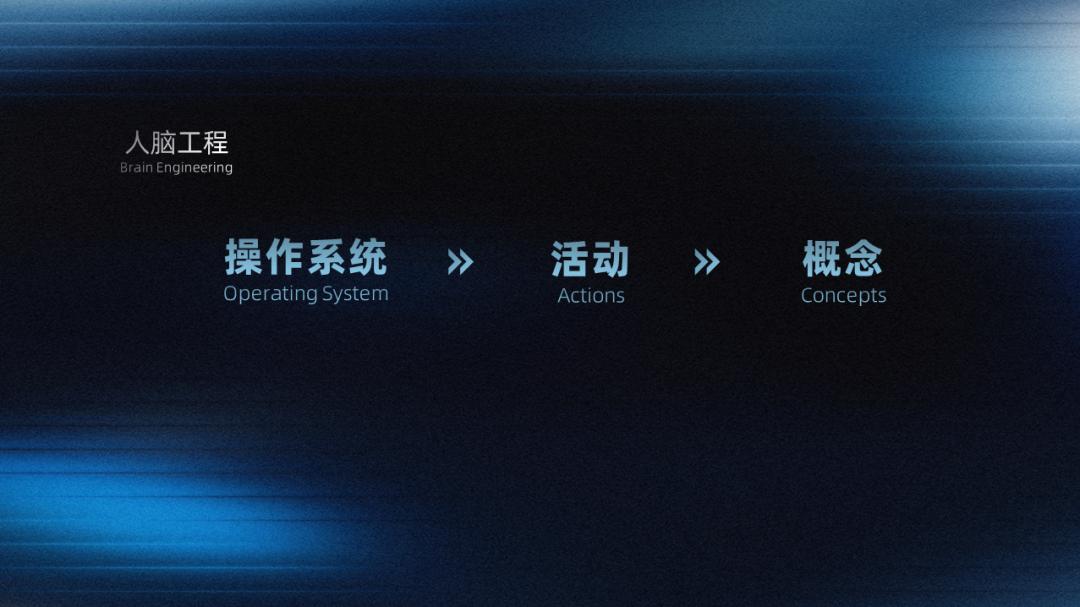
His conclusion was that the problem lies not in the strategy or the products, but in "people" - in cognition, in the operating system, and in the underlying logic of the entire organization. So, in the past two years, Zhu Xingming quietly carried out a "human brain project" (two books + four activities + four concepts): attempting to upgrade the "human brain operating system" for the entire company.
Throughout the speech, he put forward five major judgments:
1. The stagnation of an enterprise's growth is often not due to strategic mistakes, but to reaching the "cognitive ceiling."
2. What really determines future competitiveness is not the product, but "scenario capabilities."
3. The failure of strategic implementation is essentially not due to lack of effort, but to "lack of precision."
4. AI will be a "gray rhino - level" structural impact.
5. All organizational problems will ultimately return to "people" and "aspiration."
The following is the transcript of Zhu Xingming's speech:
Dear colleagues, distinguished guests, and friends:
Good afternoon, everyone!
The annual New Year's speech is here again. Today, I will share Inovance's practices and my thoughts with you. First, I will focus on a core task I have been promoting in the past two years: building the "human brain project" to upgrade the cognitive "operating system" of most employees.
Two years ago, after the pandemic ended, we optimistically expected the market to recover and Inovance's performance to grow rapidly. However, the reality made me frustrated. During that period, I was in a situation of "two extremes": the new energy vehicle business maintained a rapid development trend, becoming the "fire" supporting the company's development; while the traditional business, on which the company relied for survival, was lingering in a cold winter. However, we were not the most outstanding. Many enterprises accurately grasped the opportunities in new energy and AI, achieving a double explosion in performance and stock prices.

Preface
Two years ago, I was thinking that if Inovance's main business continued to develop in this way, being highly dependent on the external environment and at the mercy of it, Inovance would have no hope. We often say that we can only earn money within our cognitive scope. This statement really hit me hard at that time. Inovance's lack of growth might be because our cognitive scope was limited. So, I secretly made up my mind to format and then upgrade everyone's "operating system."
So, in the past two years, I led everyone to study two books. The first one is I Ching. We studied not the scriptures, but the wisdom of I Ching. The second one is The Power of Logic. In today's speech, I will share with you how the wisdom of these two books has been applied in Inovance's practices.
In addition to leading everyone to study two books, I also did four things:
The first thing was to promote digital transformation across the company. Digital transformation is essentially a transformation of thinking mode, not just a change of tools.
The second thing was the blockbuster product strategy. The blockbuster product strategy has swept through the IRB and R & D organizations, and the blockbuster product project has been carried out vigorously. On September 1st last year, the IRB released 17 blockbuster products, which received a strong response.
The third thing was the five roadmaps for customer operations. We have seen the five roadmaps led by the industrial architecture starting to take off.
The fourth thing was a company - wide special project to reduce costs and improve efficiency. We managed all the wasteful, redundant, and leaky links in the company, saving 270 million and 170 million in 2024 and 2025 respectively.
Through these four things, we realized that the change of everyone's "operating system" must happen in activities, in movements, and in battles.
Having activities alone is not enough. We also need to implant several formal logic concepts into all employees of the company:
First, Scenario. I mentioned during the product manager training last month that being a product manager is not a profession, but a belief. I particularly emphasized the "scenario." The scenario is the "dojo" for product managers and the core concept of the blockbuster product strategy.
Second, XBOM. After introducing XBOM during the digitalization process, we found that all product concepts and R & D organizational structures in the company would change. The modularization of XBOM allows the company's operation surface to sink from the "product level" to the "module level."
Third, Ecosystem. During last year's speech, I mentioned that in future competition, scenarios will replace products, and ecosystems will replace industries. At that time, people didn't understand. 2025 was the year of the ecosystem. After some activities, people got the concept of "ecosystem" and understood how to build the ecosystem of an industry and its internal mechanism.
Fourth, Architecture. In 2025, architecture was very popular. We did two things. First, through the operation of the IRB (Product Technology Investment Decision - Making Committee), the IPMT became the responsible entity for the future solution architecture. Driven by technology, we provided the solution architecture for Inovance five years later. Second, for the architecture within five years, the General Business Unit built a future full - industrial - chain architecture from L0 to L5, including components, equipment, production lines, workshops, factories, and factory production and management, at the application terminals in more than 50 industries. This architecture is very remarkable and is exactly the future new industrialization architecture that relevant national research institutes have been dreaming of. These two architectures constitute the path for the new industrialization evolution of China's manufacturing industry in the next decade.
After implanting two books, four activities, and four concepts into the team, I was delighted to find that Inovance had changed, and the operating systems of most of our employees had been updated. These two years were really worth it!
This is the preface part of what I want to talk about today.

Scenario
Zhang Ruimin, the chairman of Haier in Qingdao, once said that the future era is an era of scenario competition, not product competition. It is an era of ecosystems, not industries. I didn't quite understand it at that time. Recently, due to the popularity of AI, the word "scenario" has frequently appeared in our vision. When training product managers, I also emphasized that product managers must love scenarios, immerse themselves in scenarios, and truly get involved both physically and mentally.
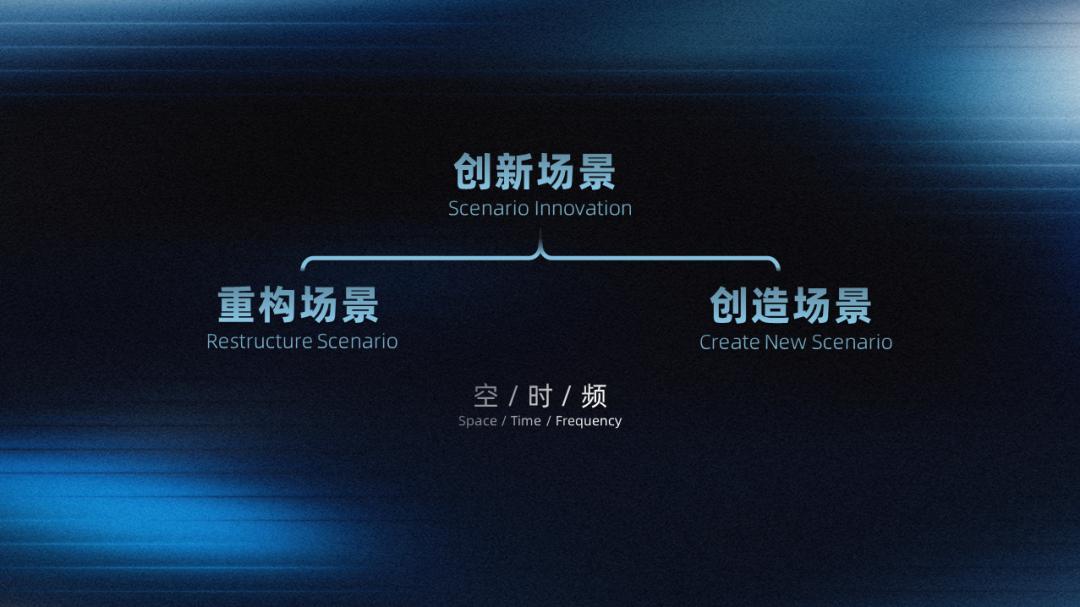
But what exactly is a scenario? The original definition of a scenario is the simulation and setting of a real - life scene when shooting a movie, which is called "Scenario" in English. Scenario innovation means simulating new technologies. For example, for new technologies such as AI, humanoid robots, and artificial intelligence that have no real - world applications yet, we create a virtual scenario for people to experience first. In Chinese, we often talk about the "site," which is an existing physical space. The physical space that we want to create and reconstruct in the future is called a scenario.
The "scenario economy" promoted by the government now is to achieve scenario innovation by simulating new technologies. For example, 3D printing used to be only available in factories and R & D laboratories, but now it has entered home studies, changing from B2B to B2C. This is creating a scenario. Inovance is also creating scenarios. For example, digital and wireless products are creating scenarios that did not exist before.
In future business, if we do not reconstruct or create scenarios, innovation will be extremely difficult, and we will eventually be abandoned by the times. This trend is very obvious in the B2C field and has also started in the B2B field. Therefore, when thinking about how to reconstruct and create scenarios, I found a new upgrade method. Thinking from the three dimensions of space, time, and frequency domain can bring new clues.
1.1 Spatial Domain
Spatial thinking seems familiar to everyone. For Inovance, we are the middle - level enterprise entity (including products and employees), with suppliers upstream and customers downstream. Previously, the scenarios at the customer end were the ones we focused on. We only did product import substitution and replication at the customer end, and the scenarios were very narrow, only looking at one level. We looked at customers forward and suppliers backward. This gave rise to the 1.0 era of product definition.
Later, we not only looked at customers but also at our customers' customers. Ten years ago, Inovance identified "14 circulation scenarios" (from order placement, manufacturing, primary transportation to on - site commissioning and installation at the OEM customer, secondary transportation, secondary storage, secondary packaging, and finally to the end - user, completing the full - life - cycle management of the product). This new product definition method is called product 2.0.
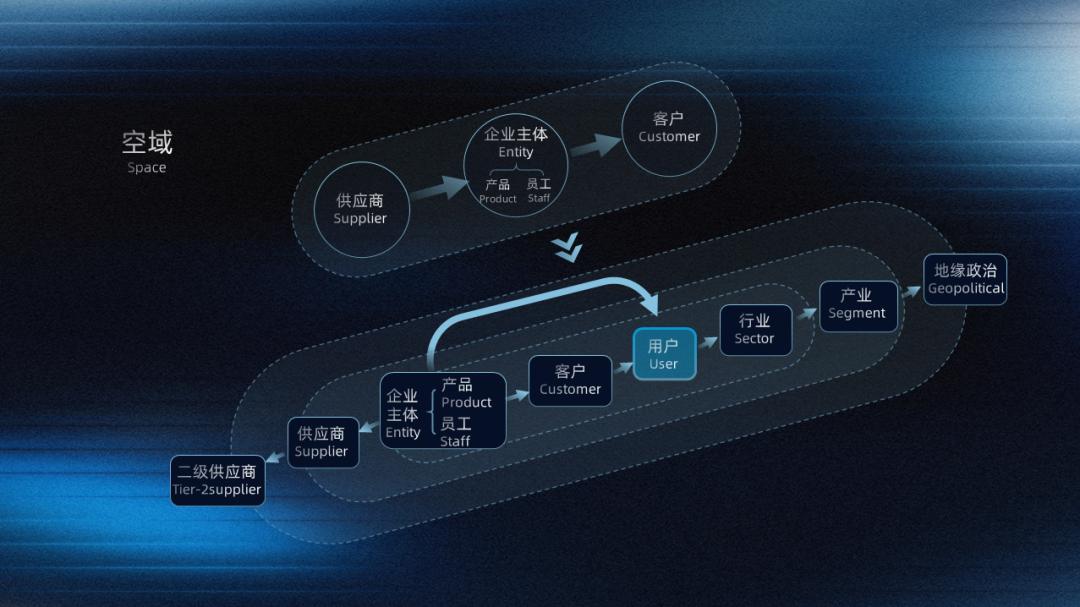
Today, in addition to looking at end - customers, we also look at the industries represented by our customers. For example, the woodworking industry has woodworking machinery, the new energy vehicle industry has motor control systems, and the mobile phone industry has the screen industry and the drilling and tapping machine industry. When multiple industries are intertwined, they form an industrial ecosystem. So, there are new energy industries, digital energy industries, and 3C industries.
In today's era, the scope of an industry is getting larger and larger. Just looking at the industry is not enough. Industries are divided by countries, and there are regional economies and geopolitics. So, "politics and economy" are inseparable, especially at present. When we expand our perspective in space, we will find that the scenarios we saw before were just tiny particles in the universe. If we don't have a clear view of the big picture, we won't be able to accurately identify these tiny particles, and we will lose the ability to judge trends.
Politics is very sensitive to some industries. The biggest variable in Inovance's internationalization strategy is politics. We need to think about how some industries will develop based on this factor and how suppliers and secondary suppliers will be affected.
With the perspective of the entire industrial chain and value chain, we can see the scenarios we focus on more completely and clearly. So, the spatial dimension of scenarios is very important.
You may think that this is how Inovance's strategy works. We call it "six - look." But think about it, have we really seen clearly? We haven't. It's because most of us just list and pile up information without reaching any conclusions or making any judgments. When talking about logic, we must have judgments and assumptions. Without judgments, there is no logical reasoning from information to insights and then to opportunities. For example, regarding our insights into suppliers and secondary suppliers, the company's material family and procurement strategy department must make assumptions and judgments.
Currently, there are four types of phenomena in society that deserve special attention: "Black Swans," "Gray Rhinos," "Crying Wolf," and "The Tiger is Coming." A "Black Swan" is an unexpected event that occurs suddenly without any warning, completely beyond our expectations. A "Gray Rhino" is an event that is certain to happen, but people are numb to it and ill - prepared, just like the development of AI. "Crying Wolf" means that groups of competitors are besieging us. And "The Tiger is Coming" means that many international brands have targeted Inovance as their primary target. Brothers, in such a competitive landscape, we must focus on scenarios and build unique core competitiveness. The spatial layout and architecture can give us a high - level perspective. What does "standing high" mean? It means standing high to see far and having foresight. This is the core meaning of the spatial architecture. Currently, although we have taken some practical actions in spatial architecture, we still have a long way to go. Our insights into scenarios are not deep enough, our conclusions are not firm enough, our initial assumptions are not strong enough, and our deduced judgments are not decisive enough. So, Inovance not only needs a spatial perspective but also has each organization responsible for different dimensions of scenario insights.
2.2 Temporal Domain
In terms of time, this is a flaw in our thinking. I think most people's understanding of scenarios is based on the concept of "time." We look at trends, but our views on trends are not firm or clear. For example, when analyzing the future trend of Sino - US relations, we should first look at the trend and then at the cycle. I believe that the cycle is the most accurate time coordinate to describe the development of things. Our current state, even sitting here in a meeting today, is just a point on the time coordinate and a node in the cycle process. Everyone must understand that in the time dimension, our present is just a point, but the trend waveform that drives our development objectively exists, and this waveform is the cycle.
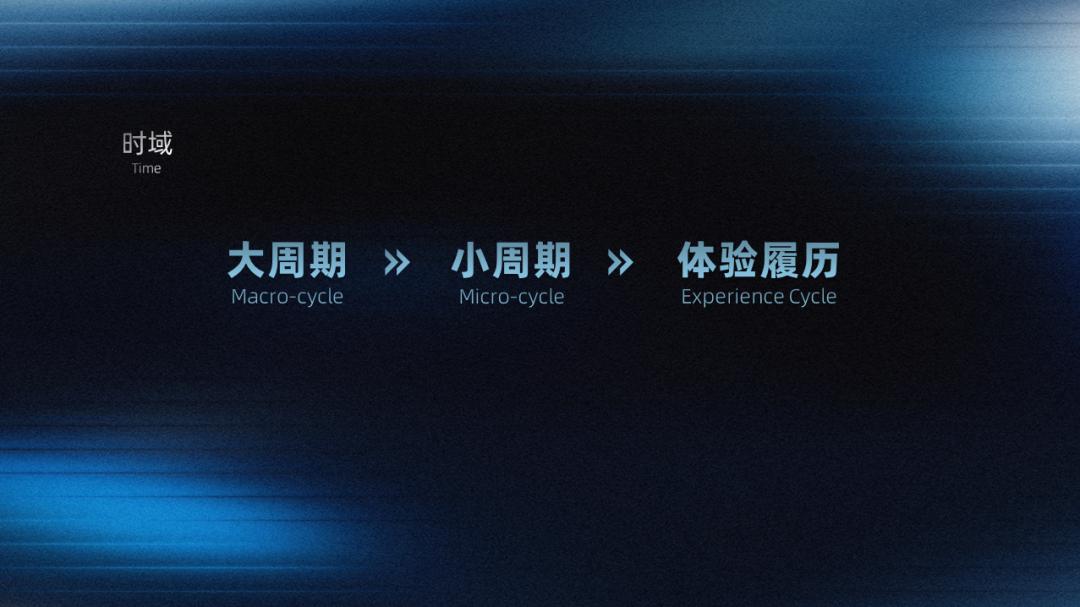
The global macro - economic cycle always follows a four - stage cycle of recovery, prosperity, decline, and depression. Since the outbreak of the Russia - Ukraine conflict, the global economy has been continuously declining and moving towards depression. Currently, the world economy is at the bottom of the cycle, and