Phone or Pocket? If you want to make your life as cinematic as a movie, which one do you trust more?
As the Spring Festival approaches, the holiday travel atmosphere is at its peak, and the hearts of young people are no longer at their workstations. For the Spring Festival journey, should they experience speed and passion at the ski resort or visit a bustling temple fair? Or perhaps head to a warm island to feel the waves and sea breeze?

Although young people are already used to taking out their phones at any time to record their travels, very few of the photos they take can be considered high - quality masterpieces. The images on their phones can't even capture one - ten - thousandth of the wonderful scenes they see with their own eyes during the journey. When taking pictures of scenery, the photos lack vividness. When taking pictures of people, it often turns into a disaster. They want to leave a souvenir for their friends and relatives, but instead, they are constantly troubled by the poor shooting results and miss out on enjoying the moment.
How common are the photo - taking pain points among young people? To find out, the "Post - 90s and 00s Research Institute" launched a "Small Survey on Young People's Photo - taking Pain Points". A total of 458 readers participated, and 90% of them were between the ages of 18 and 35. The survey shows that more and more young people are turning to independent imaging devices to improve the quality of their records, and the DJI Pocket 3 has become the top choice. 70% of the young people who clicked on the questionnaire because of their "photo - taking pain points" have experienced the more professional photography experience brought by the Pocket 3.
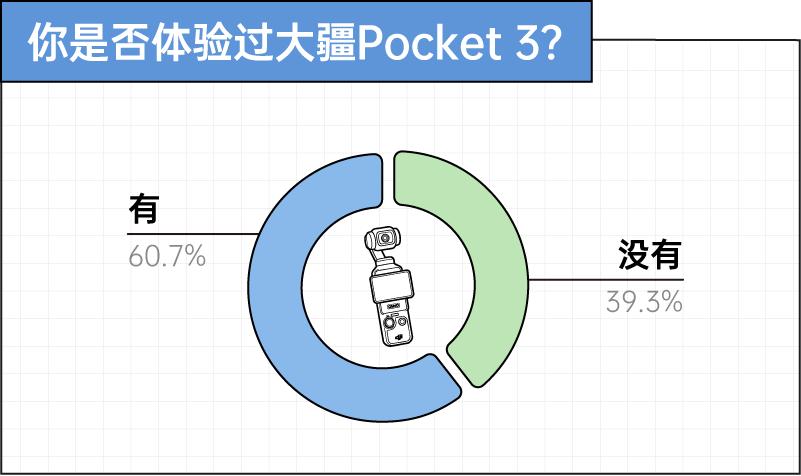
While most people are still at the stage of "just taking a picture", a new generation of "atmosphere seekers" and "record keepers" has emerged. This "Survey on the Pain Points of Mobile Phone Photography" may reveal the shift in young people's needs and interests in the "life recording" scenario.


During every gathering, it seems to have become the norm to "let the phone eat first". On various social media platforms, there are also endless tutorials on taking good photos. "Recording life" has become a new necessity for young people. When we break down the act of taking pictures into six levels from Lv1 to Lv6, we find that young people's pursuit of imaging has a clear hierarchy.
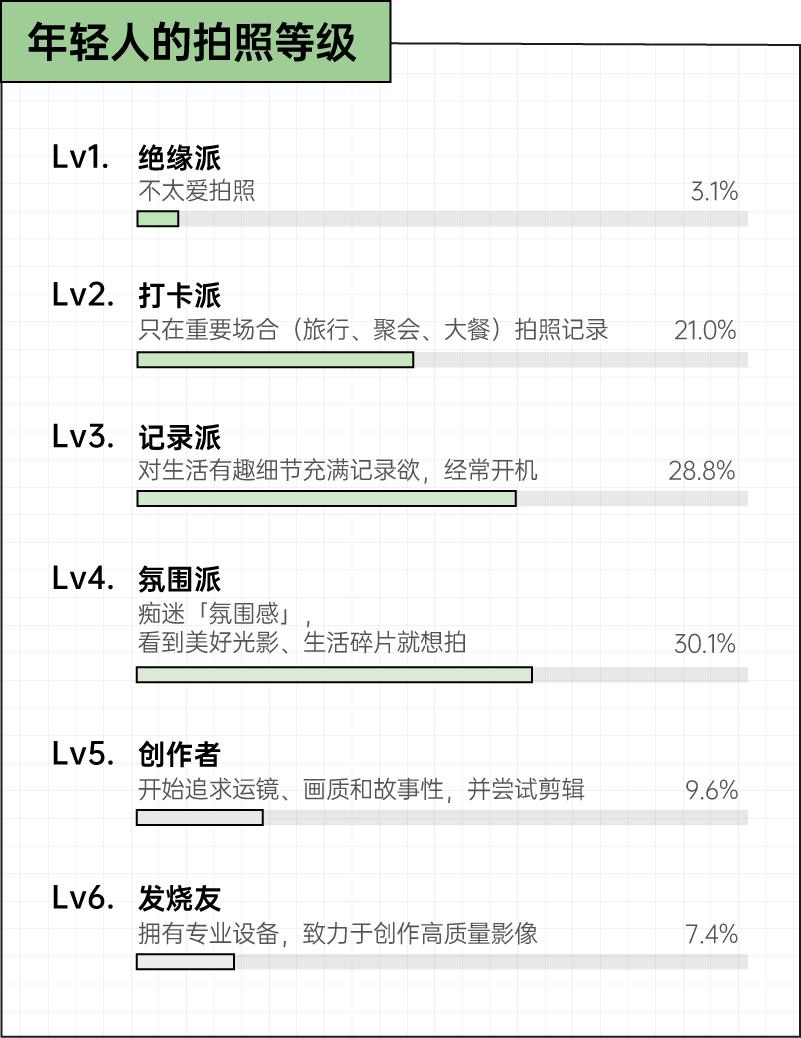
According to the survey, Lv4 atmosphere seekers account for the highest proportion, at 30.1%. They are not satisfied with simple recording but pursue the overall creation of light, composition, and atmosphere. Following them are the Lv3 record keepers, who want to take pictures whenever they see something interesting. There are also 21.0% of Lv2 check - in enthusiasts, who only take pictures to record important moments.
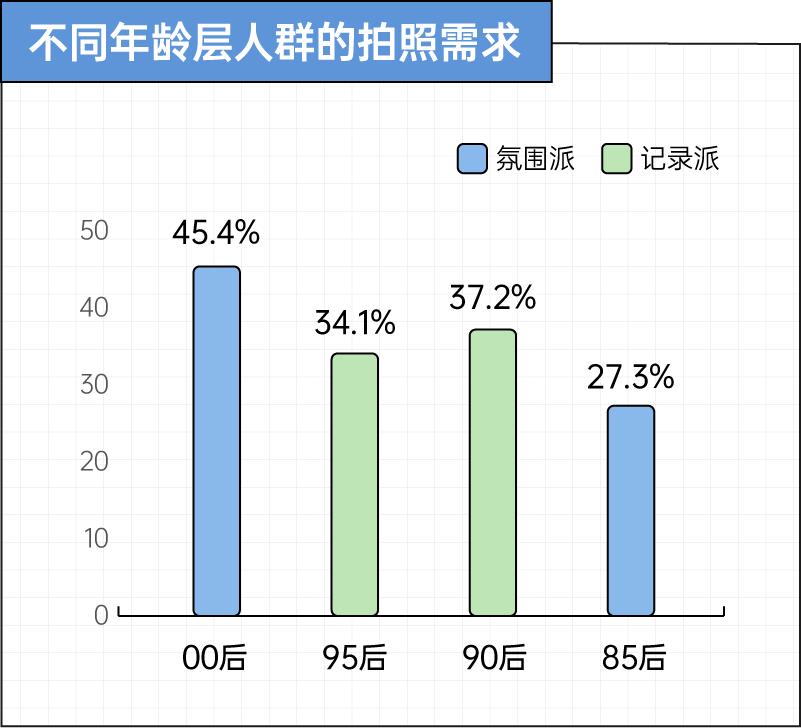
The photo - taking needs of different age groups also vary. We found that nearly half of the digital natives, the post - 00s generation, are "atmosphere seekers".
This is not difficult to understand. The growth period of the post - 00s generation almost coincides with the explosion of the mobile Internet and social media. Since they developed an aesthetic sense, they have been exposed to various "high - quality" pictures with elaborate compositions, filter color adjustments, and full - blown atmospheres. Naturally, their aesthetic baseline has been raised. For the younger generation, taking pictures is no longer simply recording reality but more like creating a visual work that conforms to their "idea of beauty". In addition, in the social context of the post - 00s generation, images are a powerful "social currency" and "identity label". A photo full of atmosphere conveys not only "where I am and what I'm doing" but also "what my taste is, what kind of circle I belong to, and what kind of lifestyle I have".
Most of the post - 95s and post - 90s generations belong to the "record keeper" group, accounting for 34.1% and 37.2% respectively. If the post - 00s generation pursues using images to express "who I am", then many post - 95s and post - 90s generations value using images to preserve "what I've experienced". Their shooting perspectives are mostly "inward", aiming to leave themselves a beautiful memory of the past.
Interestingly, among the post - 85s generation, the "atmosphere seekers" have emerged as the dominant group. Perhaps it's a kind of "mid - life rebellion". At a certain age, people start to pursue atmosphere and feeling, mainly using images for healing.
As for when young people like to take out their phones to take pictures, "natural scenery", "travel", and "life fragments" are the top choices for the vast majority of them.
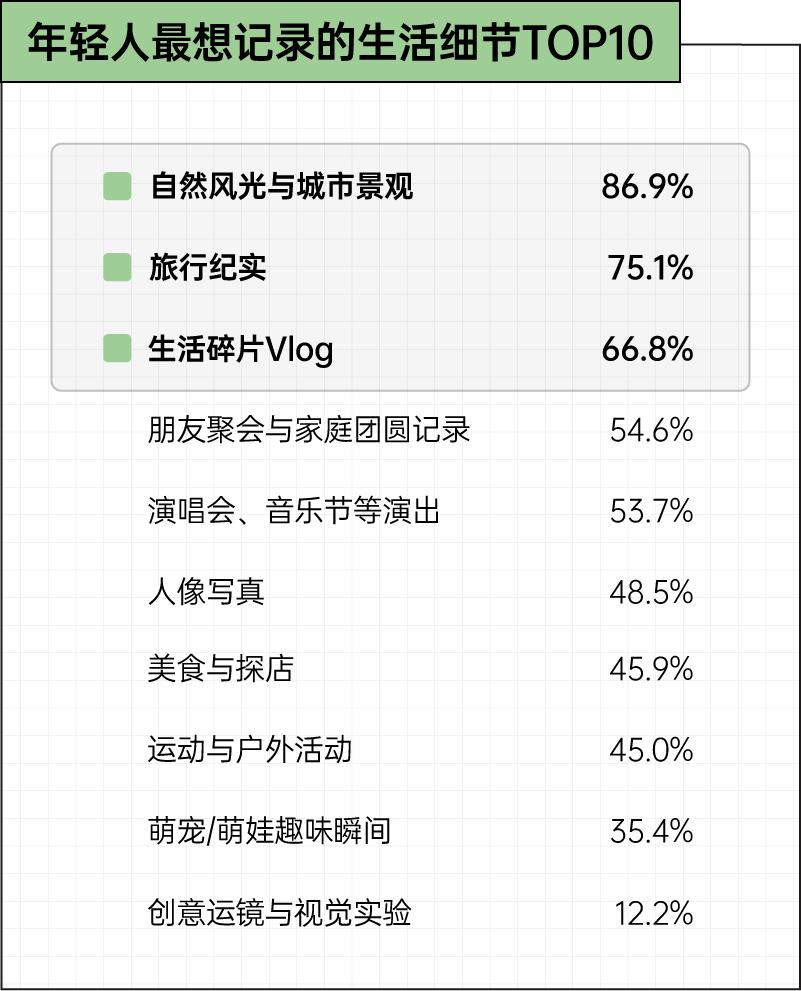
Of course, niche hobbies are also worth recording. These seemingly insignificant passions are actually the most real slices of young people's lives.



We also found that young people prefer pictures with a more "natural feel".
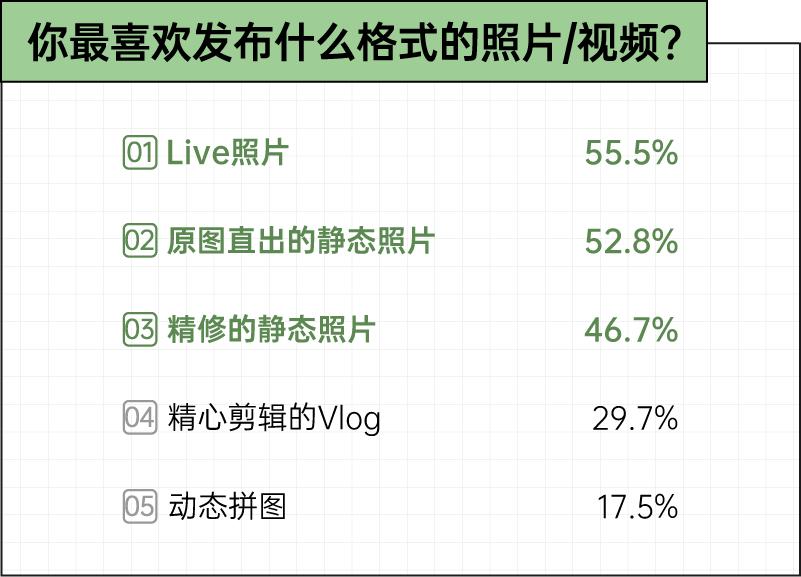
Although carefully edited Vlogs are wonderful, Live Photos have a unique charm. Compared with Vlogs and static pictures, the charm of Live Photos lies in that they record the dynamic moments 1.5 seconds before and after pressing the shutter, with just the right amount of information - short enough for people to finish watching immediately and dynamic enough to tell a short story. What it records is also a vivid and lively process, which is non - replicable and thus more infectious.

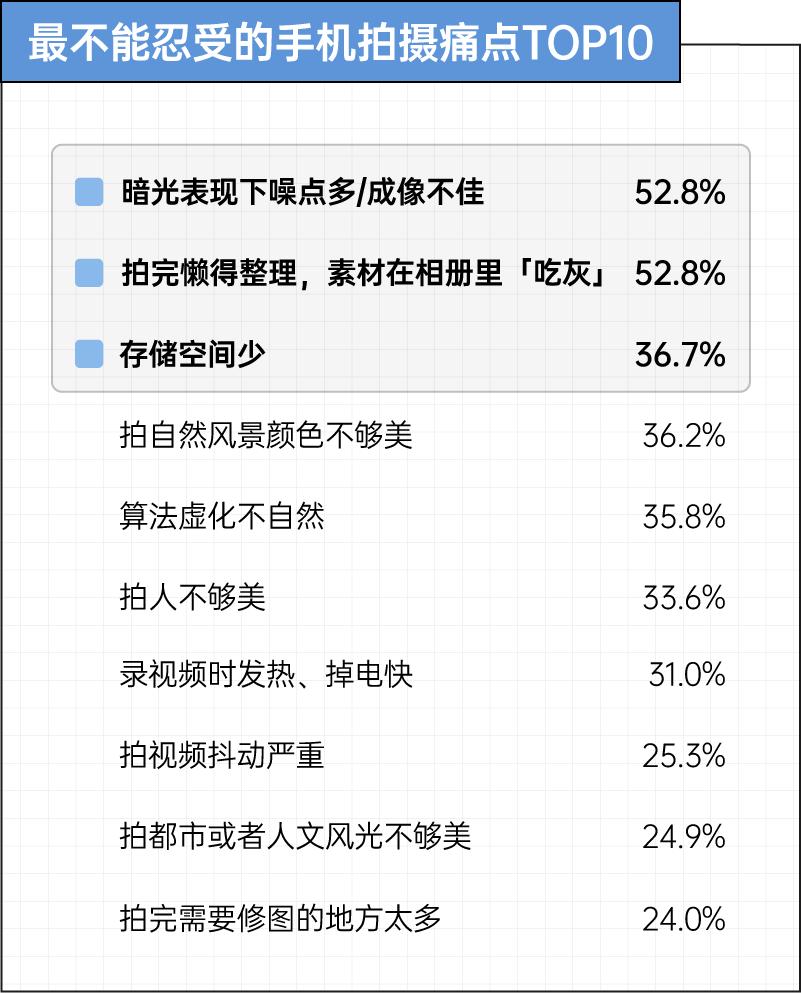
Today's young people seem to prefer the relaxed feeling of "taking a casual shot". This doesn't mean they have no requirements for good photos. On the contrary, they pursue sufficient convenience and the pleasure of taking high - quality masterpieces with a casual shot. In comparison, mobile phones are really not up to the task. Among the top 10 pain points of mobile phone photography that young people can't stand, image quality and convenience are the two core issues.
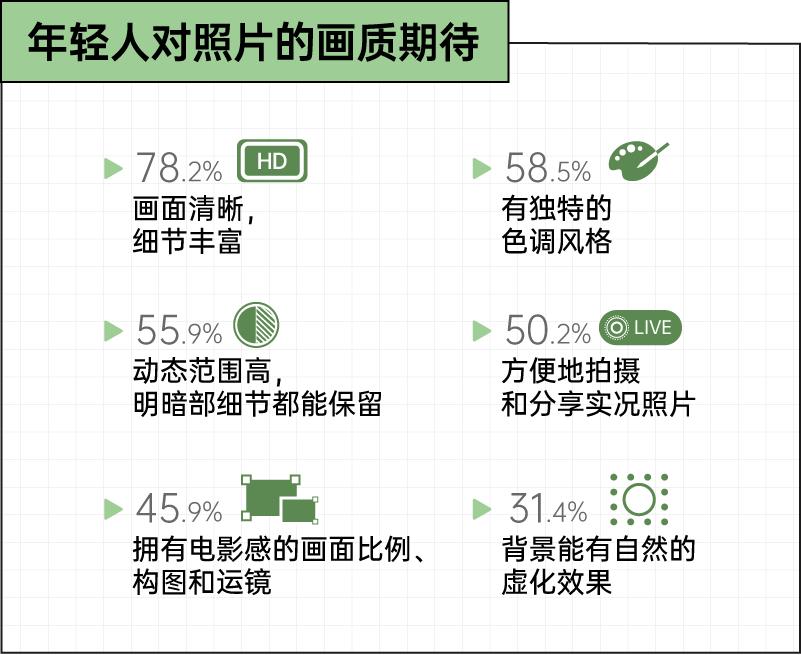
What they want for life recording must meet the following characteristics - clear pictures with rich details; unique color tones, a cinematic and dynamic feel; of course, convenience for shooting and sharing is also essential.
This explains why young people increasingly need a recording device independent of their mobile phones. In the questionnaire, nearly half of the young people already own a shooting device other than their mobile phones, 31% are considering it, and only 16.6% think their mobile phones are temporarily sufficient.
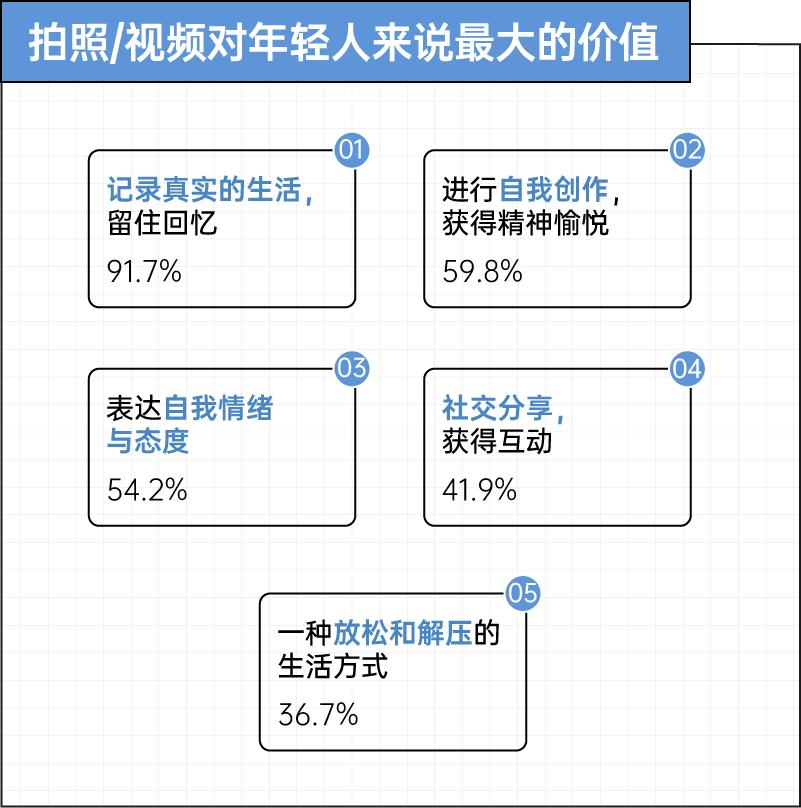
For young people, taking pictures and videos is no longer just about simple check - ins or social sharing. 91.7% of them agree that taking pictures is to record real life and preserve memories. Nearly 60% of them pursue the pleasure of self - creation. In a nutshell, taking pictures/videos is a profound manifestation of "loving yourself".

Gradually, mobile phones can no longer meet the ever - expanding shooting needs of young people.
During a trip, when trying to use a mobile phone to shoot a smooth video of the scenery, the picture shakes like a "record of an earthquake". When shooting a video of a cute pet at home, as soon as it moves, it becomes a blurry "high - speed ghost image". At a concert, excitedly raising the mobile phone to record, the recorded singing is mixed with screams and noise... But a group of young people have found an "external device" other than their mobile phones - they use the Pocket 3 to turn all the above embarrassing situations into "life movies".

Full of expectations, using a mobile phone to record the moment when the fireworks bloom, only to find when looking back that the so - called shocking scene has turned into a blurry spot of light and a pitch - black background full of noise - this is also the top pain point of mobile phone photography that young people can't stand.
But when using the DJI Pocket 3, it's like having a built - in "night vision device". The 1 - inch large sensor can truly capture the trajectory of every beam of light. It doesn't rely on algorithms to artificially increase the brightness but truly restores the details in the dark areas.
When shooting the aurora, the flow of colors can be seen;

When shooting fireworks, each beam of light is gorgeous.
