Elon Musk has ordered the discontinuation of the Model S/X, marking Tesla's first revenue decline in 15 years.
Why is Tesla's financial report becoming increasingly confusing?
Looking directly at the data: In 2025, Tesla's total delivery volume declined for two consecutive years, and its revenue experienced the first decline since its listing. The annual net profit was almost halved.
Elon Musk even "regrettably" announced in a conference call that Tesla will gradually discontinue production of the Model S and Model X starting from the next quarter.
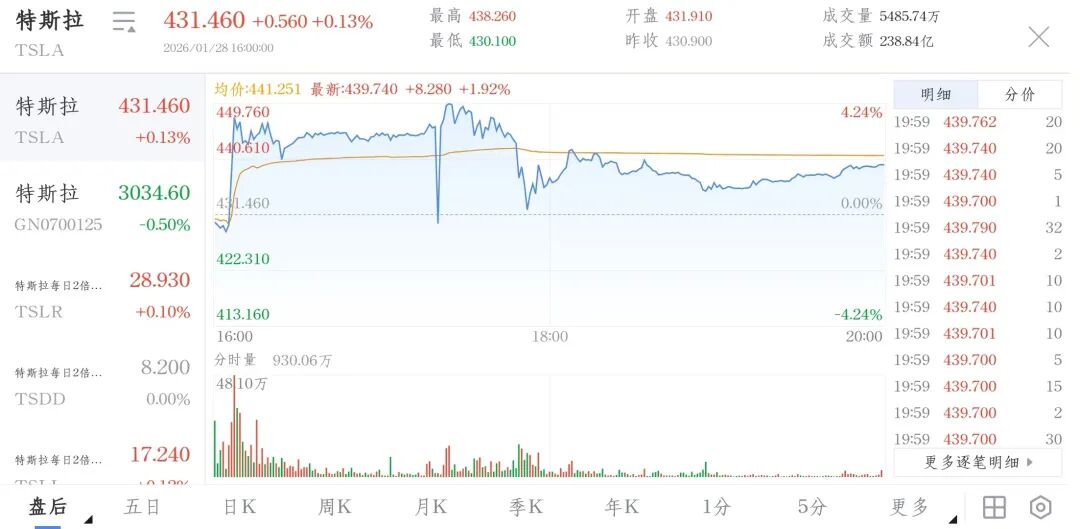
It seems like a rather unimpressive financial report... But after the information was disclosed, Tesla's after - hours stock price once rose by more than 4%.
After listening to Musk's remarks in the earnings conference call, the reason became clear - the company has started a new chapter: Tesla is shifting its focus to AI and robotics.
Most importantly, this time, these products are no longer distant; they are right here.
Tesla's 2025 Annual Report: First - ever Annual Revenue Decline
The trend of Tesla's financial data was foreshadowed when its delivery volume was announced.
Looking at the fourth quarter of last year, Tesla delivered 418,000 vehicles, a year - on - year decrease of 15.61% and a quarter - on - quarter decrease of 15.87%.
Reviewing the company's quarterly delivery data last year, only the third quarter achieved year - on - year growth, while the other three quarters saw double - digit declines.

The reason for the sales increase in Q3 and the decline in Q4 mainly lies in the expiration of the electric vehicle tax credit policy in the United States at the end of the third quarter.
This means that since October 2025, there has been no $7,500 (about 53,198 yuan) subsidy for purchasing electric vehicles in the United States. Therefore, American consumers who intended to buy cars placed orders before the policy expired, which was equivalent to overdrawing the Q4 sales in advance.
In 2025, Tesla's total sales volume was 1.636 million vehicles, a year - on - year decrease of 8.6%, and the sales have declined for two consecutive years. However, the delivery volume in the Asia - Pacific region set a new record.
The sales volume of the two main models, Model 3/Y, was 1.585 million vehicles in 2025, accounting for 96.9% of the company's total sales. The remaining 3.1% was the sales volume of other models, including Model S/X and Cybertruck.
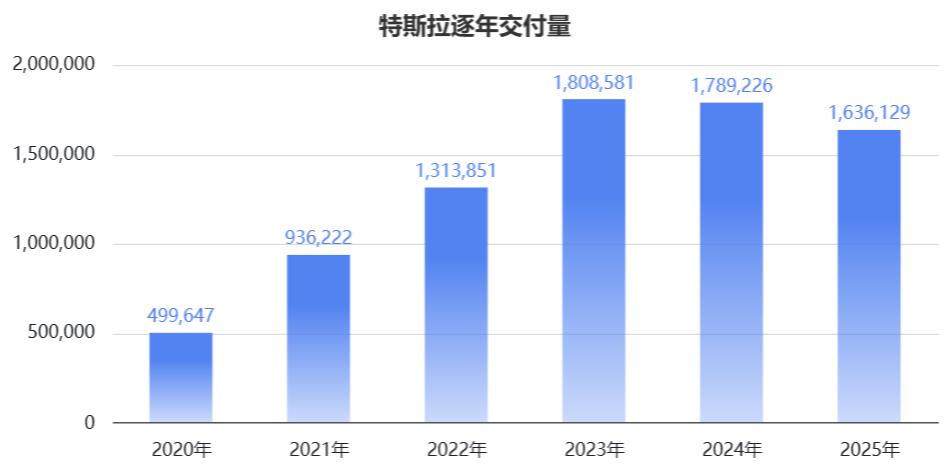
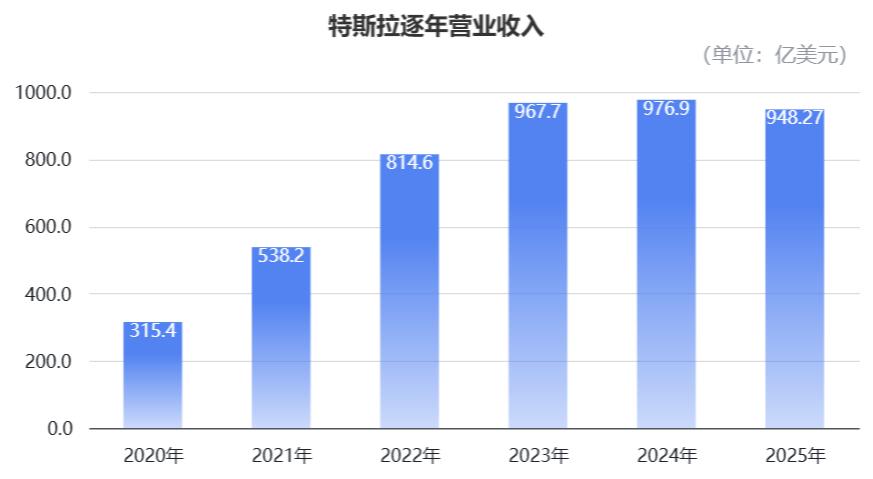
Due to the consecutive "disappointing" delivery volumes, Tesla's financial indicators also declined in 2025.
In 2025, the company's total revenue was $94.827 billion, a year - on - year decrease of 3%. This was the first revenue decline for Tesla since its listing in 2010.
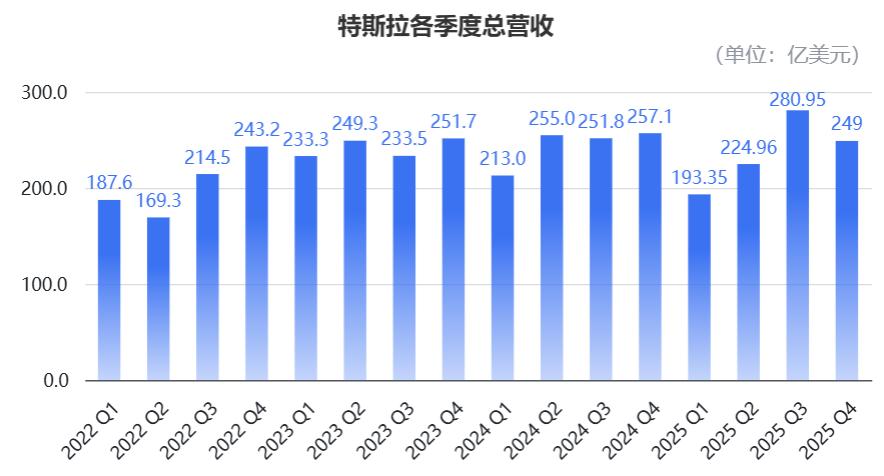
In the fourth quarter of 2025, Tesla's revenue was $24.9 billion, also a 3% year - on - year decrease. Breaking down the revenue sources:
The revenue from automobile - related businesses was $17.693 billion, a year - on - year decrease of 11%. Among them:
The revenue from automobile sales was $16.75 billion, a year - on - year decrease of 10%.
The revenue from automobile leasing was $401 million, a year - on - year decrease of 10%.
The revenue from automobile regulatory credits (i.e., selling automobile carbon emission credits) in this quarter was $542 million, a year - on - year decline of 21.7%.
Outside the automobile business, the revenue from power generation and energy storage increased significantly in this quarter, reaching $3.837 billion, a year - on - year increase of 25% driven by the deployment of Megapack.
The revenue from services and other businesses was $3.371 billion, a year - on - year increase of 18%.
In terms of profit, Tesla's gross profit margin improved. The comprehensive gross profit in the fourth quarter was $5 billion, and the gross profit margin rebounded to 20.1%. The automotive gross profit margin was 15.4%.
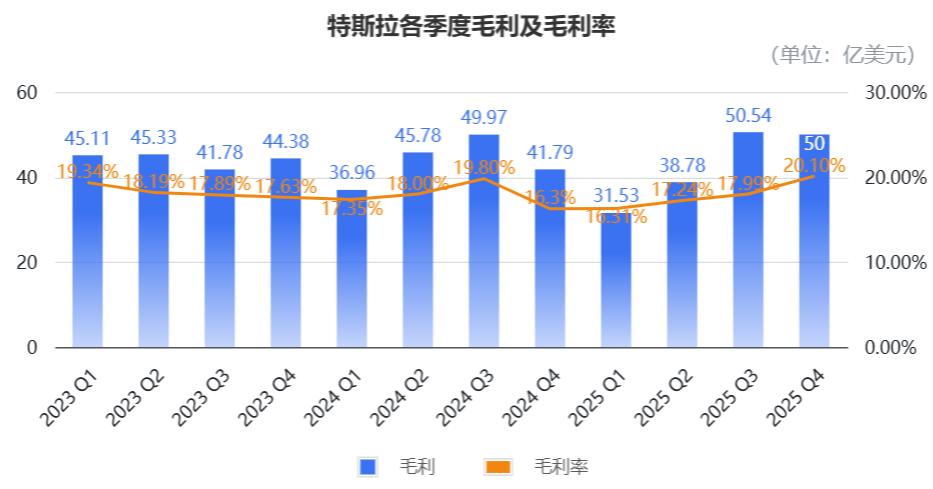
The company's annual gross profit was $17.09 billion, with a corresponding comprehensive gross profit margin of 18% and an automotive gross profit margin of 17.9% in the same period.
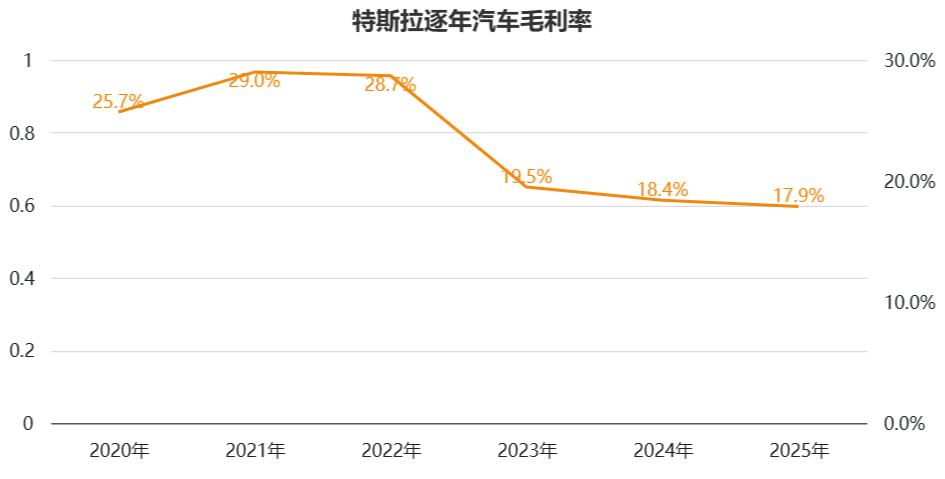
However, the net profit indicator declined significantly. In the fourth quarter, the company's GAAP net profit was $840 million, and the non - GAAP net profit was $1.761 billion.
In 2025, Tesla's GAAP net profit was $3.794 billion, a 46% decrease compared to $7.1 billion in 2024, nearly halved; the non - GAAP net profit was $5.858 billion, a year - on - year decrease of 26%.
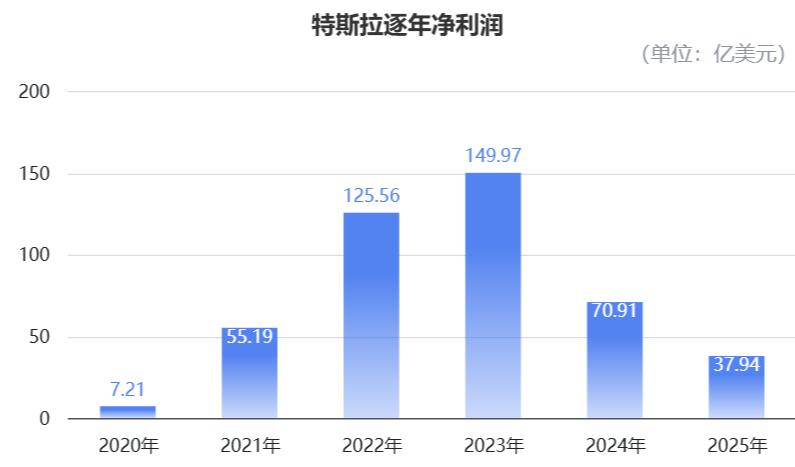
This is mainly because Tesla's expenses also increased significantly. In 2025, the company's operating expenses were $12.74 billion, a year - on - year increase of 23%, mainly used for new projects such as AI and robotics.
In addition, Tesla emphasized in its financial report that the company will continue to increase its capital expenditure. It is expected that this year's expenditure will exceed $20 billion, mainly used for building six new factories, expanding AI computing infrastructure, and improving existing production capacity.
The six factories are a refinery, a lithium - iron - phosphate battery factory, a Cybercab factory, a Semi truck factory, a new large - scale factory, and an Optimus factory.
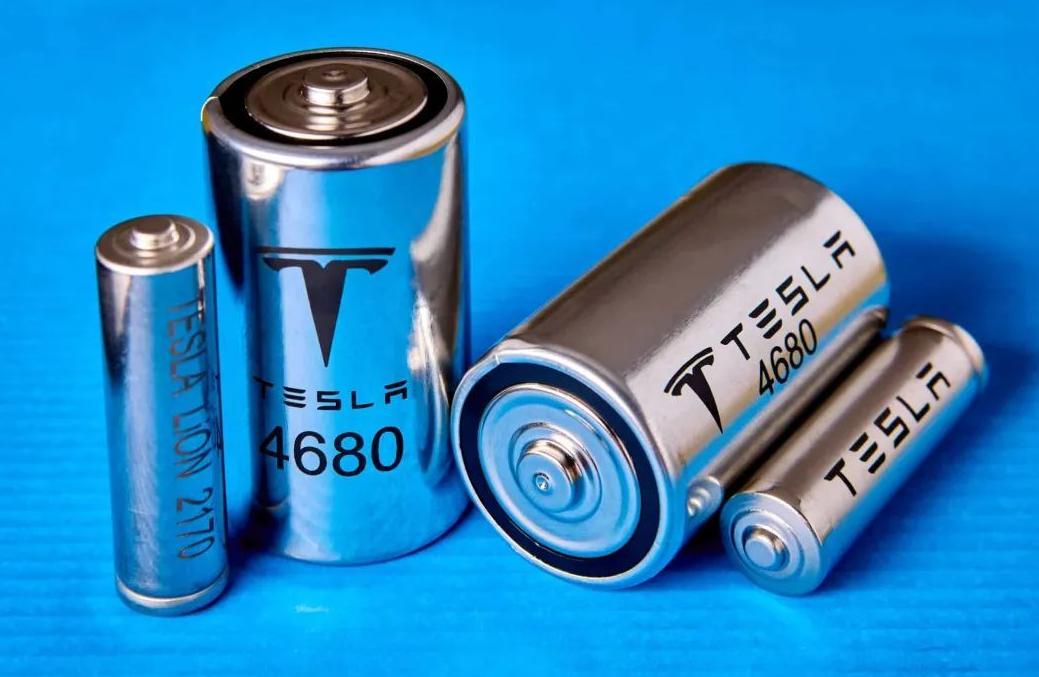
The financial report also revealed that Tesla's lithium refinery has started trial production, and some Model Y models are already equipped with 4680 batteries.
However, in terms of cash, Tesla really doesn't need to worry about spending money.
As of the end of 2025, the company's cash and investment balance reached a record $44.059 billion, a 21% increase compared to the end of 2024.
This growth mainly came from Tesla's positive free cash flow this year - the free cash flow in 2025 reached $6.26 billion.
This financial report was released after the market closed, and Tesla's after - hours stock price once rose by more than 4.2%, with its market value increasing by $60.87 billion.
It seems that Elon Musk, who is best at "casting a long - line to catch big fish", has released a new trump card in the conference call, which has made the capital market respond to Tesla in this way.
Musk's Big Move: Discontinue Model S/X and Focus on AI + Robotics
Generally summarizing Musk's speech, Tesla will accelerate its transformation and shift its focus more to AI and robotics -
The story of cars will continue, but from the perspective of an AI and robotics company.
The key points in the conference call, combined with the business in the financial report, can still be summarized in three parts:
Cars: Discontinue Model S/X, and Here Come Semi, Cybercab, and Roadster
Tesla's product line will undergo major changes this year.
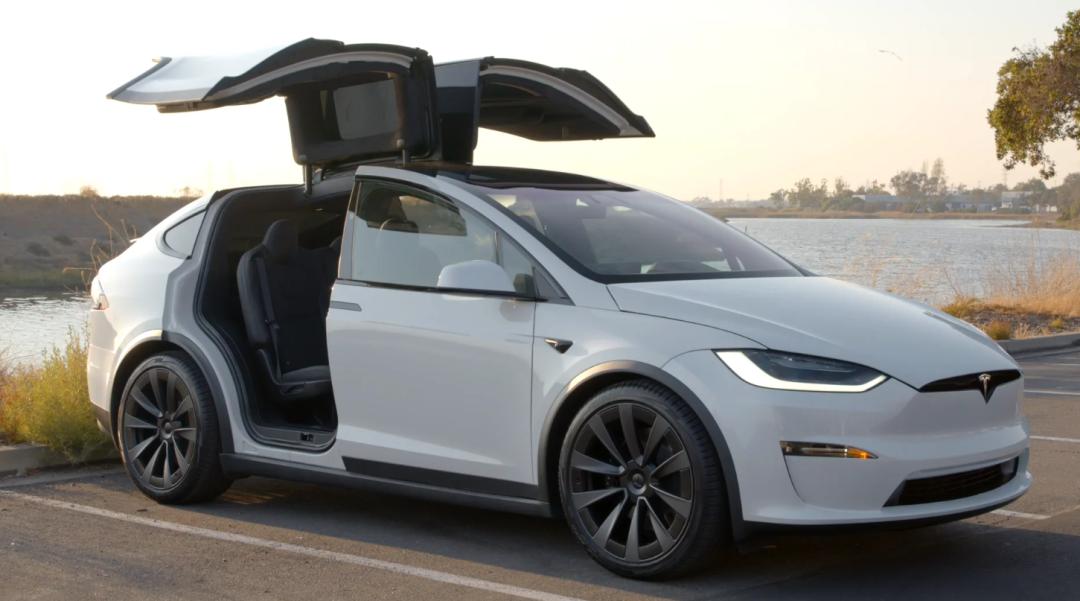
Musk announced that the Model S and Model X are planned to be "honorably retired", and production will be gradually discontinued starting from the second quarter of this year.
These two models were launched in 2012 and 2015 respectively. It can be seen from the sales volume that their proportion in the total sales is now less than 5%. In fact, Musk also said in 2019 that they continued to produce the Model S/X purely out of "nostalgia".
The main reason for the discontinuation now is the limited production capacity of the company, so these two models need to make way for Cybercab and the Optimus humanoid robot.
Musk revealed that the production lines of Model S and X at the Fremont factory will be transformed into Optimus robot production lines to achieve the long - term goal of producing 1 million Optimus robots annually.
The long - awaited new cars are finally on the agenda this year:
One is the electric semi - truck Semi. Tesla has confirmed that mass production will start in the first half of this year.
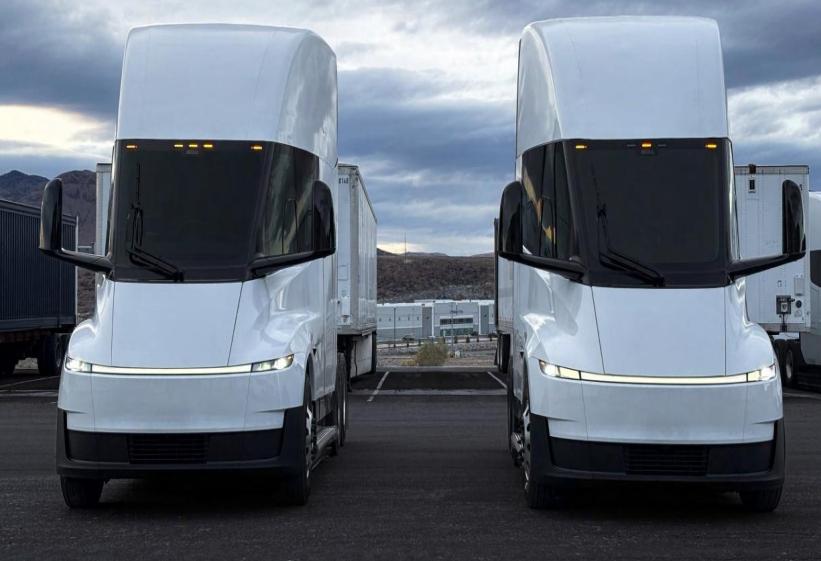
Currently, the company is planning to build a Megacharger charging network, and plans to add multiple stations this year to support the needs of long - distance freight.
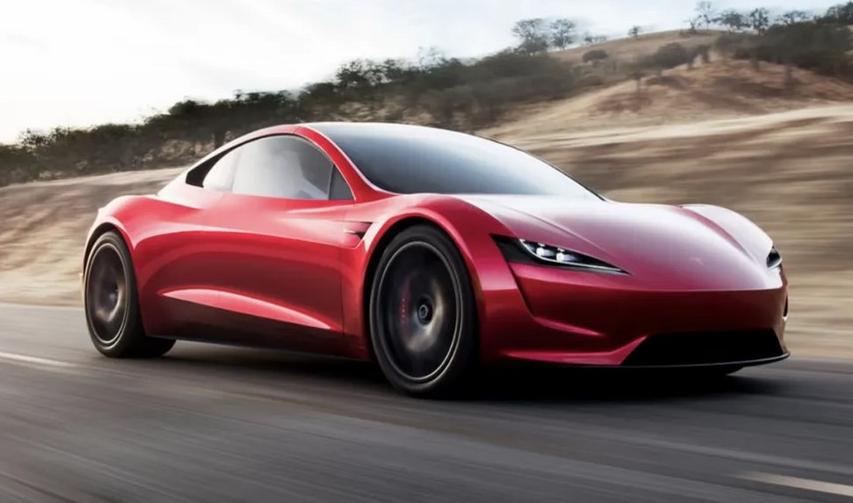
Another new car is Tesla's electric super - car Roadster, which Musk regards as "the best car among the last batch of human - driven cars". It is expected to make its debut in April this year.
There is also a car, the long - awaited ultimate Tesla Robotaxi vehicle, the Cybercab designed for two people.
This car without a steering wheel or pedals will have a dedicated production line in Texas. Mass production will start in April this year, and the production rate will increase in an S - curve.
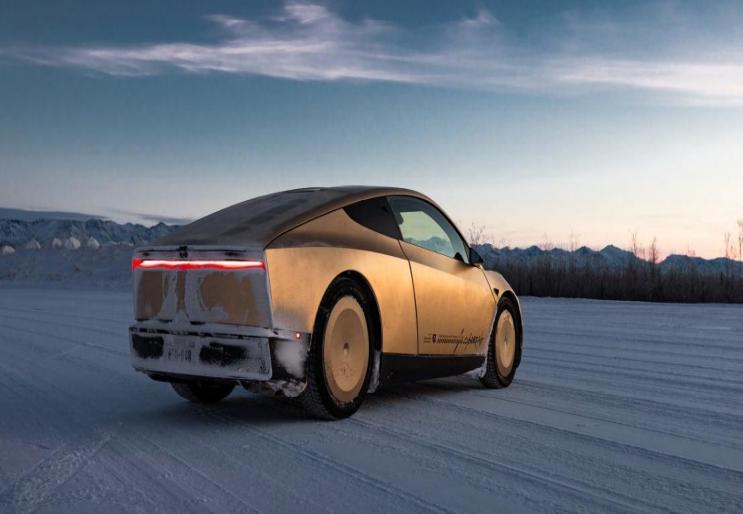
Musk predicts that "the production volume of Cybercab will be several times that of all our other vehicles combined."
This car is also one of the manifestations of Tesla's shift to the AI business.
AI: Paid FSD User Numbers and Robotaxi Fleet Numbers Revealed
In terms of AI software, Tesla has pushed the FSD V14 version to car owners, and the response has been positive.
At the same time, Tesla announced the paid user data of FSD for the first time.
By the end of 2025, the number of paid FSD users of Tesla reached 1.1 million, a year - on - year increase of 38%, and 70% of them made prepaid purchases.
