Why hasn't L3 officially hit the road, yet car companies are planning to skip it?
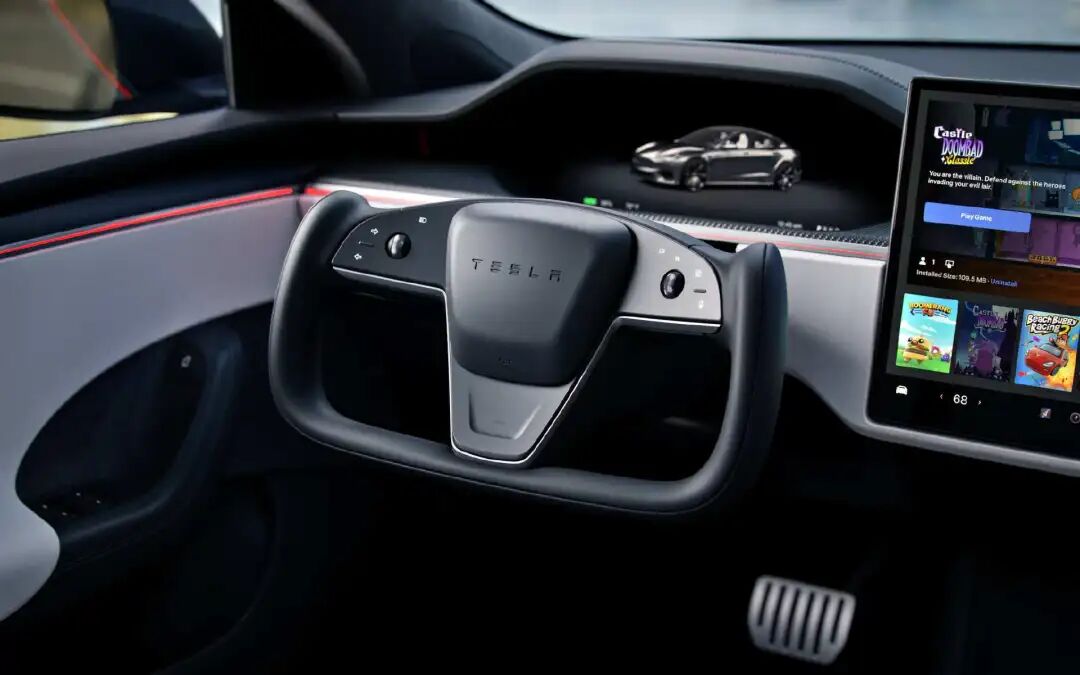
Image source: Tesla's official account
The attitude of the automotive industry towards L3 seems to have gone to two extremes.
One extreme is a short - term transition, a delay in promotion, or a direct "skip". By the end of 2025, Xpeng went against its plan at the beginning of the year. After experiencing Tesla's FSD V14.2, its founder, He Xiaopeng, posted that "in 2026, whether in the United States or China, the next - generation real fully autonomous driving will truly arrive, directly from L2 to L4 (L3 has been skipped)". In January this year, Germany's Handelsblatt reported that Mercedes - Benz temporarily shelved its previously vigorously promoted L3 - level autonomous driving system promotion plan, and the upcoming facelifted luxury sedan S - Class will no longer offer L3 - level autonomous driving functions. At the Chery AI Night in the same month, L4 became the protagonist of the autonomous driving section. Relevant people from Baidu, Horizon and other companies have also publicly stated that L3 is only a "short - term transition".
The other end is to accelerate the implementation. In December 2025, the Ministry of Industry and Information Technology issued access permits to two L3 models, the Changan Shenlan SL03 and the BAIC ARCFOX Alpha S. These are also the first batch of special license plates for L3 - level highway autonomous driving vehicles issued in China. Many automakers such as SAIC, FAW, BYD, Hongmeng Zhixing, and Li Auto said that they have obtained L3 test licenses in designated areas and are preparing for access. Among them, BYD announced that it has successfully completed more than 150,000 kilometers of actual road verification for L3 - level autonomous driving. Hongmeng Zhixing has completed more than 20,000 kilometers of actual road verification for L3 and 600 million kilometers of high - speed L3 simulation verification, and is "ready to go".
One side is "skipping", and the other is "accelerating"; one side emphasizes L4, and the other promotes the implementation of L3. This seemingly split choice easily makes ordinary consumers wonder: Is there really an insurmountable gap between L3 and L4?
The answer is exactly the opposite.
L3? L4? The technical boundaries are inherently blurred
The reason why the public easily regards L3 and L4 as two completely different stages is largely due to the way the grading system is expressed.
In the definition of SAE (Society of Automotive Engineers), the core difference between L3 and L4 is mainly reflected in the attribution of responsibility and the requirements for the driver. Within the designed operating conditions of L3, the vehicle is the driving subject, and the driver can take hands and eyes off the wheel, but needs to stay awake and take over when necessary. Once taking over, the responsibility returns to the driver. In the limited scenarios of L4, the vehicle always assumes the driving and responsibility subject, and human drivers are no longer required to take over at any time.
However, this division is more like a classification at the legal and responsibility levels, rather than a direct description of technical capabilities.
Yi Qiang, the former director of Bosch's vehicle - cloud product line, pointed out in an interview with "Power Plant" that when SAE formulated the L0 - L5 grading standard about a decade ago, there were limitations of "the blind men feeling the elephant" - even L1 was not yet popular at that time, making it difficult to accurately predict the evolution path of autonomous driving technology. In his view, in the future, the division of autonomous driving is more likely to return to two core scenarios: one is driving assistance, where the responsibility always lies with the driver; the other is real autonomous driving, and autonomous driving must be achieved in different scenarios, rather than the "all - inclusive L4" covering all road conditions.
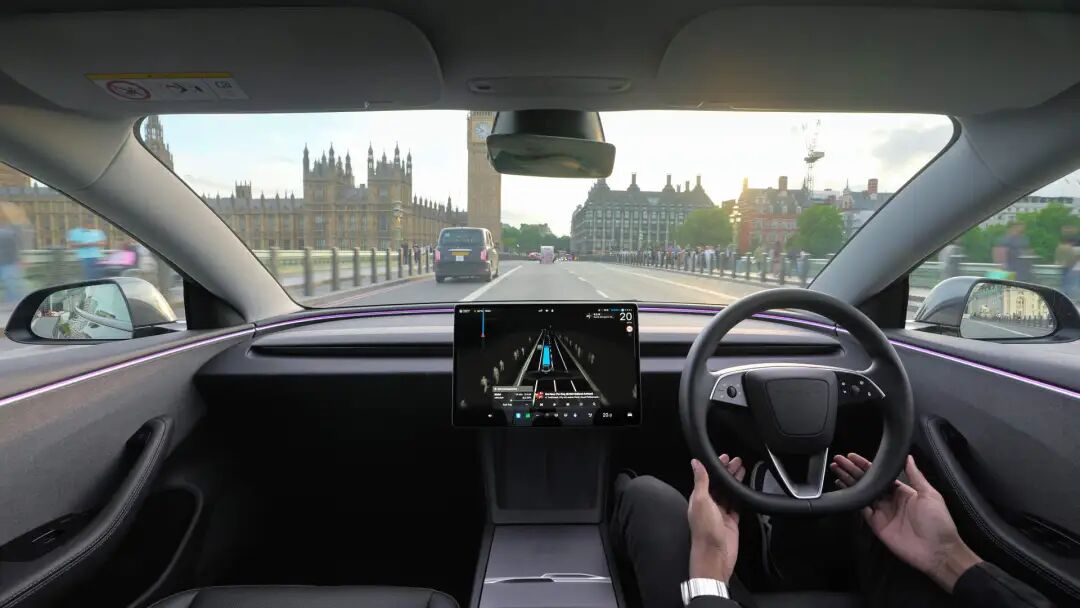
Image source: Tesla's official account
Under this framework, the implementation path of autonomous driving is to first clarify different ODDs (Operational Design Domains) and then break through them one by one, and these ODDs may even vary from city to city. In this process, the technical boundaries between L3 and L4 in the current grading system are not clear. In essence, L3 is more like a "L4 with a reduced scope of use".
For example, when a system can only be used on highway sections with "daytime, no rain, good road conditions, and a speed not exceeding 80 kilometers per hour", it is classified as L3. When these restrictions are gradually relaxed and the ODD continues to expand, it naturally evolves into what the public understands as L4. However, from the perspective of commercially - operated Robotaxis, even L4 always has conditional limitations. Without considering the division of regulations and responsibilities, L3 and L4 are more just relative terms, rather than a clear technical watershed.
Xpeng's learning target, Tesla, which "skips L3", is actually doing the same thing, just not deliberately distinguishing between the so - called L3 and L4 according to the traditional grading. Technically, L3 is originally a part of the L4 puzzle, so "skipping" itself is a false proposition.
Even so, Li Wen (a pseudonym), a person from an intelligent driving supplier, told "Power Plant" that when it comes to business, suppliers with technical capabilities tend to sell the L4 story. In this way, suppliers with L4 capabilities can gain an advantage in the competition for OEM projects. L4 - level cars that can lift more restrictions inevitably require chips with greater computing power and more sensors. Suppliers can obtain higher profits by selling more advanced hardware and software solutions. The promotion of suppliers is also one of the reasons why more and more automakers are starting to tell the L4 story.
Even so, in order to be more competitive, many automakers are still working hard to obtain regulatory L3 access permits and hope to quickly launch cars with L3 qualification certifications into the market, but the implementation is not easy.
Regulation, cost, and demand: There are still many hurdles for L3 implementation
The most difficult and core part of implementation is regulation.
For a long time, domestic autonomous driving has remained at the L2+ stage, and terms such as "L2.5" and "L2.999" have emerged in the industry. Before the regulations are clear, even if a vehicle has L3 capabilities, no real - sense L3 vehicle can enter the mass - production and sales stage.
It is against this background that the approvals of Changan Shenlan and BAIC ARCFOX seem particularly cautious and slow. Public information shows that Changan submitted its application for L3 product access to the Ministry of Industry and Information Technology in November 2023 and was approved for access after two years.
Deng Chenghao, the chairman of Shenlan Automobile, told the media that he had gone to Beijing for "defense" many times. Dozens of companies across the country participated in the L3 test access, 9 entered the on - road pilot, and only Changan Shenlan and BAIC ARCFOX obtained product access permits. Even after obtaining the access permit, currently, each L3 - level autonomous driving vehicle must be equipped with a professionally - certified driver for driving.
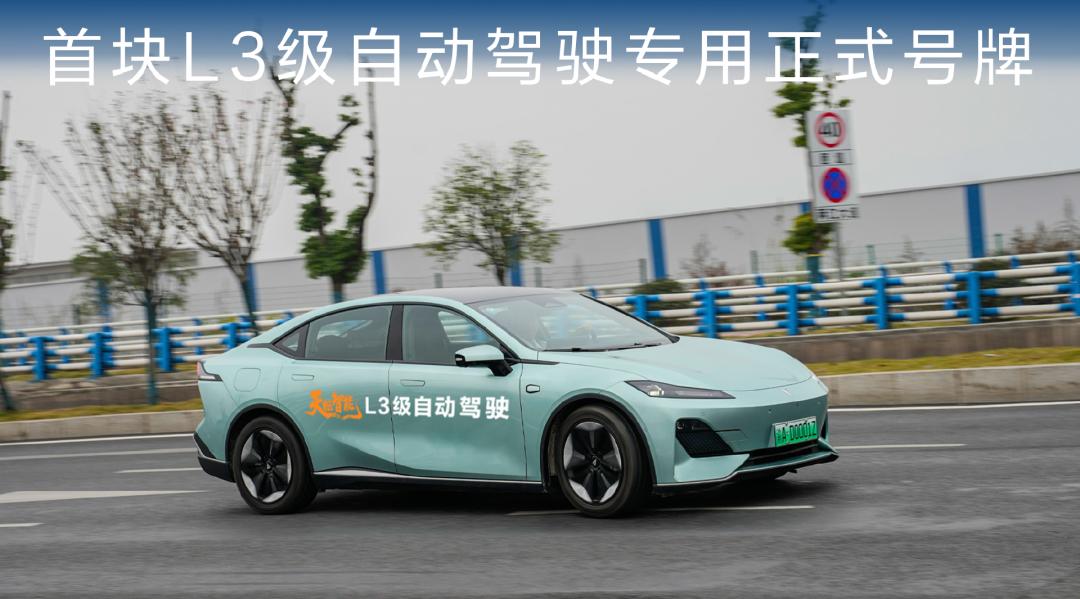
Image source: Shenlan Automobile's official account
Companies that submitted their applications later, such as Hongmeng Zhixing, which often publicly states that it has achieved L3 capabilities, can only slowly go through the test and approval process. "Many OEMs have been preparing for a long time. Whoever gets the qualification can announce it publicly," Yi Qiang told "Power Plant".
But even after obtaining access, the usage conditions of L3 are still strictly limited. Taking the two approved companies as examples, the L3 usage scenario of the BAIC ARCFOX Alpha S (L3 version) is limited to a single lane on highways and urban expressways, with a maximum speed limit of 80 km/h. Currently, it can only be piloted on roads such as the Beijing - Taiwan Expressway and the Airport North Line Expressway in Beijing. The L3 usage scenario of the Changan Shenlan SL03 (L3 version) is restricted to a single lane on highways and urban expressways in congested traffic, with a maximum speed limit of 50 km/h, and the restricted sections are the Inner Ring Expressway and the New Inner Ring Expressway in Chongqing.
The more realistic problem is that these models are still difficult to sell to ordinary consumers in the short term. Deng Chenghao previously said that the current L3 is still in the exploration stage and focuses more on B - end applications.
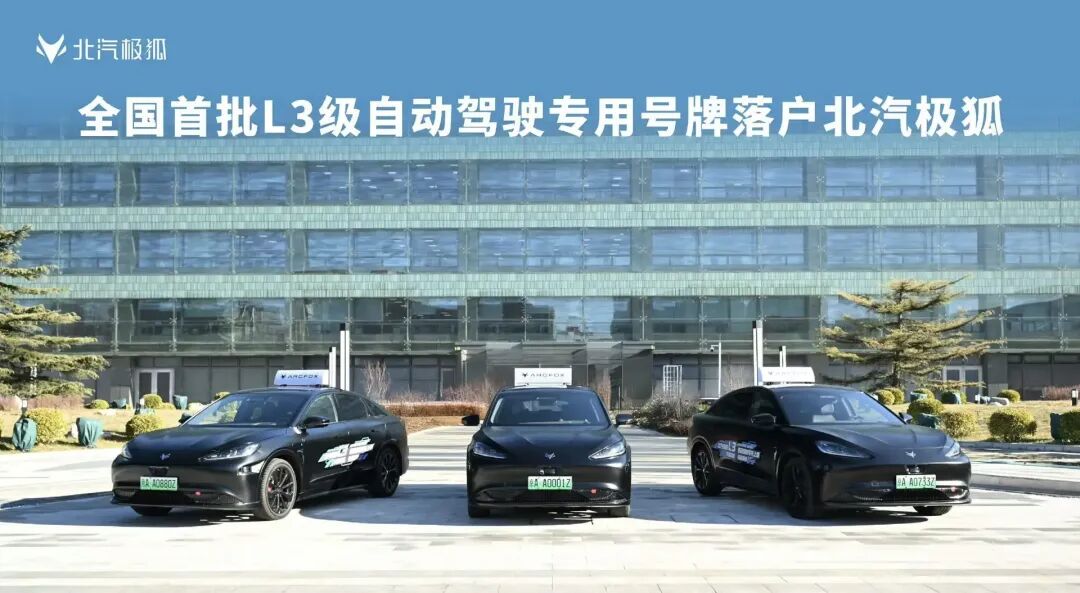
Image source: ARCFOX's official account
Globally, Mercedes - Benz is the closest to the consumer market with L3, but its attitude has also wavered recently. In January this year, Mercedes - Benz was reported to have postponed its L3 system promotion plan. Its software head, Magnus Östberg, later responded that the certification process of the relevant system is complex and costly, and the current market demand has not met expectations, making it difficult to support this investment.
Public information shows that the optional installation price of this system in Germany exceeds 40,000 RMB, and in the United States, it uses an annual - fee subscription model, with a cost of about 17,400 RMB, which is twice that of the L2+ system. At the same time, its usage scenario is severely restricted, with strict requirements for weather, lighting, road - sign clarity, and operating range, which also significantly affects consumers' willingness to buy.
Insufficient market demand is also an obstacle for Tesla in promoting FSD (Full Self - Driving). At Tesla's Q3 earnings conference last year, Tesla revealed that the optional installation rate of FSD was 12%, far lower than expected. On January 14th, Elon Musk tweeted that the "one - time purchase" option for FSD will stop selling after February 14th, and from then on, FSD will only be available for monthly subscription. This practice is generally considered to be reducing the experience cost of FSD to force an increase in the penetration rate.
Can "mass - produced L3 vehicles" really be realized in 2026?
"Realize mass - produced L3 - level autonomous driving vehicles in 2026" has become a high - frequency statement in the plans of many automakers such as GAC, Chery, and Hongmeng Zhixing. Many industry insiders even believe that 2026 will be the first year of L3 mass production. However, similar statements also appeared in 2025, 2024, and even earlier, and there is a huge room for interpretation of this statement itself.
What exactly does "mass - produced and on - board" mean? Is it that a small number of models are approved for sales after passing the access test, or only hardware with L3 capabilities is pre - installed, and the functions are opened after the approval is completed? Or is it that after a certain system passes the test, it is generalized as "the whole series has L3 capabilities"? There is no unified standard for the meaning of these statements. A person in charge of intelligent driving R & D at an OEM told "Power Plant" that there is an objective information gap between the R & D team and the external publicity.
Many intelligent driving R & D personnel from OEMs also frankly told "Power Plant" that the current technical level has not yet reached the L3 or L4 standards, and the technical route is not clear. Even the models that have obtained L3 access permits in terms of regulations have not met the technical requirements in their eyes. L3 seems to be within reach, but it is still far from ordinary consumers.
But one thing is certain: whether promoting L3 or going straight to L4, the end - goal is to achieve driverless driving. The business logic of automobiles is undergoing transformation, and there is no turning back for smart cars.
Yi Qiang pointed out to "Power Plant" that in the era of fuel - powered cars, the products of automakers were basically finalized after SOP (Start of Production), and the profit model was relatively clear. In the era of smart cars, SOP is only the end of hardware design, and software and functions need continuous investment and iteration throughout the entire life cycle.
This change breaks the traditional profit balance point. The more vehicles are sold and the longer they stay in the market, the higher the subsequent costs will be. Therefore, automakers increasingly need to obtain corresponding returns from users. Against this background, autonomous driving is generally regarded as the field most likely to achieve a paid closed - loop. But before the technology significantly exceeds users' expectations, consumers will not easily pay for immature functions.
This game still needs time.
This article is from the WeChat official account "Power Plant", author: Zhai Fangxue. Republished by 36Kr with permission.