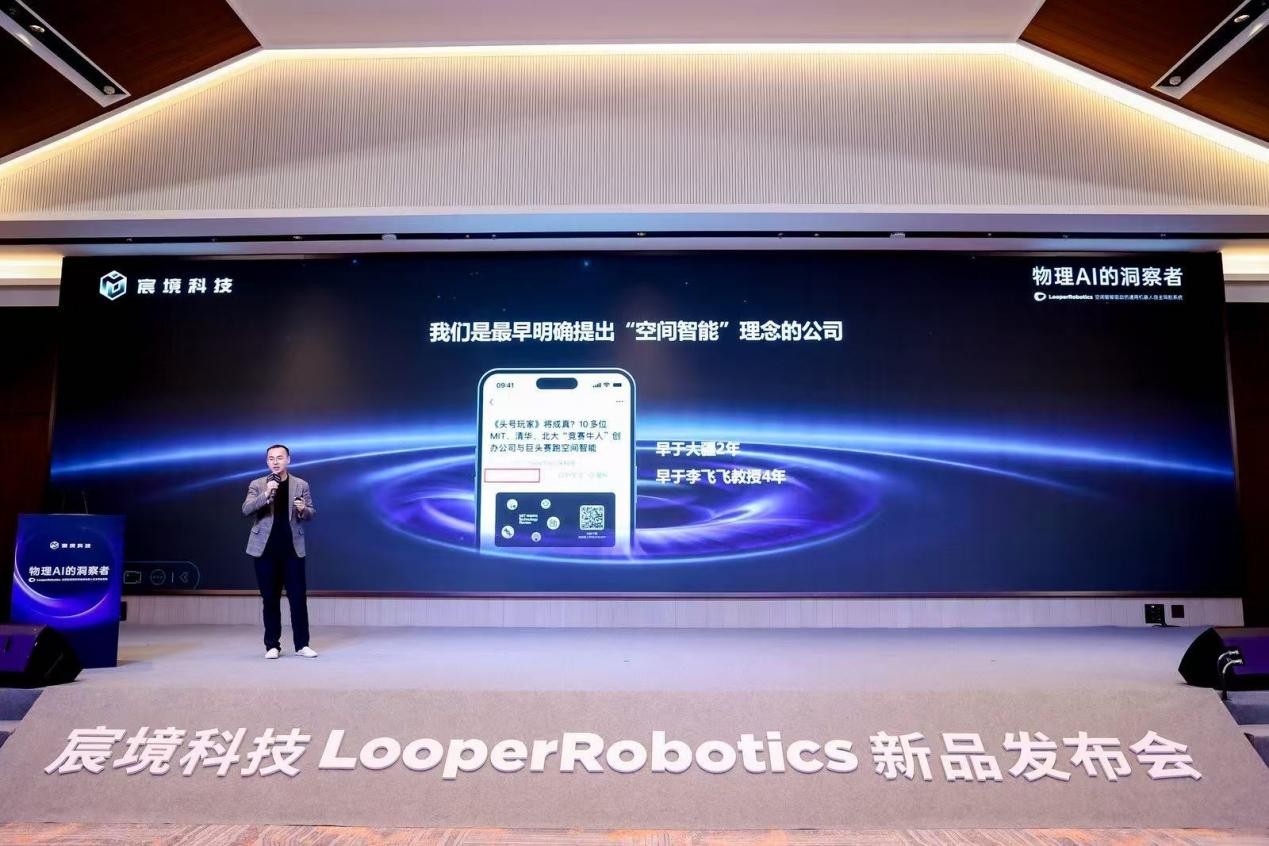
Cogint Technology grandly unveils its new embodied intelligence brand and full-stack technology matrix, breaking through the technological boundaries of spatial intelligence.
This launch covers the Insight fully autonomous spatial intelligent camera, the TinyNav high-performance navigation algorithm library, and the RoboSpatial spatial editing toolchain, marking important breakthroughs in the fields of core perception hardware, underlying algorithms and application toolchains for embodied intelligence, and providing solid support for promoting robots to become the physical task infrastructure following automobiles and smartphones.
I. Define the "Spatial Intelligence" Foundation of Robots for the Complex Physical World
At present, artificial intelligence is accelerating its expansion from the digital world to the physical world. As a typical representative of physical AI, embodied intelligence is a bridge connecting digital and physical entities, and also a key driver to empower the transformation and upgrading of the manufacturing industry. However, how to enable robots to have high-precision perception and decision-making capabilities in the complex and volatile real physical environment and realize large-scale implementation from laboratories to workshops and households remains a common challenge facing the whole industry.
The "LooperRobotics" brand system released by QD Technology this time aims to create a standardized perception base driving general-purpose robots through integrated independent innovation of software and hardware.
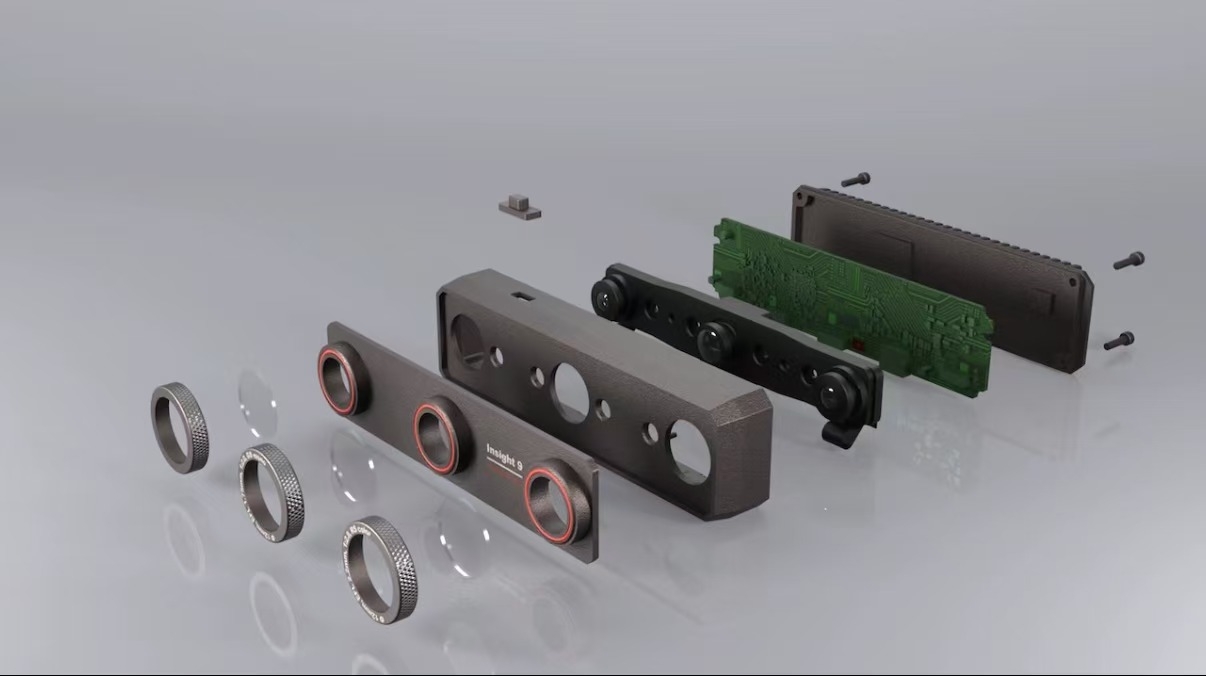
The Insight fully autonomous spatial intelligent camera launched at the conference is a major highlight of this release.
As the core data entry of embodied intelligence, the Insight fully autonomous spatial intelligent camera has reshaped the perception boundary of the industry with technological leaps in four dimensions:
First, closed-loop end-side computing power: Built-in 10TOPS NPU computing power, which realizes the collaboration of SLAM algorithm and AI binocular ranging on the camera side, ensuring the data processing efficiency at the perception source.
Second, full-domain longitudinal field of view: Adopting a 188° ultra-wide-angle lens and a longitudinal enhanced layout to eliminate perception blind areas and realize panoramic coverage of information.
Third, millisecond-level real-time response: Relying on the edge computing architecture, AI reasoning runs at the millisecond level, endowing the robot with fast obstacle avoidance reaction similar to biological instinct.
Fourth, industrial-level environmental robustness: It has 24g shock resistance and strong light suppression, which ensures the pose output accuracy of the robot under extreme working conditions such as bumpy roads and complex light conditions.
This high-performance, low-power integrated solution provides a standardized perception source for embodied intelligence.
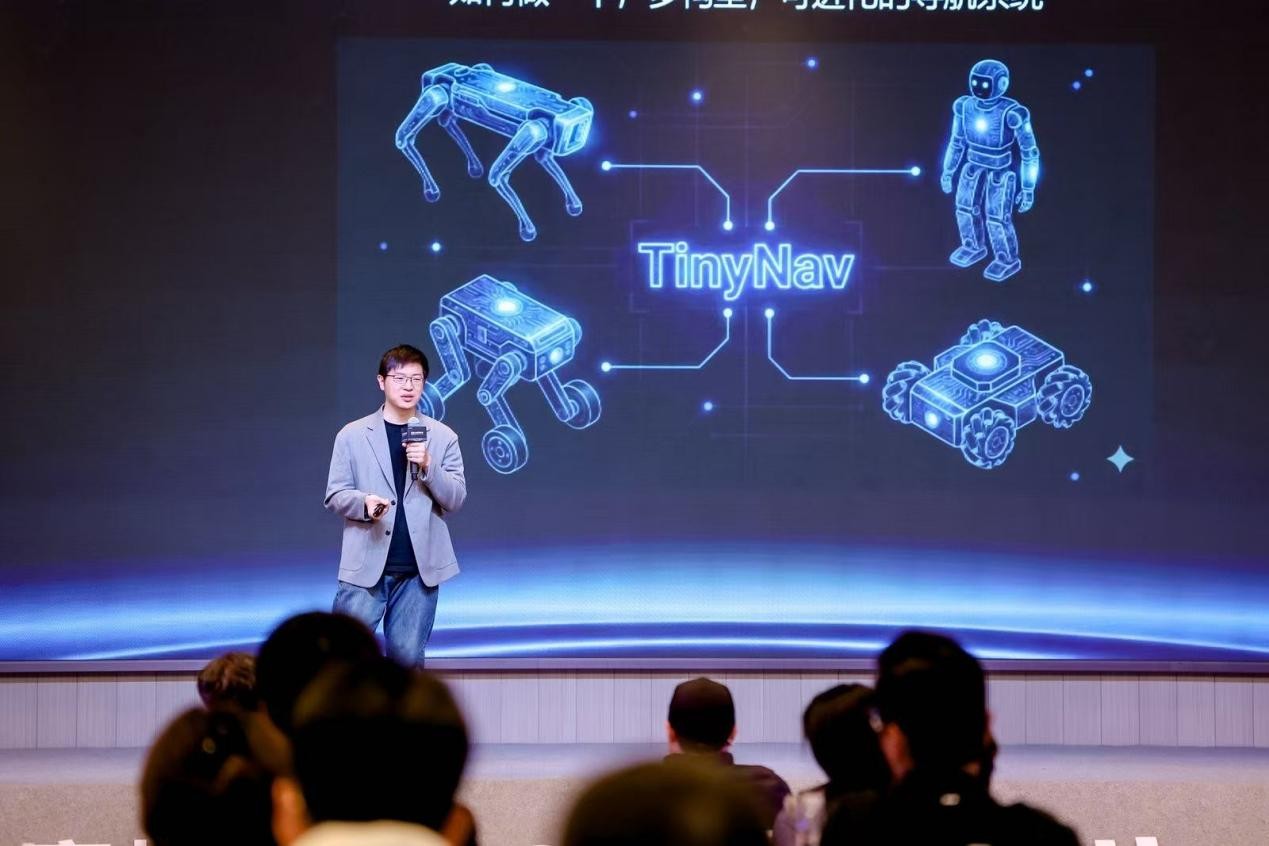
As the "navigation soul" of Looper Robotics, TinyNav endows robots with robust local perception and autonomous positioning capabilities, supports safe exploration, real-time mapping and long-term memory management in unknown environments, and ensures the continuous and stable operation of robots under unsupervised conditions. Its core technology lies in a generative world model for robot training, which can generate unlimited high-fidelity synthetic data with a small amount of real scene data, fundamentally improving the generalization and robustness of the robot decision-making system.
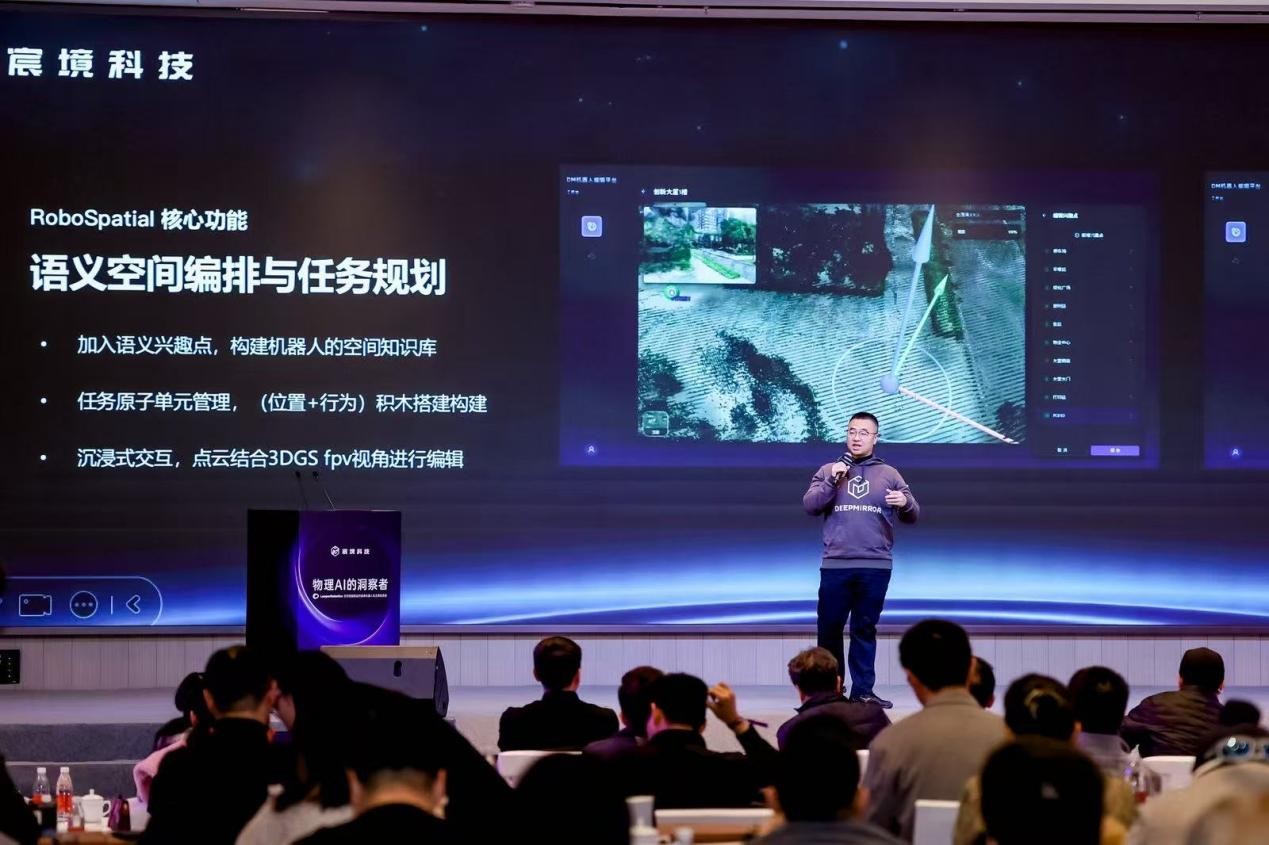
The RoboSpatial spatial perception software platform has extremely strong software and hardware compatibility. Through modular design, it creates an out-of-the-box software and hardware integrated solution, which enables robot manufacturers to skip the complex underlying development links and realize rapid empowerment of core capabilities. This innovation not only fundamentally solves the traditional industry problems of high development threshold, long cycle and difficult adaptation for robots, but also realizes structured storage and intelligent call of environmental information by building a exclusive "spatial knowledge base" for robots.
II. Innovative "Spatial as a Service" Model Demonstrates Broad Application Potential
Hu Wen, Co-founder and CEO of Context Technology, said that under the framework of physical AI, intelligent agents need to have the ability to reconstruct the physical world at an extremely high dimension. Focusing on this demand, Context Technology has built a technical closed loop with Insight camera as the perception entry, RoboSpatial platform as the space-time base, and TinyNav engine as the cognitive core, and put forward the new concept of Spatial AI as Service. Through software and hardware coupling, this matrix transforms fragmented physical signals into structured spatial intelligence, endowing robots with "spatial intuition" to understand physical logic.
If automobiles are regarded as mobile infrastructure and smartphones as information infrastructure, robots are expected to become the "physical task infrastructure" in the future. The integrated "spatial intuition" solution and the innovative "Spatial as a Service" model of Context Technology will provide standardized infrastructure support for the upstream and downstream of the industrial chain.
At the press conference, Context Technology demonstrated the in-depth cooperation achievements with leading enterprises in the industry such as Unitree Robotics and Dobot Robot. After the humanoid robot and quadruped robot are equipped with the full-stack spatial intelligence solution, they show excellent autonomous navigation and interaction capabilities, which verifies the broad application potential of this technology in the fields of industrial inspection, logistics distribution and public services.
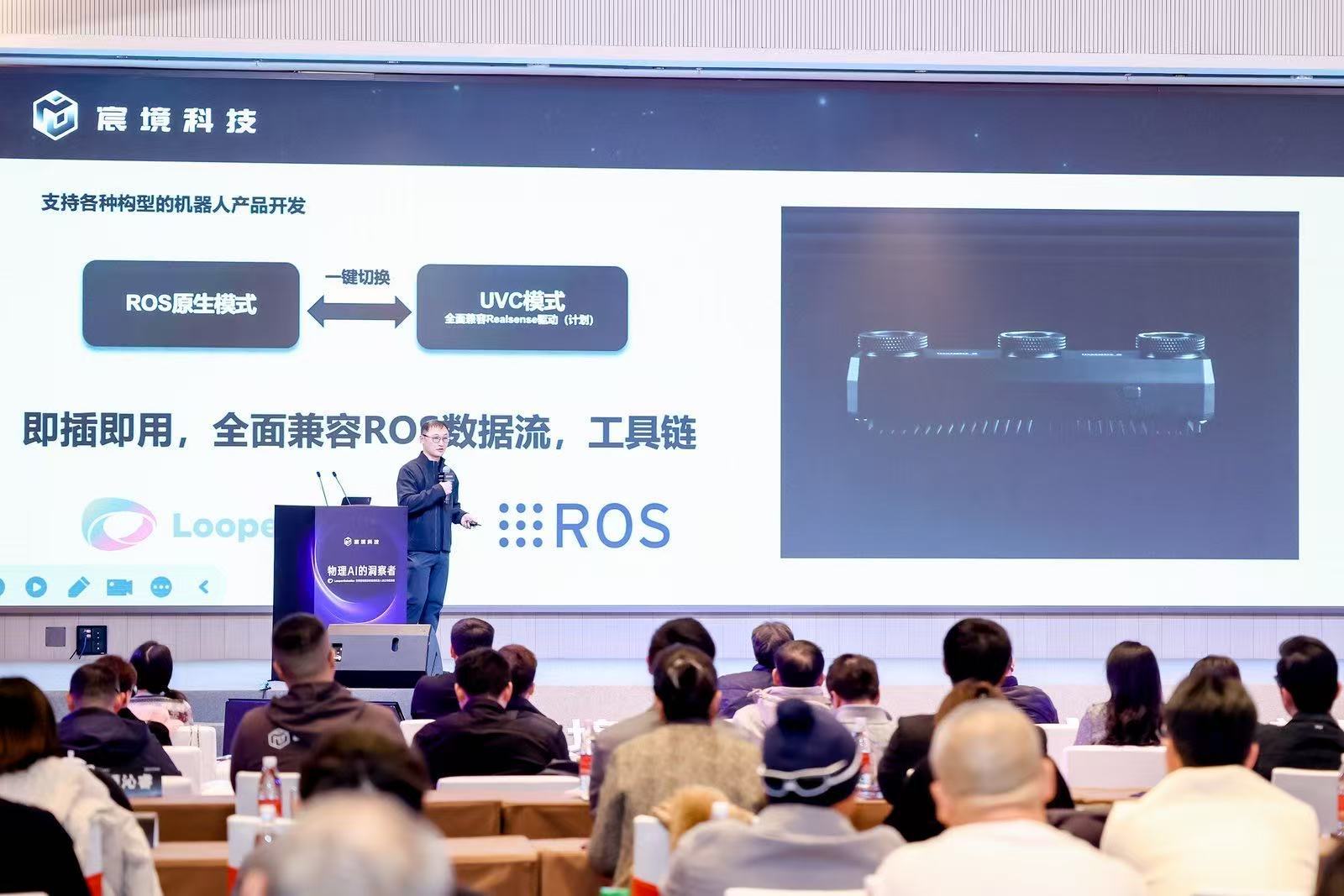
The release of this full-stack solution not only fills the technical gaps in related fields, but also reflects the active efforts of Chinese technology enterprises in promoting collaborative innovation of the industrial chain.
The matrix products launched by Context Technology this time solve the three core pain points of "clear perception, smooth movement and easy operation", which is expected to promote embodied intelligence to be rapidly integrated into the real economy and become an important force driving the digital and intelligent transformation of economy and society.
You can learn more about the product information of the press conference through the official website:
LooperRobotics official website: https://www.looper-robotics.com
TinyNav high-performance navigation algorithm library: https://github.com/UniflexAI/tinynav