The more cars are sold, the less money is earned.
In 2025, the Chinese automobile market seemed to be advancing by leaps and bounds. According to the wholesale data of narrow - sense passenger cars from the China Passenger Car Association (CPCA), the total annual automobile sales reached 29.554 million units, a year - on - year increase of 8.8%. Another set of data shows that the cumulative annual sales of independent automakers reached 20.502 million units, a staggering year - on - year increase of 16.6%, and their market share soared from 64.7% in 2024 to 69.5%.
But to be honest, for everyone involved in the industry, after being battered by rounds of price wars and public opinion battles, who can really greet the future with a smile?
As expected, under the strong influence of policies, the market atmosphere in the first month of the year was bound to be pessimistic. The decline in sales data was due to the wavering of the automobile consumer market. Moreover, it meant that the entire industry was increasingly feeling the pressure in "selling cars" and was filled with survival anxiety about the uncertainty of the future.
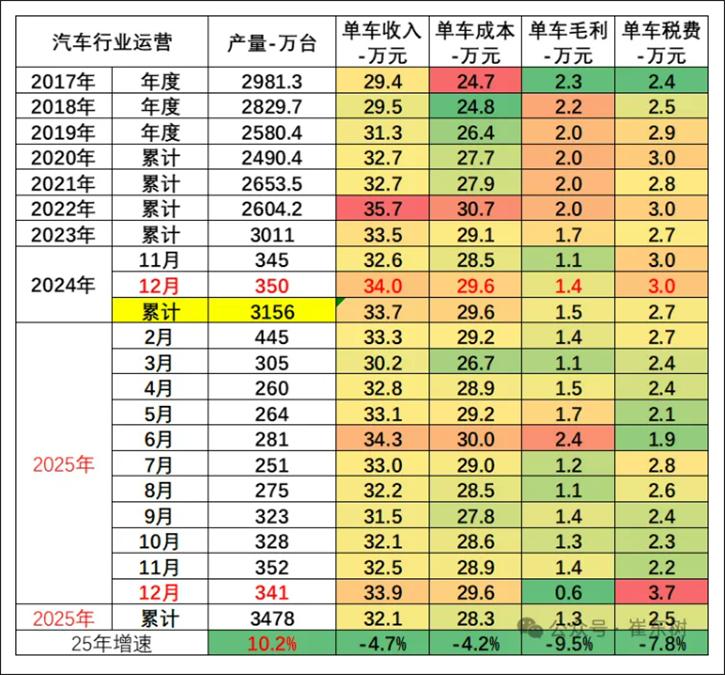
Currently, when CPCA Secretary - General Cui Dongshu pointed out that the industry's sales profit margin from January to December 2025 dropped to 4.1%, hitting a record low. Among them, the profit margin of 1.8% in December also hit a recent low, down 2.6 percentage points month - on - month and 2.3 percentage points year - on - year.
The concerns about the current development of the industry were almost openly put on the table.
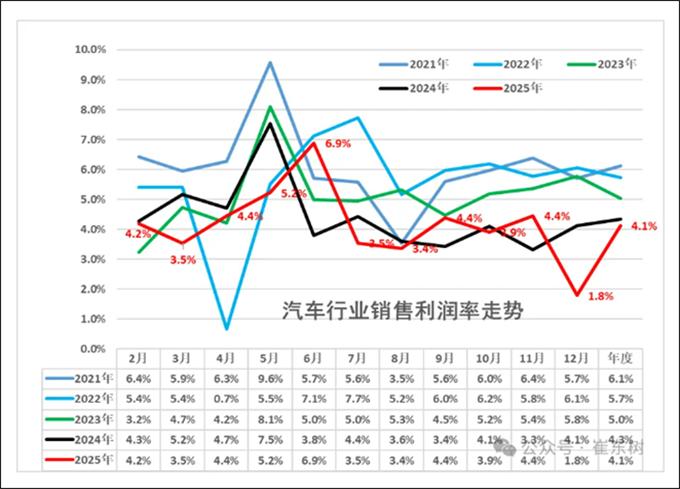
Previously, we had heard more than once the sighs from various enterprises about the market prospects. Now it seems that no matter how we try to gloss over the future development of the automobile industry, the reality must be faced. With such a low profit margin, next, automakers are not just talking about learning to shift from "price - competition" to "value - competition" for industry self - rescue. They really need to find ways to get the industry "healthy" back on track.
In recent years, the competition in the automobile industry has long been white - hot. We have witnessed it all, from initially relying on a large number of models to fill niche markets and create profit points, to launching an all - out price war to crush competitors, and then to sacrificing profits to offer high - end configurations and implement technology popularization.
It's just that this time, when we truly see the fact that the industry's profit margin has hit a new low, we believe that the sense of bewilderment about the future is too strong.
01
The Cruel Reality Can't Be Ignored by Anyone
The industry generally believes that the continuous decline in corporate profit margins is not caused by a single factor. Instead, it is the result of the combined effects of multiple pressures such as rigid cost constraints, intense market competition, imbalanced industrial chain distribution, and changes in the macro - environment. In the context of the domestic automobile market in 2025, it is simply unrealistic to make a fortune just by selling cars.
Even so, many people need a new solution to eliminate the shackles that have been affecting the development of the entire industry.
Thanks to the influence of the new energy industry on the global automobile industry, in the past two years, restricted by the upstream raw materials, the Chinese automobile market, on the one hand, has forced more and more foreign - funded enterprises out of China with the help of the new energy industry. On the other hand, it has always been seeking a balance between profitability and sales volume.
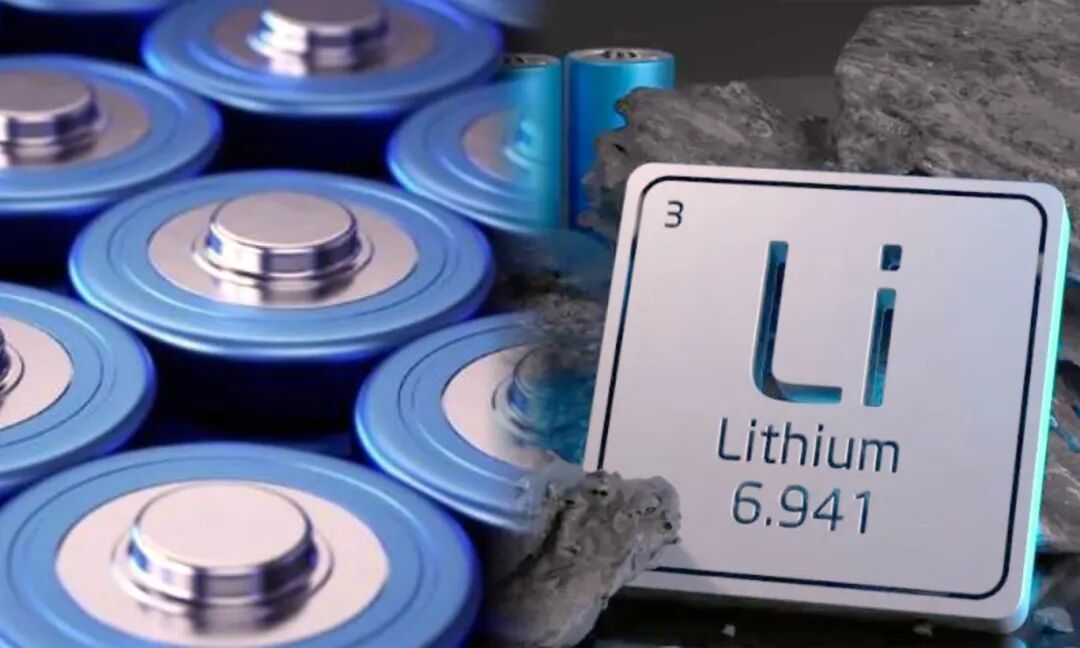
For example, in previous years, due to the soaring price of lithium ore, the side - effects of the sharp increase in automakers' production costs were quite obvious.
Although the cost of battery raw materials has dropped significantly last year, UBS pointed out in its latest research report that the sharp rise in the prices of commodities including lithium, copper, and aluminum, as well as storage chips, may erode the profit margins of Chinese automakers again. When new technologies compete for limited resources, the traditional economic balance of raw material procurement, parts supply, and vehicle assembly urgently needs a fundamental reconstruction.
Moreover, since the supply of battery cells is in the hands of leading suppliers, it is still unrealistic for automakers to cope with industry involution by reducing material procurement costs.
If we add the continuous rise of rigid costs such as labor, R & D, and logistics, it will further compress the profit buffer space of enterprises, creating a two - way squeeze situation of "difficult to reduce upstream costs and difficult to control downstream costs".
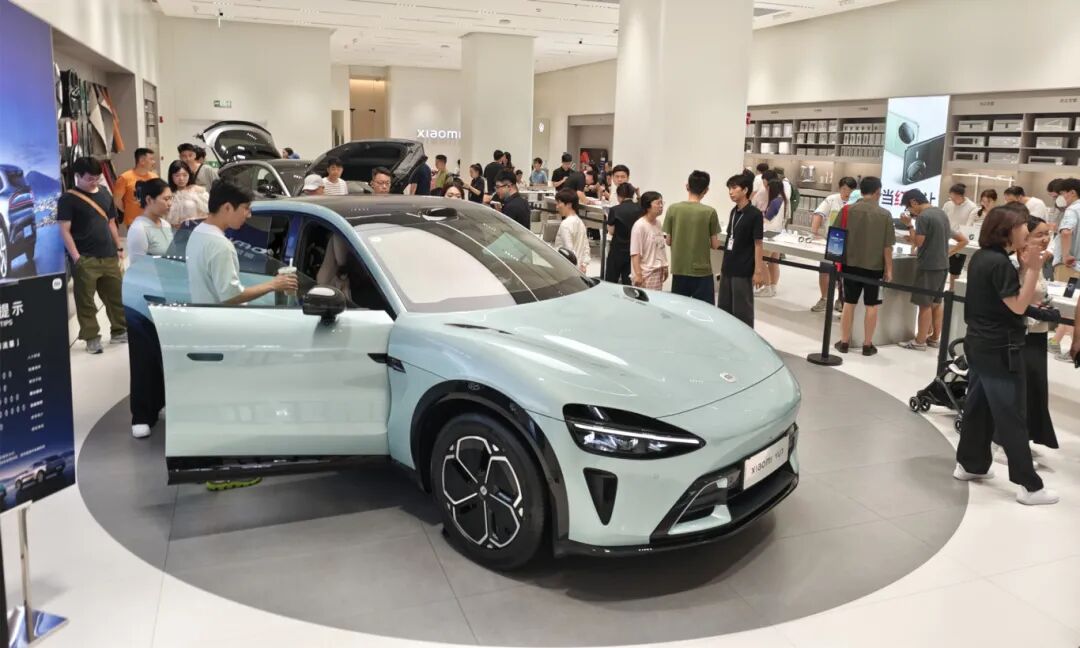
Since the beginning of last year, when several leading independent automakers successively launched price wars, the market structure has become even more severe. Under the influence of the scale effect, these enterprises' attempt to gain market share by sacrificing a part of their profits does not seem to violate the logic of industrial competition. However, once this move is implemented, for some small - scale automakers, the blow is basically devastating.
As the saying goes, "Nature selects the fittest to survive." Competition has always been cruel, and no one is willing to give up the "opportunity" in front of them. In the context of a less - than - ideal economic environment, those who can win people's hearts with their capabilities and relieve difficulties with financial strength will be able to dominate the Chinese automobile market.
It's a pity that when the bottom - hitting industry profit margin reflects that the industrial ecosystem is in a "sub - healthy" state, the view that "there are no winners in a price war" has become an industry consensus. The side - effects of such intense competition are spreading along the industrial chain, affecting every link from suppliers to dealers.
There's no need to elaborate on the survival problems of the supply chain. How many small and medium - sized suppliers have gone bankrupt due to broken capital chains during the price war has almost become daily news in the automobile industry. To survive, the tug - of - war between suppliers and automakers over supply prices is often put in the spotlight of public opinion.
Similarly, even without the data showing that nearly 1,500 4S stores closed in 2025 and only 27.5% of 4S stores achieved their sales targets. Or the fact that some dealers went bankrupt at the beginning of 2026, involving more than 180 4S stores across the country. As long as we take the time to visit offline stores, we can clearly see the helplessness on the faces of dealers, which is far more obvious than before.
The "price war" sweeping the entire industry has also led to a serious inversion between purchase and sales prices in various channels. The more cars dealers sell, the more they lose. Some automakers sell new cars in bulk through large - customer channels to boost sales volume. Dealers register new cars in stock in advance to meet the automakers' assessment requirements and then resell them as used cars to recover funds, giving rise to chaos such as "reselling zero - kilometer used cars".
There are numerous cases where dealers either downsize to cut costs and improve efficiency or even close their stores overnight and cancel their business registrations.
02
The Record - Low Profit Margin Serves as a Wake - up Call for the Entire Industry
Looking back at history, perhaps the present is the best era for the Chinese automobile industry. The fact that the development trend of the global automobile industry is shifting from the Western camp to the Eastern power indicates that Chinese automobiles, once insignificant players in the industry, have now firmly stood at the center of the world stage.
However, when it comes to the essence of development, we must also admit that the Chinese automobile industry has never been so contradictory. In contrast to the prosperous production and sales, technological breakthroughs, and soaring exports, there is a continuous drama of falling profit margins and enterprises' complaints.
Of course, from the perspective of most consumers, the health of the industrial chain is not as important as the continuous price cuts when buying a car. But anyone who understands a little about business operation logic knows that no enterprise can improve user experience in a state of continuous low income. Problems are bound to arise after a long - term inefficient operation.
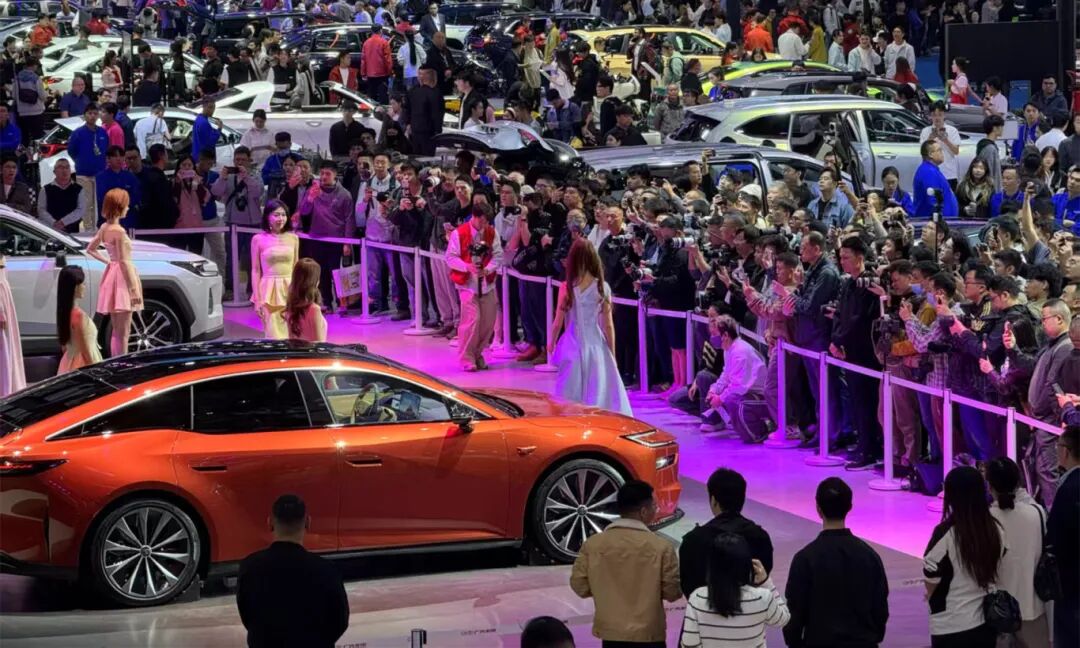
Meanwhile, the "back - stabbing" phenomenon caused by rapid product iteration and price fluctuations, which was rare in the fuel - vehicle era, has now become the "main culprit" on the list of new - energy vehicle complaints, accounting for more than half of the total industry complaints. The frequent price cuts have also led to a continuous decline in consumer desire.
With such a volatile market, how will the Chinese automobile market develop in the future?
Thankfully, from the State Council executive meeting on July 16 last year clearly proposing to "strengthen cost investigations and price monitoring" for new - energy vehicles, to relevant departments summoning representatives of multiple automakers for talks, and then to gradually taking practical actions, the state has finally stepped in to ensure the orderly development of the automobile industry.
On December 12, the State Administration for Market Regulation of China issued the "Guidelines for Compliance of Pricing Behaviors in the Automobile Industry (Draft for Comment)", aiming to guide automobile production and sales enterprises to strengthen price compliance construction and promote high - quality development of the industry by standardizing pricing and sales behaviors. The draft clearly states that automobile sales must be clearly priced, and false promotions such as "limited - time price cuts" and "clearance prices" are not allowed.
After the release of the draft, on the one hand, many automakers said they would promise to strictly implement the requirements of standardizing price competition behaviors and resolutely put an end to any form of price fraud and unfair competition.
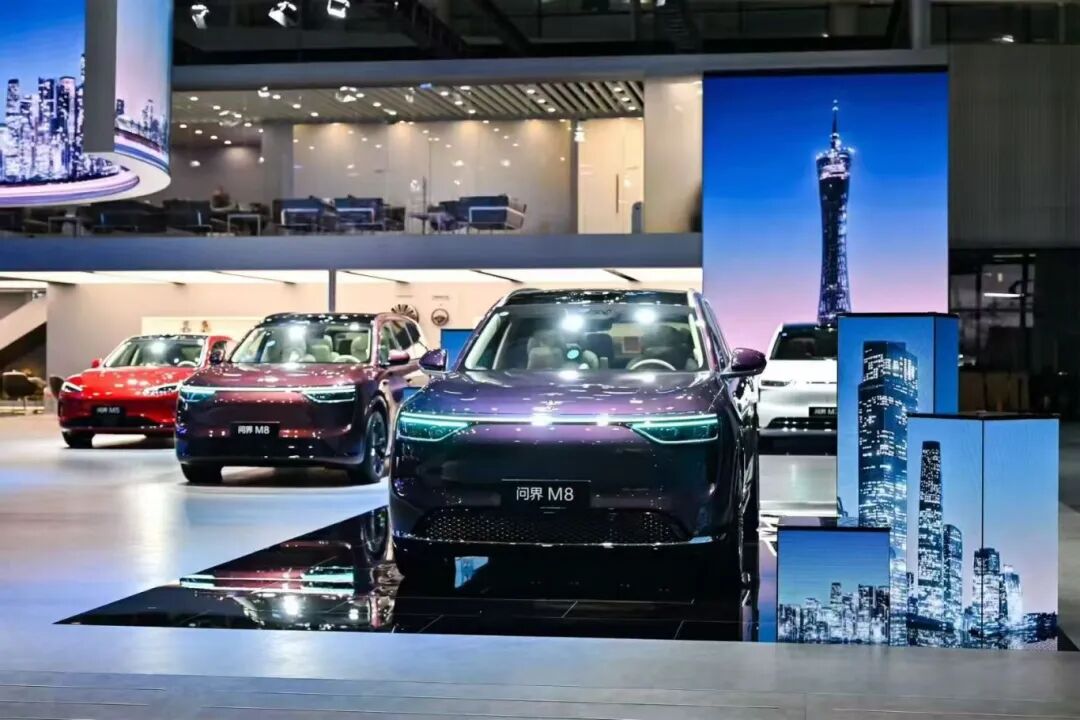
Cui Dongshu, the secretary - general of the CPCA, also put forward new expectations. He hopes that the Chinese automobile industry can promote the shift of competition from "price - competition" to "technology - competition, service - competition, and value - competition" by curbing disorderly price wars, standardizing production - sales coordination, and platform governance, so as to consolidate a healthy ecosystem of high - quality development and "high - quality, high - price".
As we entered 2026, the record - low profit margin was quite eye - catching. Through market performance, we already know that this year's market will pose another thorny survival challenge to everyone under the combined influence of multiple factors.
Indeed, in the current situation, future competition will no longer depend on who can run faster, but on who can walk more steadily in terms of system capabilities such as R & D platformization, cost control, organizational coordination, and overseas expansion.
With the in - depth implementation of the state's "anti - involution" work and the implementation of policies such as equal treatment for fuel and electric vehicles and reasonable subsidies, we sincerely hope that the Chinese automobile industry can find a comfortable balance between "excessive scale" and "meager profits".
For automakers, they need to recognize the significance of a healthy automobile industry for consumers and the national strategy.
This article is from the WeChat official account "Automobile Commune" (ID: iAUTO2010), written by Cao Jiadong, and is published by 36Kr with authorization.