AI toy extravaganza: The "explosive" narrative of big tech companies' ecosystems
In the toy factories in Rongcheng County, Hebei Province, the busiest people nowadays are not the sewing workers, but the technicians who debug intelligent modules. According to a report by CCTV.com in December 2025, more than a dozen local enterprises have transformed to research and develop AI toys.
At the CES 2026 in Las Vegas, the AI virtual pet Sweekar, similar to "Tamagotchi", was surrounded by audiences.
It responds to every sentence with facial expressions.
A more vivid scene comes from a report in Beijing Daily in the same month. A 6 - year - old child hugged the "AI Ultraman" and cheered excitedly. The Huawei co - branded "Smart Dummy" was sold out in 10 seconds after its release. The market enthusiasm is obvious to the naked eye, but a sharp contrast also emerges. In this AI toy craze pursued by the whole nation and the technological narrative, why can't we see more big tech companies?
01
AI toys are not essentially toys
In the past, when buying toys, the reasons for purchase were fun, appearance, and feel. Now, when buying AI toys, people aim for usability. They expect it to chat, accompany people, teach children, and even serve as an emotional dustbin. Although both are called toys, the consumption motives have changed. The above - mentioned report by CCTV.com describes AI toys as a product form that can chat, learn, and have memory. It can be used in early childhood education and also in diverse scenarios.
This usability is not simply stuffing technology into a doll's body, but making the toy a stepping - stone for AI to enter family and other scenarios. Consumers are not buying a doll shell, but an intelligent interactive tool that can chat and play with them. According to media information from Tianyancha and a financial focus article on Xinhua Net in May 2025, AI toys are regarded as one of the scenarios for the implementation of large models.
If we only understand AI toys as smarter toys, we may underestimate their transformative power on the toy industry. In the past, toy factories mainly competed in three aspects: manufacturing and delivery capabilities, channel and shelf - placement capabilities, and IP and content supply capabilities. After the introduction of AI, there is a more difficult task: how to make people always willing to play with it without getting bored.

▲Picture: AI virtual pet Sweekar
Disposable dolls are easy to make people get tired of them and pursue new ones, but an interactive tool that can chat and understand will make people willing to open it and form a dependency. It is this way of playing, where people always want to talk to it from time to time, that makes AI toys more like having a long - term chatting companion rather than a commodity on the counter.
The changes on the demand side are also worthy of serious attention. Toys no longer only serve children's play, but also family relationships. Parents are willing to pay for their children's AI toys, often hoping that their children can be responded to, guided, and accompanied, and their emotions can be soothed. A young person may buy an AI plush toy not because of a revival of childlike innocence, but because they need a listener who will not interrupt or find it troublesome under pressure.
According to public information from Tianyancha and data from the Ministry of Industry and Information Technology, the market scale of AI toys in China reached 24.6 billion yuan in 2024 and is expected to increase to 29 billion yuan in 2025. The rapid growth of the market is essentially because people's minds when buying toys have changed, from just for a moment of fun to long - term companionship.
AI toys borrow the amiable appearance of toys and the family scenario, undertake AI's dialogue ability, content supply, voice, and character settings, and then package all these into a purchasable item. The toy is just a carrier, and what is really consumed is the interactive feeling and the ready - to - respond companionship.
02
Toys come first, big tech companies come later
In the intuitive perception of most consumers, big tech companies are not the main players in AI toys and are often hidden in the background. This is the position of big tech companies at the industry level, that is, they often appear more in back - end empowerment. This is not that big tech companies are "hiding" back, but a smarter division of labor for the sustainable development of the AI toy industry.
The hardware manufacturing in the toy industry involves supply chain management, materials and processes, quality control and delivery, offline channels and shelf - placement rhythm, IP authorization and co - brand cooperation. Any one of these requires long - term running - in. What big tech companies are better at are large - model capabilities, voice recognition, content supply, computing power, and platform - based capabilities and tool output. Once big tech companies play a core - level role in the AI toy industry, they can help toy factories produce AI toys that really sell well and make consumers inseparable from them.
According to public media information from Tianyancha and data from Statista, in the next decade, the global AI toy market will continue to rise at a compound annual growth rate of about 14% - 16%, and it is expected to exceed 60 billion US dollars by 2034.
The excitement of AI toys seemingly comes from the chatting doll in front of the counter, but the real power to support its long - term use comes from a cooperation network jointly woven by big tech companies and toy factories. Among them, the manufacturing end is responsible for the touch and delivery, the technology end is responsible for model capabilities and computing power supply, the content end is responsible for the continuous update of content and characters, the channel end is responsible for reaching and operation, and the after - sales end is responsible for solving problems during use.
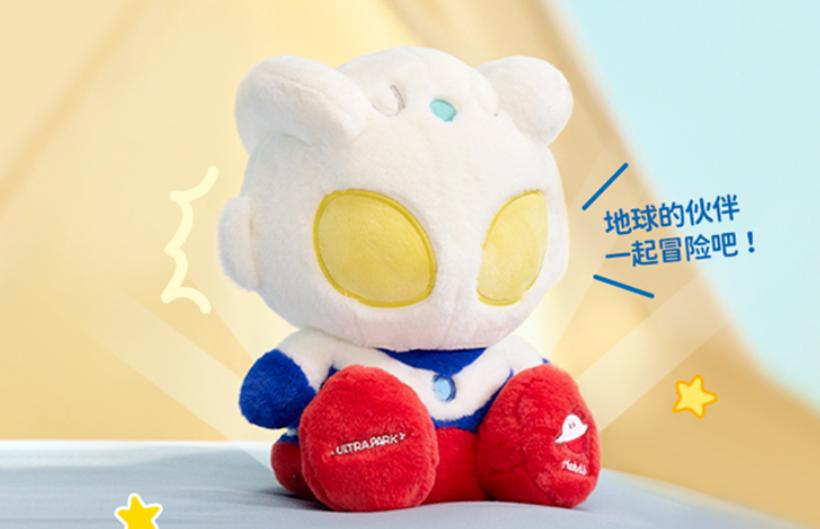
▲Picture: Ultraman AI interactive toy
If any link is loose, the experience of AI toys will return to that of a primitive toy, and it may be difficult to maintain repurchase and word - of - mouth.
The significance of toys coming first comes from the industry's long - term understanding of the basic consumption needs of toys. Toy factories know well that different age groups have different expectations for companionship. Children want stories and imagination, adults want comfort and empathy, and the elderly want chatting companions and reminders. Toy factories also know well that cuteness is not childishness, but a design language that reduces vigilance. If an AI toy looks like a cold electronic device, it will be difficult to enter daily family life.
Toy factories have more mature experience in this aspect than most technology teams.
The significance of big tech companies coming later comes from technological empowerment and the reuse of capabilities. Big tech companies don't have to make every doll themselves. They are more suitable for providing scalable and replicable capability layers, such as voice recognition, dialogue generation, content components, computing power support, and tool combinations. It can be said that without big tech companies and technology, there may be no real and sustainable AI toys.
This also explains why big tech companies are willing to "hide" in the background. Toys are a hardware business. Hardware requires inventory, delivery, and after - sales service. The gross profit elasticity and operational elasticity are often not as good as platform - based services. If big tech companies position themselves as back - end capability providers, they can expand their coverage through multiple brands and categories, and also put the iteration pressure on the technology, software, and content sides, thus responding to market changes more quickly.
In the past, the competition in the toy industry was more like a competition of channels and styles. Now, it is more like a competition of who can provide a more stable companionship experience. Toy factories no longer only compete in appearance, and big tech companies no longer only compete in model parameters. What they compete for together is the certainty of "understanding me" in family and other scenarios, as well as the ecosystem and rules behind the certainty.
03
Ecosystem pattern, rules determine victory or defeat
When the market scale approaches a certain level, if a single enterprise tries to cover the entire chain from hardware to the cloud, and then to content and operation and maintenance alone, the cost and risk will rise simultaneously. Division of labor and cooperation are more in line with the business operation rules of enterprises. The joint creation of big tech companies and industrial belts provides an ecological starting point for the cooperation network.
On June 12, 2025, the 2025 AI Toy Industry Innovation and Development Conference, hosted by Baidu Smart Cloud and the Chenghai District Government, and co - organized by the Chenghai Toy Association and Shifeng Culture, was held. The conference was themed "Cluster for Momentum · AI Breaking Boundaries", bringing together global AI technology manufacturers, well - known IP parties, and upstream and downstream partners in the industrial chain to explore the ecological construction and innovation development path of AI toys and accelerate the transformation and upgrading of traditional toy manufacturing to high - end intelligent manufacturing. Coincidentally, on January 20, 2026, JD.com released the JoyInside plan and promoted the construction of industrial belts to reduce the access threshold through capability supply.
From this perspective, big tech companies are striving to focus their core value on the long - term supply and cooperation efficiency of the full - link capabilities of AI toy technology, using first - class model capabilities and edge - side intelligence to ensure the stability and sustainability of the experience. Once the technology base is continuously supplied, the sales of AI toys in toy factories will increase faster, and the operation of channels will be more certain. The industry will present an ecological effect where big tech companies provide a general base, and multiple brands make differences in appearance and content.
The foundation for ecological expansion is rules. Its function is like a chassis. Only when the chassis is stable can everything be possible. The first dimension of rules determining victory or defeat comes from setting access conditions. Big tech companies in the background can provide their own set of AI toy technology access specifications, such as computing power call quotas, model stability, data retention boundaries, account and permission classification, etc. Which big tech company's set of capabilities a toy factory uses means that company is higher in the ecological position.
Over time, if a large number of AI toy products in the market operate under the same set of standards, channels will be more willing to access the capabilities of this big tech company. Therefore, whoever masters the access ability is more likely to turn their own rules into the common language of the industry.
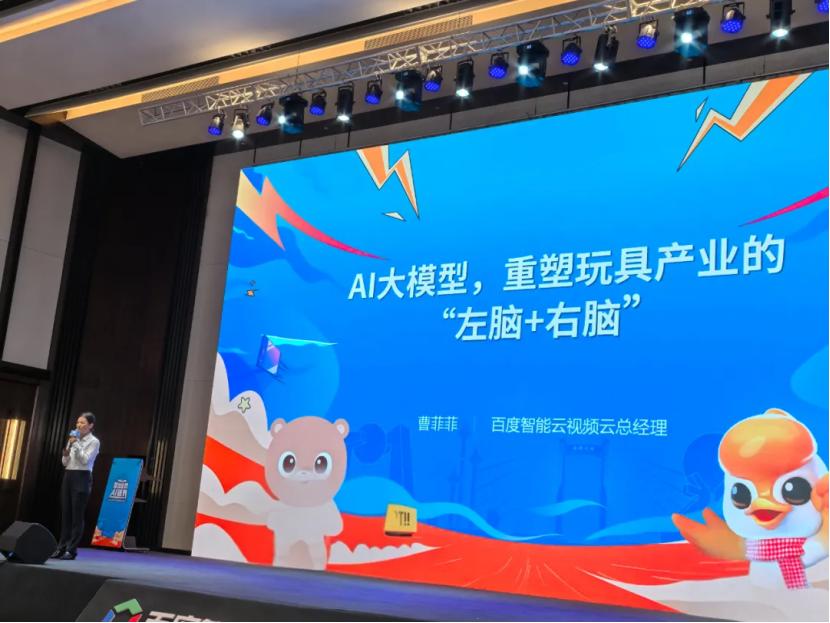
▲Picture source: Shantou Federation of Industry and Commerce (General Chamber of Commerce)
The second dimension comes from who determines the interaction boundaries. The core value of AI toys comes from interaction, and the most likely thing to go wrong is also interaction. Especially in a family environment, an inappropriate answer is enough to make parents turn off the device. Big tech companies create a dialogue mechanism with age - based dialogue strategies, topic whitelists and blacklists, and then output this ability to toy factory partners to prevent the product from going wrong.
For toy factories, this kind of rule - output ability is not just a bonus, but a safety cushion to prevent product out - of - control. The more detailed the rules, the clearer the boundaries, the more stable the experience, and the more consumers will dare to let their children use the product for a long time.
The third dimension of rules comes from how to assume long - term responsibilities. AI toys are not one - time - delivered items, but intelligent products that require continuous service. Therefore, any small problem may be magnified during high - frequency use. Disconnection, delay, false wake - up, inaccurate content, etc., will all wear down the experience. Big tech companies establish a long - term responsibility mechanism based on technological capabilities to ensure that partners operate under the same set of responsibility mechanisms.
When the industry enters the scale stage, channels and consumers are more willing to choose AI toys with clear responsibility chains. And if a big tech company's rules can be directly transformed into a trust threshold, it will be more difficult for competitors to replace long - term resources with similar rules.
After the ecosystem expands, the key to competition no longer stays at the rules themselves, but upgrades to being more trustworthy and controllable.
For example, in the family scenario, the usage boundaries for children are stricter. Parents are more worried about privacy and content and more cautious about compliance risks. At the Personal Information Protection Forum of the 2025 National Cybersecurity Publicity Week held on September 16, 2025, the organizers released achievements such as the "Initiative on Personal Information Protection of Smart Toys".
When AI toys have the ability of continuous dialogue and content generation, rules become the most core part of product competitiveness. The competition among big tech companies in rule - making and promotion will determine whether they can obtain the pass to enter broader application scenarios and sales channels. In this regard, having a more mature security governance level, a more stable privacy protection strategy supply, and more sustainable monitoring, operation, maintenance, and update iteration capabilities are the chips for big tech companies to seize the right to define the future of AI toys.
04
Conclusion
In the beginning of the report in Beijing Daily, a 6 - year - old child hugged the "AI Ultraman" and shouted excitedly, "It really can talk." In an instant, many adults were pulled back to their childhood. Toys are no longer just toys, but more like responsive partners. It doesn't attract people by telling the industry's long - term vision, but retains people by a more down - to - earth thing: being able to talk and accompany for a while.
As this scenario enters more and more families, it is no longer a mystery that big tech companies are willing to stay in the background. The AI toy craze won't maintain its popularity just by the number of new products. It is more like a long - term competition. Only by providing more stable companionship, a smarter "brain", and clearer rules can it be more likely to stay on users' desks and bedsides.
This article is from the WeChat public account "Zero State LT" (ID: LingTai_LT), written by Lin Feixue and edited by Hu Zhanjia. It is published by 36Kr with authorization.