When AI becomes the "arbiter of truth" in the art world, can artificial intelligence uncover the true creators of the greatest paintings in history?
What would the world be like if the "Mona Lisa" hanging in the Louvre was not painted by Leonardo da Vinci? This might sound like a conspiracy theory from a Dan Brown novel, but in the eyes of art lawyer Daniel Novela, it is becoming an imminent reality.
As we enter 2026, AI models have achieved atomic - level precision in identifying microscopic features. It is no longer just a tool for generating images but has become the most rigorous master of authenticity verification.
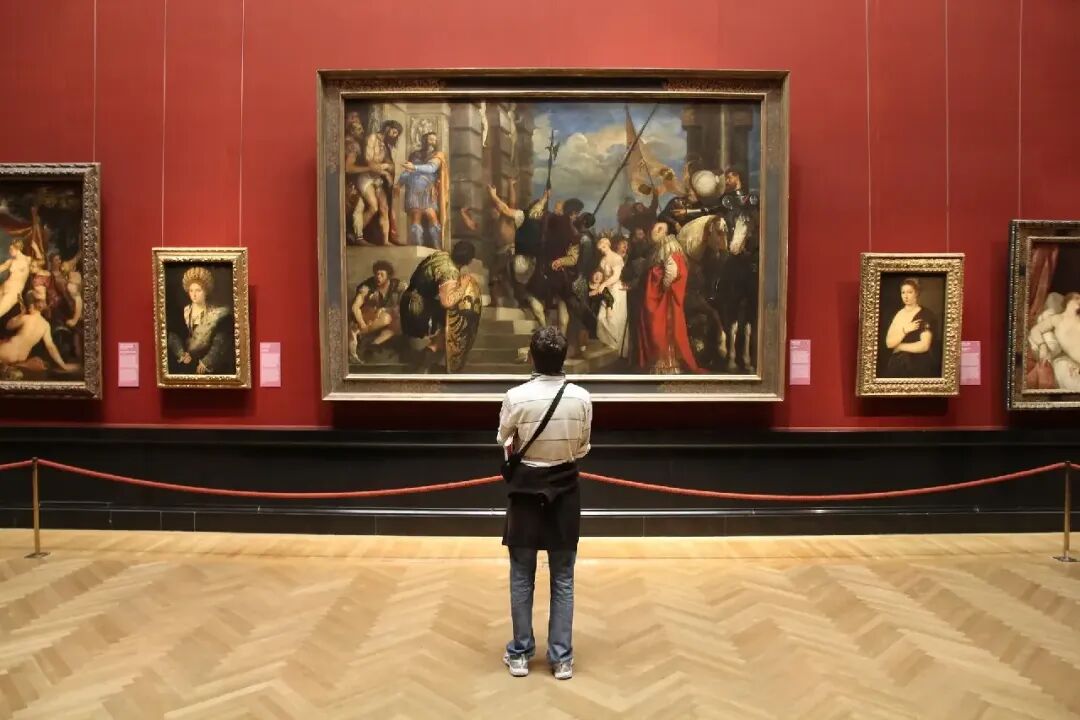
From human gait recognition to microscopic dynamic analysis of artistic brushstrokes, AI is re - examining the art treasures of human civilization in dimensions imperceptible to the human eye.
This article will deeply dissect the underlying logic of the mainstream AI authentication platforms in 2026 and reveal the huge impact of this "authenticity revolution" on the global cultural trust foundation.
The "Da Vinci Code" in the Art World: AI is Rewriting Art History
If you enter the world's top museums and assume that the labels of every masterpiece are absolutely authoritative, Daniel Novela, an art lawyer from Florida, might pour cold water on you.
As an expert specializing in providing acquisition advice and due diligence for important artworks, he believes that we are about to face an unsettling truth: the real creators of many highly - regarded paintings may not be the masters we commonly recognize.
The underlying technical logic of this concern is similar to "gait analysis" in modern criminal investigations. In the field of forensic science, AI can systematically study human movement patterns through machine learning algorithms - from the tiny sway of the pelvis to the bending angle of the knees.
Just as everyone has a unique fingerprint, the dynamic pattern of each person walking on the road can also be translated into precise mathematical equations. This biometric technology can accurately lock in a target in a complex environment without even a retinal scan.
This logic has been seamlessly transferred to the field of art authentication. Novela explains that each brushstroke of an artist carries unforgeable "dynamic features". Just like a suspect's walking posture, every line in a painting shows the artist's speed, strength, hesitation, and even the subtle proportion of paint dilution at that moment.
AI can capture these hidden clues that are difficult for human experts to detect and compare them with the big data of an artist's known authentic works at a high frequency, thereby identifying the "creative DNA" unique to a certain master.
The Authenticity Verification Tools in 2026: Four Mainstream AI Platforms
With the maturity of technology, a number of professional platforms that can give a "verdict" on the authenticity of paintings have emerged in the market in 2026. They each build an air - tight defense line of truth from different technical dimensions:
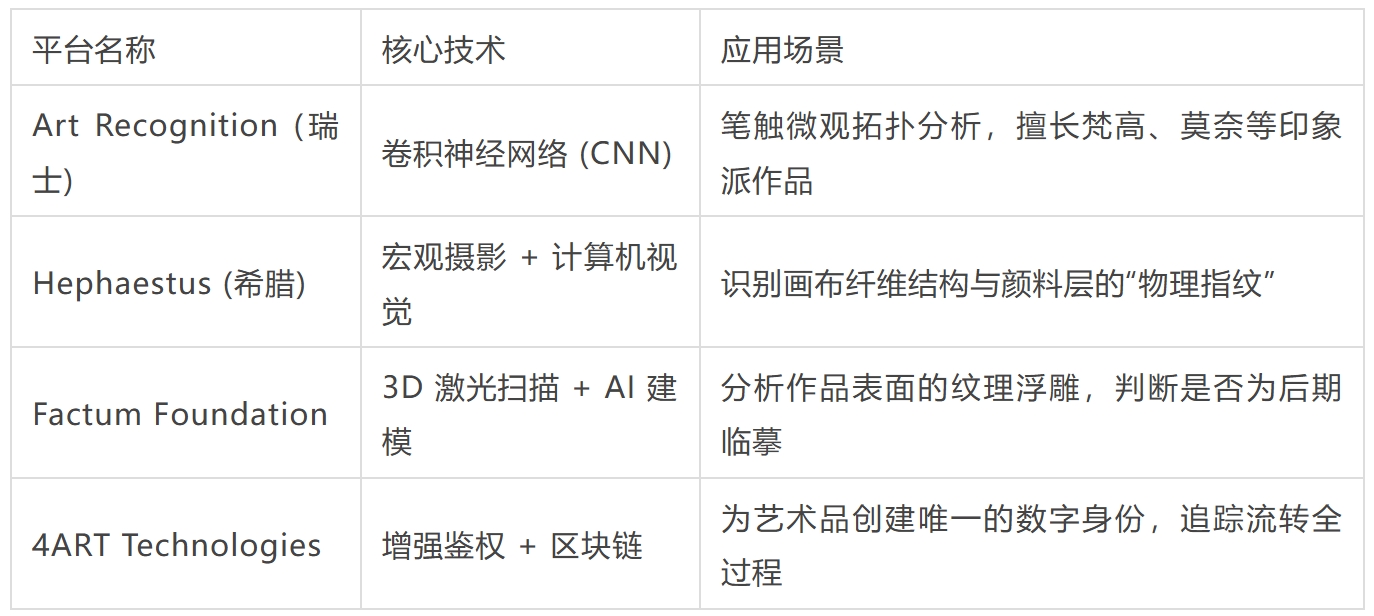
Among them, Art Recognition in Switzerland is currently the industry leader. The platform has trained a deep - learning model with more than one million images of authentic works by top masters. It can not only analyze the direction of brushstrokes but also determine the age of a painting by calculating the direction of cracks after the paint dries.
In a recent test, the platform gave a probability score of > 95% for the authenticity of a controversial Raphael painting, directly affecting the final valuation of the work at Sotheby's.
Factum Foundation has taken a more hardcore approach. They use ultra - high - resolution 3D scanning technology to record every undulation on the surface of a painting. Because even a top - notch forger can imitate the colors but cannot perfectly replicate the unique "textured relief" formed by an artist's muscle memory at the moment of putting the brush on the canvas.
Under the processing of AI, these data will generate a precise "topographic map", making any modern forgery attempts invisible at the microscopic level.
The Collapse of Trust: When "Authentic Works" are No Longer Authentic
The price of truth is often high. Thomas Hoving, the former director of the Metropolitan Museum of Art, once made an astonishing estimate: about 40% of the artworks circulating in the market are fakes.
If the full - scale intervention of AI confirms this speculation and even proves that the treasures of museums are fakes, it will not only cause a huge social shock but may also severely hit the global tourism industry that relies on the museum system. This misjudgment will not just be a public relations crisis; it will shake the foundation of cultural trust in human society.
For the art world, fully accepting AI authentication is undoubtedly a high - stakes gamble. Paintings are not only objects of aesthetic appreciation but also financial assets and national treasures. Once their authenticity is questioned, all chains from the commercial reputation of museums to the validity of sky - high insurance policies will face collapse.
Especially for institutions that rely on charitable donations, once donors find that the "masterpieces" they spent a fortune on and donated are actually fakes, their enthusiasm for donation will quickly dry up.
As Novela said: "These are not just beautiful paintings. Paintings are financial assets and historical records. If AI shows that they are not authentic, everything from the reputation of museums to insurance coverage will be affected."
This impact has even spread to second - hand trading platforms. Through AI analysis, as many as 40 so - called "Monet" and "Renoir" paintings on platforms such as eBay have been confirmed to be very likely fakes, triggering collective anxiety in the art e - commerce industry.
Spiral Evolution: The AI - Driven "Cat - and - Mouse Game"
Despite the controversy ahead, this transformation is ultimately considered a new beginning after a painful period. Resilient museums should not reject AI but should turn it into a standard means of future evaluation.
Human experts will not be replaced but will form a complementary relationship with AI: AI conducts the first - round high - efficiency screening, and then experts conduct in - depth cultural value reviews. This "human - machine collaboration" model may establish unprecedented order in the chaotic art market.
Of course, we must face up to the double - edged effect of AI. As AI becomes more and more proficient in identifying fakes, criminals can also use the same technology to improve their forgery methods.
This has become a "cat - and - mouse game" at the technical level: fraudsters use generative adversarial networks (GANs) to make brushstrokes more realistic, trying to deceive the eyes of AI. In the foreseeable future, the game of artworks will evolve into a confrontation between algorithms.
"Artificial intelligence is a double - edged sword. It can not only identify fraud but may also fuel future fraud activities."
However, no matter how algorithms evolve, the essence of beauty still belongs to humans. AI can recognize patterns, but only humans can truly have a "sense of awe". This aesthetic appreciation from the depths of the soul cannot be forged by any precise algorithm.
After this technological baptism, the authentic works that can withstand the strict tests of AI may emit a more dazzling and real human brilliance.
This article is from the WeChat official account "New Spike x AI", author: Dong Yizhen & Green. It is published by 36Kr with authorization.