With an annual revenue of 1 billion yuan and ranking second globally, has the story of the "Chinese Kindle" faded away?
In June 2023, Amazon Kindle withdrew from the Chinese market, marking the end of an era. However, it also left a huge "vacant area" for domestic players.
On January 16, 2026, Onyx Boox Technology Co., Ltd. (with its brand Onyx Boox) officially submitted a prospectus for listing on the Hong Kong Stock Exchange. As a consumer - grade electronic ink screen manufacturer, it is ready to tell a story of a "Chinese - style Kindle" breaking through in the capital market.
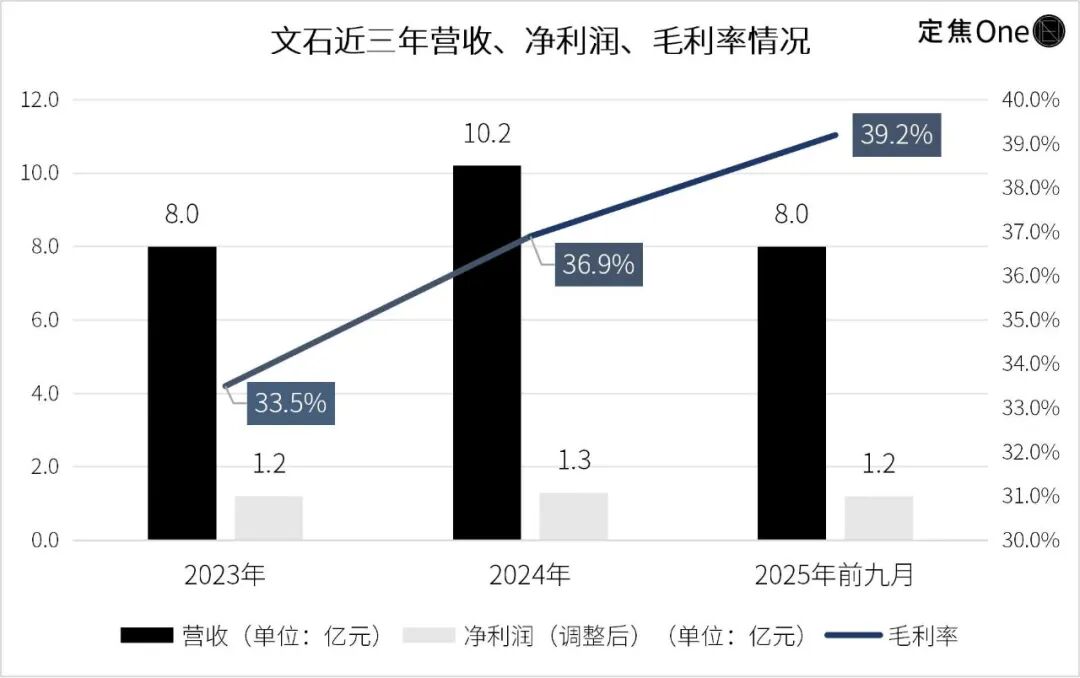
In 2024, Onyx Boox's revenue reached 1.02 billion yuan, a year - on - year increase of 26.6%. More than half of its revenue came from overseas markets, and the overseas revenue increased by as much as 33.8%.
In other words, Onyx Boox captured a part of the market left by Kindle in the domestic market and also competed with established giants in the global market.
Instead of competing head - on with Kindle in "pure reading", it chose to extend its electronic ink screen products to a wider range of usage scenarios. Its products cover sizes from 6 inches to 25.3 inches, and the productivity tablets targeting office use contributed more than half of the revenue. It also increased technology investment and independently developed the BSR ultra - refresh technology, aiming to make the ink screen as smooth as a mobile phone.
However, in terms of profitability, Onyx Boox's profits are shrinking. In the first nine months of 2025, although the revenue increased by 10%, the net profit decreased by 4%.
Where did the money go? According to the prospectus, its sales expenses ratio increased from 9.1% to 13.9%. This shows that in the multi - billion - yuan scuffle after Kindle's departure, Onyx Boox has to continuously invest heavily in the market to seize market share.
Facing the fierce competition from Hanwang, iReader, and iFlytek, as well as the continuous pressure from international giants like Kobo and Sony, for Onyx Boox to evolve from a hardware manufacturer to a global company with brand barriers, it still needs to cross multiple thresholds.
1
At 61, After Three Ventures,
Created the "Chinese - style Kindle"
A company's strategic choices often bear the mark of its founder. When it comes to Onyx Boox, its founder, Tan Yuting, cannot be bypassed. Now 61 years old, she is still fighting on the front line. Her professional background in the Department of Electronic Engineering of Xi'an Jiaotong University has also left a mark on the development of Onyx Boox.
Tan Yuting's resume shows a typical "from hardware to software" technical route:
In 1990, she entered the emerging electronic hardware track and became the general agent for EMC monitors in South China. In 1995, she started her first venture in system integration, specifically providing IT systems for large clients such as government and educational institutions.
In 2005, sensing the budding of the e - reader market, Tan Yuting led a 12 - person R & D team to do outsourcing for international brands, entering this track through OEM. Her second venture allowed her to have close - range contact with how global top players developed products and understand the real pain points of e - readers.
In 2008, she started her third venture and founded Onyx Boox. Different from most domestic brands that started from the domestic market, Onyx Boox focused on overseas markets from its birth. There are also many R & D personnel from technology giants like Microsoft and IBM in its R & D team.
Image source: Onyx Boox Weibo
In 2009, Onyx Boox's first product, the A60, was launched in the European and American markets, opening up the overseas market. To this day, the proportion of Onyx Boox's overseas revenue still exceeds half. From 2023 to the first nine months of 2025, its overseas revenue accounted for 56.2%, 59.4%, and 59.5% respectively, covering more than 100 countries and regions.
In terms of scale, Onyx Boox's revenue growth is relatively stable. The prospectus shows that in 2023, 2024, and the first nine months of 2025, Onyx Boox's revenue was 800 million yuan, 1.02 billion yuan, and 800 million yuan respectively.
However, when examined in the context of the ink screen industry, this stability has another side. In the past two years or so, with Kindle's exit from the Chinese market and the rapid development of domestic competitors, the overall activity of the industry has increased, but Onyx Boox's revenue growth has been rather tepid.
This is related to Onyx Boox's "hardware" gene. Perhaps its early OEM experience made it accustomed to "selling products" rather than "selling services". In the face of Kindle's closed - loop model of "content + hardware", Onyx Boox both benefits from and is restricted by hardware. This is also reflected in its strategy. Onyx Boox often invests resources in areas that can produce immediate results: it decisively switched to the Android open system in 2013 to seize market share with flexibility; and launched the BSR ultra - refresh technology in 2022.
From the perspective of revenue structure, Onyx Boox's productivity tablets have always been the main source of revenue. Productivity tablets refer to consumer - grade ink screen products with an open system and external input capabilities, specifically designed for efficient text information processing. The prospectus shows that from 2023 to the first nine months of 2025, the proportion of productivity tablets remained at around 54%, while the proportion of content services and value - added services revenue was extremely low.
Now, Onyx Boox emphasizes AI and ecosystem construction in the use of raised funds, which is actually an attempt to make up for its software shortcomings.
2
With 1 Billion in Revenue,
Revenue Increases but Profits Don't
The e - reader industry has always had an awkward positioning: it's a productivity tool before purchase but becomes a "noodle bowl lid" after purchase. Due to its slow refresh rate, black - and - white display, and closed system, the ink screen has long been regarded as a "niche toy only for reading books".
Onyx Boox's smart move is that it doesn't call itself a "reader" but a "knowledge - focused productivity tool".
Onyx Boox's 1 - billion - yuan revenue is achieved by carving out three pieces of the cake, corresponding to three major revenue sources: productivity tablets, high - speed readers, and value - added services around software and accessories:
The first piece is its revenue pillar: productivity tablets (Note and Tab series), accounting for 54.9% of the revenue.
This series has large screens of 10.3 inches or more and comes with a stylus. The target users are professionals who have a "rigid need" for eye protection and concentration, such as lawyers, scholars, and heavy learners.
Although the sales volume of this series decreased slightly from 224,000 units in 2023 to 216,000 units in 2024, the average price increased from 2,427 yuan to 2,587 yuan. This means that Onyx Boox has a certain "pricing power" in the mid - to - high - end market, and users are willing to pay more for a "professional tool" that allows handwriting and annotation.
The second piece is its growth engine: high - speed readers (Palma and Leaf series). These two series are 6 - 7 inches in size, targeting users who value portability and reading experience.

Image source: Onyx Boox Weibo
In 2023 and 2024, their sales volumes were 255,000 units and 384,000 units respectively, with average selling prices of 844 yuan and 1,066 yuan. The key to the growth lies in the launch of the color ink screen version. According to data from the upstream supply chain, in 2024, Onyx Boox's shipments of color ink screen products were about 200,000 units, ranking first in the world.
The third piece is "ecosystem building". This is an important attempt by Onyx Boox to improve user stickiness and seek profits from services, but its proportion is still relatively low. For example, its self - developed note - taking app, StarNote, had over one million downloads by the end of September 2025, and the paid - user rate of registered users was about 30%. However, in the current revenue structure, the revenue from value - added services of software and accessories only accounts for about 7%.
However, the prospectus has mentioned that strengthening AI R & D and ecosystem cooperation is listed as the key focus of fund - raising, indicating that the company has realized the importance of making up for its shortcomings.
Onyx Boox has expanded its market scale to the 1 - billion - yuan level with its two major product lines, but the pressure on the profit side is quite high.
In 2023, 2024, and the first nine months of 2025, Onyx Boox's adjusted net profits were 120 million yuan, 130 million yuan, and 120 million yuan respectively. Focusing on the trend, in the first nine months of 2025, although the revenue increased by 10%, the net profit decreased by 4%.
Where exactly did the money go? The answer is: sales expenses and R & D expenses.
To seize market share in the global market, the proportion of Onyx Boox's sales and distribution expenses increased from 9.1% in 2023 to 13.9% in the first nine months of 2025. This shows that in the scuffle after Kindle's departure, Onyx Boox has to maintain its visibility through high - intensity market investment.
To support the iteration of fast - refresh and color ink technologies, Onyx Boox's R & D proportion has also been increasing year by year, from 4.7% to 6.7%. This is also a "tough battle" that Onyx Boox has to fight to maintain the product premium.
In summary, to consolidate its market position and bet on the future, Onyx Boox has to increase its sales and R & D investment. In the ink screen track, capturing a part of the market left by Kindle is just the first step.
3
After Kindle's Departure,
A Multi - Billion - Yuan Track Scuffle
Kindle's departure is not the end of e - books but the beginning of the evolution of the niche ink screen track.
After Kindle exited the Chinese market, the market entered an era of fierce competition. According to Frost & Sullivan, the global market size of knowledge - focused productivity tools soared from 10.7 billion yuan in 2020 to 29.1 billion yuan in 2024 and is expected to exceed 82.1 billion yuan in 2030. This cake is getting bigger.
Calculated by retail sales in 2024, Onyx Boox is the second - largest global and the largest Chinese brand of knowledge - focused productivity tools.

Image source: pexels
In today's ink screen market, players are divided into three camps: the conservative camp, like the early Kindle, with a closed system and only focuses on reading; the reformist camp, like iReader, which deeply optimizes the reading experience; the radical camp, like Onyx Boox, which directly adopts the Android open system, supports various apps, and aims to turn the ink screen into an "eye - protecting mobile phone".
Onyx Boox's advantage lies in its "comprehensiveness". On the one hand, its product sizes range from 6 inches to 25.3 inches, covering scenarios from commuting reading to heavy - duty office work. On the other hand, it has a global market. However, there are also risks under this halo. Although more than half of its overseas revenue is impressive, nearly 20% of its revenue comes from the US market alone, and the risk of tariff policies needs attention.
In the scuffle, competitors each have their own advantages.
In the international market, Sony's DPT series has established a foothold in the high - end business circle with PDF annotation and long - document processing capabilities. The Canadian brand Kobo has an advantage in the content ecosystem by partnering with local European publishers.
The domestic market is even more of a red ocean. Hanwang has the advantage of handwriting recognition and OCR text recognition, iFlytek has leading voice - to - text technology, and iReader has a large number of book copyrights.
In comparison, although Onyx Boox is "all - around", it does not have an absolute advantage in the content ecosystem and vertical technologies (such as voice).
A deeper concern lies in the upstream supply chain. More than 90% of the global e - paper module production capacity is in the hands of Taiwan - based E Ink Holdings. This means that all players, including Onyx Boox, are somewhat restricted by this supplier. In this situation, downstream manufacturers have limited bargaining power, and the supply chain risk is concentrated.
According to the prospectus, from 2023 to the first nine months of 2025, the procurement amounts from Onyx Boox's top five suppliers accounted for 48.3%, 44.7%, and 47.5% respectively. Among them, Onyx Boox's procurement from the largest supplier (i.e., E Ink Holdings) has always accounted for more than 27% and will continue to be so in the future.
Subtly, E Ink Holdings also holds 4.9% of Onyx Boox's shares through its subsidiary, Chunghwa Picture Tubes, forming a dual relationship of "supplier + shareholder". Although this ensures the supply of goods in the short term, it also puts Onyx Boox at a disadvantage in the long - term game.
In summary, the track that Onyx Boox is in is an arena for differentiated innovation under the shadow of giants. It has captured a part of the market left by Kindle and demonstrated more possibilities of the ink screen with technology. However, the question it needs to answer is: after the hardware competition reaches its peak, can it tell a more attractive business story than "selling hardware" with AI and the ecosystem?