Beware of the "Palantirization" of startups: Without a core platform, you're just an Accenture in a suit.
God Translation Bureau is a compilation team under 36Kr, focusing on fields such as technology, business, the workplace, and life. It mainly introduces new technologies, new ideas, and new trends from abroad.
Editor's note: Don't let "forward deployment" become a fig leaf to cover up the weakness of your product. Blindly paying homage to Palantir will only lead you into a service trap with low profit margins and difficult expansion. This article is from a compilation.
Now, a new vision has emerged in the pitch decks of startups: "We're basically the Palantir of the X field."
Founders are talking about deploying Forward Deployment Engineers (FDEs) to customer sites to build deeply customized workflows and operate more like a special forces unit than a traditional software company. This year, the number of job openings for "Forward Deployment Engineers" has skyrocketed several times, as companies are emulating the model that Palantir pioneered in the early 2010s.
I understand the appeal of this model. When choosing off - the - shelf technology products, enterprises often feel at a loss. Nowadays, all products claim to be AI - powered, and it has become more difficult than ever to distinguish truly valuable signals from the noise. Palantir's core selling point is very persuasive: "Airdrop" an elite team into a chaotic environment, connect those self - built and isolated systems, and deliver a customized work platform within a few months. For a startup eager to win its first seven - figure order, the promise of "We'll send engineers to your company to ensure the system runs" is a very powerful one.
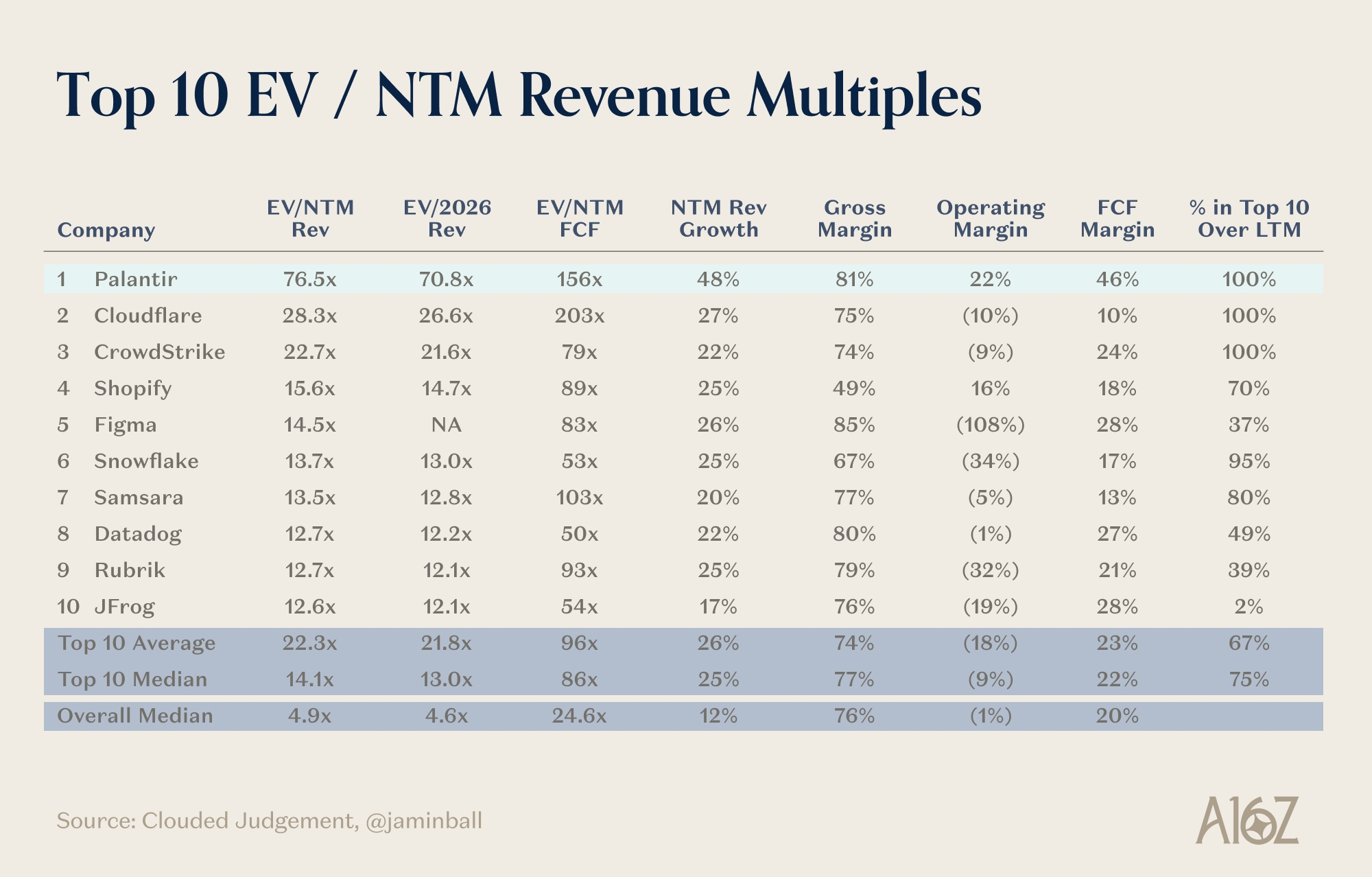
But I doubt whether "Palantir - izing" can be scaled up as a universal playbook. Palantir is a "one - of - a - kind" entity (just look at its transaction valuation!). Most companies that mimic its appearance often end up turning themselves into high - cost service providers. Although they have the valuation multiples of software companies, they lack compound competitive advantages. This reminds me of the 2010s when almost every startup claimed to be a "platform," but in fact, there were very few real platform companies because they are extremely difficult to build!
This article aims to distinguish what is truly transferable in the Palantir model from its unique attributes and provide a more practical blueprint for founders who want to combine enterprise software with in - depth delivery.
What "Palantir - izing" Really Means
"Palantir - izing" has begun to represent several related dimensions:
Forward Deployment, Embedded Engineering
Forward Deployment Engineers (referred to as "Delta" and "Echo" in Palantir's internal terminology) are stationed within the customer's organization for an extended period (usually several months) to understand the business context, integrate systems, and deliver customized workflows on top of Foundry (or Gotham in higher - security scenarios). Since pricing is usually a fixed fee, there is no traditional "SKU." Engineers are responsible for building and maintaining these functions.
A Highly Opinionated, Integrated Platform
At its core, Palantir's product is not a toolbox of fragmented components but an "opinionated" platform specifically designed for data integration, governance, and operational analysis. It's more like an operating system for organizing data. Its stated goal is to transform fragmented data into real - time, highly reliable decision - making.
Premium Market, High - Touch Go - to - Market (GTM) Strategy
"Palantir - izing" also describes a go - to - market style: a long and deeply involved sales cycle targeting mission - critical environments (such as defense, policing, and intelligence). The regulatory complexity and high "stakes" in the industry are seen as advantages rather than obstacles.
Results - Oriented, Not License - Oriented
Revenue is driven by multi - year, results - linked contracts where software, services, and continuous optimization are integrated. The annual contract value can reach tens of millions of dollars.
A recent analysis report called Palantir a "unique category" because it excels in three areas simultaneously: (a) building an integrated product platform; (b) embedding elite engineers in customer operations; (c) proving itself in mission - critical government and defense environments. Most companies can only achieve one or two of these, and it's difficult to do all three.
However, in 2025, everyone wants to borrow the brand halo of this model.
Why Everyone Wants to Imitate Palantir Now
Three forces are converging:
There is a problem of "difficult implementation" in enterprise AI.
A large number of AI projects stall before entering the production environment, often due to data chaos, integration difficulties, and a lack of internal accountability. Although the buying behavior is still frenzied (due to the pressure from the board of directors and senior management to "buy AI"), the actual implementation and subsequent return on investment (ROI) usually require a lot of in - depth support.
Forward Deployment Engineers seem to be the missing link.
Media reports and recruitment data show that the number of FDE positions is growing explosively. According to different sources, the increase this year could be between 800% and 1000%. AI startups are trying to make the deployment really effective by sending engineers.
Rapid growth has become the norm (and it's easier to achieve rapid growth with seven - figure orders than with five - figure ones!)
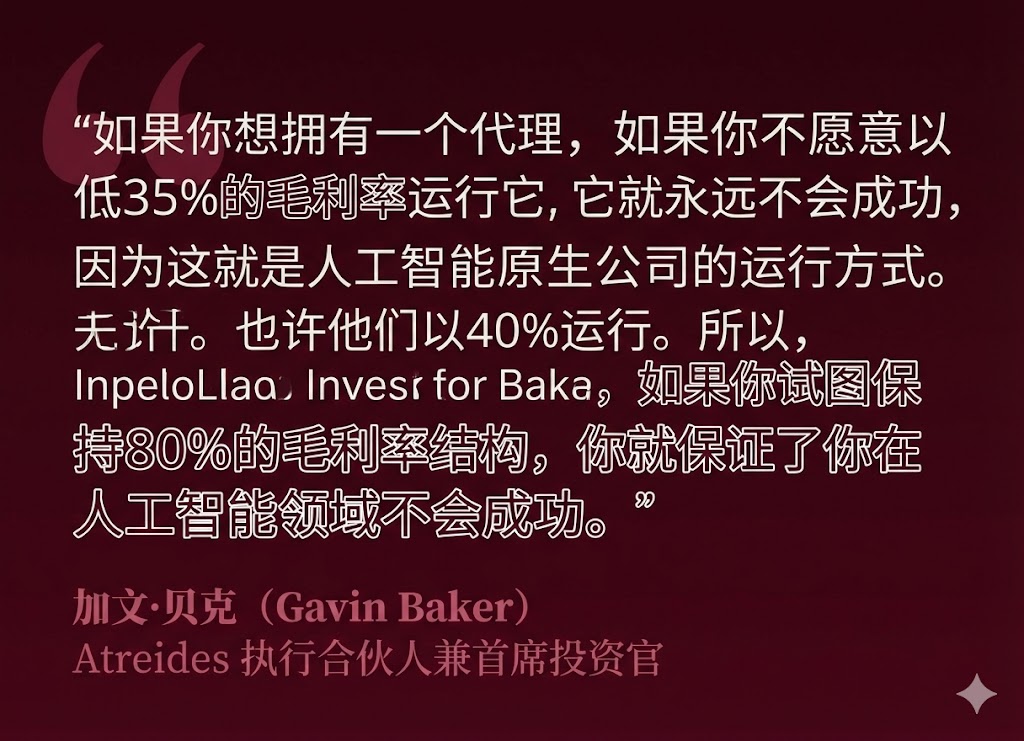
If sending engineers on business trips can secure a contract worth over a million dollars with a Fortune 500 company or a government agency, many startups would be very willing to trade gross profit margins for growth momentum. Considering that the novel AI experience often involves a large amount of inference costs, investors are becoming more accepting of less - than - perfect gross profit margins. The bet of this strategy is to win the position and trust of the customer's leadership through delivering results and then price accordingly.
So, the narrative becomes: "We're going to emulate Palantir. Send in an elite team, create something amazing, and turn it into a platform over time."
This story may be true in a very specific context. But founders often overlook some hard constraints.
Where This Analogy Breaks Down
Trying to Sell "Results" from Day One
Palantir's flagship product, Foundry, is a collection of hundreds of microservices that together serve a single result. These services form a productized and opinionated methodology for common problems in various industries. After communicating with hundreds of AI application founders in the past two years, I can tell you where their analogy falls short: Startups often paint grand, results - based goals in their pitch decks, while Palantir has built well - thought - out microservices that form the cornerstone of its core capabilities. It's these things that set Palantir apart from ordinary consulting firms (and also give it a valuation of 77 times its expected revenue next year).
Palantir Gotham is a defense and intelligence platform designed to help military, intelligence, and law enforcement agencies integrate and analyze fragmented data for mission planning and investigations.
Palantir Apollo is a software deployment and management platform that can autonomously and securely deliver updates and new features to any environment, including multi - cloud, on - premise, and offline systems.
Palantir Foundry is a cross - industry data operations platform that powers operational decision - making across the enterprise by integrating data, models, and analysis.
Palantir Ontology is a dynamic, actionable digital model of real - world entities, relationships, and logic in an organization, supporting applications and decision - making within Foundry.
Palantir AIP (Artificial Intelligence Platform) connects AI models (such as large language models) with an organization's data and operations through Ontology, creating AI - driven workflows and agents that can be put into production.
Quoting the recent Everest report again: "Palantir's contracts usually start small. The first engagement may only cover a short - term boot camp and limited licenses. If the value is proven, more use cases, workflows, and data domains will be added. Over time, the revenue structure will shift towards software subscriptions rather than services. Unlike consulting firms, services are a means to drive product adoption, not the main source of revenue. Unlike most software vendors, Palantir is willing to invest engineer time upfront to win meaningful customers."
On the one hand, I see that today's AI application companies can often jump straight to seven - figure contracts. On the other hand, this is largely because they are in a fully customized mode. They are solving any problems raised by early customers and hope to extract themes from them later to build core capabilities or "SKUs."
Not Every Problem is "Palantir - Level"
Palantir's early deployment areas often faced situations where "nothing else worked": counter - terrorism, anti - fraud, battlefield logistics, and high - risk medical operations. The value of solving these problems is measured in billions of dollars, the number of lives saved, or geopolitical outcomes, not just minor efficiency improvements.
If you're selling to a mid - sized SaaS company to optimize its sales workflow by 8%, you can't afford the same level of customized deployment. The ROI margin simply can't support months of on - site engineering development.
Most Customers Don't Want to Be Your R & D Lab Forever
Palantir's customers subconsciously agree to co - develop products with them. Their high tolerance is due to the high cost and limited alternatives.
Most enterprises (especially those outside the defense and regulated industries) don't want to feel like they're in a long - term consulting project. They need a predictable implementation process, interoperability with existing software tools, and quick - to - realize value.
Talent Density and Culture Can't Be Universalized
Palantir spent more than a decade recruiting and training a group of extremely versatile engineers who can write production - grade code, navigate bureaucratic systems, and interact with colonels, chief information officers (CIOs), and regulatory agencies. The talent flowing out of these positions has formed a "Palantir gang" of founders and operators. Many of these people are rare "unicorns" because they are both technically proficient and highly efficient in customer communication.
Most startups can't expect to hire hundreds of this type of talent. In practice, "We're going to build a Palantir - style FDE team" often degenerates into:
(Pre - sales solution engineers re - labeled as "FDEs")
(Junior versatile employees asked to handle product, implementation, and customer management simultaneously)
(A leadership team that has never witnessed a Palantir deployment up close but simply likes the "vibe")
To be clear, there are indeed a large number of talented individuals in the outside world, and tools like Cursor in our investment portfolio are making coding skills accessible to non - technical employees. But to scale Palantir's operating model, it requires a very rare combination of business and technical talents. And given that it's such a unique company, having actual work experience there would be very helpful. But the pool of such talent (n) is ultimately limited!
The "Service Trap" is Real
Palantir's success is due to a real platform underlying its customized work. Keen observers point out that if you only copy the "deploying engineers" part, you'll end up with thousands of customized deployments that are impossible to maintain or upgrade. Even if AI tools allow companies to achieve software - level gross profit margins in this model, companies that over - rely on forward deployment without a strong product foundation may not be able to generate increasing returns to scale and a lasting moat. Inexperienced investors may see the "hockey - stick" growth of the contract value from $0 to $10 million and rush to get involved. But the question I've always been asking is: What will happen when dozens (or even hundreds) of startups of this scale with the exact same pitch collide?
At that point, you're no longer "the Palantir of a certain field." You're just an "Accenture of a certain field" with a prettier front - end interface.
What Makes Palantir Truly Unique
If we peel away the myths, there are several elements worth studying closely:
Platform - First, Not Project - First
Palantir's forward deployment teams build based on a small set of reusable primitives (data models, permission controls, workflow engines, visualization components) rather than writing completely customized systems for each customer.
Having an Opinion on the Way of Working
The company doesn't just automate existing processes. It often encourages customers to adopt new ways of working, and the software reflects these opinions. This is a rare courage for a vendor, but it also enables reuse.
A Long - Term Time Horizon and Capital Support
To become a company like Palantir, it takes a long period of negative public opinion, political controversy, and an unclear short - term monetization period until the platform and market strategy mature.
A Very Specific Market Mix
Its early footprint in the intelligence and defense fields is an advantage rather than a drawback: extremely high willingness to pay, extremely high switching costs, high stakes, and a relatively small number of large - scale accounts. Not to mention that the old established players have won business with little competition in the past few decades.
In other words, Palantir is not just "software company + consulting." It's "software company + consulting + political engineering + extremely patient capital."
This is not something you can casually attach to a vertical SaaS product and expect it to be widely adopted.
A More Realistic Framework: When Does "Palantir - izing" Make Sense?
Instead of asking "How can we be like Palantir?", we should ask the following key admission questions:
The Criticality of the Problem
Is the problem mission - critical (involving lives, national security, billions of dollars) or just a nice - to - have (a 10 - 20% efficiency improvement)? The higher the stakes, the more reasonable the forward deployment model is.
Customer Concentration
Are you selling to dozens of large customers or thousands of small customers? The embedded engineering model has better economies of scale when customers are concentrated and the annual contract value (ACV) is high.
Domain Fragmentation
Do customers have similar workflows/use similar software tools, or is each deployment fundamentally different? If each customer is as unique as a "snowflake," it's difficult to build a unified platform. A certain degree of homogeneity would help.
Regulatory and Data Gravity
Are you operating in a highly regulated field with significant data integration pain (defense, healthcare, financial crime, critical infrastructure)? This is where Palantir - style integration work can create real value.
If you're mostly in the lower - left corner of these dimensions (low criticality, fragmented customers, relatively simple integration), then a full - scale "Palantir - izing" is almost certainly the wrong model. This situation is more suitable for a bottom - up product - led growth (PLG) model.
What's Worth Imitating
Although I doubt that every startup can successfully apply the Palantir model, there are indeed some aspects of its playbook worth considering.