Is the financing of trendy collectibles booming in 2026? There are three hidden concerns and three major dividends behind it.
The investment wave in trendy collectibles has arrived again.
The last time the trendy collectibles industry witnessed such a concentrated investment boom was at the end of 2021. Xiaoyu was deeply impressed that the newly - established small brand Kakawo could also gain the favor of VCs.
In the first half of last year, Pop Mart's Labubu became a global phenomenon. Its offline franchise stores expanded from Southeast Asia to North America and even Western Europe. Leading enterprises like Brukko also completed their listings on the Hong Kong Stock Exchange. The attention on trendy collectibles and card companies returned. Xiaoyu herself wrote three consecutive articles on the card market (Sky - high priced star cards can't go beyond Beijing, Shanghai, Guangzhou, and Shenzhen | Big business in cards ① A single card product has a GMV of 30 million and an annual GMV exceeding 100 million. Movie and TV cards have become the strongest derivatives of iQiyi, Tencent Video, and Youku | Big business in cards ② With 5 billion in revenue but still facing a cold market, star trading cards need to transform | Big business in cards ③). The market received a huge amount of positive feedback, which in turn triggered a concentrated financing wave in the second half of the year.
Starting from the over - 100 - million - yuan Series A financing of Shanhun Company to Jason Entertainment's recent strategic investment of hundreds of millions of yuan, there has been news almost every month of trendy collectibles companies officially announcing fund - raising and listing. Such a situation is actually quite rare.
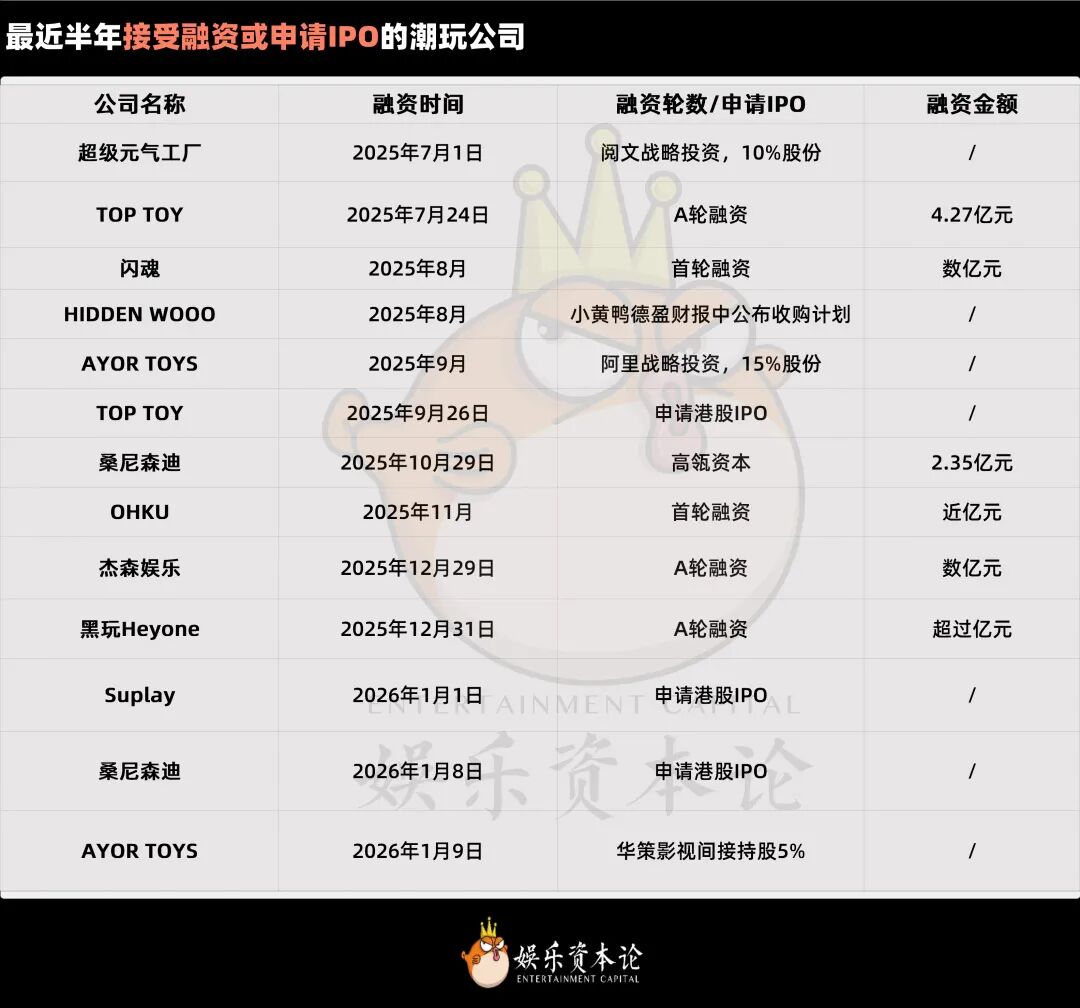
As mentioned at the beginning of the article, Suplay, the parent company of Kakawo, has just submitted its prospectus to the Hong Kong Stock Exchange. Its valuation exceeds 100 million US dollars, and the progress is gratifying.
The influx of capital proves that the trendy collectibles field is no longer just self - indulgence of a niche circle but a consumption revolution driven by emotional value. Every trendy collectibles manufacturer is making efforts in vertical tracks and building its own technological moat.
In 2026, the trendy collectibles and card industry, which is being baptized by capital for the second time, is shifting from rapid expansion to in - depth exploration of the existing market. Although money has flowed in, the future of the trendy collectibles industry seems to be getting narrower and more difficult.
#This article has interviewed four relevant people. They are also the 33rd - 36th interviewees of "Entertainment Capital Theory" in 2026.
1
Labubu Boosts Investment in Trendy Collectibles, and Movie and TV Cards Rise Rapidly
The core reason for the financing wave of trendy collectibles companies in 2025 lies in the fact that capital has seen many positive news from the market.
Li Siyun, the founder and chief product officer of Wuliu Culture, told Xiaoyu that 2025 was the year of the explosion of emotional consumption. The leading companies in trendy collectibles and cultural and creative products had frequent hits, driving the overall market sales. Meanwhile, in the current social environment, people are increasingly inclined to seek small pleasures to please themselves. Trendy collectibles and cards are also an indispensable part of the self - pleasing economy.
Labubu's global popularity was like a spark that ignited Pop Mart's overseas expansion strategy. In the past few years, Google's annual review videos mostly centered on events and ordinary people's lives, with few new products appearing. In last year's annual video, there were unexpectedly segments of global fans unboxing Labubu, which shows Pop Mart's appeal in the global market.

There are often long queues in front of Pop Mart's overseas offline stores.
Brukko's listing is another positive piece of news in the trendy collectibles field. Almost all industry insiders who talked to Xiaoyu mentioned Brukko's listing. According to the information they revealed, after Brukko's listing, various capitals and investment institutions stepped up negotiations with them, hoping to lock in the leading players in the trendy collectibles market as early as possible.
Some industry insiders also believe that the financing wave of trendy collectibles in the second half of the year was a natural result. Kong Kong (a pseudonym), a practitioner in the card industry, said that many companies started to announce their intention to seek financing at the beginning of last year. It just so happened that the completion of financing or the submission of prospectuses all concentrated in the second half of the year.
What kind of trendy collectibles companies are more likely to get financing? Xiaoyu believes that capital no longer values all kinds of illusory "stories" but pays more attention to the company's moat. Those companies that can get funds either have an excellent supply chain or a professional operation team with a competitive edge.
Suplay, which has just submitted its prospectus, is such a company. Their increasing influence in the industry originated from the acquisition of the trendy collectibles manufacturer "Heydolls". This acquisition enabled Suplay to transform from a distributor to a brand owner.
Now, collectible cards have become the core part of Suplay's business, also relying on a strong supply chain and technological barriers. In 2024, Kakawo under Suplay launched the Heritage Series · Forbidden City Classic Collectible Cards. This set of collectible cards integrates many intangible cultural heritage techniques such as brocade weaving, mother - of - pearl inlay, jade carving, cloisonné, and jewelry inlay. Without the support of a powerful supply chain and printing technology, it would be extremely difficult to achieve large - scale mass - production of these techniques.
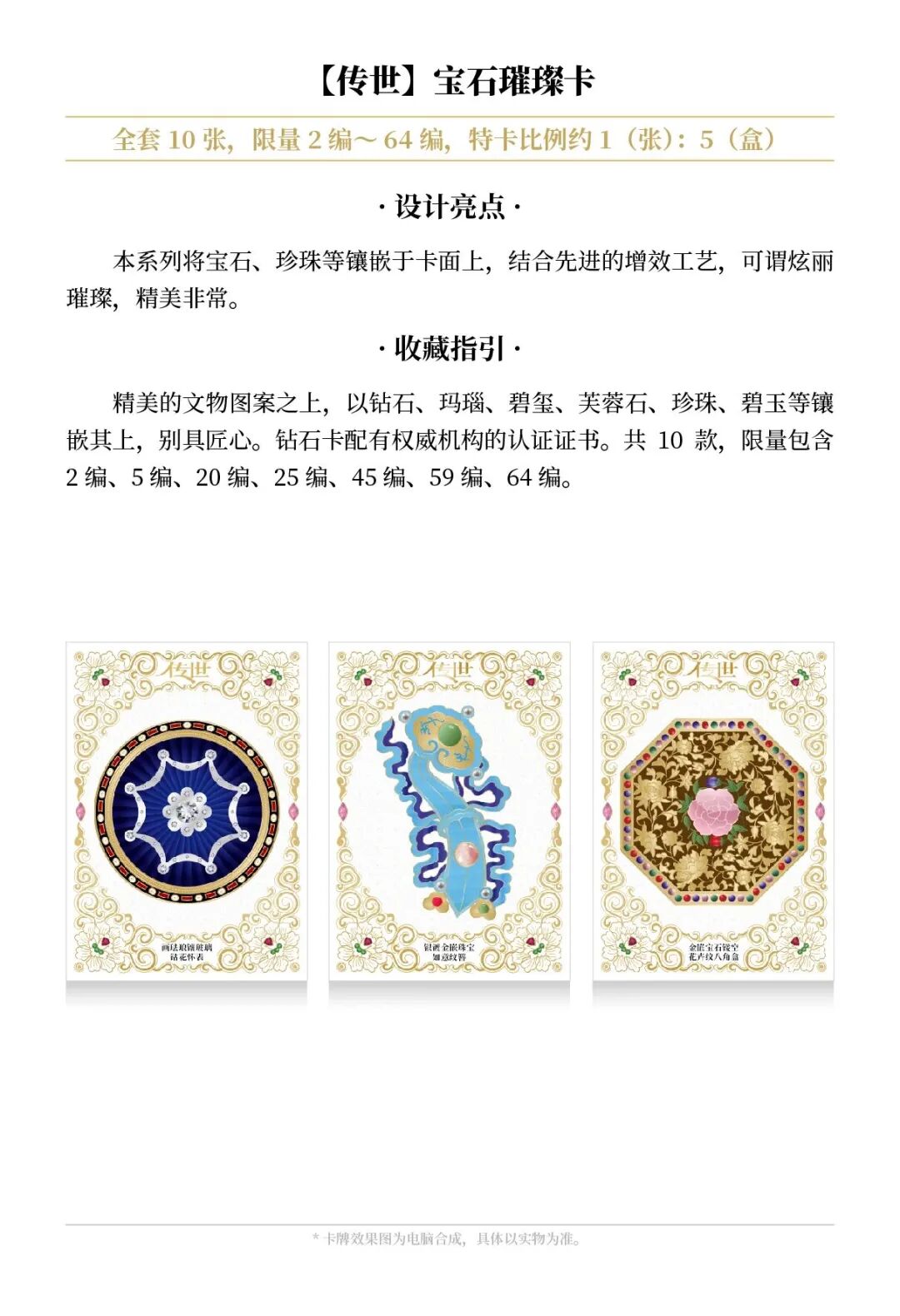
Suplay Heritage Series · Forbidden City Classic Collectible Cards - Gemstone Shining Cards
In terms of operation, Suplay also has unique experience. The core method is to maintain the price and control the quantity. Suplay strictly controls the quantity of card products during both the production and sales stages. On the one hand, this approach can maintain the price of collectible cards, and on the other hand, it can avoid inventory backlog.
It is worth mentioning that those trendy collectibles companies that can get financing often have good cash flow and profitability. The gross profit of the trendy collectibles industry is generally higher than that of traditional consumer goods. In extreme cases, some card companies can even exceed 70%. Leading companies such as Karyu and Shanhun have strong self - financing capabilities. When a company's cash flow and profitability are maintained at a relatively healthy level, capital is more willing to support these companies in expanding their business.
There are also some companies focusing on niche markets that are very likely to get financing.
Last year, the movie and TV card market rose rapidly, and many products achieved a GMV of tens of millions. Companies like Suplay and Jason Entertainment, which have obtained financing, have all made efforts in the movie and TV card market, targeting high - net - worth movie and TV fans who pursue collectible value. Hitcard's progress is even more amazing. It obtained financing in the first half of last year and started planning for listing in the second half of the year.
2
Connect Online and Offline Channels, and Manufacturers Compete for IPs and Talents with Financing
Today, the financing goals of trendy collectibles companies are quite similar. In every press release about financing or listing, trendy collectibles companies often state that they will invest the funds in the construction of online and offline channels and the expansion of overseas markets. In addition to these two points, trendy collectibles companies are also willing to invest funds in IP licensing and talent competition.
Sales are the lifeline of trendy collectibles companies. The expansion of offline channels is a hard indicator for the development of trendy collectibles companies, while the stability of online sales channels represents the soft power of trendy collectibles companies. Only by combining the hard and soft power can a company remain invincible in the market.
Offline sales channels are mainly divided into two categories. One is the direct - operated stores of trendy collectibles brands, and the other is supplying goods to various offline second - hand stores. Now, ambitious trendy collectibles companies tend to open brand - owned direct - operated stores. Each new direct - operated store requires hundreds of thousands of yuan in cost, which is also the main reason for trendy collectibles companies to seek financing. Kong Kong said bluntly that in a round of over - 100 - million - yuan financing, 60% - 70% may be used to open direct - operated stores.
The most typical example is Jason Entertainment. In 2025, Senluowanxiang, the trendy collectibles store under Jason Entertainment, opened new offline stores in major cities such as Shanghai, Hangzhou, Zhengzhou, and Nanjing. Lin Jun, the chairman of Jason Entertainment Group, said in an interview that they plan to open franchise stores in 30 cities across the country and strive to achieve an annual sales revenue of over 1 billion yuan.
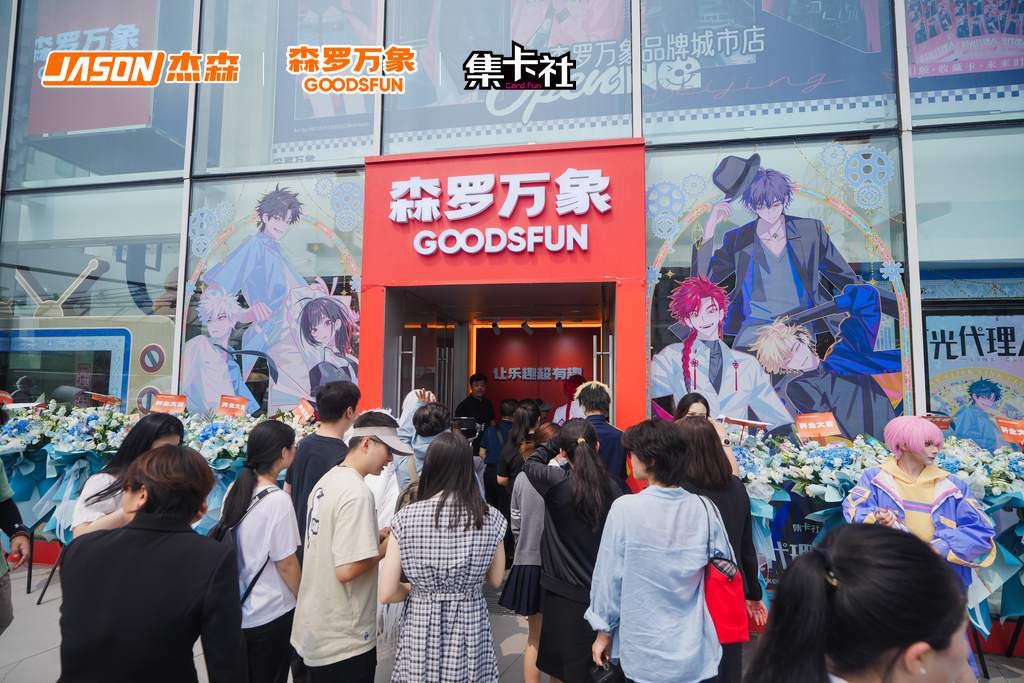
Senluowanxiang offline store (Source: Jason Entertainment official website)
As more and more offline stores are opened, many manufacturers are talking about connecting online and offline sales channels. Joe (a pseudonym), a professional investment person, told Xiaoyu that what consumers really care about is whether they can conduct genuine product inquiries, after - sales services, and returns and exchanges online. These needs highlight the importance of the stability of online channels.
Wuliu Culture adheres to the attitude of creating products with "Easter eggs" everywhere, from IP interpretation to process refinement. From the highly - praised "full of design details, even the back of the card is beautiful" to "even the common cards are full of ingenuity" to "each series of products comes with a brand - sealed bag for users to store". Li Siyun said that comprehensive and in - depth consideration and products with a human touch can not only provide users with more comprehensive online services but also penetrate the brand concept through this form.
Another purpose of trendy collectibles companies' financing is to compete for top - level IP licenses and high - quality talents.
Compared with products such as blind boxes and figurines, the card industry's pursuit of top - level IPs has already reached a white - hot stage. Some industry insiders revealed that the licensing fees for some popular IPs under Disney have reached tens of millions of yuan. Although each company has sufficient cash flow, if they want to defeat their competitors and obtain top - level IP licenses, they need to conduct large - scale financing to bid.
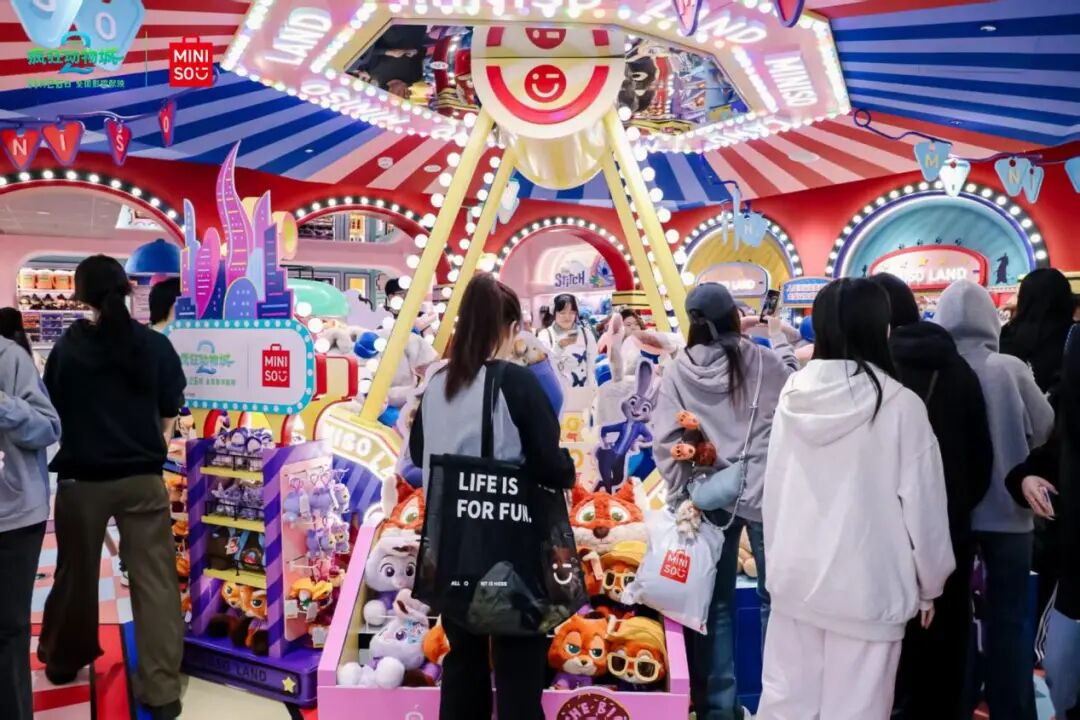
Miniso's derivatives of the "Zootopia 2" IP (Source: Miniso's official Weibo)
Incubating original IPs is also an issue that trendy collectibles companies must face on their development path, which also requires more funds for trial - and - error. However, industry insiders like Kong Kong are relatively pessimistic about the prospect of original IP incubation: "Karyu has tried to incubate original IPs, but so far, it has not reached the level of licensed IP products. The original IP incubation of Jikashe has also failed. So, being cautious about original IPs may be a better attitude."
These trendy collectibles companies that have obtained financing will also invest funds in team iteration, recruiting senior talents from the Internet and game industries to improve the refinement of operations. "In the past two years, there has been a very frequent personnel flow in Karyu, but the overall principle remains the same, which is to retain high - quality talents. So, you can also see that Karyu's business develops a little faster," an industry insider said.
As for going global, most trendy collectibles companies are still groping their way forward, and the most prominent example is undoubtedly Pop Mart.
Joe believes that most domestic trendy collectibles manufacturers' overseas expansion paths are currently replicating Pop Mart's, and they are collectively entering the Southeast Asian market. Thailand is the most competitive market in Southeast Asia. "Thailand is highly Westernized. If you can succeed in that market, it means your products can quickly enter the Western market."
AI - generated image by Entertainment Capital Theory
However, there are also some gray areas in the overseas expansion of trendy collectibles. Kong Kong introduced some of the tricks to Xiaoyu: "Some companies claim to have overseas business, but in fact, they just sell some inventory in overseas live - streaming rooms. True overseas expansion requires you to have a fixed offline sales channel in the local area, or even your own offline physical store."
For trendy collectibles companies to expand overseas markets, IPs and brand power are still the core of everything. Li Siyun observed that a lot of Chinese drama content is also quite influential overseas, and there are many orders from transfer warehouses. Last year, Wuliu also obtained the IP license for "Stranger Things". Taking advantage of the popularity of the fifth season, Wuliu Culture hopes to enhance its brand awareness through the "Stranger Things" IP series in 2026, continuously strengthen the promotion of Chinese culture through derivatives, and expand its share in the overseas market.
3
Entering the Deep - Water Zone, Trendy Collectibles Investment Faces a Cooling - off Period
Standing at the time node of 2026, the financing boom in the trendy collectibles industry is undergoing the test of time. News of financing and listing is still being released intensively, but industry insiders are starting to worry that capital is about to enter another cooling - off period.
Dependence on IPs and audience aesthetic fatigue are stubborn diseases in the trendy collectibles industry. Once the popularity of a landmark IP declines, negative voices about the industry will follow. Labubu is the best example. Countless media have reported on the sharp decline in the resale price of Labubu, and the relevant discussions have continued from last year to now.
Joe told Xiaoyu that the fact that such information can be noticed by the media is a relatively dangerous signal for the entire industry. "There are two signs of the bursting of the bubble in the trendy collectibles industry. One is the negative news about industry hits, and the other is the regression of the valuation of listed companies. The lock - up period of Brukko's listing is about to end, and then capital's attitude towards trendy collectibles companies will become clearer."
The relationship between China and Japan is also a Damocles' sword hanging over trendy collectibles companies. An industry insider in charge of IP copyright told Xiaoyu that a large - scale Japanese IP recently negotiated with a Chinese company about the cooperation on IP derivatives. Originally, the deal was about to be finalized, but it ultimately fell through. According to the insider, it was actually the Chinese company that more