In the era of Map 3.0, Petal Maps presents a distinctive answer sheet.
After nearly a decade of calm, the map market has finally witnessed new developments.
On one hand, traditional map providers are venturing into the local life service sector and upgrading to high - precision mapping, achieving remarkable results.
On the other hand, maps developed by hardware manufacturers, represented by Huawei Petal Maps, are beginning to make their mark. They have found their niche by targeting the weak areas of traditional navigation, such as overseas, outdoor, indoor navigation, and golf courses.
If the former represents the inevitable upgrading of the business model of maps as a natural traffic entry point and infrastructure, then the latter's transformation is based on the changes in the entry points of terminal devices, the innovation of underlying technologies, and the expansion of the ecosystem. In the history of the map industry, such stories have repeated themselves every decade.

Looking back at the map innovation over the past two decades, we can easily identify a trend:
Terminal devices have been continuously evolving, from computers to mobile phones, and then to in - car infotainment systems and smartwatches. Technologically, navigation has evolved from offline to real - time, from 2D to 3D, and from rough to precise. Meanwhile, the technological upgrade and the increase in terminal devices have further promoted the continuous expansion of the service scenarios and capability boundaries of maps. Market demand has evolved from simple geographical information provision to real - time navigation, support for special environments, and now to refined scenario - based services.
In this process, the map industry is never a zero - sum game but more like an infinite game. Its boundaries are constantly expanding with the development of technology and the ecosystem, and new players are emerging with the changes of the times. However, scenarios, ecosystem, and terminal devices are always the key words that cannot be bypassed.
To understand the significance of these three words for the map industry and how they have achieved breakthroughs in the Map 3.0 era, let's take Huawei Petal Maps, the most representative and fastest - growing player in this period, as an example for analysis. The practice of Petal Maps precisely provides vivid interpretations for these three key words: "scenarios, ecosystem, and terminal devices".
What capabilities are needed to create a map that works well in all scenarios?
Electronic maps have a history of several decades, but they have always struggled to make the leap from being usable to being user - friendly. Outdoor exploration and indoor navigation are two well - recognized "experience blind spots". Huawei Petal Maps has a clear strategy to break through: instead of piling up functions, it focuses on real pain points and uses a set of coordinated "hardware, software, chip, and cloud" technologies to continuously improve the navigation experience on hardware.
In outdoor scenarios, imagine being immersed in the mountains while your navigation quickly drains your phone's battery. This is probably the biggest headache for outdoor enthusiasts. The outdoor exploration mode, first launched by the Huawei Mate 80 series in the industry and deeply integrated with Petal Maps, addresses this fundamental problem.

The core is a micro - kernel map engine. Simply put, it is like an "energy - saving butler" (MCU chip and SensorHub system) specifically set up for navigation tasks, taking over core tasks such as positioning, route calculation, and rendering from the power - hungry main processor. In this way, it can not only enable navigation with the screen off but also reduce the overall navigation power consumption by up to 50%, providing a super - long battery life of up to 36 hours. From now on, you can more confidently reserve your phone's battery for taking photos and emergencies.
After solving the battery anxiety, the next challenge is the signal. In no - man's lands and deep mountains, losing the network means losing your sense of direction and security. Petal Maps, for the first time in the industry on the Mate 80 series, launched an outdoor route signal map, which is equivalent to providing "signal forecasts" for more than 10,000 high - quality hiking routes.
This is due to the chip - level signal perception and AI big - data prediction capabilities. Petal Maps can sense the signal strength and interference in real - time. By combining with an AI model trained with a large amount of historical route data, it can accurately predict which sections of the whole journey will have "disconnection" or no signal before you set off. You can download offline maps in advance and be well - informed during the journey, making your adventure more controllable and safe.
In addition, outdoor navigation often requires following a trail, but inaccurate trails and signal loss can easily lead to getting lost. Petal Maps' trail - following navigation intelligently repairs the trail through technology (automatically filling in breakpoints and smoothing jitters) to ensure the reliability of the route. Combined with the aforementioned signal risk prediction, it can give an early warning when entering a weak - signal area. Its intelligent off - route reminder function is like a considerate guide. Once you deviate from the preset trail, it will give a timely voice prompt to ensure that you always stay on the right track.
In indoor scenarios, positioning has always been a major problem. For example, it's extremely frustrating to lose your car in a large parking lot or fail to find a store in a complex shopping mall. Petal Maps' solution is 3D precise indoor positioning technology.
After parking, it can automatically record the parking space and floor. When looking for your car, you can directly access the navigation through a card on the negative first screen and even be guided "back the same way". Thanks to Petal Maps' multi - source signal (Wi - Fi, Bluetooth, etc.) fusion and AI learning capabilities, even if the layout of your environment changes, it can achieve store - level precise positioning and automatic floor - switching. On devices such as the Huawei Mate X7, this ability is embodied as the "precise car - finding" function, completely eliminating the possibility of users getting lost in the parking lot.
In the era of the Internet of Everything, how to evolve from fragmented device experience to seamless cross - device navigation?
In the vision of the Internet of Everything, there should be a "living map" that can freely shuttle between devices and scenarios. However, when we try to switch navigation between in - car infotainment systems, mobile phones, and smartwatches, we often encounter information gaps and fragmented experiences.
This seemingly minor inconvenience actually reflects the long - standing drawbacks in the map industry: map providers, software developers, and terminal hardware manufacturers each focus on their own areas, and the industry chain is fragmented. In the wave of ecosystem collaboration, they have built barriers that hinder the seamless user experience.
One is the problem of multi - device adaptation. In - car infotainment systems need simple and large - screen navigation information to avoid distracting the driver; smartwatches can only display core data such as altitude and remaining distance; mobile phones need to balance detail and ease of operation. This requires the presentation logic of navigation information to be reconstructed according to the device form, and most map providers lack the ability to adapt to all devices.
The second is the barrier to cross - device data transfer and synchronization. In the past, the different system formats of cars, mobile phones, and smartwatches made smooth connection and switching almost impossible. Traditional solutions either rely on cloud synchronization, which is useless in weak - network environments such as basements and mountainous areas, or the devices operate independently. The route planned on the in - car system needs to be recalculated on the mobile phone, which means users have to reload the information on different devices.
As the usage scenarios of maps expand to various devices such as cars, watches, and screens, the continuity of the user experience has become a new challenge. Relying on the distributed capabilities of Huawei's HarmonyOS ecosystem, Petal Maps provides an answer that "devices serve people, rather than people adapting to devices".
For example, for smartwatches, one of the most important interaction entry points for modern people, Petal Maps launched an independently - operating "watch map" on the HUAWEI WATCH 3 series in November 2022. It supports route planning for walking and cycling without relying on a mobile phone. Key navigation nodes are notified by gentle wrist vibrations and voice prompts, fully conforming to the interaction logic of the watch.
On the computer side, in May 2025, Petal Maps was adapted and released as a PC version for the folding form of the first HarmonyOS folding - screen computer, HUAWEI MateBook Fold Master of Excellence. It can automatically adapt to the interface in the folded state and switch to the panoramic view in the unfolded state, achieving an immersive experience with pixel - level restoration of road textures and building details. By opening the 3D Earth mode, users can precisely locate any place in the world through rotation and zooming operations, realizing global exploration.
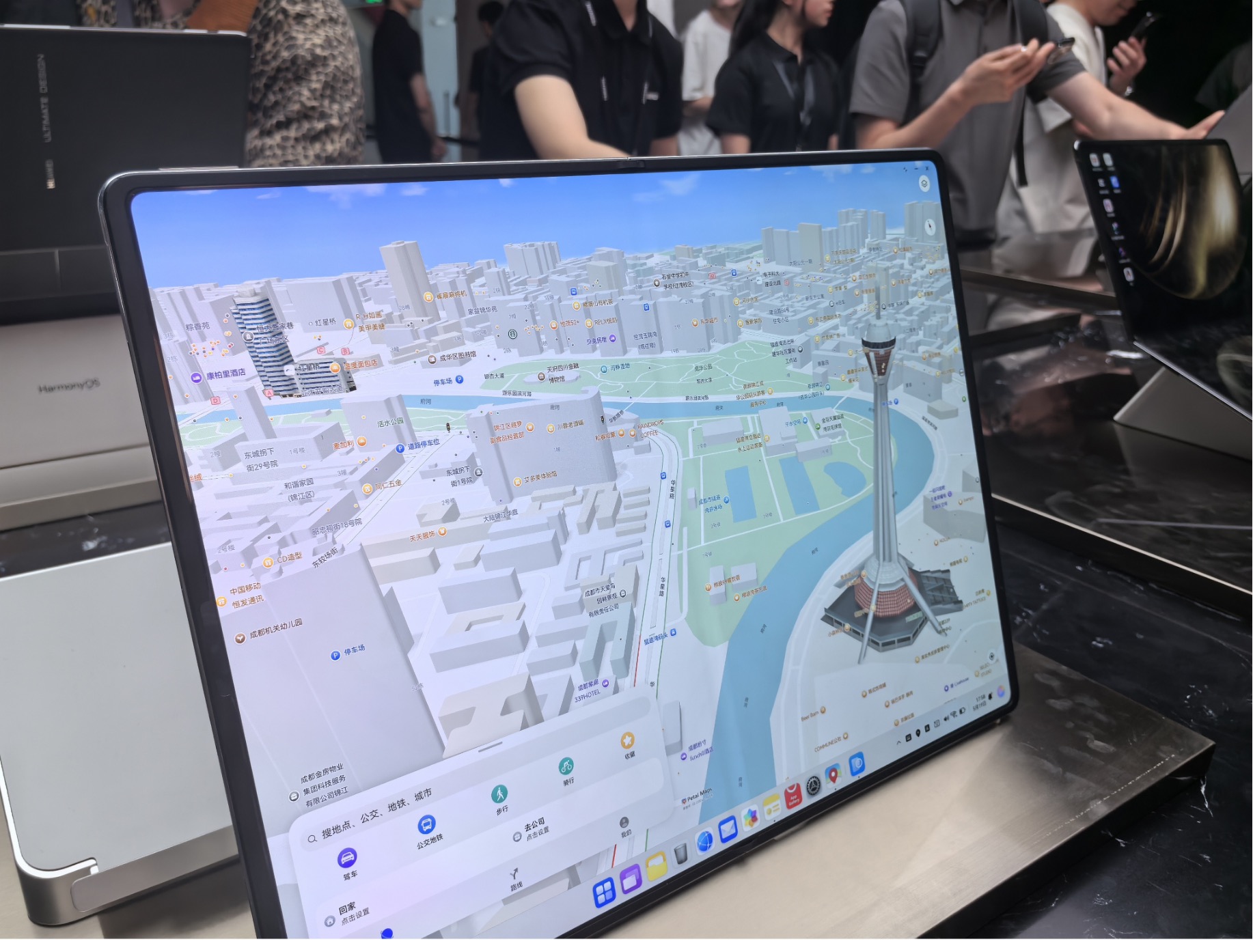
According to the different states of the screen, Petal Maps can automatically adapt to different interface effects. When in the folded state, the Petal Maps interface automatically adapts to a 13 - inch screen. After unfolding to an 18 - inch large screen, the system intelligently switches to the panoramic view, presenting more location and surrounding information, allowing users to easily view details of various places.
Even for mature devices like mobile phones, Petal Maps is specifically designed according to the features of different products.
For example, for the first wide - folding HUAWEI Pura X, users can directly wake up the immersive live navigation by clicking the arrow on the Petal Maps card on the lock screen. Without unlocking the phone, the outer screen can automatically display core route information, allowing users to know the direction of travel without opening the app.
On the basis of multi - device adaptation, Petal Maps also realizes multi - device collaboration through the distributed architecture of HarmonyOS.
In the past, in - car systems used Linux, mobile phones used Android or iOS, and smartwatches used RTOS, which became the core difficulty in data collaboration across different scenarios.
The distributed architecture of the HarmonyOS system allows different devices such as mobile phones, tablets, in - car infotainment systems (including HiCar), and smart wearables to share the same operating system. Data transfer between different devices no longer requires complex format conversion and path retrieval, achieving seamless sharing.
In terms of cross - device interaction, Huawei Petal Maps also provides a multi - terminal navigation experience: during the planning stage, when users plan a travel route on their mobile phones, the relevant information can be timely synchronized to the computer, in - car system, and smartwatch. For example, when traveling, the navigation route on the mobile phone can be transferred to the in - car system by simply touching the phone when getting in the car, and the mobile phone can automatically resume navigation after getting out of the car. Another example is that after driving into a basement, the in - car system and the mobile phone work together to automatically record the parking position and floor, and the mobile phone can also automatically record and identify it, completely eliminating the awkwardness of experience interruption during scenario switching.
Through cooperation and integration, how can the ecosystem make up for the last shortcoming of the map experience?
As the core infrastructure of each era, maps are never isolated navigation tools.
Its usage scenarios are often combined with specific services. From simple location sharing on social media to the route planning of food delivery riders, they are all extensions of map capabilities in essence.
When map software integrates service capabilities across all terminals and expands its scenarios to outdoor, overseas, and indoor scenarios, it is an inevitable choice to carry out cooperation and integration at the ecosystem level.
The standard travel process for contemporary young people is to first browse recommended notes on Xiaohongshu and then switch to a map to check the route. The disconnection between travel guides and map navigation in this process brings a lot of inconvenience in interaction. To address this issue, on the HUAWEI Mate X7, Petal Maps and apps such as Xiaohongshu implement a split - screen linkage function. When users are browsing travel guides on Xiaohongshu, they can click on the location in the picture. Through the distributed capabilities of the HarmonyOS system, the system can quickly add the location to the map, conveniently display the location and route, and realize intelligent multi - destination itinerary planning, making the itinerary clear at a glance.
A high - quality in - depth outdoor trip often requires half a day or even a week of thorough preparation.
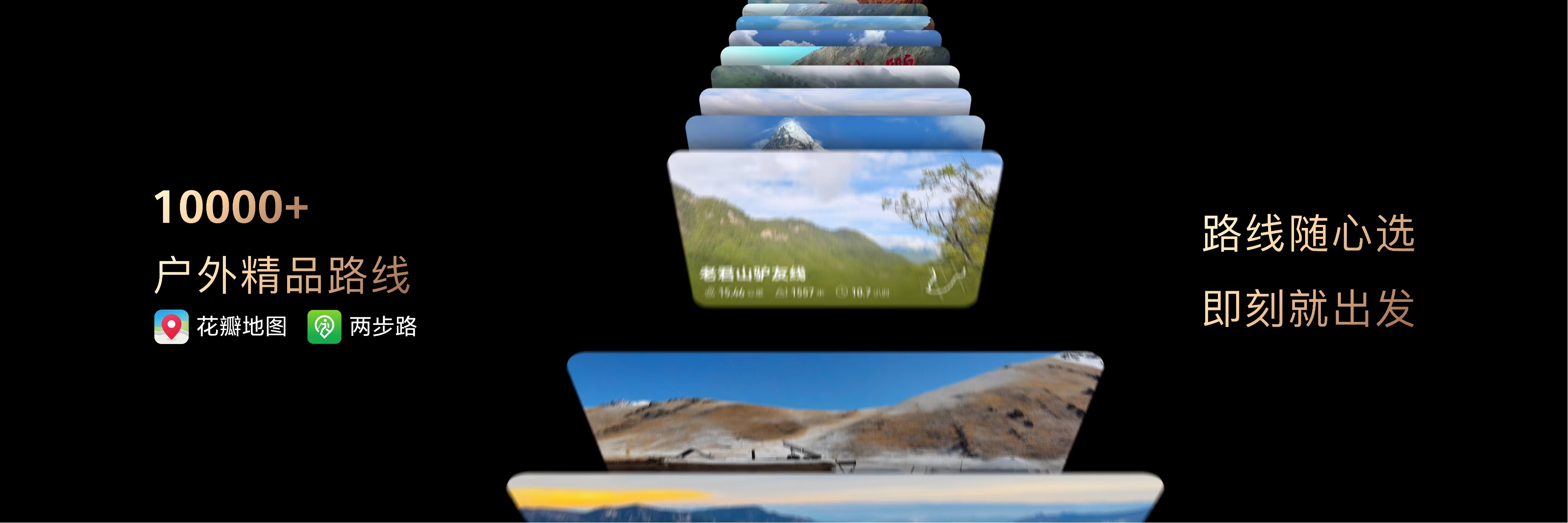
To solve this pain point, Petal Maps and the outdoor app "Two Steps Road" jointly launched more than 10,000 high - quality routes, covering the full - range of scenarios from beginner - friendly suburban hikes to professional - level high - altitude off - road adventures. Each route is detailed with information such as distance, altitude change curve, difficulty rating, distribution of supply points, and real user notes, allowing users to quickly filter and select suitable routes according to their own capabilities. Even in the "outdoor exploration mode", it supports precise filtering according to conditions such as route length, difficulty level, and cumulative climb. For niche exploration enthusiasts, Petal Maps also supports importing route files in KML and GPX formats shared from other platforms, enabling precise navigation on custom - defined routes after import.
Of course, the experience improvement brought by this kind of ecosystem cooperation is not limited to the domestic market. The four upgraded functions of Petal Maps for overseas travel are a concentrated manifestation of the depth of ecosystem cooperation.
In the exploration guide, official lists and guides for destinations such as Malaysia and North Queensland in Australia are from direct cooperation between Huawei and local tourism bureaus. The recommendations for scenic spots, food, and accommodation are all officially endorsed by the local authorities. The overseas navigation planning ability uses the resources of local data partners to build a global map, enabling Huawei phone users to navigate and plan routes globally and never get lost during their travels.
The infinite game of maps and the growth secret of Petal Maps
In this infinite game of maps, players still have a long way to go. In the future, with the popularization of terminals such as smart cars and wearable devices, the boundaries of map services will continue to expand. Full - terminal collaboration and full - ecosystem integration will be the inevitable challenges for all players.
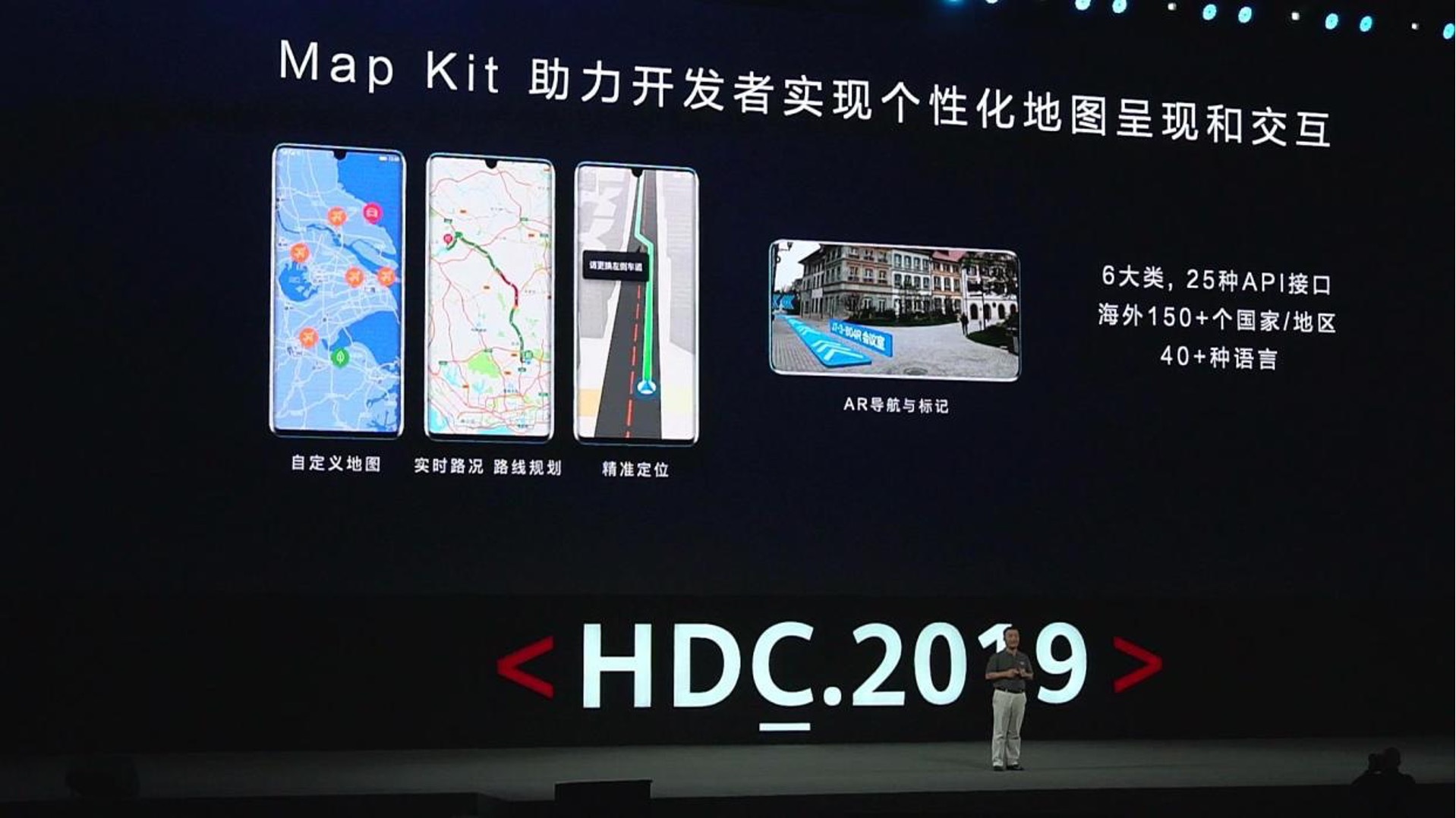
Since the release of the Map Kit map service at the Huawei Developer Conference in 2019, the official launch of Petal Maps (Petal Maps) 1.0 with the Huawei Mate 40 series in October 2020, and the debut of the in - car version of Petal Maps on the Wenjie M5 in December 2021, although it started late, it has grown rapidly. Now, Huawei Petal Maps covers more than 160 countries and regions around the world, providing reliable map services for global users and offering a highly valuable model for the industry.
Looking at the overall situation, the continuous progress of technology, the continuous refinement of scenarios, and the increasing diversification of terminals will ultimately lead to the same goal: enabling ordinary users to no longer worry about navigation failures or be confused by fragmented scenarios, truly