Volkswagen lays off employees up to the board of directors, kicking out one-third of senior executives, and plans to launch 20 new car models to counterattack the Chinese market this year.
Who would have thought that Volkswagen, the veteran of the German automotive industry, has cut costs to such an extent...
The group's large - scale layoffs have reached the board of directors. Nearly one - third of the board members will be laid off before this summer.
This is just part of Volkswagen's plan to lay off 35,000 employees. Moreover, Volkswagen's Dresden plant in Germany officially stopped production last month, which is also the first time in 88 years that Volkswagen has shut down its domestic production line.
Layoffs, plant closures, and organizational restructuring... All these are aimed at increasing revenue and reducing expenditure. After all, when the financial report for the third quarter of last year was released, Volkswagen had suffered losses of over tens of billions of yuan.
However, saving money is also for better car sales. Volkswagen plans to go all out in the Chinese market this year and has prepared more than 20 new energy vehicles to be launched in China.
Volkswagen Plans to Lay Off One - Third of the Board Members
Volkswagen recently announced on its official website the news of layoffs and organizational restructuring:
The core brand group (BGC) under the Volkswagen Group will reduce the number of board members by about one - third before this summer, from 29 to 19.
Specifically, for Volkswagen's mainstream brands, including Volkswagen Passenger Cars, Skoda, Seat/Cupra, Volkswagen Commercial Vehicles, etc., the management of each brand will only retain one CEO and one executive each in finance, sales, and human resources.
In the future, the related work of R & D, procurement, and production of each brand will be centrally carried out at the headquarters.
And this is just the group's short - term plan.
In the medium term, Volkswagen also intends to gradually streamline the internal management structure of the core of the brand group. That is to say, there will be further restructuring and perhaps more layoffs in the future.
To understand the motivation behind this move, we need to go back to the new guiding model that Volkswagen initially implemented.
At the beginning of this year, Volkswagen specifically established a new top - level management body - the Brand Group Core Management Committee. All cross - brand decisions of Volkswagen in the future will be made by this management committee.
Building a more efficient and competitive organization is the first step in promoting this new model. Its purpose is to streamline internal processes, optimize the organizational structure and decision - making path, reduce the technical engineering development costs of each brand, and improve the overall operational efficiency of the group.
Meanwhile, the new production model is also the top priority of Volkswagen's restructuring plan.
The group plans to implement more streamlined processes in more than 20 production bases around the world. In the future, these production bases will be divided into five production regions, and each region needs to be more independent, efficient, and flexible.
In Volkswagen's view, this new model will significantly save more expenses for the group. Just in production, it is estimated that by 2030 after the restructuring, the group will be able to save a cumulative 1 billion euros (about 8.1 billion yuan) in expenses.
Volkswagen has been shouting the slogan of "cost - cutting" for a long time. The last large - scale cost - cutting and restructuring was concentrated at the end of 2024.
At that time, the German automotive industry was generally impacted by the wave of new energy vehicles, and its financial situation was challenged. "Layoffs" became the first life - saving measure for many established car companies.
Volkswagen was no exception. After multiple rounds of negotiations between the management and employee representatives, the two sides finally reached an agreement: by 2030, Volkswagen will gradually lay off 35,000 employees and significantly cut production capacity.
However, after a year of implementing the cost - cutting plan, the situation has not improved significantly.
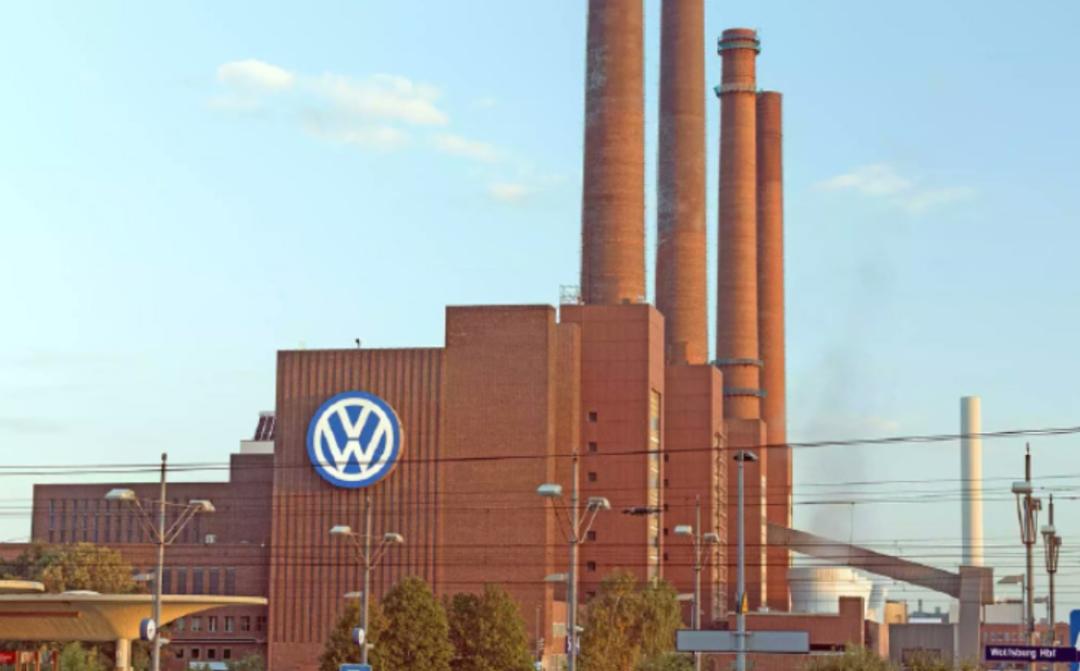
Just last month, it was reported that for the first time in 88 years, Volkswagen shut down its domestic production line in Germany - the Dresden plant that produced the ID.3 officially stopped vehicle production on December 16th last year. In the future, the group will rent out the site for scientific research purposes.
Today, Volkswagen is still the largest automotive manufacturer in Europe, but the pressure on its shoulders is indeed extremely heavy.
Where does this pressure come from?
The Winter of German Cars Has Not Ended
Volkswagen is currently facing dual challenges in finance and business.
First, in terms of finance, the financial report for the third quarter of last year showed that Volkswagen Group had an operating loss of 1.3 billion euros (about 10.58 billion yuan), while the operating profit in the same period of the previous year was 2.83 billion euros.
This is the first quarterly loss for Volkswagen in five years.
Moreover, the group has lowered its performance forecast several times last year, and the net cash flow of its automotive business for the whole year was close to zero.
The company's five - year investment budget has also been lowered several times in recent years. Last year, it decreased from 180 billion euros (about 1.46 trillion yuan) for the period from 2023 to 2027 to 160 billion euros (about 1.3 trillion yuan).
According to analysts' forecasts, Volkswagen will still face significant cash - flow pressure in 2026. Therefore, the group will continue to cut expenses and increase operating profit this year.
The financial pressure is actually related to the challenges in business.
In 2025, the global sales volume of the Volkswagen Group was 8.984 million vehicles, a slight year - on - year decrease of 0.5%.
Among them, the sales performance in Europe and the domestic German market was good, with year - on - year increases of 4.5% and 5.6% respectively; the markets in South America, the Middle East, and Africa all maintained double - digit growth.
However, in the North American and Chinese markets, Volkswagen's sales declined, with year - on - year decreases of 10.4% and 8% respectively. In 2025, Volkswagen's sales volume in China was 2.6938 million vehicles, accounting for 30% of its global sales volume. China remains Volkswagen's largest single market.
When summarizing the performance pressure, Volkswagen also admitted that the current challenges are related to these two markets with declining sales:
In China, Volkswagen is facing fierce competition; in the United States, Volkswagen has to face tariffs. In addition, the costs brought by the group's electrification transformation are also continuously exerting pressure.
So, how should Volkswagen respond? Since it's difficult to control the tariff issue, it should start with the Chinese market and electrification.
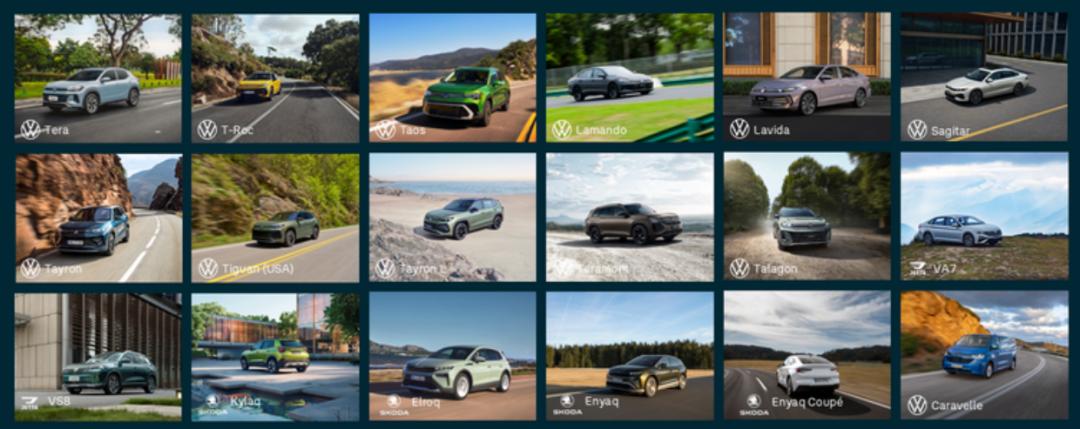
Volkswagen may be the most radical overseas traditional car company in the transformation in China. According to the group's plan, more than 20 new energy vehicle models are expected to be launched in China this year, including pure - electric, plug - in hybrid, and range - extended vehicles.
By 2027, the number of these new energy vehicle models will increase to more than 30; by 2030, it will further expand to about 50, among which about 30 are pure - electric models.
Of course, simply increasing the sales volume is not the secret to success. The key lies in whether the features of the models are competitive enough. In this regard, Volkswagen has stopped working in isolation and has learned to take shortcuts - cooperating with Chinese partners.
In terms of electrification, Volkswagen established a partnership with XPeng early on to jointly develop the electronic and electrical architecture.
In terms of intelligence, "Dahua Magic" are now partners of Volkswagen's various brands. For example, the Audi Q6L e - tron and Audi E5 Sportback launched last year have also received positive feedback.
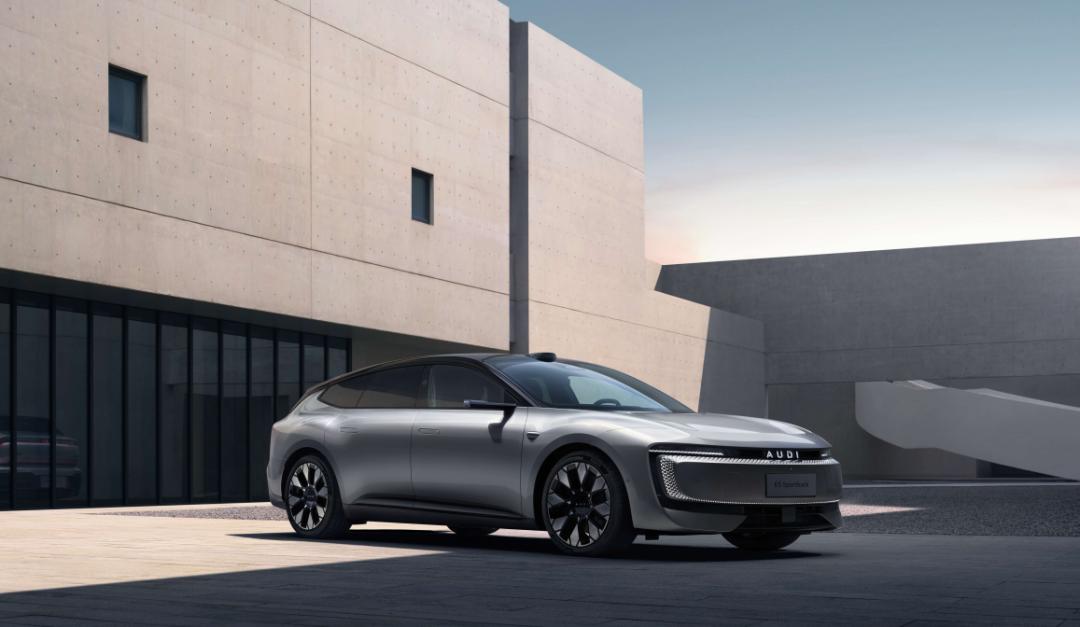
In this cold wave sweeping the traditional automotive industry, Volkswagen has gradually found a breakthrough. Other representative German car companies, such as BMW and Mercedes - Benz, are also struggling to transform in electrification and are seeking cooperation in China...
The "Chinese content" of joint - venture cars is clearly increasing.
On the electrification transformation path of these traditional automotive manufacturers, Germany has also started to provide strong support recently -
Germany's Ministry of the Environment just announced this week that it will restart the electric vehicle subsidy policy for private consumers, which applies to pure - electric, plug - in hybrid, and range - extended vehicles registered since January 1st this year, and the subsidy will last until 2029.
According to the government's grading standards, subsidies will range from 1,500 to 6,000 euros (about 12,200 to 48,800 yuan) depending on the vehicle type, family size, and income level.
Germany launched this electric vehicle subsidy policy in 2016 but stopped it in 2023 due to budget reasons.
Interestingly, Germany's new policy this time is different from those of its neighboring countries - the subsidy is also open to Chinese brands.
Does this mean that the era of Chinese electric cars being exported back to Germany is about to begin?
This article is from the WeChat public account "Intelligent Vehicle Reference" (ID: AI4Auto), author: Jessica, published by 36Kr with authorization.