Huawei Reaches the Top: Whose Cake Did It Take?
After a five-year hiatus, Huawei has returned to the top of the Chinese mobile phone market with a shipment volume of 46.7 million units, holding a market share of 16.4%.
Five years ago, Huawei ranked first in the Chinese mobile phone market with a shipment volume of 125 million units and a market share of 38.3%.
Although there is still a gap compared with its peak in 2020, after five years of perseverance and progress against the odds, Huawei mobile phones have truly made a comeback and reclaimed the top spot in the Chinese market.
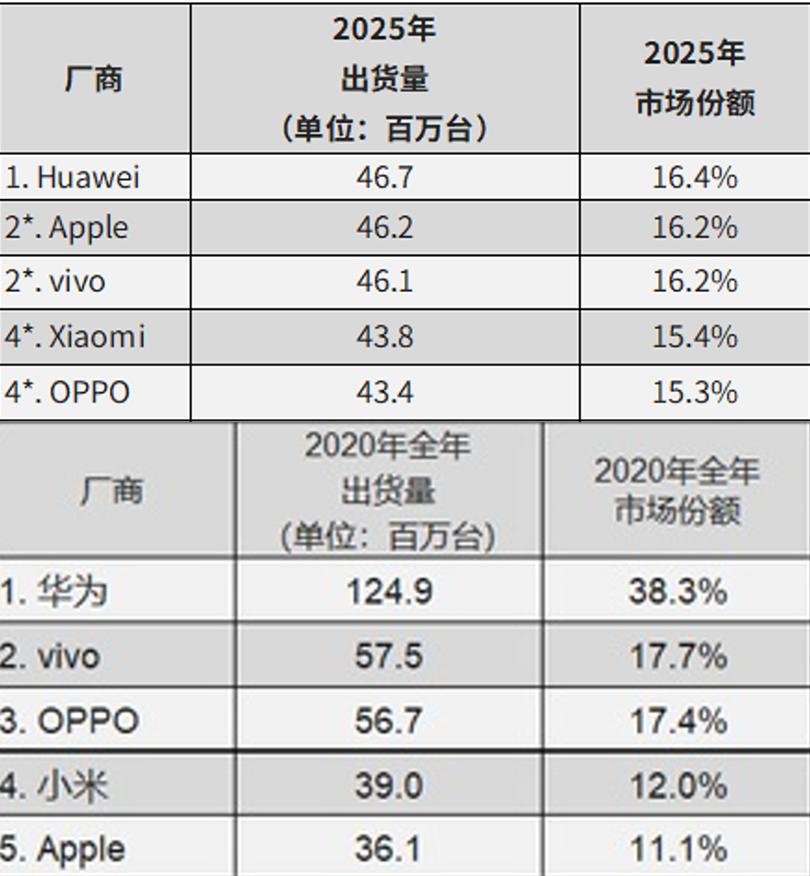
Huawei's annual mobile phone shipment volume and market share in 2025 and 2020. Source: IDC
As the chip supply gradually stabilizes, some digital bloggers have even boldly predicted that in 2026, an all-round battle between Huawei and Apple will begin, leaving no room for other players in the high-end market.
But is this really the case?
Beyond Huawei's remarkable performance, other mobile phone manufacturers have also been actively involved. Behind the detailed data from various perspectives, we can see a more realistic picture of the Chinese mobile phone market. Huawei's first place is not an overwhelming lead:
The intense competition among Huawei, Apple, and vivo in the top three positions has narrowed the gap to "tens of thousands of units." Among the top three, both Huawei and vivo experienced year-on-year declines in shipments. There is a "millions of units" gap between Huawei's activation volume and shipment volume, and its activation volume ranks fifth. Despite the aggressive promotion of AI mobile phones and the stimulus of national subsidies, the overall market in 2025 still faced a downward trend. The rising storage costs have become a heavy burden, leaving no breathing space for the industry.
The Chinese smartphone market in 2025 is neither simple nor peaceful.
How many overlooked details are hidden behind the data battle? Whose market share has Huawei captured? What new storms are brewing in the turbulent market?
After delving into the data and interviewing multiple industry insiders, we attempt to find the answers.
01. Ranking first in shipments but fifth in activations. Can Huawei's "first place" hold up?
Is Huawei's "first place" truly solid? We try to find the answer from more dimensions.
According to IDC data, throughout 2025, Huawei's mobile phone shipments returned to the top in the Chinese market. However, its shipment volume decreased by approximately 2% year-on-year, which is basically in line with the overall decline of the market.
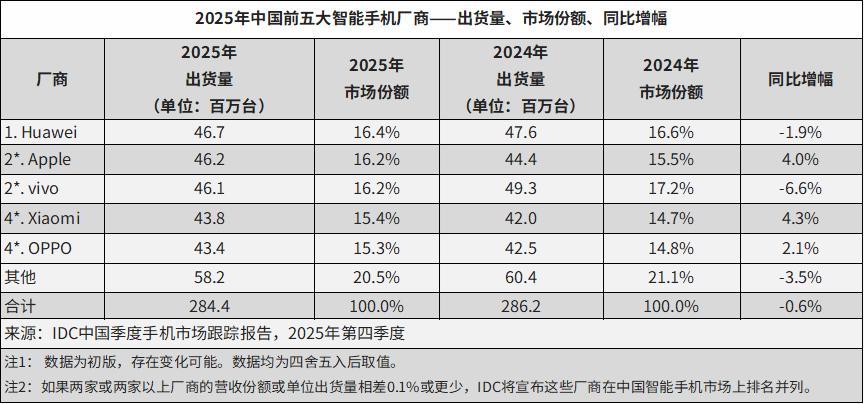
In contrast, Xiaomi, Apple, and OPPO maintained year-on-year positive growth, with Xiaomi having the highest growth rate of 4.3%.
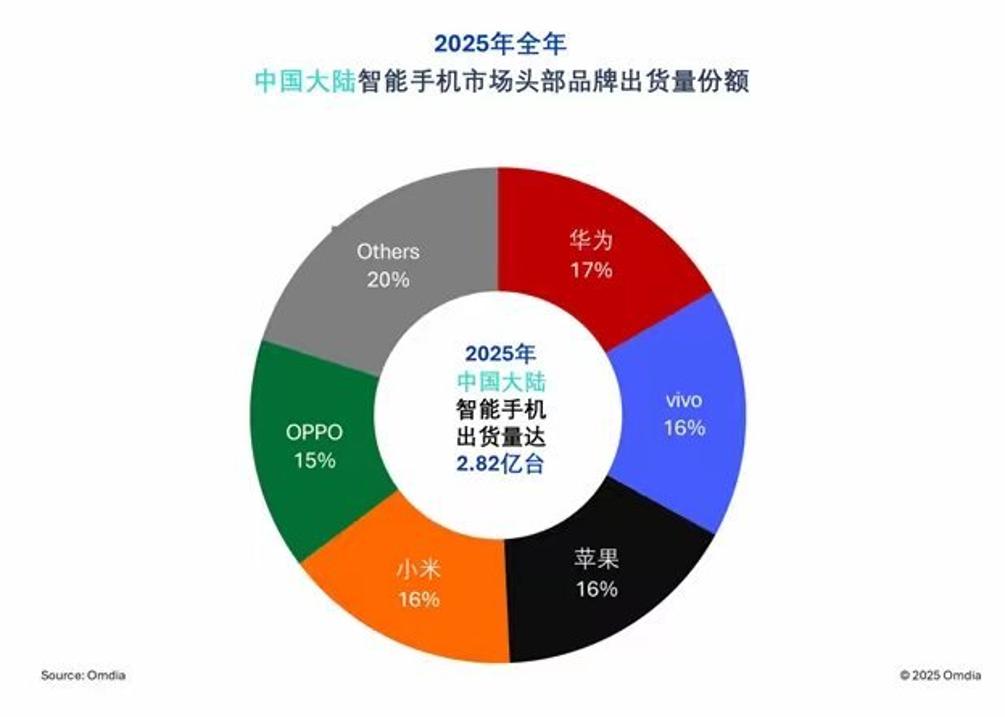
Mainstream market research institutions such as Counterpoint, Omdia, and IDC all ranked Huawei, Apple, and vivo among the top three in the Chinese mobile phone market shipments in 2025. Since the shipment volumes of vivo and Apple are very close, they can basically be regarded as tied for second place.
In the fourth quarter of 2025, Huawei's mobile phone shipments ranked fourth, with a year-on-year decline of 10.3%.
From the data, we can see that although Huawei ranked first, the trend is not optimistic, and the gap with the second and third places is not significant.
According to IDC data, Huawei's advantage in achieving the "first place" in shipments in 2025 was mainly concentrated in the first half of the year: It ranked second in the first quarter and returned to the first place for the first time in the second quarter. The main sales period of the Huawei Mate 70 series and the release and main sales period of the Pura 80 series were all in the first half of 2025.
From the perspective of actual "activation volume" data statistics, Huawei not only failed to rank first but dropped to fifth place.
Mobile phone activation volume is another data statistical measure and has become a focus of attention for many digital bloggers. An industry insider told Zhidx that this type of data is generally counted by telecom operators rather than market research institutions.
The most discussed chart recently shows the ranking of mobile phone activation volumes in the Chinese market in 2025. The top five rankings differ significantly from the IDC shipment volume rankings. Among them, vivo, Xiaomi, and Apple ranked in the top three, while Huawei ranked fifth.
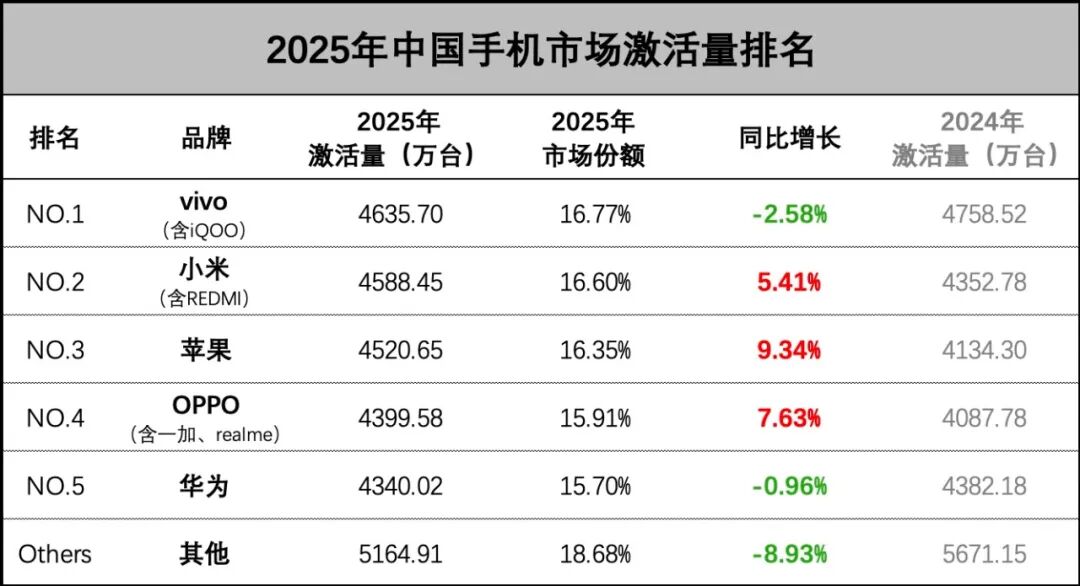
Source: Weibo blogger Digital Chat Station
Judging from the difference between activation volume and shipment volume, the activation volumes of vivo, Apple, and OPPO are basically in line with their shipment volumes, with a small difference. Xiaomi's activation volume significantly exceeds its shipment volume, with a gap of about 2 million units. In contrast, Huawei's activation volume is far lower than its shipment volume, with a gap of over 3 million units.
Of course, the data from these two dimensions are not from the same institution, and the comparison is only for reference. Generally speaking, when the shipment volume far exceeds the activation volume, it means there is a certain amount of inventory backlog.
Whether it is the shipment volume or the activation volume, the above observations are all in the short term. If we extend the time line to the past five years, we can see that Huawei is at an upward peak. Whether it can maintain its first place still depends on its future market performance.
Looking at the rankings in the past five years, the pattern of the top six in the Chinese mobile phone market has been basically stable. Among them, vivo ranked first for three years, OPPO has always been within the top five, Apple reached the top of the Chinese mobile phone market in 2023, and Xiaomi has generally ranked between fourth and sixth in the domestic market.
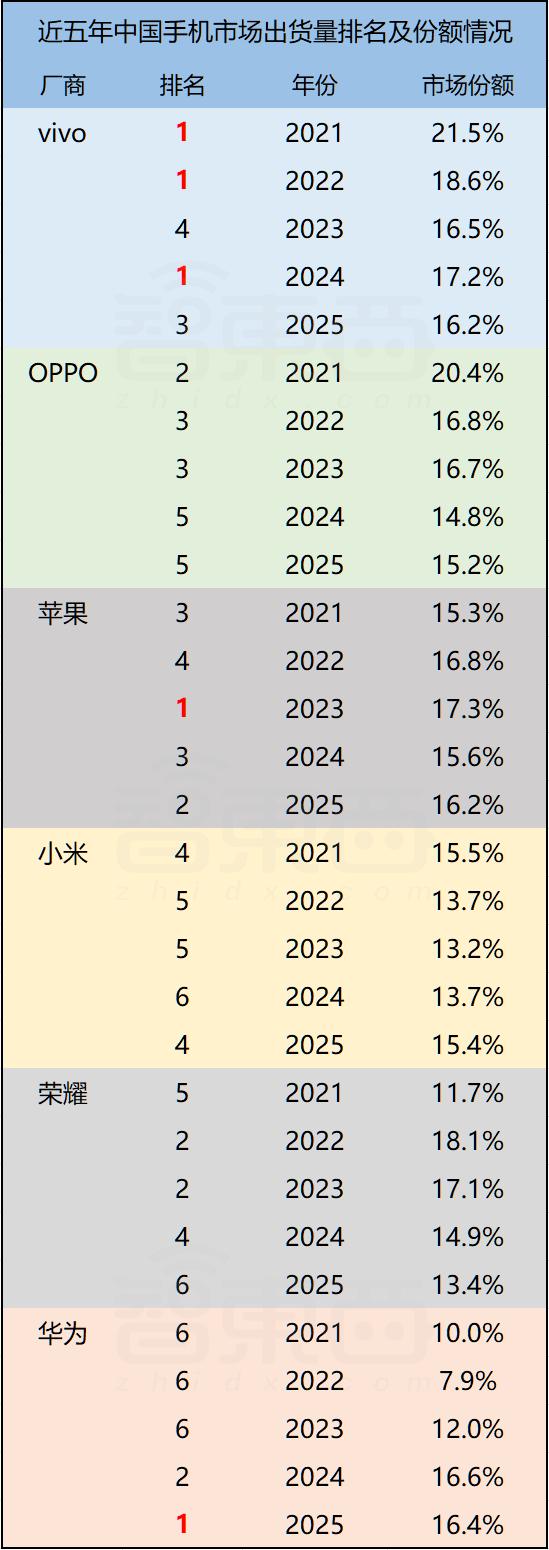
Ranking and market share of the Chinese mobile phone market from 2021 to 2025
There is an obvious "reverse complementary" trend between the Honor and Huawei brands. Before the release of the Huawei Mate 60 in 2021 - 2023, Huawei's mobile phone shipments were relatively low, ranking outside the top five. Meanwhile, the newly - established Honor in 2021 grew rapidly and reached the second place in the Chinese market in 2022 and 2023.
In 2024 and 2025, when Huawei's mobile phones quickly returned to the market and its market share soared, Honor's market share gradually decreased.
Overall, although Huawei has topped the Chinese mobile phone shipment market, it faces obvious downward pressure and challenges from many strong competitors. The competition is extremely fierce.
Whether Huawei can maintain its leading position in 2026 will become the focus of attention in the industry.
02. It only took two years from return to the top. Without 3nm chips, why did Huawei's flagship phones sell so well?
Although the leading margin is not significant, there is no doubt about Huawei's mobile phone "return" and rapid growth.
Which Huawei mobile phones sold particularly well? And who is buying Huawei mobile phones?
According to the ranking of single - model shipments of flagship phones in the Chinese market compiled by a well - known digital blogger, there were approximately 28 models with shipments exceeding one million in 2025. Among them, Huawei accounted for 11 models, including multiple models in the Huawei Mate 70 series, the Huawei P70 series, multiple models in the Huawei Mate 80 series, and two models in the Huawei foldable Mate X6 series.
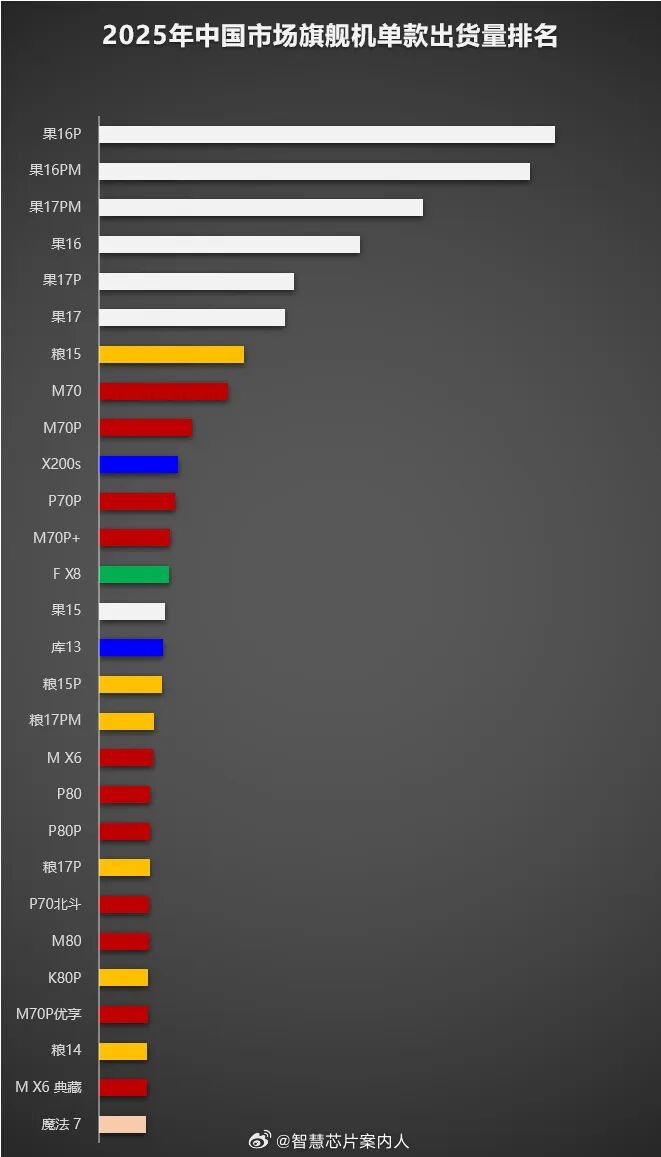
Source: Weibo blogger Smart Chip Guide
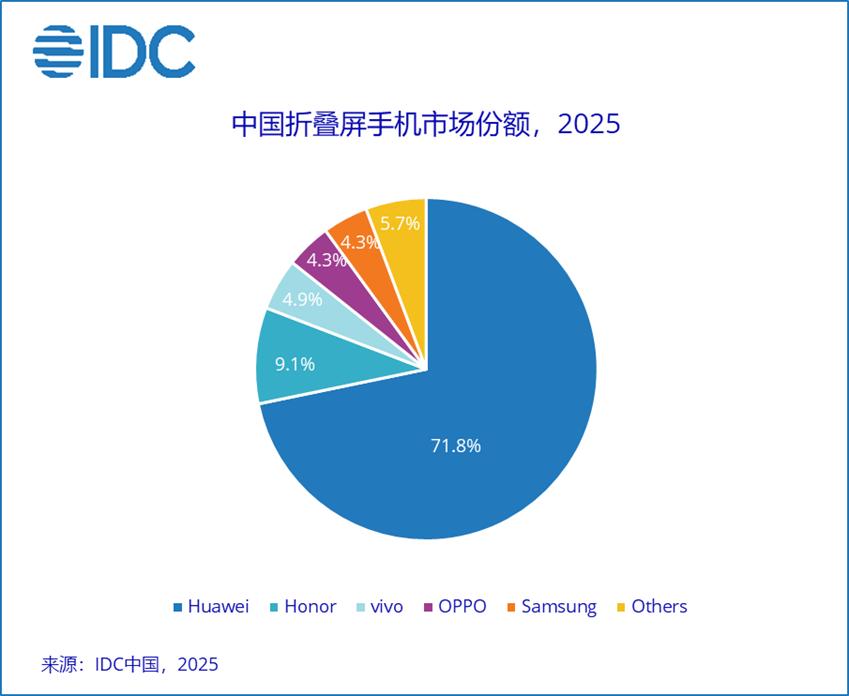
Huawei is in a league of its own in China when it comes to selling over one million foldable phones. According to IDC data, in the Chinese foldable mobile phone market in 2025, Huawei's foldable phone shipments led by a large margin, accounting for over 70% of the market share. Honor, vivo, and OPPO ranked second, third, and fourth respectively, with a significant gap from Huawei.
The blogger also released the activation data of the Huawei Mate 70 series within three months of its launch. The activation volume of the Mate 70 standard version was close to 3 million units, and the Pro+ and Pro Premium versions also had an activation volume of about 1.45 - 1.55 million units. Even the RS Master Edition, which is priced close to 10,000 yuan, had an activation volume of about 660,000 units.
It can be seen that a large number of popular products are a major guarantee for Huawei's high shipment volume.
Why can Huawei's mobile phones sell well despite the key chip restrictions? Based on the views of multiple industry insiders, product strength, brand power, and comprehensive experience are the frequently mentioned keywords.
A senior Huawei dealer told Zhidx that during the period when Huawei was "absent" from the market, its brand power was not lost, and its high - end brand image remained unchanged. Therefore, once the products returned and the supply was sufficient, the growth in shipments was a natural result.
In June 2025, Quest Mobile released a report. From the perspective of brand loyalty, Huawei users have relatively high loyalty, second only to Apple and OPPO. The repurchase rate exceeds 40%, and 27.4% of Honor users choose Huawei when changing their phones.
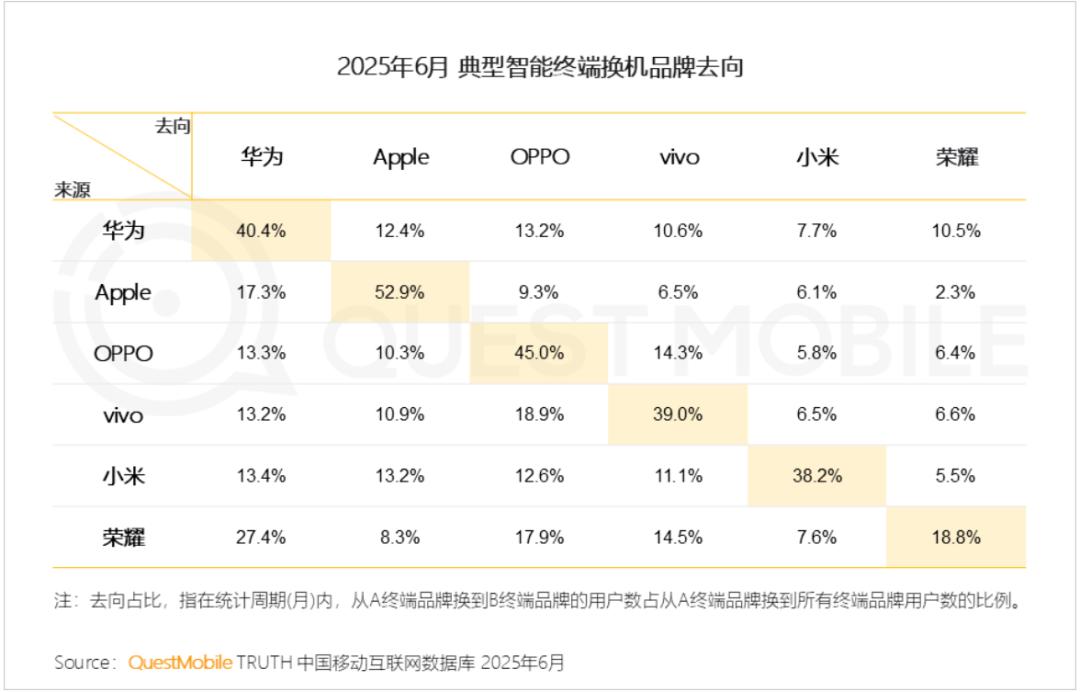
In addition to Honor, the second - largest source of non - brand users for Huawei is Apple, accounting for 17.3%, which is a relatively high proportion. In the mobile phone consumption of the "new middle - class" group, Huawei leads by a large margin with a market share of over 40%.
In short, Huawei's high - end brand image has remained unchanged.
From the perspective of product strength, the restrictions on chip manufacturing processes have not had an obvious negative impact on Huawei's flagship phones.
According to the leaked test results, the latest Kirin 9030 Pro installed in the Huawei Mate 80 has a multi - core score very close to that of the Qualcomm's fifth - generation Snapdragon 8, a flagship chip in 2025 based on TSMC's 3nm process, and the latest Apple A19 Pro in the iPhone 17 series.
In addition to peak performance, the Kirin 9030 Pro has good power consumption control. In actual games, it has a certain advantage in temperature compared with contemporary flagship phones. The power consumption advantage also enables the Mate 80 series to perform well in terms of battery life. In Huawei's strong suit of communication, the advantage is even more prominent.
From the software perspective, after six generations of iteration, the "pure - blooded" native HarmonyOS has quickly improved its application ecosystem and basically covers all mainstream applications required by consumers in their daily lives.
It can be said that Huawei's flagship phones still rank among the top in terms of comprehensive experience in performance, imaging, AI, communication, battery life, etc., and have not been left behind by competitors. This is the fundamental support for Huawei to continuously create popular products and gain recognition upon its return.
03. A bold move of cutting prices by 800 yuan against the trend and joining the "national subsidy wave" to reap huge benefits
In addition to the mobile phone product experience, competitive pricing is also one of the core driving forces for the popularity of Huawei's mobile phones, as commonly believed by industry insiders.
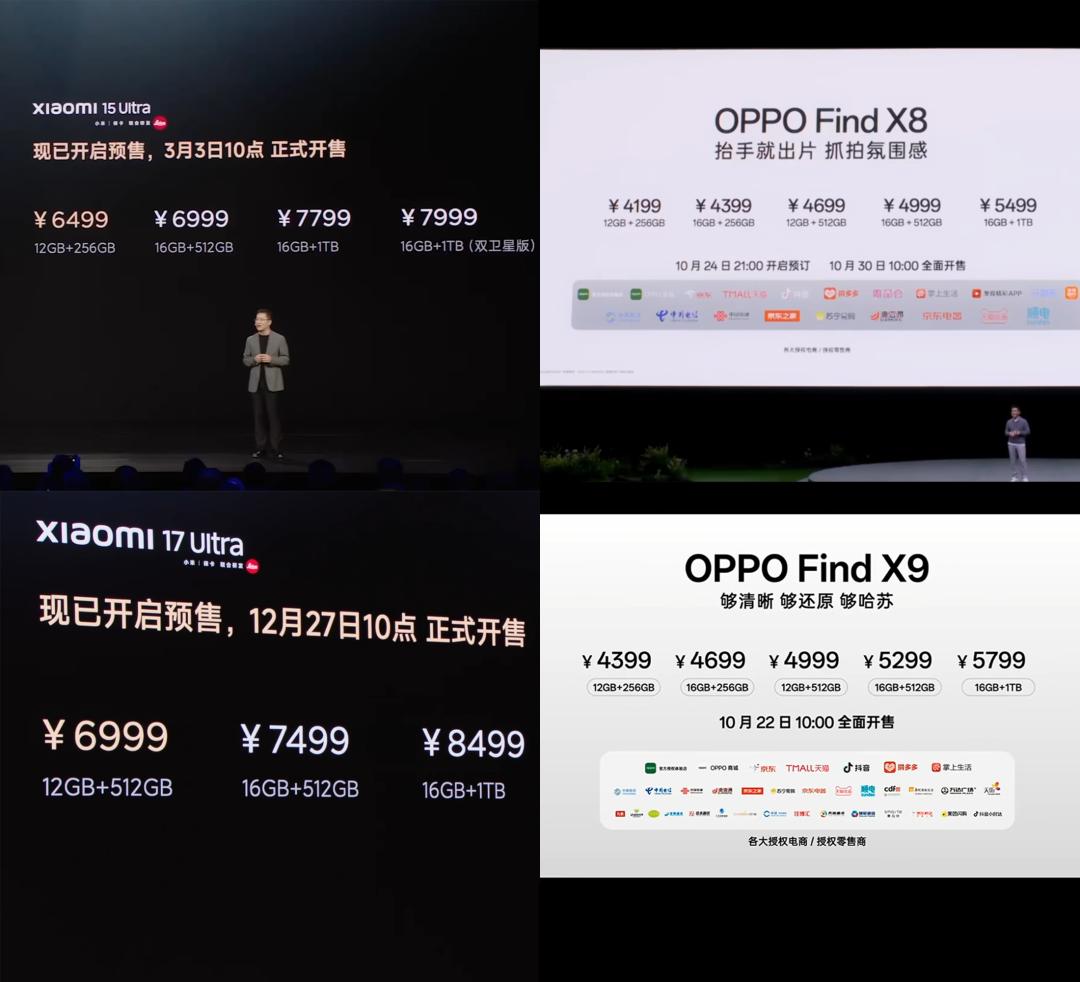
In 2025, when storage prices soared, many manufacturers raised the prices of their flagship models to some extent, especially for the high - capacity storage versions. For example, the 16GB + 1TB version of the Xiaomi 17 Ultra is 700 yuan more expensive than the previous - generation model with the same specifications. The 512GB and 1TB versions of the vivo X300 series are 300 yuan more expensive than the previous generation, and the 512GB and 1TB versions of the OPPO Find X9 series are also 300 yuan more expensive than the previous generation.