Who is "supporting" Tooz?
On the Bambu Lab community on Reddit, a netizen shared a photo of their chicken nonchalantly standing on the Bambu A1 machine and refusing to leave. The netizen complained, "Usually it just sits beside and watches, but today it crossed the line."
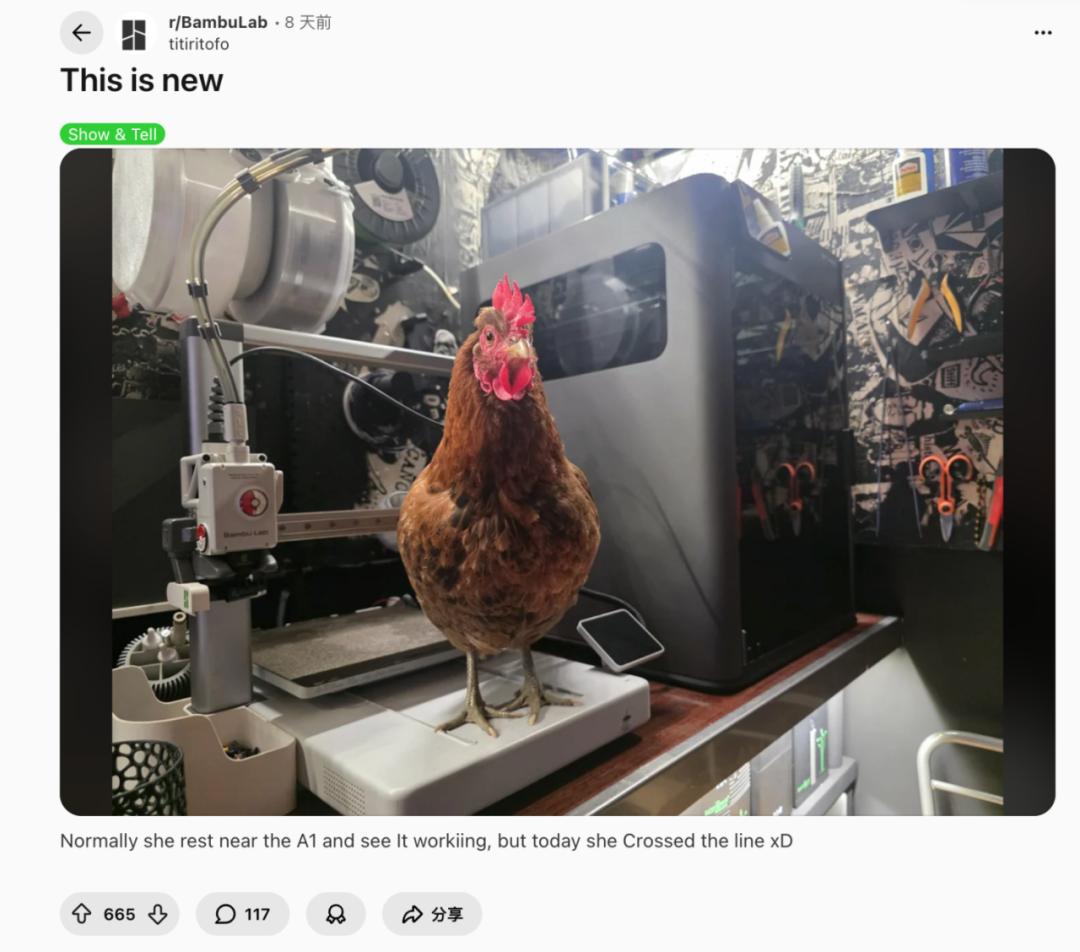
A real animal and a 3D printer together (Screenshot from Reddit)
After the post was published, the comment section quickly became lively.
"It looks like a very complex printed work."
"At least the poop must be huge."
"You should print an egg and put it on. It'll just lie there."
"The details are nice. What filament did you use?"
"How about printing a fox and putting it beside?"
"Why doesn't my A1 printer work? What parameters did you use to print the chicken?"
In just a few days, this post received over a hundred replies. This is just an ordinary post in the Bambu Reddit community, and similar content is created here almost every day.
From a traditional marketing perspective, this UGC content is uncontrollable, non - reproducible, and not brand - compliant. However, in terms of results, it forms a stable, real, and sticky communication foundation for modern brands.
Data shows that the Bambu Reddit community currently has over 330,000 members, the Facebook discussion group has over 88,000 members, and the official Discord group has 8,000 online users. Its activity level ranks among the top in technology - related communities.
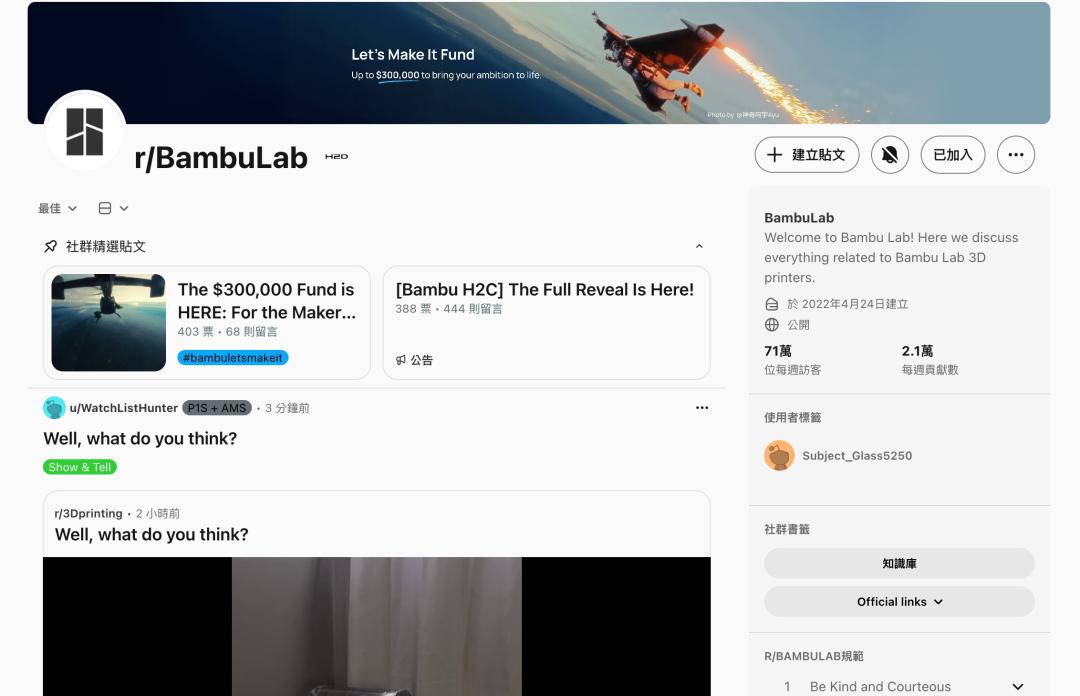
The Bambu Reddit community is very active (Screenshot from Reddit)
Judging from the weekly visitor count on Reddit alone, the Bambu Reddit community has about 710,000 visitors. In comparison, the leading consumer brand Apple has about 910,000 visitors, and DJI, another brand popular among geeks, has 250,000 visitors.
It can be seen that for a non - mass - market brand, this is an extremely rare scale. What are people talking about? Why are they willing to talk here, there, and everywhere?
The Sales Champion Is Here
The 3D printing field is a highly specialized and niche geek market with a relatively high learning curve.
In communities like Reddit, users are often more concerned about specific problems rather than brand slogans.
"My print failed. What's wrong with my machine?"
"Which filament is more stable, and how can I save more materials?"
"Hey, I've made a new 3D printed work. Welcome to use it."
"Finally bought the machine. Can't wait to have a try."
Surrounding the topic of "how to better use 3D printing machines", the questions are repeatedly discussed, answered, and expanded. Many posts have little to do with the Bambu brand itself, but they revolve around the same consensus: after having this machine, life can become more creative.
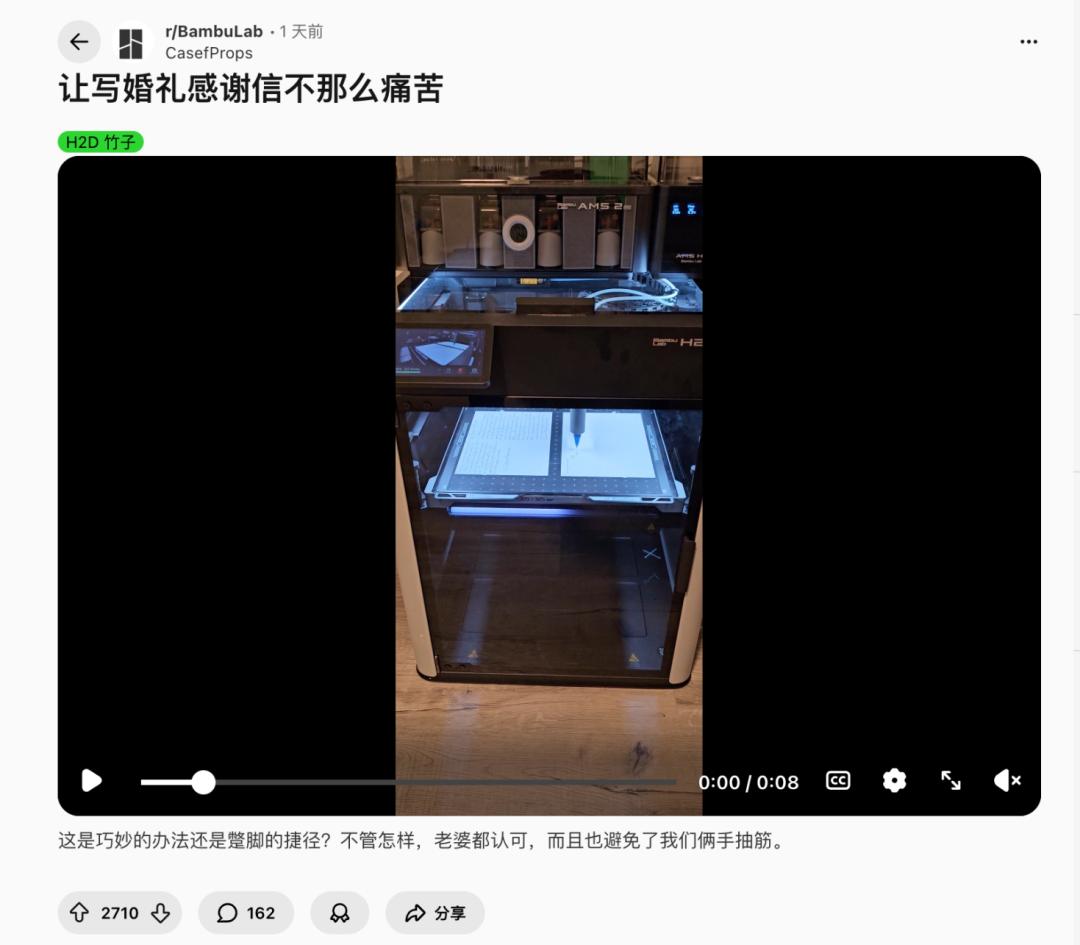
Using a 3D printer to write wedding thank - you notes seems to be a good idea (Screenshot from Reddit)
In the article "Geeks Who Left DJI Earned 6 Billion Annually with a 3D Printer | Dissecting the Invisible Overseas Champion", we dissected Bambu's rise from a product and business perspective. From a content marketing perspective, it also provides a worthy case for study.
When many brands talk about communities, content, and UGC, they tend to indulge in self - admiration.
Posting on social media and organizing offline events may seem lively, but a large amount of content is just the brand talking to itself. For users, it often feels like "none of my business", so it's hard to generate discussions.
Bambu, on the contrary, does it differently.
The core of Bambu's content marketing is its UGC system. This system doesn't rely on a large number of KOLs or a bunch of viral content, but on Bambu's official community, MakerWorld.
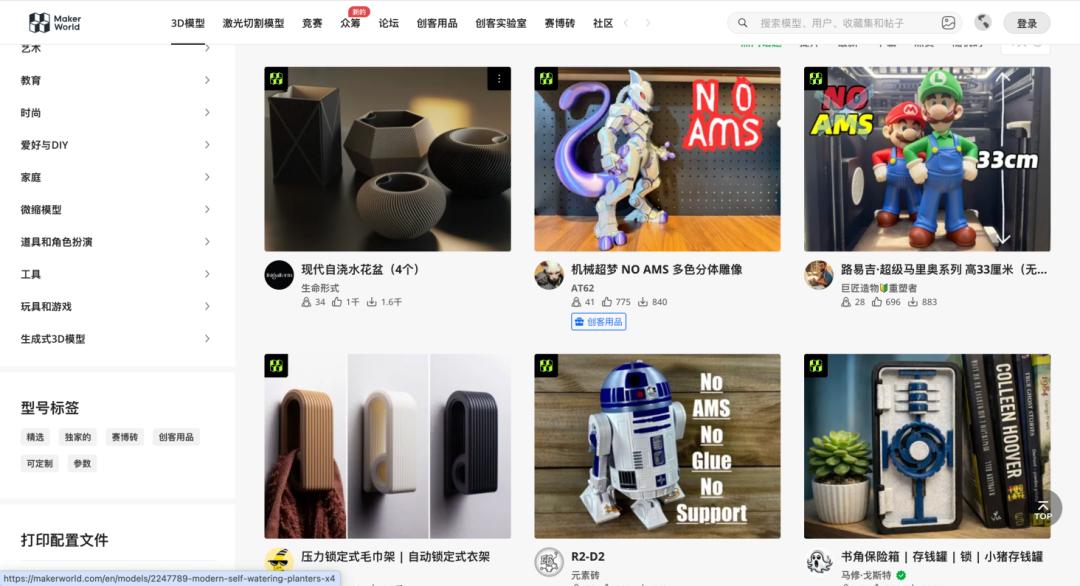
Bambu's official community, MakerWorld
MakerWorld is a platform where users can download 3D printing models for free. Dongfang Liang, the person in charge, once described the significance of MakerWorld to Bambu in an interview: "It's like the many zeros after the number 1. The better MakerWorld performs, the more it will support Bambu's hardware."
In the 3D printing ecosystem, MakerWorld solves a core problem: what to print. For many users, the first two months after buying a 3D printer are usually the most exciting. They print all kinds of models crazily. But as their inspiration dries up, the printers soon gather dust.
Initially, MakerWorld was created to reduce this user churn. Through continuously updated models, competition mechanisms, and user - contributed content, Bambu keeps creating new usage scenarios for users.
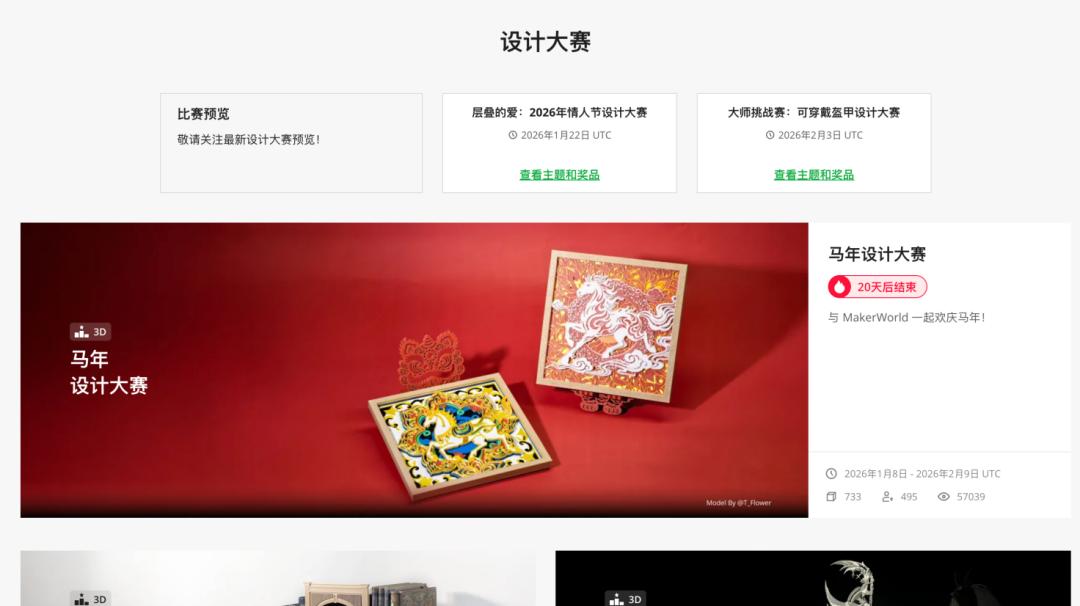
Bambu encourages KOLs and KOCs to create content through competitions and incentives (Screenshot from relevant source)
As more and more models are uploaded, downloaded, and modified, users become more dependent on the devices. Meanwhile, Bambu has inadvertently created a well - recognized 3D printing community.
From MakerWorld to Reddit, Bambu provides platforms, tools, and mechanisms, laying a fertile foundation for users to create content and allowing it to grow naturally.
In more public environments like YouTube and Instagram, the effectiveness of content is further amplified by algorithms.
For example, Freddyprops, a YouTuber who is also an artist and a maker of film and special - effect props, 3D printed a chain mail using Bambu's machine and wore it to the premiere of the Netflix film "Jay Kelly", creating a cross - border effect.
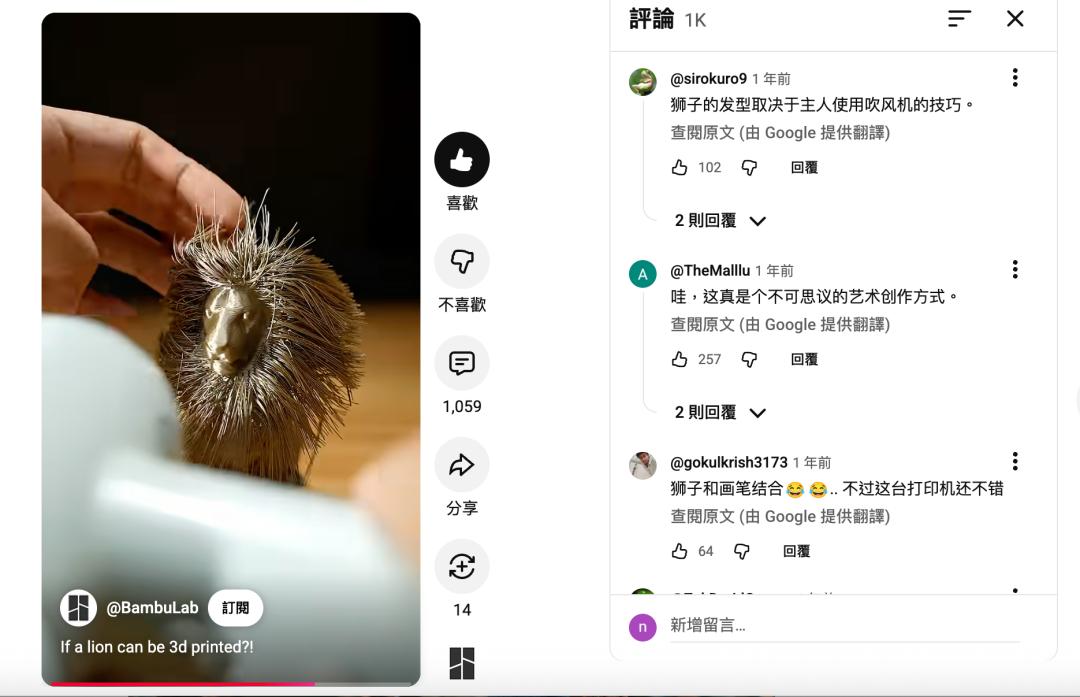
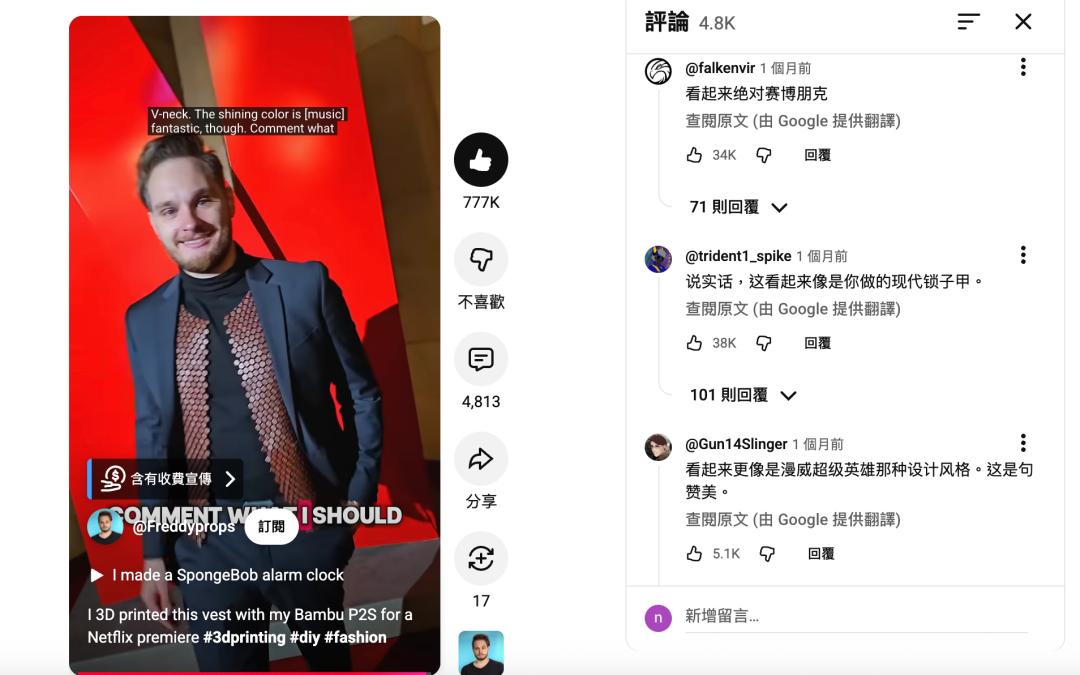
Bambu's content marketing in public communities is also eye - catching (Screenshot from YouTube)
"The sales champion is here" is the highest praise users give to promotional content on social media. For Bambu, the "sales champion" could be Reddit, MakerWorld, or YouTube. They all point to the same thing: Bambu users and UGC content.
Sell Products and Sell Emotions
In the world of IP fan - created content, it's a common belief that the more "cooks" (creators) there are, the more derivative works there will be, and the greater the commercial potential. The same goes for brands.
Communities based on common interests, high transparency, and user initiative are the breeding grounds for a lot of creativity. These users are not only consumers but also creators, or more precisely, seed users.
When a brand has enough seed users, a community will naturally form. This also means that the probability of creating viral content will be greatly increased. Although these viral contents may not necessarily translate into sales, they can invisibly enhance the connection between the community, users, and the brand.
For example, in Bambu's Reddit community, when someone shares "Just got the machine and going home to unbox it", they'll receive a lot of likes and experience - sharing. Everyone can't wait to welcome a new member.
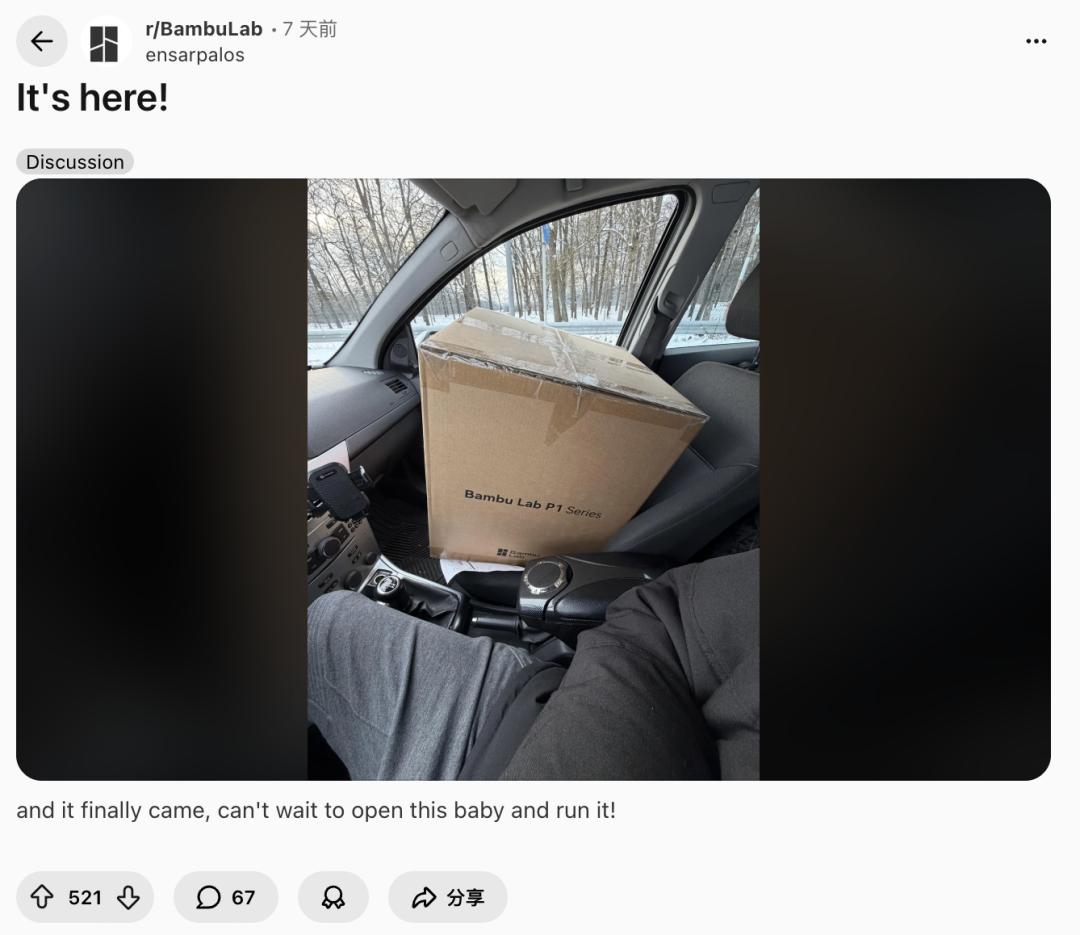
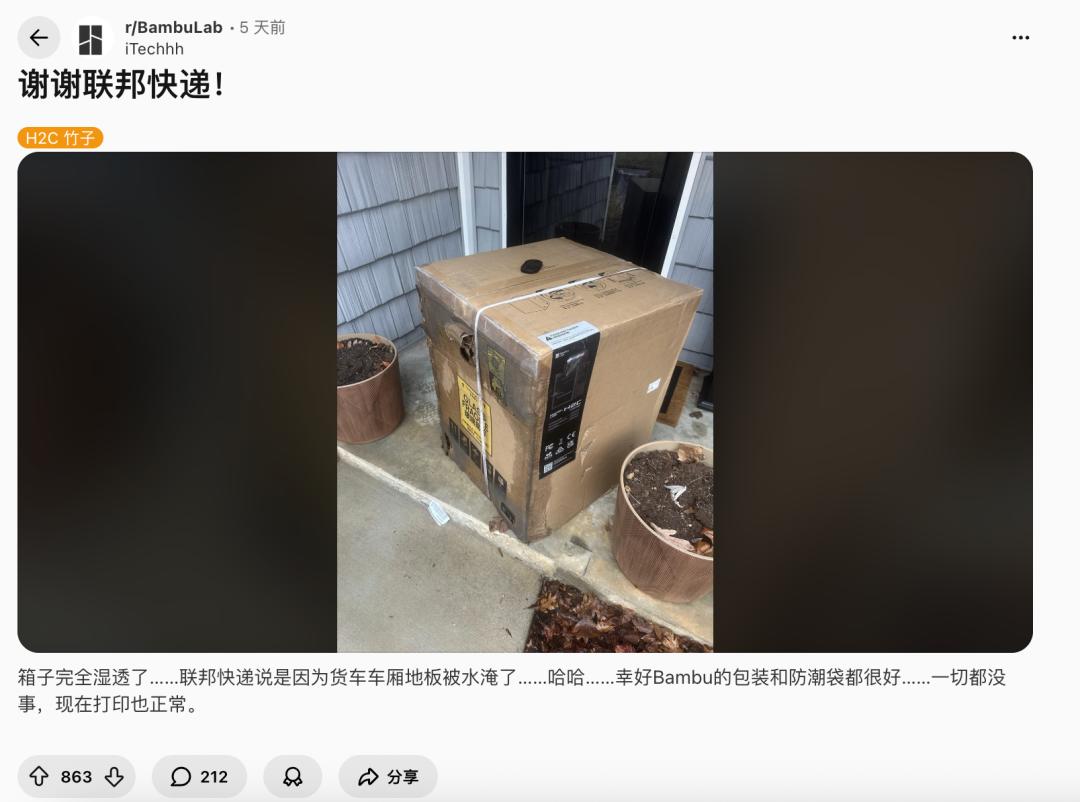
Getting a new machine is worth celebrating (Screenshot from Reddit)
Most of the time, users will share some interesting 3D - printed items they've created. A small tool for cutting tape, a self - designed lamp, or a "little eye" for a robotic vacuum... The traffic generated by these DIY contents will flow back to the official community, MakerWorld.
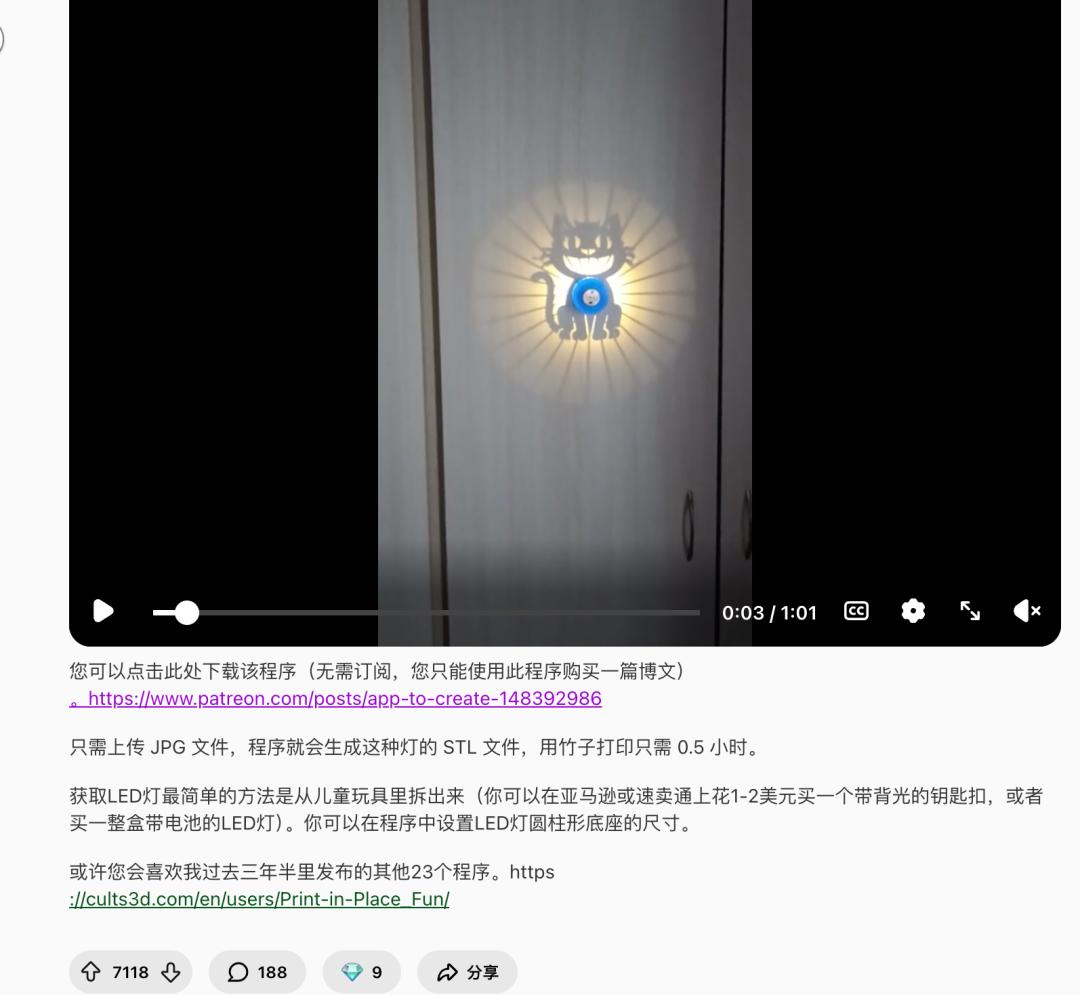
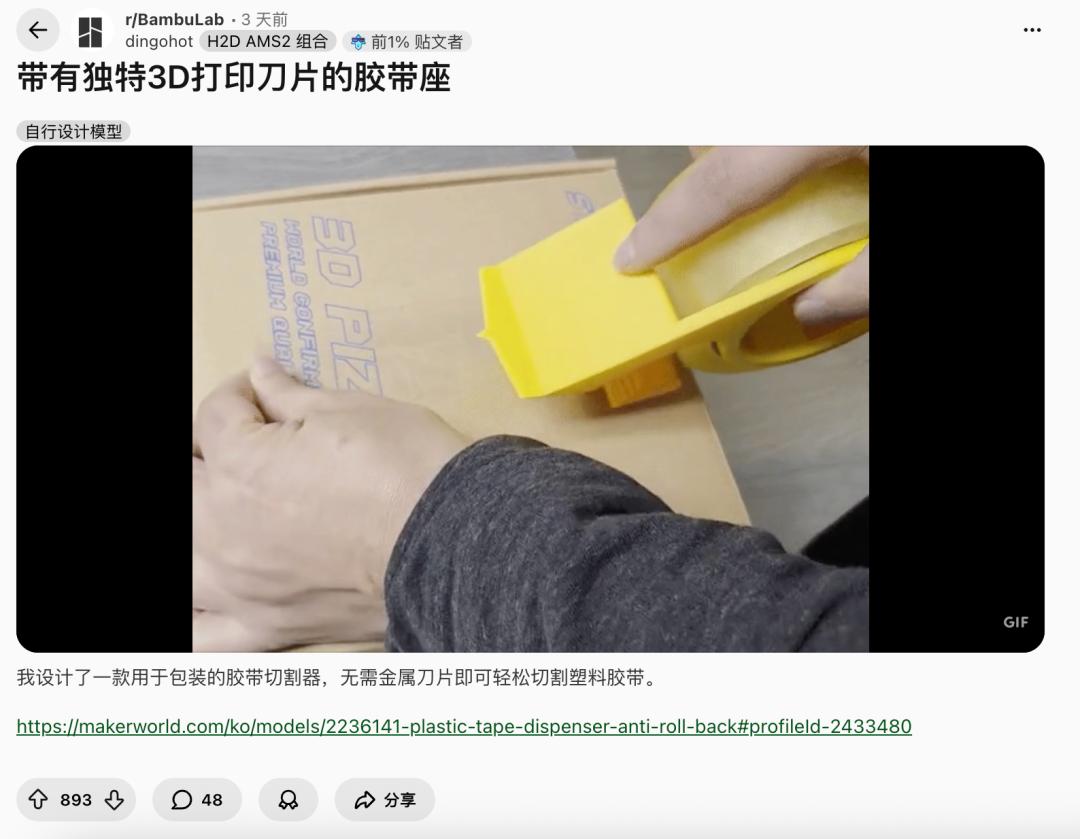
DIY small items are great for attracting traffic (Screenshot from Reddit)
So, how can such a community be built?
First of all, we believe that the current active community of Bambu is not just the result of a "brilliant idea" from the brand's marketing department. It's more due to the combination of active investment and "unintended success".
On the one hand, the products are innovative and user - friendly, leading to a rapid increase in sales. On the other hand, it has caught up with the rising trend of the 3D printing industry and platform ecosystems. Its target users highly overlap with those of platforms like Reddit and Discord. Bambu's official also attaches great importance to communicating with users. The founder has answered questions in the Reddit community.
This outcome, which is not the result of precise calculation, has objectively formed a content community that supports organic growth.
In other words, for other industries, Bambu's case cannot be completely replicated. More importantly, MakerWorld is a tangible brand community with a clear platform, usage scenarios, and continuously created content.
In today's brand environment, communities are often more of an abstract concept. They are not a specific app or discussion group but are scattered in various corners of the Internet.
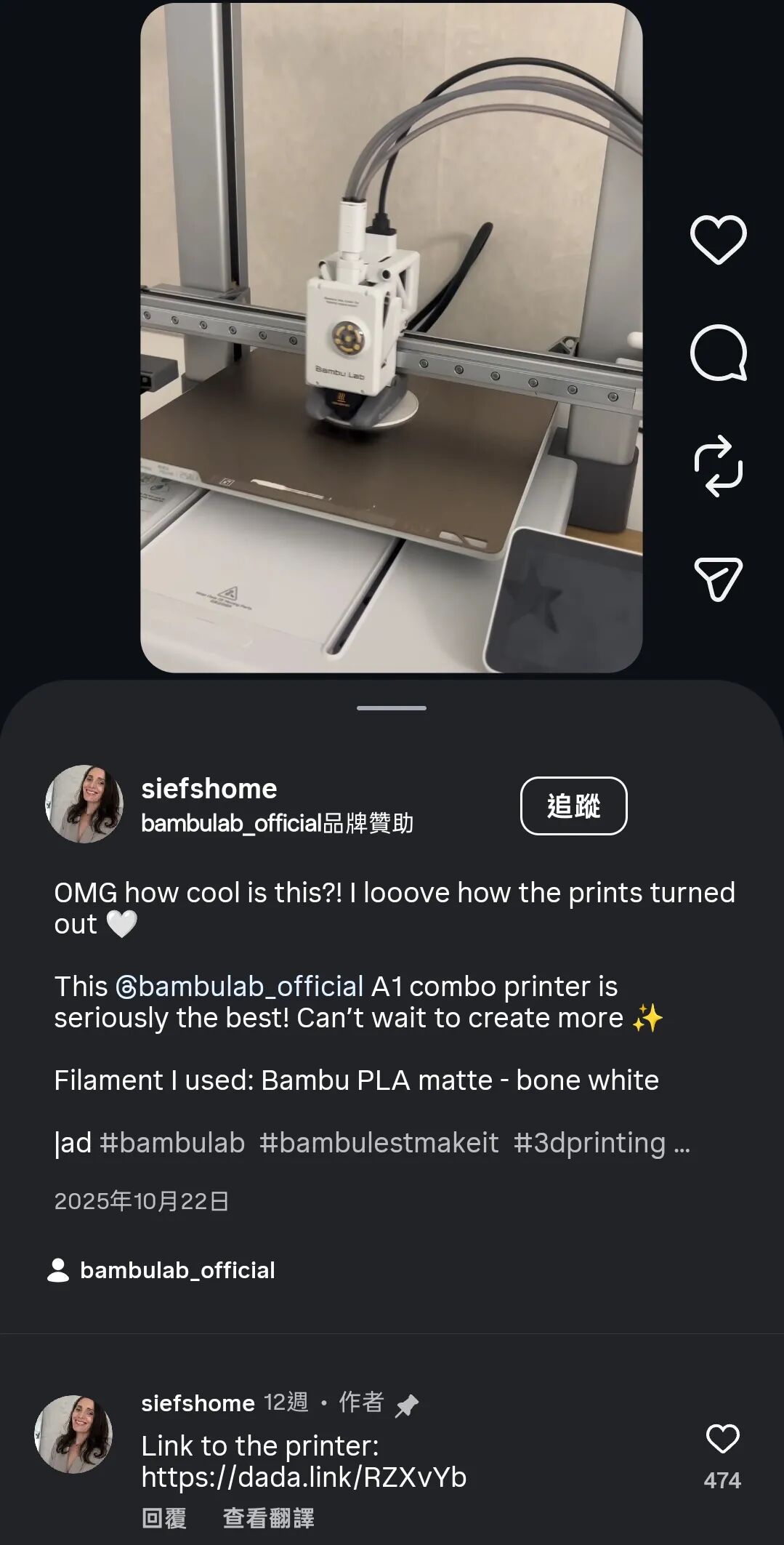
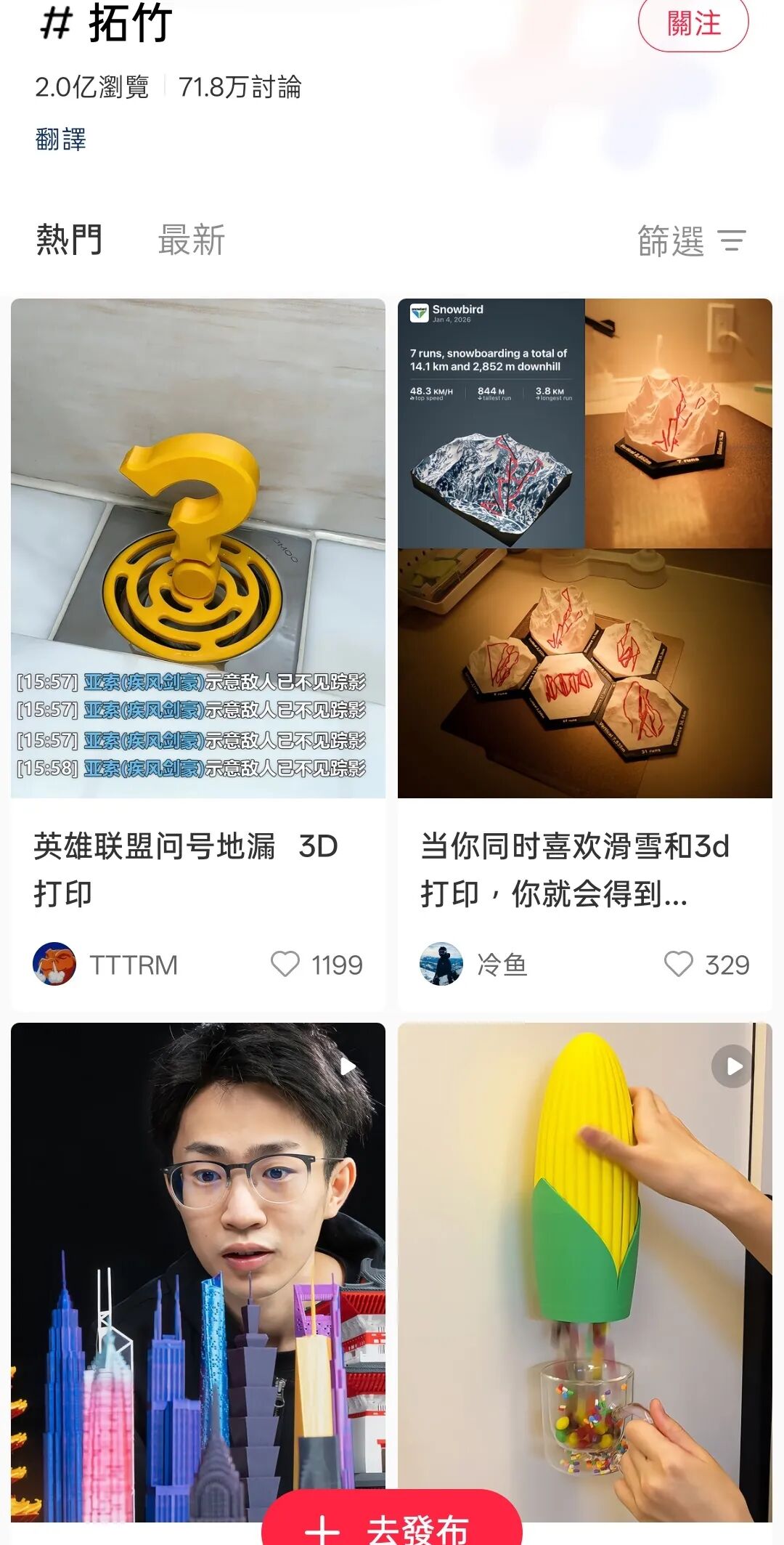
Social media hashtags and algorithms also encourage the development of UGC communities (Screenshots from Instagram and Xiaohongshu)
The turning point is that social changes have made individuals break away from the stable groups of the past, causing users to project more of themselves onto brands. This genuine emotion can sometimes make onlookers feel uneasy.
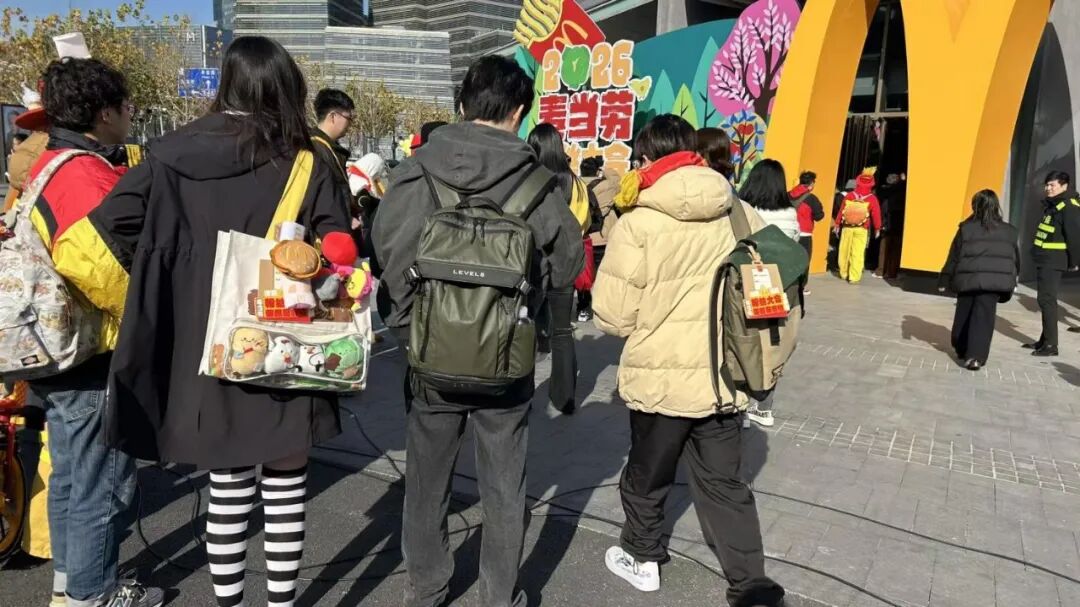
Some time ago, McDonald's held its second fan convention, and we were also invited to the event. Later, a colleague asked when talking about the event, "Were all the people there fans? Would anyone really travel from afar to attend an event for a brand?" The answer is yes.