In the 2025 new energy vehicle battle, who will win and who will lose?
Recently, the China Association of Automobile Manufacturers released the production and sales data of the automobile industry in 2025. Both production and sales volumes exceeded 34 million units, reaching a new historical high. Among them, the production and sales of new energy vehicles reached 16.626 million and 16.49 million units respectively, with year-on-year increases of 29% and 28.2% respectively, and the export volume exceeded 2.6 million units.
Behind the data is a brutal industry reshuffle: Self-owned brands have fully dominated the market, squeezing the living space of joint-venture car companies; the "Matthew effect" in the industry has become more obvious, and the top 10 car companies in terms of sales have taken more than 70% of the market share.
More importantly, the development logic of the industry has undergone a fundamental change: Simple "sales volume" is no longer the golden ticket for survival, "profit" has become the only fig leaf, "AI" has become the entry ticket to the high-end market, "management" and "cash" have become the oxygen cylinders to cross the cycle, and "going global" has become a trend.
In the new energy vehicle battle in 2025, who will be the winner? Who will be left dejected?
Market concentration is accelerating
Judging from brand sales, the "Matthew effect" in the new energy vehicle market in 2025 has become more obvious, and the market concentration has reached an unprecedented height. The top ten in the industry accounted for more than 74% of the market share, compared with about 67% in 2024, and this trend will intensify in 2026.
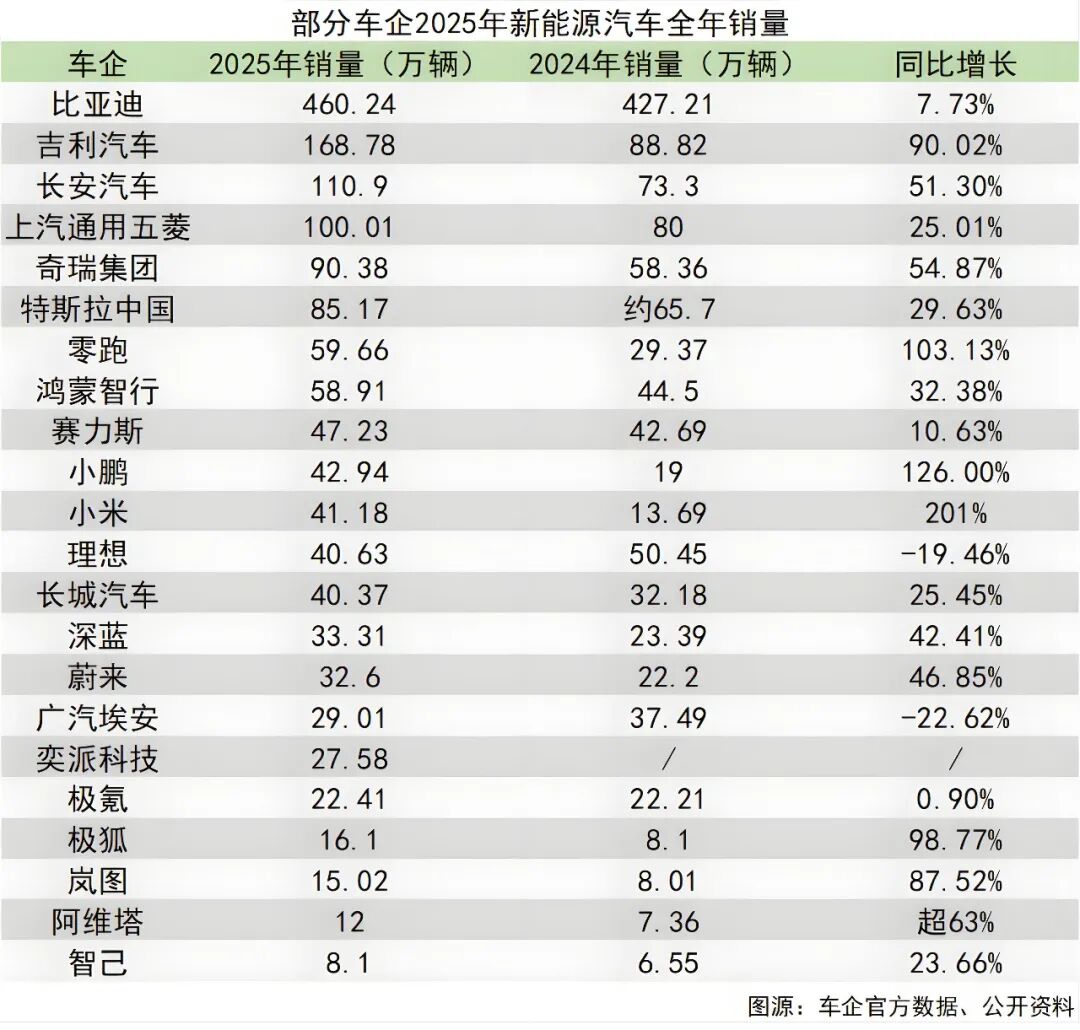
BYD led by a large margin, winning the championship for the second consecutive year with an annual sales volume of 4.6024 million units. Among them, the sales volume of pure electric models reached 2.257 million units, surpassing Tesla to become the global champion in pure electric vehicles. Its high-end brand matrix also performed brilliantly: The annual sales volume of the Fangchengbao series reached 234,600 units, a year-on-year surge of 316%, and the Denza brand continued to capture high-end market share.
Geely, Changan, and SAIC-GM-Wuling newly entered the "million club". Among them, Geely's new energy business experienced explosive growth, with an annual sales volume of 1.6878 million units. The Galaxy series achieved a sales volume of 1.236 million units in just two years, becoming the new energy vehicle that fastest exceeded one million in sales.
In contrast, the new forces camp showed a differentiated pattern of "the strong getting stronger and the weak being eliminated". Leapmotor achieved a sales volume of 596,600 units and a year-on-year growth rate of 103.13%, becoming the "growth king" among the new forces, with a target completion rate of 119.3%. Although Hongmeng Smart Mobility is not strictly a new car-making force, it has established itself in the high-end market with the rapid rise of the sales of its "Five Realms", especially the Aito series.
XPeng Motors achieved an annual sales volume of 429,400 units, a year-on-year increase of 126%. As a cross-border player that started deliveries in April 2024, Xiaomi Automobile delivered more than 411,800 units in 2025, quickly entering the mainstream camp. Although NIO's sales increased by 46.85% year-on-year to 326,000 units, there was still a large gap compared with the sales forecast of 440,000 units, forming a sharp contrast with Leapmotor, XPeng, and Xiaomi Automobile, which exceeded their targets.
Ideal Automobile, due to multiple reasons such as intensified competition in the extended-range track and difficulties in the transformation to pure electric vehicles, delivered 406,300 units throughout the year, a year-on-year decrease of 19.46%, becoming the only company among the leading new forces with a decline in sales.
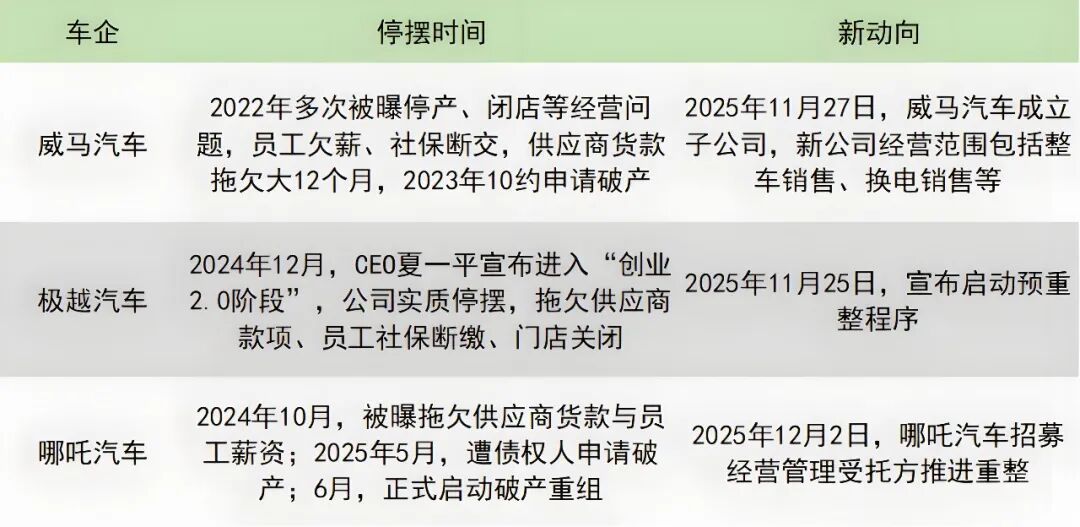
In addition, car companies in trouble such as WM Motor, Jiyue, and Nezha have not completely exited the market and are actively seeking "rebirth" through methods such as restructuring and establishing new companies.
Profit, profit, profit!
In the past few years, "trading price for volume" and "seizing the market regardless of costs" were common strategies for new energy vehicles. However, in 2025, "profit" became the keyword in the industry, and the "500,000-unit survival line" became the "profit watershed".
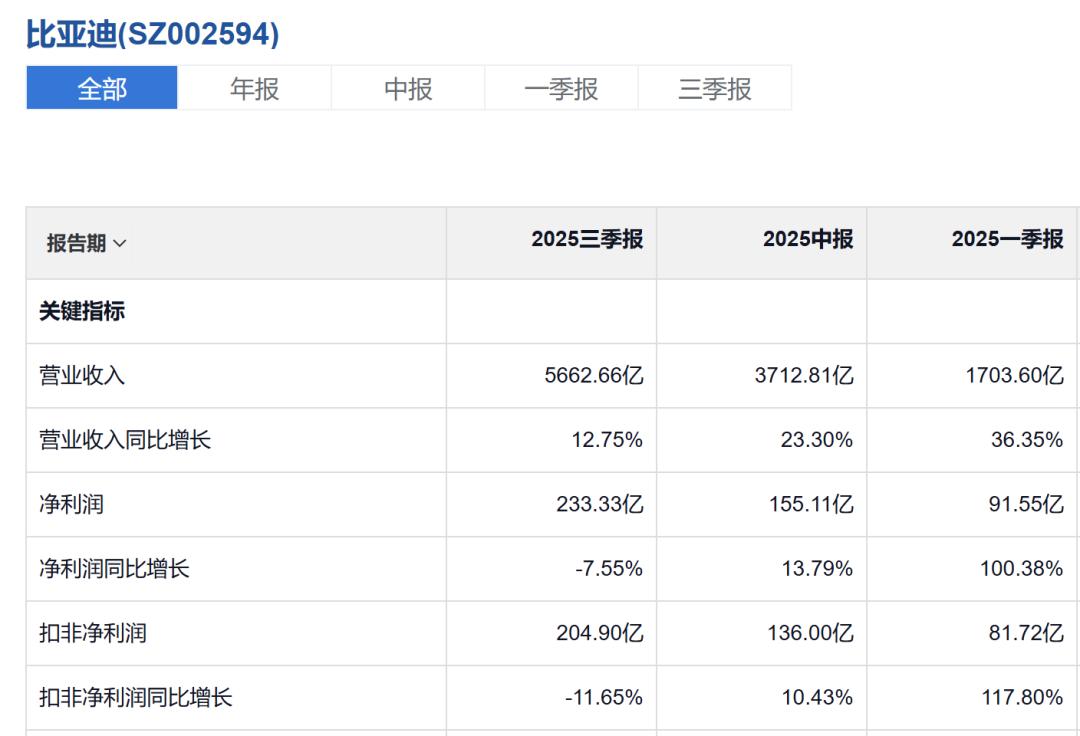
The leading car companies achieved steady profits through vertical integration and economies of scale. As of the third quarter of 2025, BYD's revenue was 566.266 billion yuan, its net profit was 23.333 billion yuan, and its gross sales margin remained at a high level of 17.87%.
Benefiting from the platformization of the SEA vast architecture and the advantages of localizing the supply chain, Geely's new energy segment achieved large-scale profitability for the first time in 2025.
Among the new forces, Leapmotor's performance was the most eye-catching: In the first half of 2025, Leapmotor's revenue reached 24.25 billion yuan, a year-on-year increase of 174%, and its net profit was 30 million yuan. Although the profit seems small, it was the first time for the company to turn its semi-annual net profit positive, making it the second Chinese new car-making force after Ideal to achieve this goal.
Xiaomi Automobile also achieved single-quarter operating profit for the first time in the third quarter of last year, with a profit of about 700 million yuan; although XPeng Motors has not yet achieved profitability, its annual loss was narrowed by 79%, approaching the break-even point.
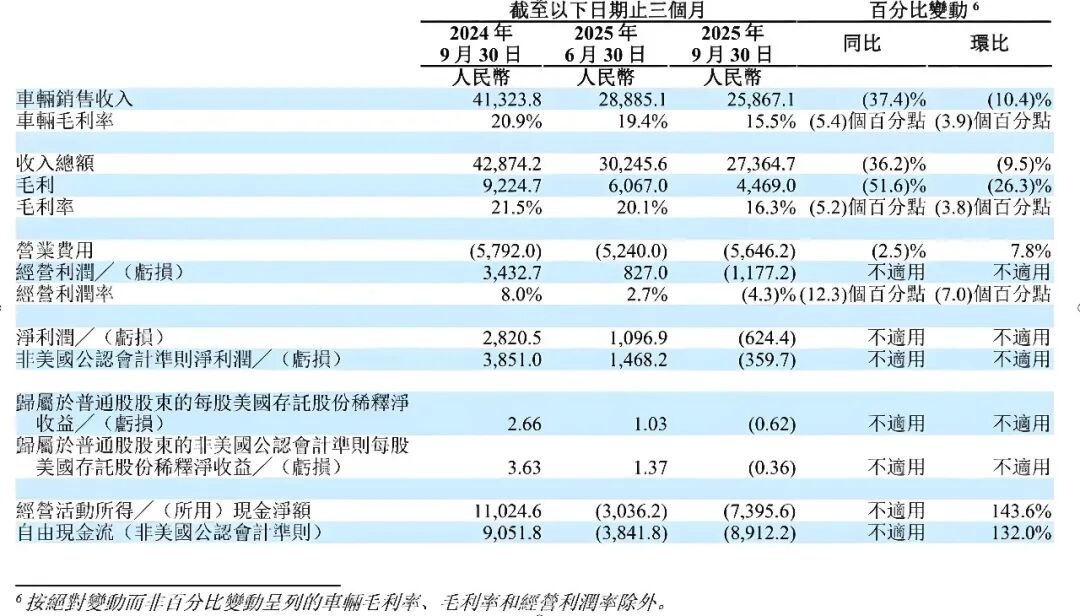
In contrast, Ideal and NIO faced a brutal reality: Although Ideal Automobile had an impressive delivery volume, challenges in the market for its pure electric models (MEGA, i6) and the dual pressure of policies and public opinions on its extended-range technology led to inventory backlogs and frequent promotions. In the third quarter of 2025, it unexpectedly fell into a loss (net loss of 624 million yuan), breaking the record of 11 consecutive quarters of profitability since Q4 2022; NIO's cumulative net loss in the first three quarters of 2025 exceeded 15 billion yuan, and the loss per vehicle exceeded 100,000 yuan.
AI becomes the biggest selling point
In 2025, AI technology in the new energy vehicle field completed the leap from "concept hype" to "large-scale implementation", becoming one of the core competitiveness of new energy vehicle companies.
Overall, intelligent driving has entered a stage of two-way promotion of "downward popularization and upward breakthrough".
On the one hand, leading car companies are accelerating the sinking of technology, and intelligent driving configurations have changed from being exclusive to high-end models to being standard for all. In February 2025, BYD announced that 21 of its models were equipped with the "Heavenly God's Eye" high-order intelligent driving system, and the high-speed NOA function was extended to models in the 70,000-yuan range. Subsequently, Geely and Chery followed suit, and intelligent driving solutions further penetrated to the 60,000-yuan range.
On the other hand, with the release of the first batch of access licenses for L3-level conditionally autonomous driving models by the Ministry of Industry and Information Technology in December 2025, Changan Shenlan and BAIC ARCFOX cars were piloted on the roads in designated areas in Beijing, Chongqing and other places, which means that intelligent driving has achieved a qualitative change from L2+ to L3 access. 2026 will be an important node for the verification and pilot demonstration of L3-level high-order intelligent driving technology.
Among the new forces, XPeng's XNGP has covered most cities in the country, and the reliability of urban NGP and high-speed NOA has been continuously improved, becoming the core selling point of models in the 200,000 - 300,000-yuan range. At the same time, the testing of Robotaxi has accelerated, paving the way for future commercialization; NIO achieved the implementation of L4-level scenarios on the ET9 model through the combination of the Shenji chip and the Xinghuan OS; Xiaomi Automobile and Hongmeng Smart Mobility, with their strong ecological collaboration capabilities, achieved seamless AI linkage between mobile phones, home appliances, and cars, enabling the cockpit to truly have "active intelligence".
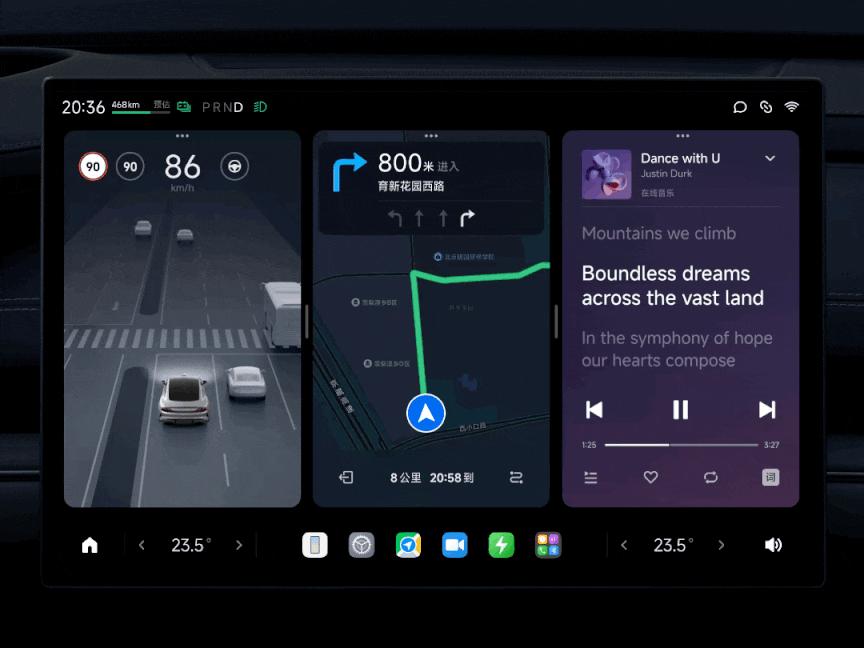
In addition, the empowerment of AI technology has gone beyond the intelligent driving scenario and extended to the entire industrial chain. GAC jointly built an AI middle platform with Huawei to provide end-to-end platform support for the "Stellarium AI Panorama". NIO's "Enclave" intelligent assembly island achieved flexible production of multiple models, with a 30% increase in efficiency. The automation rate of Tesla and BYD factories exceeded 90%. Ideal's Xinghuan OS saved billions of yuan in BOM costs every year through computing power sharing, and NIO's intelligent production scheduling system increased inventory turnover efficiency by 25%. Regardless of the technical route, AI has become the core variable determining the future competitiveness and premium ability of car companies.
Refined management becomes the key to competition
In 2025, the industry bid farewell to barbaric growth, and "internal strength" - namely, refined management ability - became the key for new energy vehicle companies to cross the industry cycle and widen the competitive gap.
Reform of the organizational structure was the highlight. Changan and Geely actively promoted the reform of the business unit system, focusing on new energy and intelligent businesses and streamlining management levels; NIO fully implemented the organizational change of the "Basic Business Unit (CBU)" and the "Million-fold Thinking", shifting the management responsibility to the front line and requiring everyone to be responsible for the money spent.
The supply chain management ability determines survival. BYD has significantly reduced costs through self-developed "three electric systems and one core". Its overseas factories in Thailand and Brazil have achieved local procurement and production, greatly reducing logistics costs; Xiaomi and XPeng are accelerating the self-development of motors and intelligent driving chips to reduce external dependence; Leapmotor adheres to "full-domain self-development", with a self-made rate of core components as high as 65%, showing obvious cost advantages; Chery and SAIC are accelerating the establishment of supply chain bases overseas.
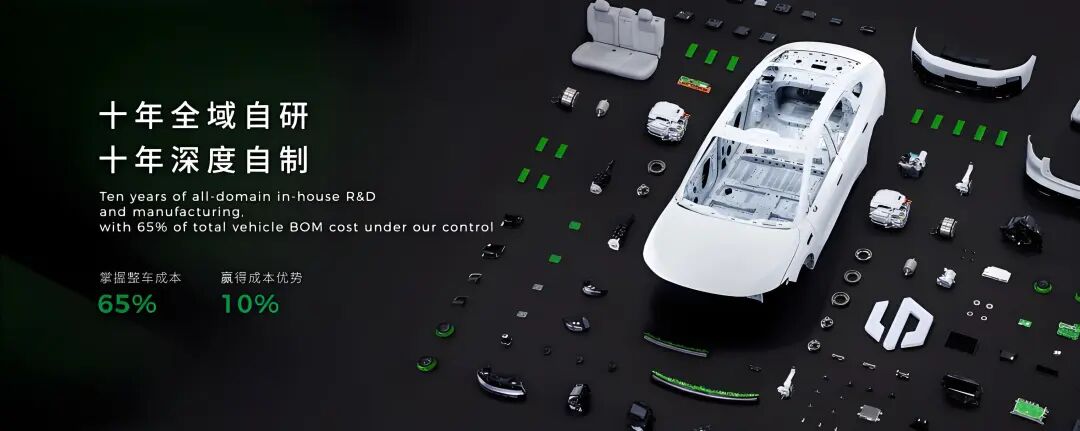
Cost control has also entered the "precision" stage. The extravagant marketing of "booking the entire airport billboard" has disappeared, replaced by: big data for precise customer acquisition and private domain traffic operation.
Refined management ability has become the invisible soft power of enterprises. It is not only about reducing costs but also about building a systematic advantage that is difficult to replicate. In 2025, new energy vehicle companies are not only competing on who can run fast but also on who can maintain a lower heart rate while running fast.
Even BYD and Xiaomi need to add a "health bar"
The elimination race in the new energy vehicle industry is accelerating. All car companies know that if they want to have the confidence to compete, a thick capital "health bar" is a prerequisite.
In March 2025, BYD completed a placement of H-shares worth HK$43.5 billion on the Hong Kong Stock Exchange. It was the largest equity refinancing project in the global automotive industry in the past 10 years and the largest lightning placement project in the global automotive industry ever. It attracted participation from top global investors such as the United Arab Emirates Sovereign Wealth Fund. The funds were mainly used for the construction of overseas factories, the research and development of the "Heavenly God's Eye" intelligent driving system, and the iteration of core technologies. Xiaomi also issued additional shares worth US$5.3 billion in March 2025 to increase investment in its automotive business.
Although NIO is still in continuous losses, it also completed two rounds of financing last year, raising nearly HK$12 billion. It also introduced strategic investment from CATL, providing crucial capital "ammunition" for the company's technology research and development, new model development, and expansion of the battery swapping network.
In addition, Leapmotor and Shenlan Automobile also showed strong financing capabilities: In less than 10 days from the end of 2025 to the beginning of 2026, Leapmotor officially announced the introduction of two strategic investors, FAW and Jinyi High-tech, and received a cumulative cash injection of more than 6.7 billion yuan; also in December 2025, Shenlan Automobile announced the completion of a Series C financing of 6.122 billion yuan, with its valuation reaching a new high.
In contrast, marginal new forces such as Nezha have almost exhausted their financing channels due to various reasons such as declining sales and lagging technology, and have basically withdrawn from the mainstream competition stage. Money is not everything, but without money, nothing can be done. The thickness of capital determines the trial-and-error opportunities and survival time of new energy vehicle companies.
Going global, the second growth curve
In 2025, "going global" became another keyword in the new energy vehicle industry. In 2025, China's new energy vehicle exports reached 2.615 million units, a year-on-year increase of more than 100%, accounting for 36.84% of the total vehicle exports. Judging from this momentum, perhaps new energy vehicles will soon account for half of China's vehicle exports.
BYD still led by a large margin. According to data from the Passenger Car Association, in 2025, BYD's new energy vehicle exports reached 1.054 million units, with a year-on-year growth rate as high as 160.43%, accounting for 40% of China's new energy vehicle exports. This benefited from its factory layout in overseas markets such as Thailand and Brazil, which effectively avoided trade barriers.
Chery exported 319,80