The 9-series flagship models are emerging in clusters. It's not about following the trend but seizing market positions.
In 2026, the automotive market witnessed a significant year for "Series 9" products. Brands such as BYD, SAIC Volkswagen, and Leapmotor collectively launched their high - end flagship Series 9 models, targeting the market segment priced between 300,000 and 500,000 yuan or even higher. In the context of a consumption downgrade, this collective push towards high - end seems to go against the trend, but in fact, it reflects the strategic foresight of automakers.
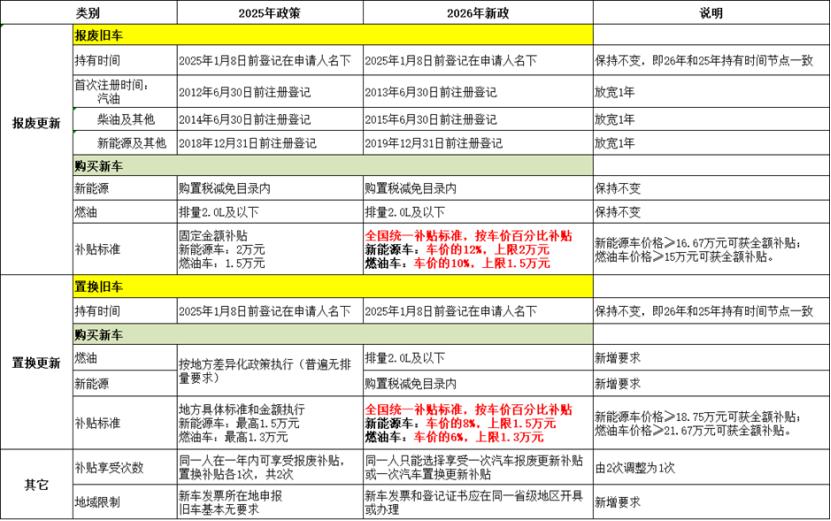
As the market share of BBA in the high - end new energy vehicle market continues to shrink, Chinese brands are filling the gap with their advantages in electrification and intelligence. Meanwhile, the policy on the purchase tax of new energy vehicles has shifted from "full exemption" to "half exemption", and the "trade - in" subsidy mechanism clearly encourages consumers to upgrade to mid - to high - end models.
Cui Dongshu, the secretary - general of the Passenger Car Association, previously pointed out that the adjustment of the new energy vehicle purchase tax policy and the optimization of the "trade - in" mechanism are driving the consumption logic to shift from "prioritizing low prices" to "paying for technology and quality". This change is not an isolated phenomenon but an inevitable result of the combined effects of policy guidance, user awareness, and technological iteration. The once - intense price war is fading, replaced by a deep - seated competition in technological depth, product quality, and user experience.
High - end is not just a slogan, but a structural trend
The high - end transformation of the Chinese automotive market is not just a one - sided marketing strategy of enterprises. It is a structural phenomenon driven by both policy guidance and user demand. The subtle shift in policy has become a catalyst for value competition. In 2026, the national subsidy policy for new energy vehicles underwent a crucial adjustment - from the previous full - scale tax exemption to a replacement subsidy based on the vehicle price ratio. This means that consumers must purchase models priced above 180,000 to 210,000 yuan to receive the maximum subsidy. This well - designed mechanism effectively links fiscal incentives with consumption upgrade, directly driving up the car - buying budget.
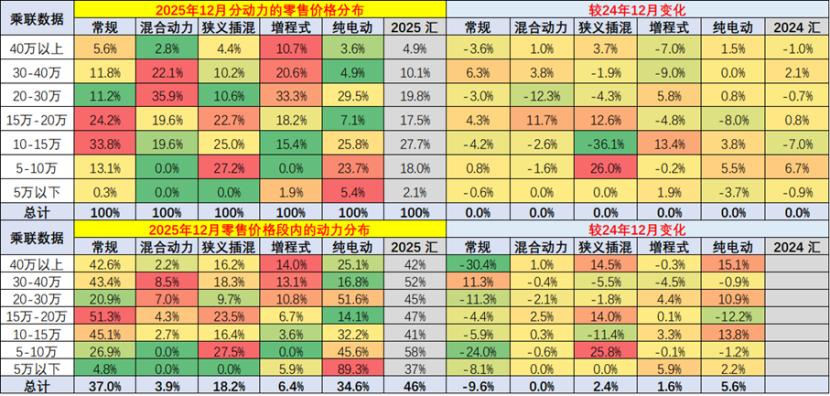
Meanwhile, the deeper - seated change in consumer behavior is even more critical. As the post - 95s gradually become the main car - buying force, they generally grew up in an era of material abundance and technological explosion. Their car - buying decisions have gone beyond simple income matching and shifted to a comprehensive consideration of family support, credit leverage, and identity recognition. McKinsey's consumer insights reveal that young users' attention to high - level intelligent driving and smart cockpits has increased significantly, and their car - buying logic has shifted from "function satisfaction" to "experience recognition". Market data confirms this trend: the average retail price of passenger cars has steadily increased from around 150,000 yuan in 2019 to 184,000 yuan in 2024, and it rebounded to this level in December 2025, indicating the resilience of the consumer base.
In 2026, the new energy vehicle purchase tax policy shifted from a universal exemption to a tiered support based on the vehicle price. In particular, the "trade - in" subsidy mechanism clearly requires consumers to purchase models priced around 200,000 yuan to receive the full subsidy. The policy design links fiscal incentives with consumption upgrade, avoiding the internal strife of the past "national price cuts" and forcing the market to move towards the mid - to high - end value anchor.
More importantly, the number of price - cut models has significantly decreased. Data shows that there were only 177 price - cut models in 2025, 42 fewer than the previous year, indicating that the effectiveness of the price war is diminishing.
McKinsey also pointed out in the "2025 China Automotive Consumer Insights Report" that the stimulating effect of price on car - buying decisions has dropped sharply from 3% in 2023 to 0.6% in 2024. Consumers are now highly concerned about the "value bottom line" - whether the product has stable quality, leading technology, and innovative experiences.
Consumers are no longer willing to pay for inflated brand premiums. Instead, they focus on tangible real values such as seat comfort, battery safety, and the reliability of intelligent driving. When "paying for technology and quality" becomes a consensus, the resonance between policy and consumption forms an irreversible transformation momentum.
From configuration stacking to full - lifecycle experience construction
When "value" becomes the keyword in competition, automakers' response strategies have also undergone fundamental changes. In the past few years, some brands relied on hardware configurations such as lidar and air suspension for "parameter involution", trying to create best - sellers with high - end configurations at low prices. However, the core of value competition is the upgrade of quality. In the past "price war", automakers often achieved price advantages by reducing configurations and cutting costs, but this led to a decline in product quality and made consumers suspicious of "low prices". Now, quality is no longer just "icing on the cake" but the cornerstone of "value competition".
However, market feedback in 2025 shows that consumers are no longer willing to pay for "paper luxury". Instead, they require these technologies to be truly transformed into safe, comfortable, and convenient daily experiences. The core of value competition has shifted from the static configuration at the time of factory delivery to the dynamic evolution ability of the vehicle throughout its lifecycle.
This logic is verified in several successful cases. GAC Toyota's C-HR Pro not only comes with double - chamber air suspension, zero - gravity seats, and Momenta's high - level intelligent driving system but also puts forward "three guarantee commitments": full compensation for battery spontaneous combustion, attenuation guarantee, and responsibility for parking accidents. This combination of technological advantages and responsibility commitments greatly enhances user trust. Xiaomi SU7, with a starting price of 299,900 yuan, is standard - equipped with an 800V platform, an intelligent chassis, and urban NOA, redefining the high - end standard within 300,000 yuan with "technological equality". Traditional luxury brands such as Mercedes - Benz and Audi also start to make practical functions such as seat heating and OTA upgrades standard equipment, giving up some optional equipment strategies. This two - way integration - new forces learning the rigorous quality control of joint - venture brands and joint - venture brands absorbing the user - experience thinking of new forces - forms a more resilient competitive ecosystem.
Looking deeper, the essence of value competition is an inevitable result of the "software - defined vehicle" era. In the wave of intelligentization, a car is no longer a hardware product that is fixed once delivered but an "intelligent terminal" that can continuously evolve through remote upgrades. Deloitte's report points out that in the future, what is sold is no longer the "factory - out quality" but the "dynamic quality throughout the lifecycle". Users expect the vehicle to continuously obtain new functions and optimize performance during use. This continuously evolving experience is the real value. Therefore, leading enterprises are transforming their scale advantages into R & D advantages, building an insurmountable moat through the logic of "using scale to support innovation and using innovation to improve quality". BYD, through high - level vertical integration, has increased the self - research rate of components to over 70%, making its cost about 30% lower than that of traditional automakers, thus having more resources to invest in the stability of the three - electric system and chip autonomy. XPeng, Huawei, etc. focus on the iteration of intelligent driving algorithms, promoting high - level intelligent driving from a "luxury item" to a "standard feature".
The upgrade of quality is also reflected in the pursuit of safety. With the implementation of three mandatory national standards such as the "Technical Requirements for the Information Security of Whole Vehicles" on January 1st this year, the safety of intelligent vehicles has a "mandatory requirement". The standards require that the vehicle's network interface, software upgrade, and data transmission must be encrypted, eliminating potential safety hazards at the source.
However, the road to value competition is not smooth. Industry analysts generally warn that if the macro - economic recovery fails to meet expectations and residents' income growth is weak, the current high - end trend may face sustainability challenges. Data from the Passenger Car Association shows that from January 1st to 11th this year, the year - on - year decline of 38% in new energy vehicle sales has exposed the vulnerability during the policy transition period. In addition, some second - tier new forces may fall into the dilemma of "neither here nor there" if they blindly follow the high - end trend without core technologies and stable cash flows. Roland Berger's industry analysis points out that more than 50 automakers may face shutdown or mergers and acquisitions in 2026, accelerating the industry elimination. What is being eliminated is not the high - end trend itself but those brands that only rely on marketing or short - term price advantages to survive.
Under the dual guidance of policy and demand, value competition has become an irreversible mainstream direction. Future winners will not be those enterprises good at short - term marketing or cost - cutting but brands that truly master the initiative in innovation, ensure quality, and can establish a full - lifecycle connection with users. The increase in industry growth rate ultimately depends on the improvement of product strength, which makes users willing to pay. When users no longer ask "why is it more expensive" but naturally recognize "it's worth it", the victory of value competition is achieved.
This article is from the WeChat official account "Automotive Market Insights", author: Yang Shuo. Republished by 36Kr with permission.