From Crossing the Uncharted Territory to Entering a New One: Three Decades of Visionox and China's OLED Industry
Once upon a time, in the Chinese mobile phone market at the beginning of the 21st century, there was a common belief: when it came to phone screens, there was Samsung and then the rest. Domestic screens often meant compromise, being the "reluctant choice" when budgets were tight. Today, not only do domestic flagship models commonly feature domestic OLED screens, but even Apple has included Chinese screens in its supply chain.
From being "looked down upon" to "running side by side," and then to being "unreachable" in some areas, how exactly did China's OLED industry achieve this breakthrough over three decades? Recently, the "Yang Sheng" column of Xinhua News Agency conducted a special interview with Zhang Deqiang, the chairman of Visionox, to tell the story of how from the pain of the "screen shortage" in the last century to now occupying "half of the global OLED market," how a single screen has witnessed the "comeback" of China's display industry.
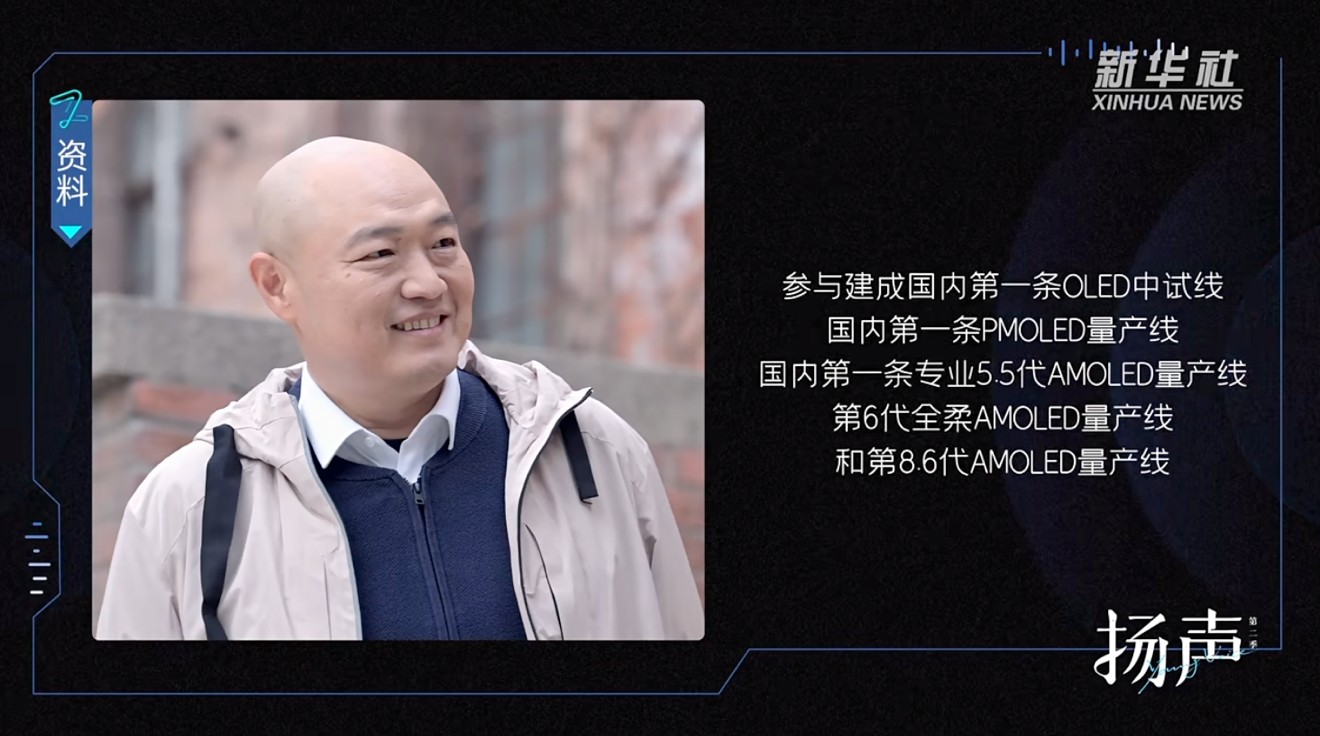
I. Breaking through the uncharted territory: The history of China's OLED from scratch
A tiny screen used to be an invisible high wall standing in front of China's consumer electronics industry. Inside the wall was a huge market demand and booming mobile phone brands; outside the wall were numerous barriers of core display technologies, key materials, and precision equipment.
According to data statistics from CINNO Research, the overall coverage rate of domestic equipment suppliers in the OLED manufacturing process is only 39%.
This is not just a simple supply - chain issue, but an all - round pursuit in terms of technology, industrial chain, and market perception.
Back in 1996, in a laboratory at Tsinghua University in Beijing, researchers were conducting a cutting - edge attempt worldwide at that time - OLED technology research, using second - hand equipment purchased with a budget of 5,000 yuan. This was the predecessor of Visionox.
It was under such humble conditions that the first OLED pixel was lit up, and the four Chinese characters "Holding Morality and Bearing All Things" (equivalent to "Virtue Can Bear All Things") appeared on the screen. This glimmer of light became a symbol of the initial spark of China's OLED industry.
However, the path from the laboratory to industrialization was far more difficult than expected. At that time, almost everything was blank. For example, questions like "what material to use for the OLED substrate," which seem non - issues today, were at the beginning of R & D and testing. Moreover, the industry mainstream was still focused on LCD, and there was a boom in importing LCD production lines in China. Against this background, focusing on OLED industrialization was undoubtedly an uncharted and risky path with few takers.
With its self - emissive, bendable, and high - contrast features, OLED is destined to be the future direction of display technology. To truly achieve security and autonomy, it is necessary to establish a complete set of capabilities from basic research to large - scale mass production. Only by holding the core technology in one's own hands can one truly control the lifeline of the industry.
In 2001, Beijing Visionox Technology Co., Ltd. was established, becoming the first mainland Chinese enterprise dedicated to OLED industrialization. This meant that the team voluntarily stepped out of the "comfort zone" of scientific research and plunged into the challenging "deep waters" of the industry.
Around 2006, the global OLED industry hit a trough. Product prices plummeted, and over 80% of manufacturers withdrew. At the coldest moment of the industry, the team chose to go against the current.
Through a series of technological improvements and process innovations focused on the underlying aspects, they not only survived the winter but also built the first OLED mass - production line in mainland China two years later, which also marked the initial scale and prototype of China's OLED industry. Since then, there have been the first 5.5 - generation line in the mainland, the first fully flexible 6 - generation line, the first high - end customized 6 - generation line, and the world's first 8.6 - generation line without FMM...
In the process of industrialization, a unique "four - stage relay race" model was explored: an innovation and development model oriented by application, from basic research to pilot testing to mass production. These four links are closely connected, forming a closed - loop from laboratory technology to marketable products. At the same time, the market will generate new demands, and new demands bring new problems, which then trigger new basic research, forming a virtuous and cyclic innovation and development model.
For Visionox, breaking through this uncharted territory relied not on trends or luck, but on the belief in technology and the perseverance of "patiently sitting on the cold bench for ten years." Today, the market share of domestic OLED screens is approaching 50%. One out of every two OLED screens in the world comes from China. And Visionox has grown into a leading enterprise with the third - highest global OLED shipment volume and ranking first in the smart wearables field.
This also gives China's OLED industry more confidence in the competition for the next - generation display technology.
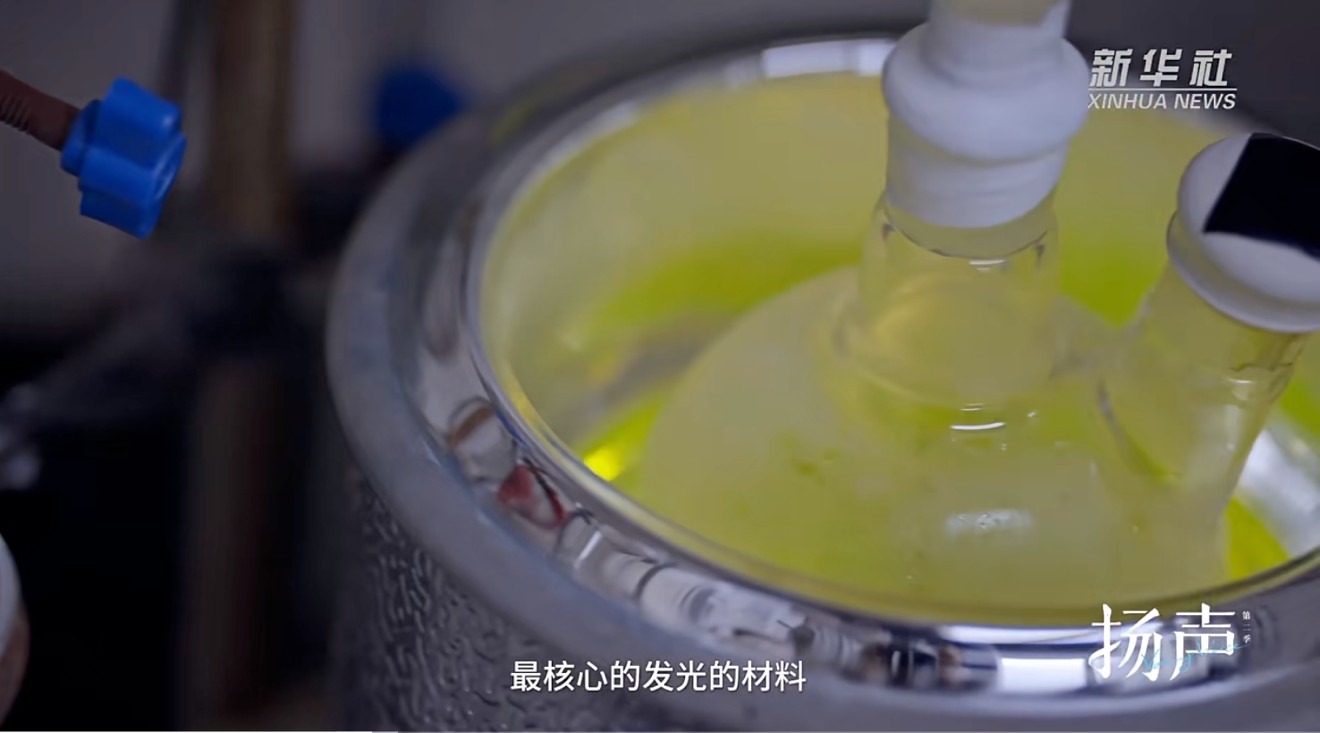
II. The new uncharted territory: A difficult but correct choice at the crossroads
However, the evolution of technology never stops, and the boundaries of the market are constantly expanding. As the focus of the industry shifts from mature mobile terminals to broader high - end IT product blue oceans such as in - vehicle displays and laptops, a "new arena" for new exploration, medium and large - sized OLEDs, is clearly in sight. This is not only a technological battle but also a positioning competition regarding future production scale and industry influence.
This new arena poses more stringent and comprehensive requirements for display performance: extremely high brightness is needed to combat outdoor strong light, a long lifespan is required to match the usage cycle of automobiles, lower power consumption is needed to meet the current mobile office needs supported by AI, and the ability for special - shaped cutting to meet increasingly personalized display shapes is also necessary...
The traditional core OLED manufacturing process, FMM (Fine Metal Mask) evaporation technology, has become very mature. However, when facing the requirements of large size, high precision, and high uniformity, it encounters physical and cost difficulties. This is not only a challenge for Visionox but also a common technological bottleneck for the global display industry.
The industry has reached a crossroads again: should it continue to improve on the established technological path or blaze a trail in an uncharted area?
Visionox's answer is the latter. In May 2023, at the World Ultra - High - Definition Video Industry Development Conference, Visionox released a new AMOLED technology solution called ViP (Maskless Technology), which, like a stone thrown into a calm lake, stirred up huge ripples.
This is a brand - new technological route and an uncharted technological territory. Its subversiveness lies in completely avoiding the traditional FMM mask and instead adopting the mature lithography process in semiconductor manufacturing for pixel patterning. This is not just a substitution of processes but a fundamental innovation of the underlying technological logic, and it is also a path that no one in the global display industry has ever taken.
"At first, many people told us, 'This is impossible,'" said a representative of the ViP technology R & D team. "There was no path in the world originally; only when more people walk on it does it become a path. We are going to turn this impossibility into possibility."
Behind "turning it into possibility" are numerous engineering challenges. How can the lithography process be implemented on organic materials? How to ensure the independence and luminous efficiency of pixels? How to control costs? Each question is like a mountain standing in the way.
Having emerged from the uncharted territory of China's OLED industry, it's time to charge into the global uncharted OLED territory. With the belief of "holding fast to the green mountain without relaxing," Visionox has been seeking breakthroughs in numerous experiments. Finally, the ViP technology achieved an ultra - high resolution of 1700 PPI, an aperture ratio of 69%, and achieved multiple - level improvements in brightness, power consumption, and lifespan.
More importantly, from the extremely small size of smartwatches to the extremely large size of televisions, the same technological platform can be used to cover, achieving "full - scale" flexible production. Its "independent pixel encapsulation" structure has also significantly improved the screen reliability.
The deeper significance of ViP lies in the autonomy of the industrial chain. This technology has promoted the formation of a more controllable and localized supply chain from materials, equipment to processes. As Dr. Zhang Deqiang said, "Following others' rules can only make you a follower; defining your own technological path gives you the opportunity to become a rule - maker."
Currently, the world's first 8.6 - generation AMOLED production line equipped with ViP technology has completed the construction of the production line and is accelerating its progress. It is expected to achieve mass production in 2027. This is not only a breakthrough for Visionox but also a symbolic flag planted by China's OLED industry in the global "uncharted territory" of the next - generation display technology.
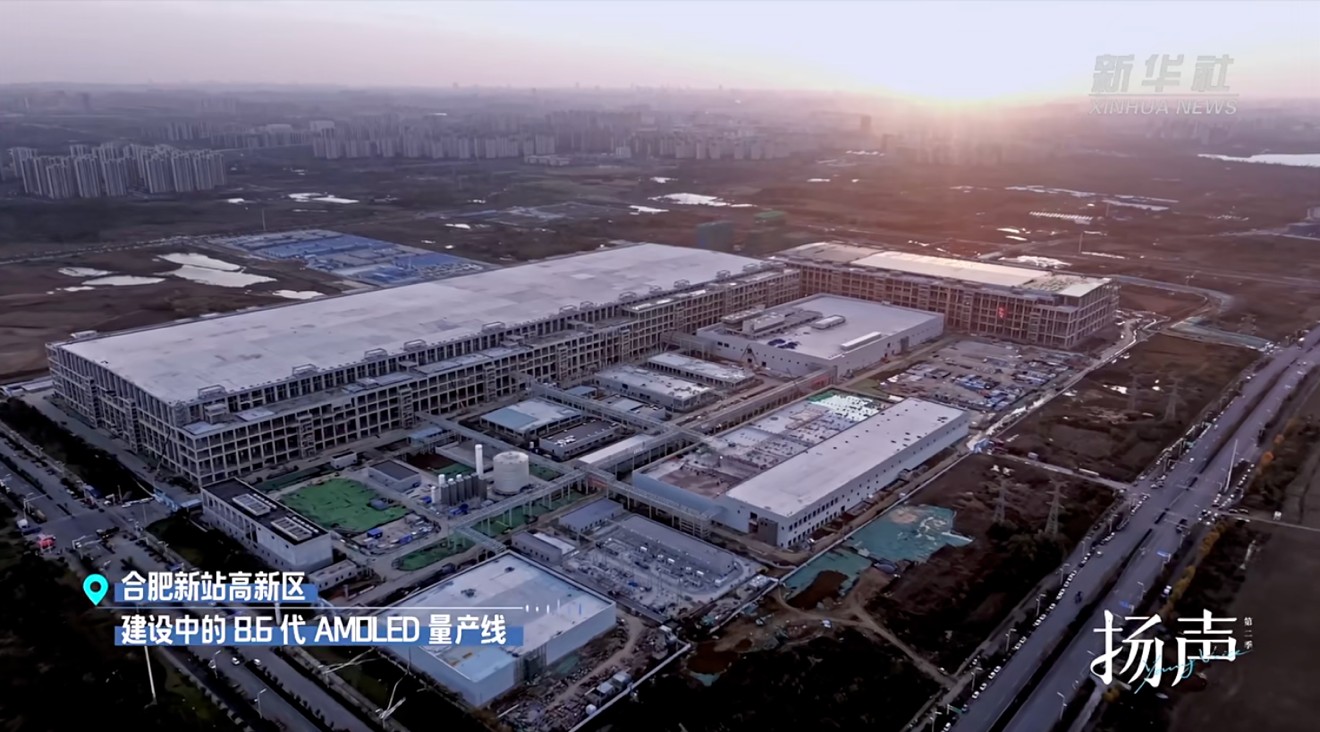
Visionox's journey is a microcosm of the rise and high - end breakthrough of China's display industry. The key lies not only in technological breakthroughs but also in choosing the "difficult but correct" path at every industrial turning point and persevering until success.
Looking back on the 30 - year history of China's OLED industry, the first half was about "creating something from nothing," testing determination and endurance; now, the industry has entered a new stage of "from something to excellence, from excellence to strength," and the challenge lies in continuous innovation and ecosystem building.
Standing at the peak of the global OLED display, new "uncharted territories" are waiting to be crossed. On this long and rewarding journey, the story of Visionox and China's OLED industry will continue to be written.