A post-1975 alumnus of Tsinghua University who has raised hundreds of millions in financing
The "Shaowei" series of superconducting quantum chips
A huge amount of financing has emerged in the quantum computing field.
Just recently, SpinQ Technology has received hundreds of millions of yuan in Series C financing. Since its establishment, SpinQ Technology has completed six rounds of financing, with a cumulative financing amount of hundreds of millions of yuan.
Quantum computers with supercomputing capabilities have not been widely applied in the industrial, commercial, and financial fields. Many peers are still struggling with revenue, but SpinQ Technology has already achieved continuous large - scale revenue. It has mainly done two things right:
1. Launched the world's first programmable desktop quantum computer for general teaching and scientific research, which has been sold to 40 countries and regions around the world;
2. Developed and mass - produced superconducting quantum chips and measurement and control systems, and exported them to many overseas regions.
SpinQ Technology was founded in 2018 and is headquartered in Shenzhen. Recently, Pencil News interviewed Xiang Jingen, the founder of SpinQ Technology, to explore new opportunities behind quantum computing. The highlights are as follows:
1. What are the pain points in the industry?
Answer: Traditional quantum computers weigh up to one ton and cost millions of dollars, which are unaffordable for ordinary universities and research institutions.
2. What are the solutions?
Answer: Develop and sell desktop quantum computers. Although their computing power is not outstanding, they meet the needs of the education industry and can achieve large - scale sales. On this basis, simultaneously layout superconducting quantum computers to meet scenarios with higher computing power requirements.
3. When will the industry explode?
Answer: The industry is in the transition stage from education and scientific research to industrial applications. By 2028, quantum computers will demonstrate cost - effectiveness advantages far beyond classical computing in specific fields such as drug screening, new material design, and catalyst research.
Statement: The interviewee has confirmed that the information in the article is true and accurate. Pencil News is willing to endorse the content. The following is the oral account of Xiang Jingen.
A "Computer" Turns into a Cash Cow
In May 2016, the quantum computing industry witnessed a major change.
IBM connected a 5 - qubit quantum computer to the cloud and made it freely available to the world. For the first time, quantum computing stepped out of the laboratory and became a computing resource that anyone could use remotely, thus opening the era of "cloud - based quantum computing".
Xiang Jingen, who was working in Canada at that time, was extremely shocked. Before that, quantum computers were "scientific research treasures" in the extreme environment of laboratories, carefully tended by dedicated personnel.
Xiang Jingen is from Jinhua, Zhejiang. He was born in 1977 and was admitted to the Department of Physics at Tsinghua University in 1995. At Tsinghua University, he completed his undergraduate, master's, and doctoral degrees, and later served as a post - doctoral researcher and associate researcher at Harvard University.
Although he studied physics, Xiang Jingen obtained a computer degree during his studies and became interested in quantum computing. Moreover, Xiang Jingen likes to develop products. In his undergraduate years, he developed a miniaturized industrial CT machine that could replace large - scale equipment for testing.

Xiang Jingen, the founder of SpinQ Technology. Since he completed his undergraduate, master's, and doctoral degrees at Tsinghua University, he is usually called a "Triple - Tsinghua Doctor".
At that time, his wife, Zeng Bei, after graduating with a doctorate from the Massachusetts Institute of Technology, was also engaged in post - doctoral research at the Institute for Quantum Computing at the University of Waterloo in Canada. They both judged that the era of quantum computing industrialization was slowly approaching.
"At that time, quantum computers had an obvious application scenario: teaching and scientific research. It doesn't mean that only serving industrial customers in materials, pharmaceuticals, and AI can be called industrialization. Providing machines for teaching and scientific research can also generate economic value."
They carefully compared the Canadian and Chinese markets. Canada has a good scientific research foundation and strong customer purchasing power. However, China has a larger potential user base and a more complete electronic industrial chain. Moreover, "China has more potential users in universities than Canada."
The couple decided to return to China to start a business.
In 2018, SpinQ Technology was established in Shenzhen. The first practical problem they faced was: with limited resources, which technical route should they choose?
At that time, there were several "schools" in quantum computing: superconducting, ion trap, optical quantum, nuclear magnetic resonance, etc. IBM and Google bet on the superconducting route (i.e., quantum chips made of superconducting materials), which is a "high - speed road" to industrialization, but it burns money, has extremely high thresholds, and a high failure rate.
Nuclear magnetic resonance is more like an "easy - going path". Although it cannot perform large - scale calculations, the technology is mature and stable, making it particularly suitable for teaching and demonstration.
"Our initial idea was to take a two - pronged approach, doing both nuclear magnetic resonance and superconducting," Xiang Jingen said. However, reality did not allow it. SpinQ Technology only raised 10 million yuan in angel - round financing, which was still due to the investors' recognition of the team from Tsinghua University.
"At that time, just setting up a basic superconducting equipment set cost more than that amount," the team quickly reached a consensus: first concentrate limited resources to develop products that could be put into use and sold using nuclear magnetic resonance technology, and start running in the education and scientific research markets.
After getting the money, the SpinQ Technology team targeted a most direct pain point: quantum computers were too bulky, often weighing up to one ton. "The pain point we solved was very simple: making it possible for ordinary people to use quantum computers in the classroom by themselves," Xiang Jingen said.
In January 2020, at the QIP Conference in Shenzhen (the world's top academic conference in the field of quantum computing), SpinQ Technology's first nuclear magnetic resonance quantum computer product, "Gemini", was unveiled. It weighed 90 kilograms, like a large iron cabinet. This was also the world's first desktop - level programmable quantum computer.
Industry veterans, who had seen a lot, were still shocked: a quantum computer could be so "compact" and yet have good stability.
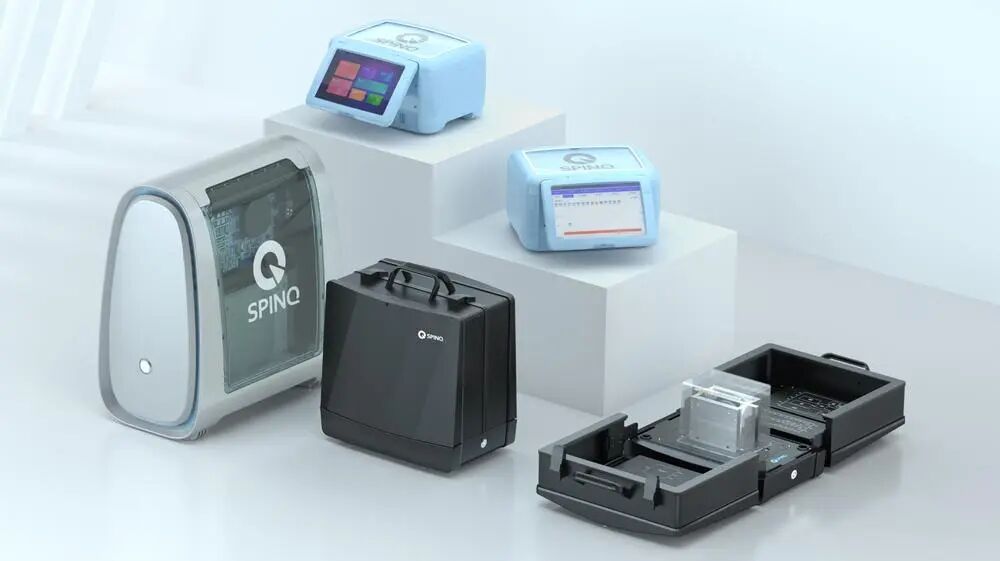
Educational - level nuclear magnetic resonance quantum computer series products
Of course, for large - scale deployment in university classrooms and laboratories around the world, 90 kilograms was still too heavy. The SpinQ Technology team optimized the weight of "Gemini" to more than 50 kilograms, making it suitable for desktops. It is priced at only 400,000 yuan, which has an obvious price advantage compared with foreign large - scale products priced at millions of dollars. University teachers and students and ordinary scientific researchers can use it in daily life.
"Gemini" became popular in the overseas market, with sales exceeding those in the domestic market. This unexpected success brought valuable initial cash flow.
Quantum Chips Exported to the Middle East
The nuclear magnetic resonance products were developed to solve the survival problem first. Xiang Jingen and his team's original intention has always been superconducting quantum computing.
On the one hand, desktop quantum computers do not have enough qubits, that is, their computing power is not strong enough. To break through the high - computing - power bottleneck of quantum computers, more qubits are needed, which means taking the superconducting quantum computer route.
On the other hand, superconducting quantum computing is currently the "most promising quantum computing solution to be large - scale engineered and generalized", and high - end customers with high - computing - power requirements, such as those in the telecommunications, petroleum, power, and pharmaceutical industries, will pay for it.
In July 2020, after obtaining Series A financing, the superconducting research and development was officially launched. This path was more difficult than expected: it burned money quickly, there was a shortage of talent, and international embargoes were encountered. Purchasing key equipment became extremely difficult. Even importing an X - ray machine required a long - term review by the exporting country.
At the end of 2021, Xiang Jingen decided to build a superconducting chip processing laboratory on his own.
In April 2023, the self - developed superconducting quantum chip "Shaowei" and the superconducting quantum computer "Ursa Major" were finally launched.
In November of the same year, SpinQ Technology delivered superconducting quantum chips to a research institution in the Middle East. This was the first time a Chinese company exported superconducting quantum chips to an overseas customer. This customer soon repurchased a new - generation chip with a higher number of qubits and better performance.
The two - pronged approach is working.
2028: The Industrial Inflection Point Arrives
The speed of quantum computing industrialization has exceeded the expectations of industry insiders.
In late 2019, Google announced the achievement of "quantum supremacy" (quantum computing completely leading in some computing problems), which directly triggered a collective acceleration among global governments, technology giants, and capital.
At the policy level, the United States launched the "National Quantum Initiative Act", China listed quantum technology as a key breakthrough area in the "14th Five - Year Plan", and the European Union launched the Quantum Flagship Program, elevating quantum computing to the level of digital sovereignty.
The capital market has also entered an explosive stage. In 2020 and 2021 alone, the investment in the quantum computing field reached 700 million US dollars and 1.4 billion US dollars respectively, exceeding the total of the previous 10 years.
Xiang Jingen clearly felt that after 2022, there was more attention to the industry.
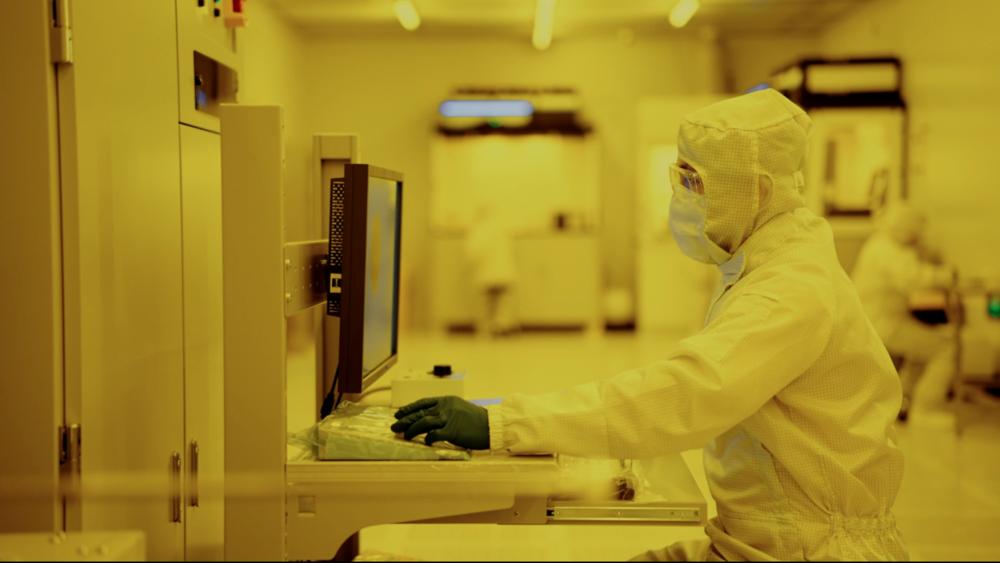
Quantum chip laboratory
Since it has mass - produced desktop quantum computers, SpinQ Technology has maintained a financing rhythm of about one and a half years per round. In September 2022, it completed nearly 100 million yuan in Pre - Series B financing, and the annual order growth rate exceeded 100%.
Especially in early 2023, SpinQ Technology launched the more cost - effective Gemini Mini pro and Triangulum Mini. Nearly 200 universities at home and abroad became its customers.
Xiang Jingen predicts that within ten years, desktop quantum computers for the education market will be popularized in many schools, including ordinary universities and even ordinary middle schools. There is still room for continuous growth in this market.
A more critical turning point occurred in 2024: the order amount of superconducting products exceeded that of nuclear magnetic resonance products for the first time. By 2025, superconducting orders accounted for nearly 70%, and the annual order growth rate reached 130%.
According to McKinsey statistics, in 2025, the global quantum computing revenue scale exceeded 1 billion US dollars. By 2035, the market size of quantum computing may reach 28 billion to 72 billion US dollars.
In the long run, quantum computing will move out of the scientific research and education markets and enter the commercial and industrial markets on a large scale. Xiang Jingen believes that the inflection point is approaching:
First stage (soon, around 2028):
Medium - scale (500 - 1000 qubits) quantum computers will demonstrate cost - effectiveness advantages far beyond traditional supercomputers in specific fields such as drug screening, new material design, and catalyst research. "The scale of this market may reach tens of billions or even hundreds of billions of US dollars."
Second stage (5 - 10 years later):
General - purpose quantum computers with fault - tolerance capabilities will mature, and like today's classical computers, they can solve various problems through programming, opening up a trillion - level market.
This article does not constitute any investment advice.
This article is from the WeChat official account “Pencil News” (ID: pencilnews), author: Wu Xinxiao, editor: Zou Wei. It is published by 36Kr with authorization.