Jungen Mitbürger aus Tsinghua-Universität, geboren in den 75er Jahren, haben mehrere hundert Millionen Yuan an Kapital beschafft.
Die Supraleitenden Quanten-Chips der Serie "Shaowei"
In the field of quantum computing, there has been another huge financing.
Just now, Quniverse Technology has received financing in the C - round of several hundred million yuan. Since its establishment, Quniverse Technology has completed six rounds of financing, and the cumulative financing amount amounts to several hundred million yuan.
Quantum computers with outstanding computing power have not yet been widely spread in the industrial, commercial, and financial industries. Many competitors are still struggling for revenues, while Quniverse Technology has already achieved continuous and scalable revenues. It has mainly done two things right:
1. It has developed the world's first programmable desktop quantum computer, which can be used for ordinary teaching and research work and has already been sold in 40 countries and regions around the world.
2. It has developed and mass - produced superconducting quantum chips and measurement and control systems and exported them to several overseas regions.
Quniverse Technology was founded in 2018 and is headquartered in Shenzhen. Recently, PencilNews interviewed the founder of Quniverse Technology, Xiang Jingen, to talk about the new opportunities behind quantum computing. The highlights are as follows:
1. What are the problems in the industry?
Answer: Traditional quantum computers weigh up to one ton and cost several million US dollars. Most universities and research institutes cannot afford such computers.
2. What are the solutions?
Answer: The development and marketing of desktop quantum computers. Although their computing power is not particularly outstanding, they meet the needs of the education industry and can be sold in large quantities. On this basis, the development of superconducting quantum computers is promoted in parallel to meet the requirements for higher computing power in certain scenarios.
3. When will the industry explode?
Answer: The industry is currently in the transition phase from teaching and research to industrial application. By 2028, quantum computers will have a much higher cost - effectiveness than traditional computers in certain fields such as drug discovery, new material development, and catalyst research.
Explanation: The interviewee has confirmed the accuracy of the information in this article. PencilNews is responsible for the reliability of the content. The following is the oral statement of Xiang Jingen.
A "computer" becomes a cash cow
In May 2016, the quantum computing industry changed fundamentally.
IBM connected a five - qubit quantum computer to the cloud and made it freely accessible worldwide. Thus, quantum computing stepped out of the laboratory for the first time and became a computing resource that anyone can use from anywhere. This initiated the era of "cloud quantum computing".
Xiang Jingen, who was still working in Canada at that time, was very impressed. So far, the quantum computer had been a "scientific jewel" that was maintained by specialists under extreme laboratory conditions.
Xiang Jingen is from Jinhua, Zhejiang. He was born in 1977 and studied at the Department of Physics of Tsinghua University in 1995. At Tsinghua University, he completed his bachelor's, master's, and doctoral degrees and then was a post - doctoral researcher and associate researcher at Harvard University.
Although he studied physics, Xiang Jingen also completed a computer science degree during his studies and came into contact with quantum computing, which interested him very much. In addition, Xiang Jingen likes to develop products. Even during his bachelor's degree, he developed a miniaturized industrial CT scanner that can be used as a replacement for large devices for testing.

Xiang Jingen, the founder of Quniverse Technology. Since he completed his bachelor's, master's, and doctoral degrees at Tsinghua University, he is often referred to as the "Doctor from Tsinghua".
At that time, his wife, Zeng Bei, after completing her doctorate at the Massachusetts Institute of Technology, also conducted research as a post - doctoral researcher at the Institute for Quantum Computing of the University of Waterloo in Canada. Both agreed that the era of the industrialization of quantum computing had slowly begun.
"The quantum computer had a very obvious application area at that time: teaching and research. It doesn't mean that only providing services for industrial customers in the fields of materials science, pharmacy, and artificial intelligence counts as industrialization. Providing machines for teaching and research can also create economic value."
They carefully compared the Canadian and Chinese markets: Canada has a strong scientific foundation and customers have high purchasing power. But China has a much larger potential customer base and a more complete electronics industry chain. And "the potential customer base at Chinese universities is larger than in Canada."
The couple decided to return to China and start a business.
In 2018, Quniverse Technology was founded in Shenzhen. The first practical problem they faced was: With limited resources, how should one choose the technology orientation?
At that time, there were several "schools" in quantum computing: Superconductivity, ion traps, quantum optics, nuclear magnetic resonance... IBM and Google bet on superconductivity (i.e., quantum chips based on superconducting materials). This is a "high - speed road" to industrialization, but it consumes a lot of money, requires high technical skills, and has a high failure rate.
Nuclear magnetic resonance is more like a "well - trodden path". Although it is not suitable for large - scale calculations, the technology is mature and stable and is particularly suitable for teaching and demonstration.
"Our original idea was to walk on two legs, to engage in both nuclear magnetic resonance and superconductivity." said Xiang Jingen. But reality didn't allow it. Quniverse Technology only received 10 million yuan in the angel - financing round - this was also an acknowledgement of the team from Tsinghua University by the investors.
"At that time, it already cost more than this amount to build a basic superconducting facility." The team quickly reached a consensus: First, the limited resources should be concentrated to produce products with nuclear magnetic resonance technology that can be used and sold in practice, and first establish itself in the education and research market.
After the team received the money, it immediately faced an urgent problem: Quantum computers are too heavy, often over one ton. "The problem we solved is very simple: Enable people to use a quantum computer directly in the classroom." said Xiang Jingen.
In January 2020, Quniverse Technology presented its first nuclear magnetic resonance quantum computer "Gemini" at the QIP Conference in Shenzhen (the world - renowned academic conference in the field of quantum computing). It weighs 90 kilograms and looks like a large steel cabinet. This is also the world's first programmable desktop quantum computer.
The industry giants had seen a lot, but they were still impressed: A quantum computer can be so "miniaturized" and still be stable.
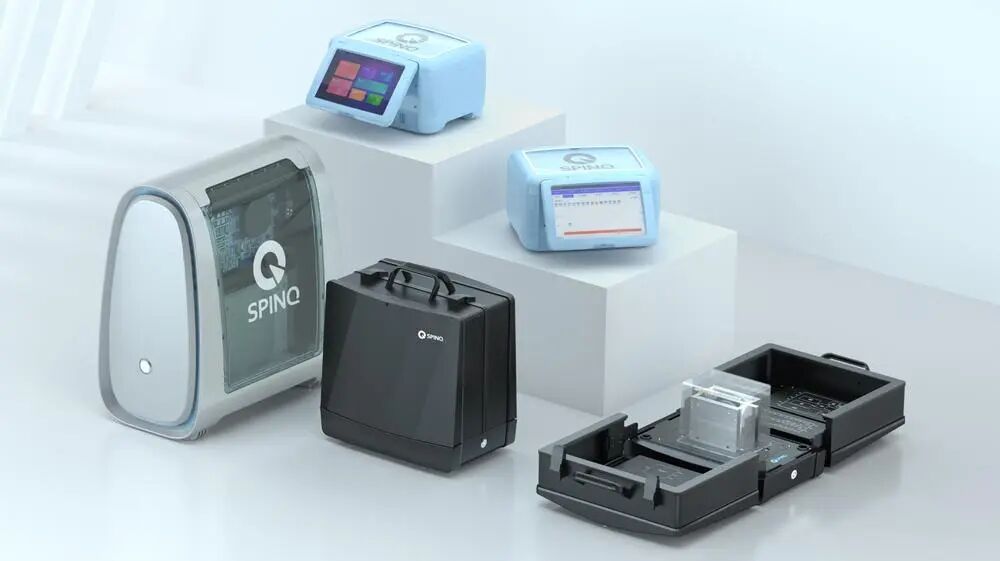
Products of the nuclear magnetic resonance quantum computer series for education
Naturally, 90 kilograms is still too heavy to be widely spread in university classrooms and laboratories around the world. The Quniverse Technology team has reduced the weight of "Gemini" to over 50 kilograms so that it can be placed on a desk. The selling price is only 400,000 yuan. Compared with the expensive foreign large - scale devices that cost several million US dollars, it has a clear price advantage. University teachers and students as well as ordinary researchers can use it in daily use.
"Gemini" has become very popular in the foreign market, and the sales volume is even higher than in the Chinese market. This unexpected success has brought valuable initial cash flows.
Quantum chips are exported to the Middle East
The products based on nuclear magnetic resonance are supposed to ensure survival first. The original idea of Xiang Jingen and his team was always superconducting quantum computing.
On the one hand, the desktop quantum computer does not have enough qubits, i.e., its computing power is not strong enough. To overcome the difficulties in the high - computing power of quantum computers, more qubits are needed, i.e., the route of superconducting quantum computers.
On the other hand, superconducting quantum computing is currently the "most promising" quantum computing scheme that is industrially and generally applicable on a large scale. High - quality customers with high computing power requirements will pay, such as customers from the fields of telecommunications, oil, energy, and pharmacy.
In July 2020, after the financing in the A - round was completed, the research and development of superconductivity officially began. This path was more difficult than expected: It consumes a lot of money, there is a shortage of professionals, and there are international embargoes. Buying key devices was extremely difficult. Even importing an X - ray machine requires a long review by the exporting country.
At the end of 2021, Xiang Jingen decided to build his own laboratory for the production of superconducting chips.
In April 2023, the self - developed superconducting quantum chip "Shaowei" and the superconducting quantum computer "Ursa Major" finally entered the market.
In November of the same year - Quniverse Technology delivered a superconducting quantum chip to a research institute in the Middle East. This is the first time that a Chinese company has exported a superconducting quantum chip to a foreign customer. This customer quickly reordered a new chip model with a higher number of qubits and better performance.
It is walking on two legs.
2028: The turning point of the industry arrives
The speed of the industrialization of quantum computing has exceeded the expectations of industry members.
At the end of 2019, Google announced that it had achieved "quantum supremacy" (in some calculation problems, quantum computing is completely leading). This has directly led to an acceleration on the part of global governments, technology giants, and capital providers.
Politically, the United States has introduced the "National Quantum Initiative Act", China has selected quantum technology as a key area for research and development in the 14th Five - Year Plan, and the European Union has launched the Quantum Flagship Program to raise quantum computing to the level of digital sovereignty.
The capital market is also in an explosive state. Only in 2020 and 2021, the investment in the field of quantum computing was 700 million US dollars and 1.4 billion US dollars respectively, more than the sum of the past ten years.
Xiang Jingen has clearly felt it: After 2022, the interest in the industry has increased.
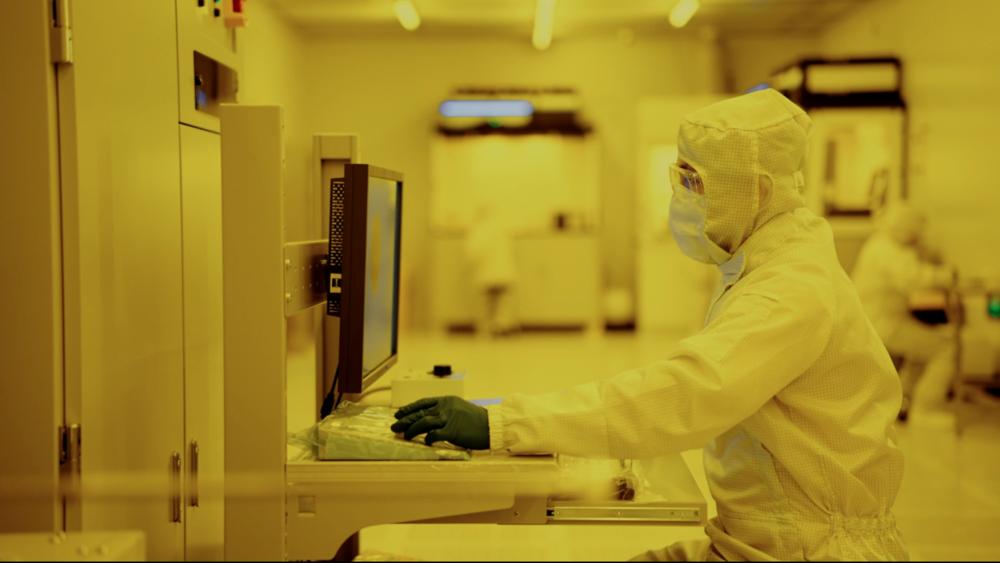
Quantum chip laboratory
Since Quniverse Technology is already mass - producing desktop quantum computers, it maintains a pace of about one and a half years per financing round. In September 2022, it completed financing in the Pre - B round of nearly 100 million yuan, and the annual turnover increased by more than 100%.
Especially at the beginning of 2023, Quniverse Technology presented the more cost - effective models Gemini Mini Pro and Triangulum Mini. Nearly 200 universities in China and abroad are now customers.
Xiang Jingen predicts that within ten years desktop quantum computers for the education market will be widespread in many schools, including ordinary universities and even ordinary middle schools. This market still has room for continuous growth.
The most important turning point came in 2024 - the orders for superconducting products exceeded the orders for nuclear magnetic resonance products for the first time. By 2025, the proportion of orders for superconducting products was nearly 70%, and the annual turnover increased by 130%.
According to a McKinsey statistic, the global turnover in the field of quantum computing reached over 1 billion US dollars in 2025. By 2035, the market volume in the field of quantum computing could be between 28 billion and 72 billion US dollars.
In the long run, quantum computing will go beyond the field of research and teaching and penetrate on a large scale into the commercial and industrial markets. Xiang Jingen believes that the turning point is near.