Huawei phones have reached the top, but can they really compete with Apple?
The global technology competition has shifted from unipolar hegemony to multipolar game. The real test for Huawei lies in whether it can transform short - term market victories into long - term ecological value.
Huawei can pop the champagne in advance to celebrate the New Year.
Recently, a report released by IDC shows that Huawei's smartphone shipments surpassed Apple and other Chinese peers in 2025. After five years, Huawei once again ranked first in the Chinese market.
Judging from the data, Huawei won by a narrow margin. Huawei ranked first with 46.7 million shipments. Apple and vivo followed closely with 46.2 million and 46.1 million shipments respectively. Xiaomi and OPPO occupied the remaining positions. The market share of the above five manufacturers accounted for 79.4% of the total share of the Chinese smartphone market in 2025. However, the shipments of the Chinese smartphone market in 2025 were about 285 million units, a year - on - year decrease of 0.6%.
Although Huawei's current market share of 16.4% still has a large gap compared with its peak market share of 46%, enough applause should be given to Huawei's smartphone for regaining the top position. You know, previously, due to various factors such as the US's crackdown on Huawei's smartphone business, supply - chain restrictions, and market competition, Huawei suffered a devastating blow, and its global market shipments once dropped out of the top five. It's really not easy for it to stand up again in such an adverse situation.
01
The breakthrough in the chip field is the core driving force for Huawei's comeback. In September 2025, Huawei released the Mate XTs Feifan Master triple - folding flagship smartphone equipped with the Kirin 9020 chip. This chip is the latest achievement independently developed by HiSilicon, a subsidiary of Huawei. Since the production of high - end chips was hindered due to external blockade in 2021, the Kirin series had once faded out of the flagship smartphone stage.
Under the real constraint of not being able to use the most advanced process technology, Huawei turned to innovations in "system - level optimization" and "heterogeneous computing architecture" to achieve a balance between performance and power consumption by improving the energy - efficiency ratio and optimizing AI computing power scheduling. Simply put, this technological breakthrough is not a single - point advance.
The Hongmeng OS has built another ecological barrier. Public data shows that the number of devices using the Hongmeng 5.0 system has exceeded 14 million. This means that Huawei has successfully built an independent ecological closed - loop of "chip - system - application - service". And the breakthrough in adaptation in industry scenarios such as government affairs and medical care has extended Hongmeng from the consumer end to the industrial end.
The synergistic effect of the supply chain played a key role in Huawei's return to the top. In Songshan Lake, Dongguan, 90% of the components of a mobile phone can be sourced within a one - hour commuting circle. The "industrial density" formed by 220,000 industrial enterprises and 14,000 enterprises above the designated size provides strong support for Huawei and builds a full - chain technical firewall. This reconstruction brings cost advantages. When the price increase of storage chips triggered an industry cost crisis, Huawei's Mate 80 series reduced prices against the trend, forming a differentiated competitiveness in the same price range.
Folding - screen phones have become an important tool for Huawei in the high - end market. In the second quarter of 2025, the shipments of folding - screen phones in China reached 2.21 million units, and Huawei dominated with a share of 72.6%, far exceeding other manufacturers. Moreover, Huawei led the folding - screen market with the dual - flagship strategy of Mate XT and Pocket 2. The new water - drop hinge design used in Mate XT has made obvious progress in reducing screen creases and improving durability.
As the world's first triple - folding screen phone, the significance of the Mate XTs goes far beyond its appearance innovation. This phone for the first time realized the direct transplantation of PC - version office software and financial software to the mobile phone, supporting multi - window collaboration, global handwritten annotation, and split - screen extraction. This phone also became the first intelligent terminal in the industry to access real - time data from the China Earthquake Administration, which can link up 15,000 professional earthquake monitoring stations across the country and improve the earthquake early - warning response ability by 2.5 times.
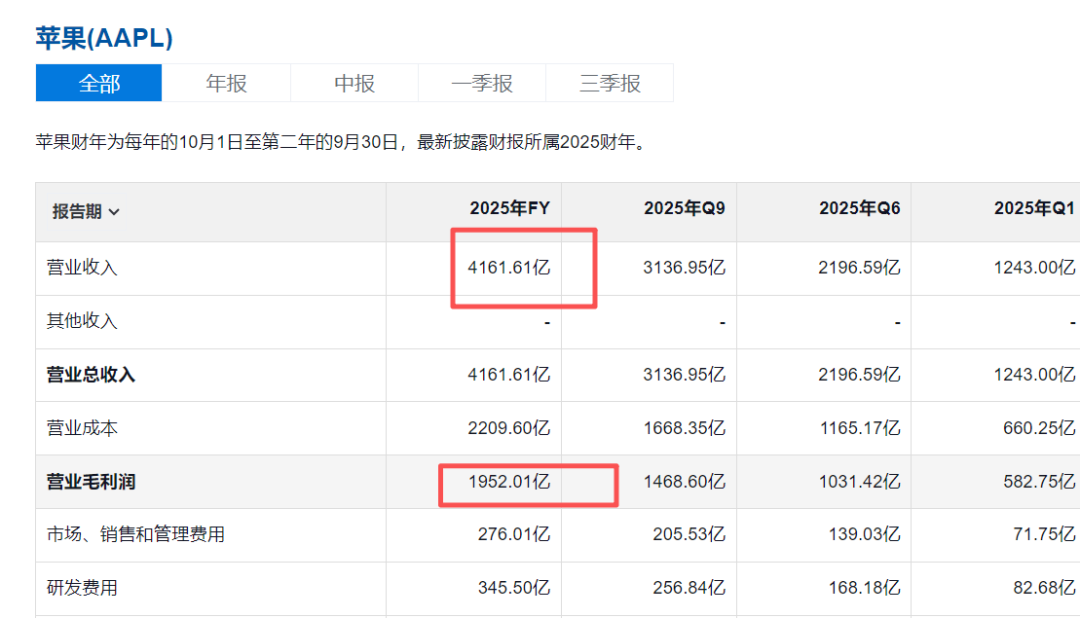
However, it should be noted that behind Huawei's return to the top in shipments, there is an embarrassing fact that cannot be concealed: compared with Apple, there is a huge gap in the profit margins of Huawei and even the entire Chinese mobile phone manufacturers.
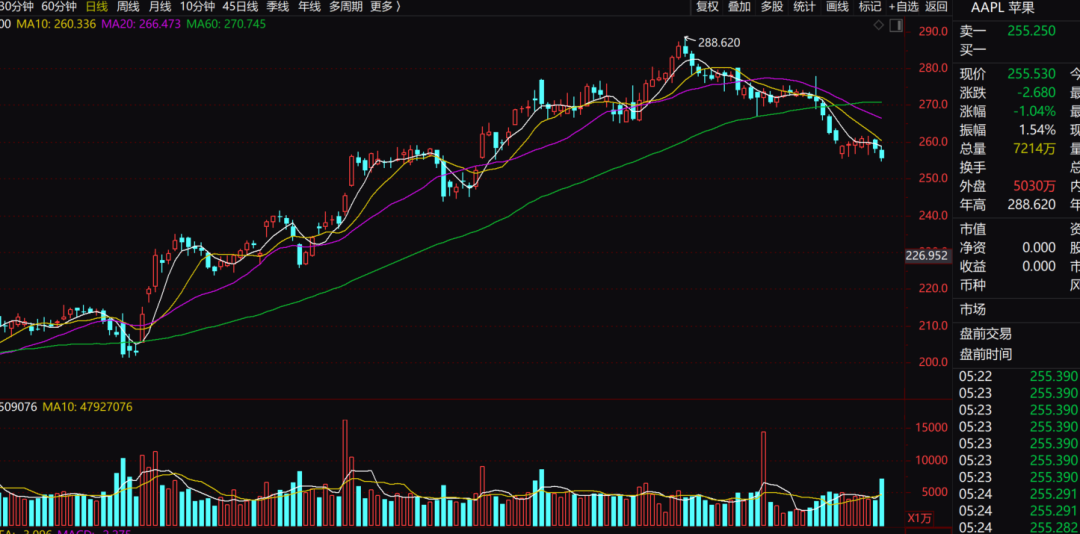
Data shows that in 2024, Apple ranked first in the global mobile phone manufacturers' profit list with a net profit of 840 billion yuan, accounting for 83% of the global mobile phone market's profit, and its total revenue reached 2.8 trillion yuan, demonstrating its absolute dominance in the high - end market. Although Samsung ranked second with a revenue of 1.5 trillion yuan, its net profit of 169.2 billion yuan decreased by 28% year - on - year, and its R & D expenditure was as high as 179.7 billion yuan. Obviously, Samsung has made heavy bets in fields such as chips and folding - screen phones.
In 2024, Huawei's net profit increased by 130% year - on - year to 62.6 billion yuan, and its total revenue was 862.1 billion yuan. Although this increase is remarkable, the gap is still very obvious compared with Apple's net profit of 840 billion yuan.
It is an indisputable fact that Chinese mobile phone manufacturers have low profits. Attention! The latest data from IDC shows that 91% of the industry's profits are concentrated in the price range above $600. Among the 285 million shipments in the Chinese market in 2025, the proportion of models above $600 exceeded 40%, and Apple alone accounted for 68% of the profit share. Below this dividing line, the once - prosperous mid - and low - end market has become a "chicken rib battlefield" that is not worth fighting for.
Therefore, although it is worthy of congratulations that Huawei has topped the Chinese market in shipments, it is obvious that there is still a long way to go.
It cannot be denied that there is still a generational gap in technology. Although some Kirin chips do have certain competitiveness, compared with the 5nm process of Apple's A - series chips, there is still room for improvement in the energy - efficiency ratio. And in sub - fields such as imaging technology and fast - charging protocols, Samsung's screen advantage and Apple's imaging algorithm still pose greater competitive pressure.
02
The shrinkage of the overseas market may be a short - term insurmountable weakness. In 2019, Huawei's global smartphone shipments were second only to Samsung and exceeded Apple, firmly ranking second in the world. In the second quarter of 2020, Huawei's smartphone shipments exceeded Samsung's, topping the global list. This was a historic moment for Chinese mobile phone brands.
Currently, affected by geopolitics, Huawei has not yet restored its channel layout in core overseas markets such as Europe. Most of Huawei's growth depends on the domestic market. In the global smartphone market with shipments of 1.26 billion units, Chinese manufacturers find it difficult to form the corresponding scale effect to dilute R & D costs due to the lack of overseas markets, and there is a significant gap in global market share compared with Apple and Samsung.
What is worrying is that the shadow of geopolitics may linger for a long time. Although the US has relaxed the export control of NVIDIA's H200 chips, it requires a 25% fee and a security review, which in essence transforms technology control into profit - harvesting. Although Huawei's supply chain has achieved a high degree of localization, high - end lithography machines and some special materials still rely on imports. Unfortunately, this "asymmetric blockade" may be upgraded at any time, posing a hidden threat to the stability of the supply chain.
The internal cost pressure cannot be ignored either. Although the domestic supply chain ensures security, the initial R & D investment is huge. And compared with the vertically integrated supply chains of Apple and Samsung, Huawei is still passive in cost control.
Based on this, Huawei's mobile phone still needs to break through in three dimensions in the future.
Building an ecological profit model is the key. Hongmeng needs to shift from "application adaptation" to "service monetization". Referring to Apple's App Store revenue - sharing model, it can explore revenue paths in fields such as financial payment and content services. For example, the "tap - to - pay" cooperation between Hongmeng and Alipay. If this scenario innovation can be transformed into commercial value, it will make up for the shortage of hardware profits.
The gradual recovery of the overseas market is indispensable. Huawei can rebuild its channels in policy - friendly regions such as the Middle East and Southeast Asia, attract local developers through the open - source Hongmeng, and gradually form a regional ecological advantage. The overseas growth rate of Honor proves that emerging markets have great potential, and Huawei's brand accumulation and technological strength have the possibility of replicating this growth.
The sustainability of technology investment needs to be balanced. While maintaining the R & D investment ratio, it is necessary to focus on next - generation technologies such as AI chips and quantum communication to avoid falling into the cost trap of "catch - up R & D". The case where the Ascend AI cluster significantly reduces power consumption through the "super - node cluster" model suggests the combination point of technological innovation and cost control.
In a sense, Huawei's topping the list is more like a "defensive victory" - holding its ground in a shrinking market rather than achieving explosive growth. Behind this victory lies the confidence of Chinese enterprises in scientific research and the collective breakthrough of the Chinese supply chain. However, challenges such as the profit gap, technological generational gap, and overseas difficulties will surely make the road to defending the title more difficult than reaching the top. Just as the global technology competition has shifted from unipolar hegemony to multipolar game, the real test for Huawei lies in whether it can transform short - term market victories into long - term ecological value.
[This article is for communication only, not an investment advice. Please note the investment risks.]
This article is from the WeChat official account "Daily Capital Theory". Author: Thoughts of Plain Boiled Water. It is published by 36Kr with authorization.