Behind the rising stock price, a neglected listed company worth tens of billions is quietly turning around.
On January 15th, Wankai New Materials (301216) released its latest performance report, projecting that the net profit attributable to shareholders of the listed company for the entire year of 2025 would be approximately between 156 million and 203 million yuan. Compared with the loss in the same period of the previous year, the company has achieved a turnaround from loss to profit.
For the general public, "Wankai New Materials" is not a name with strong recognition. However, in daily life, this company frequently appears in our consumption scenarios in an almost "invisible" way: behind the bottles of Nongfu Spring, the constantly changing transparent cups of Starbucks and Luckin, and the straws and packaging materials consumed in large quantities during the peak season of new tea drinks, there is always this PET material supplier.
This is exactly the position Wankai has long occupied: highly present in the consumption chain, but extremely low - key in public perception.
In the recently disclosed performance and business information, a notable change is taking place: Wankai's resource allocation and business focus have begun to undergo systematic adjustments. Although these adjustments have not fully manifested in the profit figures, they are gradually emerging in the capital expenditure structure, technology route selection, and medium - to long - term business layout.
For this reason, a question has become increasingly important: When a company that has long been regarded as a "cyclical material manufacturer" starts to actively reshape its profit structure, can the market still use the old judgment methods to evaluate it?
The "familiar stranger" starts to grow anew
From a business logic perspective, Wankai has taken a highly mature but not overly complex path.
The company takes food - grade PET as its core product. Through large - scale production, long - term stable delivery, and a strict quality certification system, it has deeply tied up with leading beverage and tea drink customers, forming a highly sticky supply relationship. This model has been successful at the industrial level and has brought the company stable orders and predictable cash flows.
However, in the context of the capital market, stability does not naturally equate to a premium.
Due to the product attributes of PET itself, its pricing has long fluctuated around crude oil, energy costs, and industry supply - and - demand relationships. Even if the company's operational efficiency is high, its gross profit margin is still difficult to break free from cyclical fluctuations.
This is the core reason why Wankai's valuation has been limited for a long time.
It is not a company that "has not done well enough," but rather a company that has long lacked "non - cyclical profit sources" in its structure. For this reason, the capital market tends to view it as a traditional manufacturing enterprise with certain defensive attributes but limited growth elasticity.
In other words, what constrains Wankai is not its execution or operational capabilities, but its business structure itself.
Wankai is also trying to break out of this structural limitation.
With the continuous expansion of its scale and the accumulation of cash flows, Wankai has gradually gained more strategic maneuvering space in the past few years. Its stable main business has enabled the company to move beyond the state of relying solely on a single main business and passively enduring the cycle. Instead, it has begun to have the ability to make early arrangements for the future.
Since 2023, Wankai has started to systematically optimize its main business structure.
On the one hand, the company has extended upstream. After the commissioning of the Sichuan MEG project, it has connected the complete industrial chain from natural gas to ethylene glycol and then to polyester. On the other hand, the company has accelerated its overseas layout, actively dispersing the risks brought by a single market. In 2024 and 2025, the company successively announced the deployment of production capacity in Africa, Indonesia and other places to counteract fluctuations in geopolitics, policies, and regional demand.
It should be emphasized that after these adjustments, Wankai's "fundamental business" has not undergone a fundamental change.
Wankai remains a materials enterprise with PET at its core. Extending upstream or overseas has not changed Wankai's industrial nature. Its core role is more to smooth out cyclical fluctuations and enhance operational resilience.
What truly touches on the change in business logic are the three new paths gradually unfolding since 2025.
From "structural logic" to "new materials logic": the profit curve is being reshaped
New path 1: Shifting from the petrochemical cycle to the natural gas chemical industry track
The first new path comes from the switch at the resource end.
As the controlling shareholder has obtained large - scale natural gas mineral resources in Sichuan, low - cost and stably supplied natural gas has begun to become a core resource that can be internally allocated. In response to this change, natural gas chemical industry has been incorporated into Wankai's clearer industrial plan.
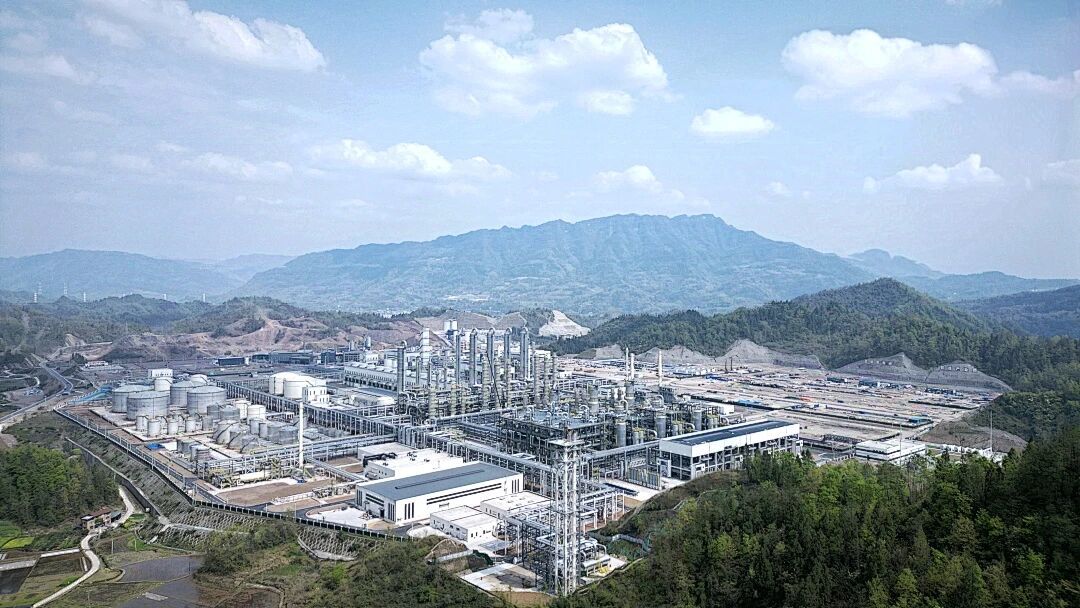
In December 2025, Wankai announced an investment in the construction of a project with an annual output of 100,000 tons of oxalic acid, becoming the first foothold for this resource system.
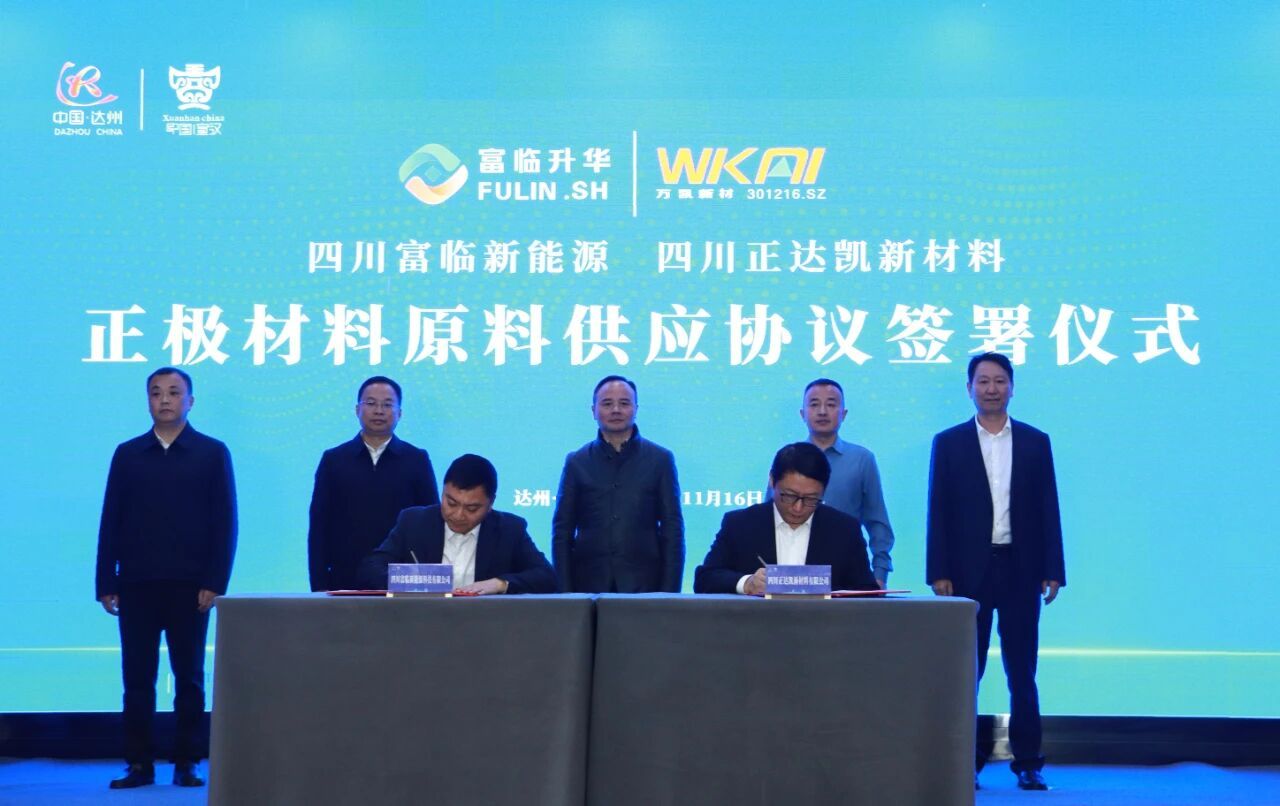
Oxalic acid itself is not a new material. However, in recent years, its application value in new energy materials, especially in the lithium - battery - related system, has been continuously increasing. Before the project is fully put into production, Wankai has announced a strategic cooperation with Fuling Precision Industry, which in turn is deeply tied to CATL.
For Wankai, the significance of oxalic acid lies not only in the certainty of downstream customers. Its truly important aspect is that it is an attempt at cycle switching.
The cost of oxalic acid starts from self - controlled natural gas resources, and the demand side is driven by the new energy industry chain. Its profit - making logic no longer fluctuates with the petrochemical boom cycle but is closer to the pricing method of "stable - supply materials" in new energy materials.
It is precisely these characteristics of "different starting points, different cycles, and different demands" that make the oxalic acid business line the first new business variable with real independent pricing significance in Wankai's business structure.
New path 2: Recycled materials breaking out of the petroleum system
The second path comes from the reconstruction of the material system itself.
The cooperation with Carbios means that Wankai has started to try to break out of the petrochemical system and enter a brand - new material path - recycled materials.
The traditional PET industry is more like a one - way operating system: oil is consumed, materials are produced, used, and finally discarded. The entire process is one - way and consumptive, and growth can only be based on the continuous consumption of new resources.
The bio - enzymatic depolymerization technology has, for the first time, enabled discarded PET to return to the same molecular state as virgin materials and re - enter the production system. Materials have thus changed from single - use consumables to recyclable production units.
This change has directly reshaped the value logic of materials. The pricing of materials no longer mainly depends on oil prices and energy costs but more on recycling efficiency, technological capabilities, and the operating costs and stability of the system itself.
This provides Wankai with a material path that is not completely restricted by the petroleum system and has an independent ESG - based pricing foundation.
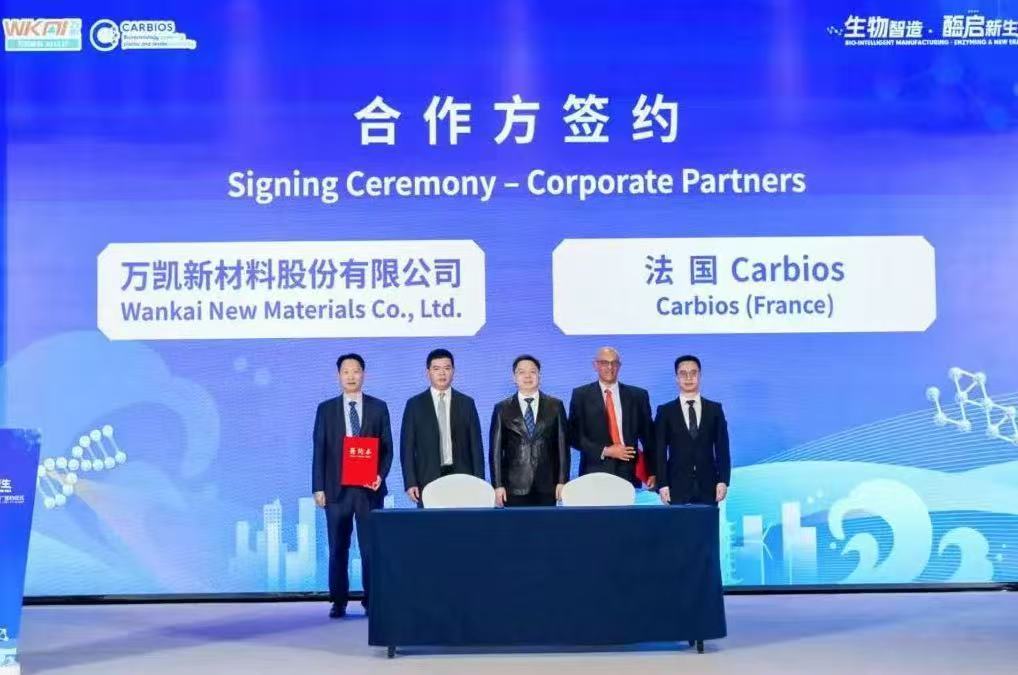
New path 3: Special materials for high - requirement application scenarios
The third path extends to high - requirement application scenarios.
The new scenarios Wankai is trying include, but are not limited to, materials related to robots, 3D printing materials, and some materials for medical and electronic structures.
These directions have relatively small short - term volumes, but they all share a common feature: their pricing logic does not depend on crude oil but on whether the technology is replaceable.
They are more like individual "independent profit units." Even if the scale is limited, they can provide a buffer for overall profits during industry downturns and reduce the company's dependence on a single cycle.
Role transformation: an ongoing "pricing migration"
Currently, the capital market's attitude towards Wankai has undergone a substantial change.
The company's market value has significantly increased since the beginning of 2025. This change itself reflects that the market has begun to re - understand Wankai's business structure and development path. At this stage, it is more about confirming the direction rather than realizing profits.
What will truly determine the valuation level in the next stage is not "whether to transform" but which new businesses can truly run through the model in a profit - making mode.
In this sense, what Wankai is experiencing is not simply a project expansion but more like an ongoing pricing migration.
After all, all business imagination will ultimately be recognized by the capital market only in the form of profits.